
Could We Ever Reverse the Aging Process Completely?
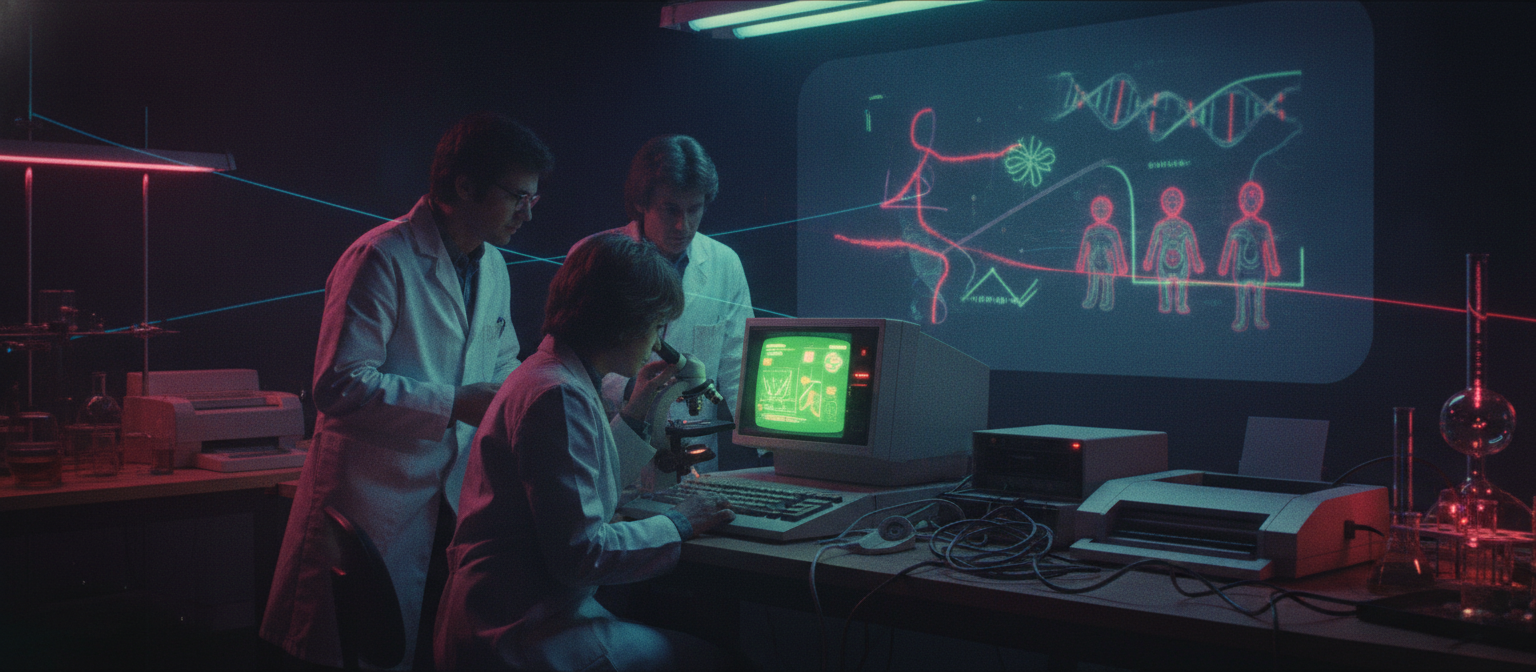
Imagine waking up one morning and discovering that your body has become biologically younger. Your cells function more efficiently. Your muscles recover faster. Your organs perform as though they belong to someone decades younger. The years you spent accumulating biological wear and tear have somehow been reversed.
Now imagine that this process does not stop at restoring a few years of youth. What if scientists could reverse aging completely, returning the human body to an earlier biological state and maintaining it there indefinitely?
It sounds like science fiction. Yet the scientific questions behind this possibility are very real.
Aging is one of the most complex processes in biology. It affects nearly every system in the human body, from the behavior of individual cells to the performance of entire organs. Over time, cells accumulate damage, tissues change, the immune system becomes less effective, and the body’s ability to repair itself gradually declines.
For most of human history, aging was understood as an unavoidable consequence of being alive. Today, researchers are investigating whether at least some aspects of this process can be slowed, modified, or even reversed.
But there is an important distinction between making an older biological system function better and returning an entire human being to a permanently youthful state.
Could we ever achieve the latter?
To explore that question, we need to look at aging not simply as the passage of time, but as a complex biological system whose underlying mechanisms scientists are only beginning to understand.
1. Aging Is More Than the Number on Your Birth Certificate
We often measure age using a simple number: the number of years since birth.
Biologically, however, two people of the same chronological age can have very different physical characteristics.
One person may maintain strong muscles, good cardiovascular function, and considerable physical independence well into later life. Another may experience significant changes in mobility, metabolism, and organ function much earlier.
This difference highlights an important concept: biological age.
Biological age describes aspects of the body’s condition and function rather than simply counting the years that have passed. Researchers estimate it using various indicators, including molecular changes, patterns of gene activity, physiological measurements, and certain chemical markers.
Some of these measurements are incorporated into what scientists call epigenetic clocks.
Epigenetics concerns changes in how genes are regulated without changing the underlying DNA sequence. One important mechanism involves DNA methylation, a chemical modification that can influence gene activity.
As people age, patterns of DNA methylation change in ways that can be associated with biological aging. Certain mathematical models use these patterns to estimate aspects of biological age.
However, an epigenetic clock is not a perfect measurement of the body’s total age. Different clocks capture different biological features, and changing a clock’s reading does not automatically mean that every tissue has become younger.
This distinction matters because reversing aging would require much more than changing a number on a laboratory report.
It would mean restoring the underlying systems that enable the body to function, repair itself, and remain resilient.
The real question is not whether we can make a biological age estimate move backward. It is whether we can make the body itself younger in meaningful, lasting ways.
2. The Cellular Machinery Behind Aging
To understand whether aging can be reversed, we need to look inside the cell.
The human body contains trillions of cells, each performing specialized tasks. Some transport oxygen, others transmit electrical signals, and others produce hormones, maintain structural tissues, or defend the body against infection.
These cells depend on intricate internal machinery.
They must produce energy, repair damaged molecules, regulate gene activity, remove waste, and communicate with neighboring cells. They also need to respond appropriately to changing conditions.
Over time, several processes can interfere with these functions.
DNA damage accumulates. Proteins can become damaged or misfolded. Mitochondria, which help generate cellular energy, can become less efficient. Cellular waste-management systems may struggle to maintain their previous performance.
Cells can also enter a state known as senescence.
Senescent cells stop dividing but remain metabolically active. Some release signaling molecules that influence surrounding tissues. Although cellular senescence can help prevent damaged cells from multiplying and plays useful roles in certain biological processes, the accumulation of senescent cells can contribute to age-related tissue dysfunction.
Another important factor is the gradual disruption of communication between cells.
The body is not merely a collection of independent biological machines. It is a network of interacting systems. A change in one population of cells can influence the behavior of other cells, potentially affecting an entire tissue.
This creates a fascinating possibility.
If aging results partly from accumulated damage, altered cellular regulation, and disrupted biological communication, perhaps interventions could repair some of those problems.
Scientists are investigating precisely that possibility.
The challenge is that aging does not have one universal cause. It emerges from many interconnected processes, and those processes do not necessarily progress at the same rate in every organ.
Reversing one mechanism may improve a particular function without reversing the entire aging process.
3. Can Scientists Reset a Cell’s Biological Age?
One of the most intriguing developments in aging research comes from the study of cellular reprogramming.
In 2006, researcher Shinya Yamanaka and colleagues demonstrated that certain factors could reprogram mature cells into induced pluripotent stem cells, a type of cell capable of developing into many different cell types.
This discovery transformed modern biology.
A mature cell, such as a skin cell, normally maintains a relatively specialized identity. Reprogramming can change its regulatory state, returning it to a more flexible, stem-cell-like condition.
During this process, many molecular features associated with cellular age can be reset.
That raises an extraordinary question: if cells can be returned to a younger state, could similar techniques rejuvenate cells without erasing their identities?
Researchers are exploring approaches known as partial cellular reprogramming.
Instead of completing the transformation into a pluripotent stem cell, partial reprogramming attempts to induce some youthful molecular changes while allowing the cell to retain its original identity.
In principle, this could help restore aspects of cellular function without turning a skin cell into a stem cell or disrupting the organization of an organ.
Experimental studies have reported promising results in certain cells and animal models. Some approaches have improved selected measures of tissue function or produced changes in molecular indicators associated with aging.
However, this research remains at an early stage.
Reprogramming must be carefully controlled. If cells lose their identity, divide inappropriately, or acquire dangerous characteristics, the consequences could be serious. Some reprogramming approaches also raise concerns about tumor formation and abnormal tissue growth.
A technique that works in a laboratory dish may behave very differently inside a living organism.
And a technique that rejuvenates one tissue does not necessarily rejuvenate the brain, heart, immune system, and other organs simultaneously.
Still, cellular reprogramming introduces a powerful idea: at least some features of cellular aging may be more reversible than scientists once assumed.
Perhaps the biological state of a cell is not as permanent as it appears.
4. The Body Has Its Own Repair Systems
Long before scientists began investigating advanced rejuvenation techniques, the human body already possessed mechanisms for maintaining and repairing itself.
Skin renews itself. Bones remodel themselves. The liver has a substantial capacity to regenerate tissue under suitable conditions. Blood-forming stem cells continually produce new blood cells.
These processes demonstrate that biological renewal is not an entirely foreign concept.
The body already replaces many of its components throughout life.
Yet renewal is not the same as complete rejuvenation.
Some tissues regenerate more effectively than others. Certain cell populations have limited replacement capacity, and some forms of damage are difficult to repair. The brain, for example, contains highly specialized neural circuits whose organization is essential for memory, learning, and personality.
Replacing a damaged component is not always equivalent to restoring the original system.
Consider a computer.
Replacing a worn-out fan may improve its performance, but that does not automatically repair a damaged processor, restore corrupted files, or eliminate every software problem.
The human body is vastly more complicated, but the analogy illustrates the challenge.
Reversing aging may require coordinated maintenance across many biological levels: molecules, cells, tissues, organs, and the systems that connect them.
Scientists are investigating ways to support this maintenance through regenerative medicine, stem-cell research, tissue engineering, and treatments targeting specific age-related mechanisms.
The long-term goal is not necessarily to discover one magical intervention. It may be to develop combinations of treatments that address different sources of biological decline.
Such a strategy could prove more realistic than expecting a single treatment to reverse every aspect of aging.
5. Could We Remove the Damage That Accumulates With Time?
Another major area of research focuses on identifying and repairing the biological damage that accumulates during aging.
One influential framework describes aging through several interconnected processes, including genomic instability, epigenetic alterations, mitochondrial dysfunction, cellular senescence, and changes in how tissues communicate.
These processes are sometimes called the hallmarks of aging.
The framework helps researchers organize an enormous scientific problem into more manageable questions.
For example, if damaged or senescent cells contribute to tissue dysfunction, could selectively removing them improve health?
This question has led to research into senolytics, a category of experimental interventions designed to selectively eliminate certain senescent cells.
Animal studies have reported improvements in selected age-related outcomes following particular senolytic interventions. Early human studies have also explored their safety and biological effects, but much more evidence is needed to determine whether they can produce meaningful, durable clinical benefits.
Another research direction involves improving cellular waste removal.
Cells rely on systems that break down and recycle damaged components. One such process is autophagy, through which cells deliver certain materials to internal structures for degradation and recycling.
Autophagy contributes to cellular maintenance, and its regulation changes with age. Researchers are investigating whether safely modifying these processes can help maintain tissue health.
Mitochondria are another target.
These structures play central roles in cellular energy production and other biological functions. Age-related changes in mitochondrial performance may contribute to declining tissue function, making mitochondrial maintenance an important research area.
Each of these approaches addresses a different part of the problem.
But there is a complication: the body does not classify every biological change as simply good or bad.
Senescence can help suppress tumors and support wound healing in some circumstances. Cellular recycling must be balanced with other metabolic needs. Mitochondrial activity is linked to numerous signaling pathways.
Intervening in a complex system can create unexpected consequences.
A successful rejuvenation treatment must therefore do more than eliminate a problem. It must restore a healthier balance without damaging the mechanisms that keep the organism alive.
6. What About the Brain and Human Identity?
If reversing aging means restoring the entire human body, the brain presents one of the most important challenges.
The brain is not simply an organ that produces energy and maintains tissue. It stores and processes information through highly organized networks of neurons and their connections.
Memories, learned skills, emotional associations, and elements of personality depend on complex patterns of activity and connectivity.
As people age, changes in brain structure and function can affect processing speed, sleep, sensory perception, and other abilities. Some people also develop neurodegenerative diseases that cause substantial damage to neural systems.
A complete rejuvenation strategy would need to address the biological changes that affect the brain while preserving the information that makes each person who they are.
This is a difficult scientific problem.
Imagine a future treatment capable of replacing damaged neural cells or repairing age-related changes in the brain. Such a treatment would need to preserve the functional organization of neural circuits while restoring healthy activity.
Simply replacing old cells with new ones would not necessarily achieve that goal.
It is similar to repairing a library. Replacing damaged shelves is useful, but the objective is to preserve the books, their organization, and the knowledge they contain.
The challenge becomes even more complicated when considering diseases that destroy neural connections and memories.
Could future treatments repair those connections? Could they restore lost functions? Could they prevent some age-related neurological decline before it becomes severe?
These are active questions in neuroscience and regenerative medicine.
At present, no established treatment can comprehensively rejuvenate the human brain and restore every aspect of age-related cognitive decline.
Nevertheless, research into neurodegeneration, cellular maintenance, and brain repair may gradually reveal ways to preserve neurological function for longer.
Any serious theory of complete rejuvenation must account for this challenge.
A body that looks younger but cannot preserve the function of its brain would not represent complete biological reversal.
7. Could We Reverse Aging in Every Organ at Once?
Consider the number of systems involved in keeping a person alive.
The heart circulates blood. The lungs exchange gases. The kidneys regulate fluid balance and remove waste. The immune system identifies threats. The endocrine system coordinates hormones. The digestive system extracts nutrients.
Each organ contains different cell types, and each responds differently to aging.
A treatment that benefits one tissue may have little effect on another.
Even within the same organ, different cells may age at different rates. Blood vessels, supporting cells, immune cells, and specialized functional cells all have distinct biological requirements.
This means that complete rejuvenation is not simply a matter of finding a treatment that works everywhere.
It may require tissue-specific interventions delivered at the correct time, in the correct amount, and with the correct biological effects.
Scientists would also need to understand how rejuvenated organs interact with one another.
Suppose a future treatment improves muscle function but leaves the cardiovascular system unchanged. The overall benefits might be limited by the capacity of other systems.
Or imagine rejuvenating the immune system without properly accounting for how it responds to existing tissue damage. The consequences could differ from those observed in an isolated laboratory experiment.
The human body operates as an integrated network.
This suggests that the future of longevity medicine may depend on systems biology: studying how different biological components interact rather than treating each component as an isolated problem.
It also explains why promising results in individual cells or animals cannot automatically be translated into predictions about human lifespan.
A complete reversal of aging would require coordinated changes across multiple levels of biological organization.
We are still learning how to achieve even a fraction of that coordination safely.
8. Would Reversing Aging Mean Living Forever?
This is where the question becomes particularly interesting.
If scientists eventually discover how to reverse many aspects of biological aging, would humans become immortal?
Not necessarily.
Aging is only one source of mortality. Even a biologically younger person remains vulnerable to infections, accidents, environmental hazards, and other causes of death.
Moreover, reversing some age-related changes would not guarantee that every disease could be prevented or cured.
A future therapy might improve cardiovascular function, restore certain cellular processes, or reduce the risk of specific age-related conditions. Such benefits could be enormously valuable without making a person invulnerable.
There is also a difference between extending lifespan and extending healthspan.
Lifespan is the total duration of life. Healthspan refers to the period spent in relatively good health and functional independence.
A treatment that helps people maintain mobility, cognitive function, and independence for longer could have significant benefits even if it did not substantially increase maximum lifespan.
This is an important distinction because the most practical objective of aging research may be to reduce the years people spend experiencing severe age-related illness and disability.
Rather than immediately imagining a world without death, we can begin with a more measurable goal: helping people remain healthier for longer.
If future science eventually makes extensive rejuvenation possible, its effects on lifespan would need to be established through evidence.
At present, there is no scientifically demonstrated method that can reverse human aging completely or guarantee indefinite life.
9. The Engineering Problem of a Younger Human Body
There is another way to think about this challenge.
Reversing aging could be understood as a biological engineering problem.
An engineer who wants to restore an aging machine must first understand its original design, identify its failures, determine which components can be repaired, and establish how the repairs affect the rest of the system.
The human body is considerably more complex because its components are alive.
Cells respond to their environments. Genes regulate one another. Hormones transmit information. Immune cells adapt to changing conditions. Tissues continually remodel themselves.
The system also changes as it is being repaired.
This creates a feedback problem.
A treatment may initially improve a biological function, but that improvement could alter other processes. Those changes may then affect the original treatment’s effectiveness.
Consequently, successful rejuvenation may require continuous measurement and adjustment rather than a single intervention.
Future technologies could combine molecular diagnostics, computational models, advanced imaging, and personalized medicine to monitor biological changes over time.
Artificial intelligence may help researchers analyze large datasets, identify patterns associated with aging, and prioritize possible treatment strategies. It could also support the design of experiments that investigate interactions between biological mechanisms.
However, computational predictions would still need to be tested in laboratory studies and clinical trials.
A model can identify a promising possibility without proving that the intervention will be safe or effective in a human being.
The engineering perspective therefore offers both optimism and caution.
Complex systems can sometimes be repaired in ways that were previously difficult to imagine. But reliable repair requires detailed knowledge of how the system works, how it fails, and how interventions change its behavior.
The more interconnected the system, the more carefully its restoration must be approached.
10. What Would Complete Rejuvenation Actually Look Like?
Suppose researchers eventually develop a collection of therapies capable of addressing many major mechanisms of aging.
How would they know whether those therapies had succeeded?
They would need evidence across several dimensions.
First, biological measurements would need to show meaningful improvements in the processes associated with aging.
Second, those improvements would need to correspond to better physical function, not merely changes in laboratory biomarkers.
Third, benefits would need to extend across multiple organs and systems.
Fourth, treatments would need to demonstrate acceptable safety over an appropriate period. A therapy that improves certain functions while increasing the risk of cancer or other serious complications would not represent successful rejuvenation.
Finally, researchers would need to establish how durable the improvements were.
A temporary change in a molecular marker is different from a sustained restoration of biological function. And sustained improvement in several tissues is different from reversing every aspect of aging.
There is also an unresolved question about what complete reversal would mean in practical terms.
Would it require returning every cell to the exact molecular condition it possessed decades earlier? Or would it be sufficient to restore the function, resilience, and repair capacity associated with a younger body?
The second definition may be more biologically meaningful.
A living organism is constantly changing. Even a healthy young body does not maintain an identical molecular state from one day to the next.
Therefore, successful rejuvenation might not mean reconstructing a perfect snapshot of the past.
It might mean restoring a healthier operating state and maintaining the body’s ability to repair itself.
This is a more flexible goal, although achieving it comprehensively would remain an enormous scientific undertaking.
11. The Most Likely Future May Be Gradual Rejuvenation
When considering the future, it is tempting to imagine one extraordinary discovery that suddenly makes every human being young again.
Scientific progress often follows a less dramatic path.
Different research teams investigate different mechanisms. One group develops a better way to detect early cellular damage. Another studies how to restore tissue function. Others investigate senescent cells, stem cells, metabolic regulation, or neurodegeneration.
Over time, separate discoveries may become complementary.
A treatment that produces a modest improvement in one biological system could become more useful when combined with an intervention that addresses another mechanism.
Preventive medicine could also play a major role. Reducing exposure to known health risks, maintaining physical activity, getting adequate sleep, and managing established health conditions can support healthy aging, even though none of these measures reverses aging completely.
Future medical technologies may add increasingly sophisticated interventions to this foundation.
The result could be a gradual shift from treating individual diseases after they appear toward preserving biological function before serious decline develops.
That possibility is worth exploring because it does not depend on achieving complete rejuvenation in a single leap.
Even partial improvements could matter if they safely help people remain independent and healthy for longer.
Nevertheless, it is important to separate scientific possibility from demonstrated clinical reality. Many experimental approaches remain far from routine medical use, and their long-term effects are not yet fully understood.
The future may hold substantial progress, but its exact pace and limits cannot be predicted with confidence.
Conclusion: Could We Ever Reverse the Aging Process Completely?
The possibility of completely reversing aging challenges one of our deepest assumptions about life.
For generations, growing older has been treated as an irreversible journey. Yet modern biology is revealing that many processes associated with aging involve molecular mechanisms that can be studied, manipulated, and, in certain experimental settings, partially reversed.
Cellular reprogramming has shown that aspects of a cell’s biological state can be reset. Research into senescent cells, mitochondrial function, cellular recycling, and regenerative medicine is investigating additional ways to preserve or restore biological function.
These developments suggest that aging may be more biologically flexible than previously assumed.
But flexibility is not the same as complete reversibility.
Aging involves many interconnected mechanisms, and the human body is an extraordinarily complex system. Rejuvenating one cell type does not automatically rejuvenate an organ. Improving several organs does not guarantee that the brain, immune system, and every other biological system will also return to a youthful state.
Safety, durability, cancer risk, tissue identity, and the preservation of neurological function all remain important challenges.
Could we ever reverse the aging process completely? The honest scientific answer is that we do not know yet.
There is no established evidence that complete reversal of human aging is currently achievable, and indefinite life remains speculative.
However, the absence of a complete solution does not mean that every component of aging is permanently beyond our ability to influence.
The more productive question may be how much of the aging process can be safely modified, which biological functions can be restored, and whether those improvements can be maintained over time.
Perhaps the future will not begin with a treatment that makes an entire person thirty years younger overnight. It may begin with therapies that repair particular forms of cellular damage, preserve organ function, and gradually improve the body’s ability to maintain itself.
Each discovery could expand our understanding of what biological rejuvenation means.
And perhaps that is the most fascinating part of the story.
We are not simply asking whether human beings can live longer. We are asking whether the biological systems that govern aging are fixed limits or complex processes that can be understood and, to some extent, redesigned.
The answer may emerge from years of careful experimentation rather than one spectacular breakthrough.
For now, complete rejuvenation remains an open scientific question. But the investigation itself is already changing how we think about biology, medicine, and the relationship between time and the living body.
The future of aging research may ultimately depend not on discovering how to stop time, but on learning how to help living systems repair the damage that time leaves behind.
And that is a scientific question worth pursuing.