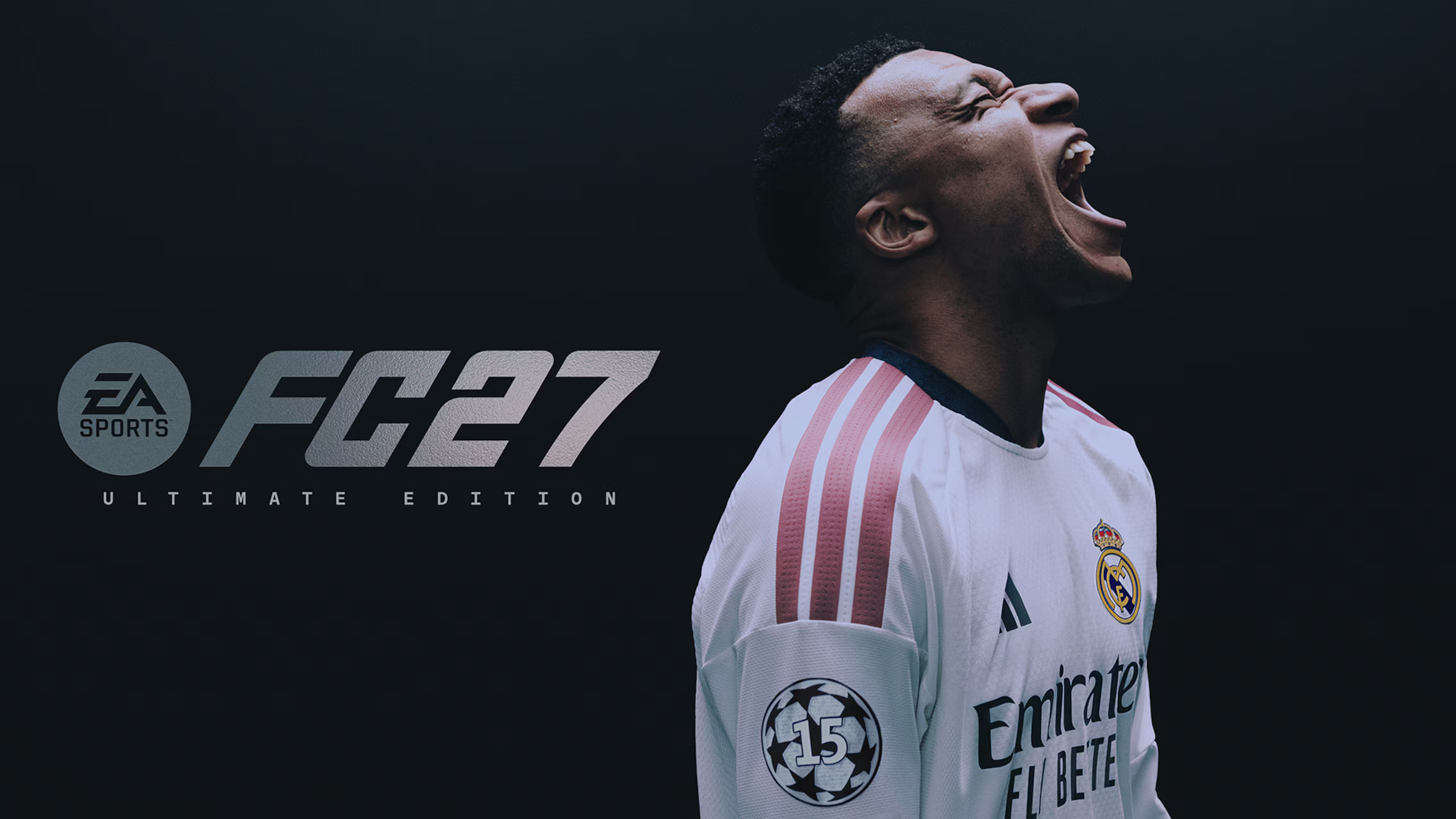
Sportsman of the Year 2026: Ferran Torres and the Season That Changed Everything

There are football seasons you remember because of the trophies.
There are seasons you remember because of the numbers.
And then there are seasons you remember because one player somehow turns an entire career into a story.
For me, Ferran Torres is the Sportsman of the Year 2026.
Not simply because he scored goals.
Not simply because he won trophies.
Not simply because he became a World Cup winner.
Ferran Torres deserves the conversation because 2026 feels like the year when everything finally connected for him: the talent, the pressure, the criticism, the patience, the goals, the big moments and, ultimately, the glory.
He went from being a player people questioned to becoming the man who scored the goal that made Spain world champions.
That is not just a football story.
That is a story about persistence.
And I think that is exactly what makes sports so beautiful.
The Year of Ferran Torres
Football is brutally simple when you watch it from the outside.
Score goals.
Win games.
Lift trophies.
Become a hero.
But football careers are rarely that simple.
Behind every great season are years of uncertainty, injuries, criticism, tactical changes, competition for places and moments when players wonder whether they are actually good enough.
Ferran Torres knows that story better than most.
The Spanish forward entered 2026 with something to prove.
At Barcelona, he had already experienced the strange contradiction of being both highly talented and heavily questioned. He had arrived from Manchester City with enormous expectations, and expectations can sometimes become heavier than the football itself.
But instead of allowing the pressure to define him, Torres gradually began redefining himself.
And 2025/26 became the season when it all came together.
Barcelona’s official records show that Torres finished the campaign with 21 goals, while scoring 16 goals in La Liga, earning the Zarra Trophy alongside Lamine Yamal. (FC Barcelona)
That is already an excellent season.
But then came the World Cup.
And that is where the story became something much bigger.
Before the World Cup, He Had Already Done the Work
One of the biggest mistakes we make when discussing football is focusing only on the final moment.
We see the goal.
We see the celebration.
We see the trophy.
We see the photographs.
We don’t always see the thousands of hours that made the moment possible.
Ferran Torres’ 2026 World Cup heroics did not begin in the final.
They began months earlier.
At Barcelona, Torres became an increasingly important part of Hansi Flick’s team.
He was not simply a player waiting for opportunities.
He was becoming a player who could create opportunities.
His versatility became one of his biggest strengths.
He could operate centrally.
He could play from the wing.
He could attack space.
He could combine with teammates.
He could finish with either foot.
And, perhaps most importantly, he could understand where the goal was going to be before the ball arrived.
Barcelona’s official profile describes his ability to adapt across the attack, his reading of space, technical quality, finishing with both feet, pace and ability to create danger. (FC Barcelona)
That versatility became incredibly valuable.
Modern football is no longer about simply having eleven specialists.
It is about having players who understand multiple systems.
And Torres increasingly looked like one of those players.
The Zarra Trophy Was the Warning
There was a moment during the 2025/26 La Liga season when the football world should have started paying closer attention.
Ferran Torres scored 16 league goals.
So did Lamine Yamal.
Together, they shared the Zarra Trophy for the highest-scoring Spanish players in La Liga. Barcelona noted that they finished one goal ahead of Real Sociedad’s Mikel Oyarzabal. (FC Barcelona)
Think about that.
A player who had spent years being questioned had suddenly become one of the most productive Spanish attackers in the league.
And he was doing it while playing for one of the biggest clubs in the world.
This wasn’t a fluke.
It was evolution.
Torres had learned how to survive in an environment where every missed chance becomes a headline.
Every bad performance becomes a debate.
Every substitute appearance becomes a question about his future.
Every transfer rumor becomes a referendum on his career.
Yet he kept scoring.
That matters.
Because confidence in football is strange.
You can have all the technical ability in the world, but if you stop believing in yourself, the ability becomes difficult to access.
Torres found his belief again.
And football noticed.
Barcelona Was the First Chapter
Barcelona’s 2025/26 campaign was another important part of the story.
The club won La Liga.
They also won the Spanish Super Cup.
And Torres played a meaningful role in that success. (FC Barcelona)
He was not merely collecting medals from the bench.
He was contributing.
The official Barcelona account even described him as having his best goalscoring season for the club.
That matters because Barcelona is not an easy place to rebuild your confidence.
It is one of football’s most demanding environments.
At Barcelona, technical quality is expected.
Goals are expected.
Entertainment is expected.
Winning is expected.
And if you fail, the football world notices.
Torres survived that environment.
Then he thrived in it.
And that created the foundation for what happened next.
Then Came the World Cup
The 2026 FIFA World Cup was supposed to be about the biggest names in football.
The superstars.
The established icons.
The players already sitting at the top of the football pyramid.
But football has a habit of ignoring the script.
Spain went deep into the tournament.
And Ferran Torres became one of the most important characters in the story.
Barcelona’s official profile records that Torres played a decisive role during Spain’s knockout journey, including providing the crucial assist against Portugal in the round of 16. (FC Barcelona)
That alone would have been enough for a respectable World Cup story.
But Ferran Torres had apparently decided that respectable was not enough.
He wanted history.
The Final Against Argentina
And then came the final.
Spain versus Argentina.
One of the biggest possible stages in football.
Millions watching.
The entire world waiting.
A trophy that only appears every four years.
One match.
One opportunity.
One moment.
And Ferran Torres delivered it.
In extra time, he scored the decisive goal.
The official Barcelona account records the goal as coming in the 99th minute, giving Spain a 1–0 victory and the World Cup title. (FC Barcelona)
That is the kind of goal that changes a player’s legacy instantly.
Before the final, Torres was a talented Spanish forward.
After the final, he was a World Cup hero.
There is a difference.
Imagine Being Ferran Torres in That Moment
Imagine standing on a football pitch in New York.
Extra time.
The game is still 0–0.
Everyone is exhausted.
The opposition is Argentina.
The World Cup trophy is waiting.
Every player knows that one mistake could become history.
Then the ball arrives.
You have a chance.
You finish.
The net moves.
And suddenly your country is world champion.
Your teammates are running toward you.
Millions of people are screaming.
Your name is everywhere.
Your career has just changed.
That is what happened to Ferran Torres.
It is almost cinematic.
But the best sports stories often sound fictional even when they are real.
The Most Important Part Is Not Even the Goal
Here is where I think Ferran Torres’ story becomes bigger than football.
The goal is incredible.
The World Cup is incredible.
But the journey to that goal is what makes it meaningful.
Four years earlier, Torres had been dealing with enormous psychological pressure.
Reports in 2026 revisited the difficult period he experienced after his move to Barcelona, including his struggles with confidence and mental health. Fortune reported that Torres had described feeling trapped in a “bottomless pit” and had sought help from a psychologist. (Fortune)
And now look at the contrast.
The player who once questioned whether he could find a way out was standing on the biggest football stage in the world, scoring the goal that gave his country the World Cup.
That is powerful.
Because sometimes success isn’t about becoming a completely different person.
Sometimes success is simply refusing to stop becoming yourself.
Football Is Full of Comeback Stories
We love comeback stories because they remind us that careers are not linear.
A player can be brilliant at 18.
Struggle at 21.
Get criticized at 22.
Find his rhythm at 24.
And become a hero at 26.
There is no universal timeline.
Ferran Torres is a perfect example.
He wasn’t suddenly created in 2026.
The player who scored the World Cup-winning goal was being built for years.
The Valencia academy.
Manchester City.
Spain’s youth teams.
Barcelona.
The injuries.
The criticism.
The tactical changes.
The competition.
The pressure.
The difficult periods.
All of those experiences contributed to the player who eventually stood in that final.
That is why I don’t see the World Cup goal as a miracle.
I see it as the final sentence of a very long paragraph.
The Player Behind the Numbers
Statistics can tell us that Torres scored.
They cannot completely explain why.
Football intelligence is difficult to measure.
A player can touch the ball only a few times and completely change a game.
Torres has developed a reputation as a player who understands movement.
He knows how to attack space.
He knows when to make a run.
He knows how to arrive rather than simply stand in dangerous areas.
That is a different skill.
The best forwards aren’t always the ones who are constantly touching the ball.
Sometimes they are the ones constantly moving defenders.
They create gaps.
They stretch defensive lines.
They appear where defenders don’t want them to appear.
And when the opportunity comes, they finish.
Torres has increasingly become that type of forward.
The Shark Finally Bit
Ferran Torres has long carried the nickname “El Tiburón” — The Shark.
And honestly, 2026 was the year the nickname felt completely appropriate.
A shark doesn’t panic.
It keeps moving.
It waits.
It observes.
And when the opportunity appears, it attacks.
That is almost a perfect metaphor for Torres’ career.
There were periods when his opportunities seemed limited.
There were periods when his confidence appeared fragile.
There were periods when his future at Barcelona looked uncertain.
Yet he stayed in the fight.
And when the opportunity arrived, he took it.
The World Cup final was simply the biggest opportunity of them all.
Being a Sportsman Is More Than Winning
This is why I don’t want to reduce Sportsman of the Year to a simple question of trophies.
If trophies were the only measurement, the conversation would be easy.
But sportsmanship is bigger.
It is about professionalism.
Resilience.
Character.
Adaptability.
Discipline.
The ability to deal with failure.
The ability to respond to criticism.
The ability to keep improving.
And the ability to perform when the pressure becomes enormous.
Ferran Torres demonstrated all of those qualities in 2026.
He won.
But more importantly, he evolved.
The Strange Irony of His Barcelona Future
And now comes the funny part.
After such a spectacular year, his club future became one of the biggest stories surrounding him.
Paris Saint-Germain reportedly showed serious interest in Torres, with Barcelona rejecting an opening offer reported at around $46 million. (Morocco World News)
Other reports linked him with additional major clubs.
Eventually, by the end of the summer transfer window, Barcelona’s relationship with Torres had changed dramatically.
Reports indicate that Torres moved to PSG for approximately €48.5 million. (Diario AS)
And suddenly, the player who had just become a World Cup hero was beginning a new chapter.
That is football.
One minute you are a hero.
The next minute you are a transfer story.
One year you are fighting for minutes.
The next year clubs are fighting for you.
It is a strange industry.
But His Legacy Doesn’t Belong to Barcelona
Whether Ferran Torres stays at Barcelona, moves to PSG, or eventually plays somewhere completely different, 2026 belongs to him.
Because the most important moment of his career happened wearing the Spanish shirt.
The World Cup changed the scale of his legacy.
Barcelona helped rebuild him.
Spain gave him the stage.
And Torres gave Spain the moment.
That is how football history works.
The Mental Game Is the Real Game
One of the things I find most fascinating about Ferran Torres’ journey is that his biggest battle wasn’t necessarily physical.
It was psychological.
Footballers are human beings.
We sometimes forget this.
We see their salaries.
Their cars.
Their stadiums.
Their sponsorships.
Their social media followers.
Their glamorous lifestyles.
And we assume that successful athletes don’t struggle.
But they do.
The pressure can be enormous.
A bad performance can be analyzed by millions of people.
A missed chance can become a meme.
A transfer fee can follow a player everywhere.
A coach’s decision can become a public debate.
And young players are expected to handle all of this while still developing emotionally.
Torres’ story reminds us that athletes need support too.
His decision to work with a psychologist during a difficult period was part of his journey back to confidence. (Fortune)
That should not be seen as weakness.
It should be seen as professionalism.
Asking for Help Can Be Part of Becoming Stronger
There is an old idea that strength means never struggling.
I don’t believe that.
Real strength can mean recognizing that something is wrong and doing something about it.
For Torres, that meant seeking professional support.
And years later, he was standing in a World Cup final.
That doesn’t mean every difficult experience automatically produces success.
Life doesn’t work like that.
But it does show us something important:
A bad chapter does not have to become the entire story.
That might be the most important lesson of Ferran Torres’ 2026.
Why Ferran Torres and Not Someone Else?
Of course, there are many incredible athletes in 2026.
There are footballers who dominated domestic leagues.
There are athletes who broke records.
There are champions in basketball, athletics, tennis, boxing and countless other sports.
So why Ferran?
Because his year combined almost every ingredient that makes a great sporting story.
Domestic success.
Individual recognition.
International glory.
A defining moment.
Resilience.
Personal growth.
Pressure.
Redemption.
And ultimately, a World Cup-winning goal.
That is an extraordinary résumé for one calendar year.
The Numbers Tell Part of the Story
Let’s put the achievement into perspective.
During Barcelona’s 2025/26 campaign, Torres scored 21 goals, including 16 in La Liga. He shared the Zarra Trophy with Lamine Yamal. (FC Barcelona)
Barcelona won La Liga.
Barcelona won the Spanish Super Cup.
Spain won the World Cup.
And Torres scored the winning goal in the World Cup final. (FC Barcelona)
That’s not just a good season.
That’s an extraordinary year.
And There Is Something Beautiful About the Timing
Torres was born in 2000.
At 26, he was entering what should be one of the most important stages of his career.
Footballers often talk about their prime years.
Some arrive early.
Some arrive late.
Some never find them.
Torres appears to have found his at exactly the right moment.
The player who once looked like he was still searching for his identity now looks like someone who understands exactly what kind of footballer he wants to be.
A forward.
A goal scorer.
A versatile attacker.
A player who can change a match.
A player who can handle pressure.
And, now, a world champion.
The World Cup Goal Will Follow Him Forever
Footballers score thousands of goals.
Most disappear.
Some are remembered for a season.
A few are remembered for decades.
The goal against Argentina belongs to the third category.
Whenever people discuss Spain’s 2026 World Cup triumph, Ferran Torres’ name will appear.
Whenever someone watches highlights of the final, there will be the same moment.
The ball.
The movement.
The finish.
The celebration.
The trophy.
The history.
That’s immortality in football.
There Is No Perfect Career
Perhaps this is why his story resonates so strongly.
Ferran Torres didn’t have a perfect career.
He didn’t dominate every season.
He didn’t avoid criticism.
He didn’t avoid difficult moments.
He didn’t avoid pressure.
He didn’t walk into Barcelona and immediately become the undisputed superstar.
His career had turbulence.
But maybe that’s better.
Because perfection isn’t relatable.
Progress is.
We can understand someone who struggles.
We can understand someone who gets criticized.
We can understand someone who loses confidence.
And we can understand someone who keeps going.
That’s what makes his 2026 special.
The Lesson for Young Athletes
If I were speaking to a young footballer reading this, I would say:
Don’t panic if your career isn’t moving as quickly as you imagined.
Don’t allow one bad season to convince you that you are finished.
Don’t allow social media to define your value.
Don’t allow criticism to become your identity.
Keep training.
Keep learning.
Take care of your mind.
Ask for help when you need it.
And understand that football careers are long.
You might be closer to your breakthrough than you think.
Ferran Torres is proof.
The Lesson for Everyone Else
And this isn’t only about footballers.
The same principle applies to almost everything.
Technology.
Business.
Music.
Art.
Education.
Life.
Sometimes we think success should happen immediately.
We build something today and expect results tomorrow.
We release music and expect millions of streams.
We start a business and expect customers immediately.
We learn programming and expect to become experts in six months.
But human development doesn’t work like software deployment.
You cannot always ship version 1.0 and expect perfection.
Sometimes you need version 2.
Then version 3.
Then version 4.
Then suddenly one day, something works.
That’s what Torres’ career feels like.
A long series of iterations.
Then 2026 happened.
Sportsman of the Year
So when I think about the Sportsman of the Year 2026, I don’t simply think about the guy who scored the biggest goal.
I think about the entire journey.
I think about a player who was questioned.
A player who struggled.
A player who adapted.
A player who kept working.
A player who became one of Barcelona’s important attackers.
A player who scored 16 La Liga goals.
A player who won the Zarra Trophy.
A player who became a European champion.
A player who entered a World Cup.
A player who assisted in the knockout stage.
And finally…
A player who stood in the World Cup final against Argentina and scored the goal that made Spain champions of the world.
That is Ferran Torres.
2026 Was the Year He Became the Story
Football has always loved heroes.
But the most interesting heroes aren’t necessarily the ones who were always destined to win.
They are the ones who almost lost themselves along the way.
They are the ones who had to rebuild.
They are the ones who had to answer critics.
They are the ones who had to rediscover their confidence.
They are the ones who eventually get one giant moment.
Ferran Torres got his.
And what a moment it was.
Final Whistle
Maybe one day, years from now, people will forget the transfer rumors.
They will forget how much clubs offered.
They will forget which coach started him.
They will forget individual league matches.
They will forget the arguments on social media.
But they won’t forget the World Cup final.
They won’t forget Spain.
They won’t forget Argentina.
And they certainly won’t forget Ferran Torres.
Because when the biggest match of 2026 needed a hero, Ferran Torres answered.
He didn’t need a perfect career.
He didn’t need everyone’s approval.
He didn’t need to silence every critic.
He just needed one moment.
And when that moment arrived, he took it.
That is why, for me, Ferran Torres is Sportsman of the Year 2026.
Not because he had the easiest journey.
Because he didn’t.
Not because he was always the favorite.
Because he wasn’t.
But because he showed something every great athlete eventually has to discover:
You can lose confidence without losing your future.
You can be doubted without being defeated.
You can fall without staying down.
And sometimes, after years of uncertainty, football gives you one beautiful moment where everything suddenly makes sense.
For Ferran Torres, that moment came in a World Cup final.
The ball hit the net.
Spain became champions.
And a new chapter of his legacy was born.
The Shark had finally arrived.
And 2026 belonged to him.