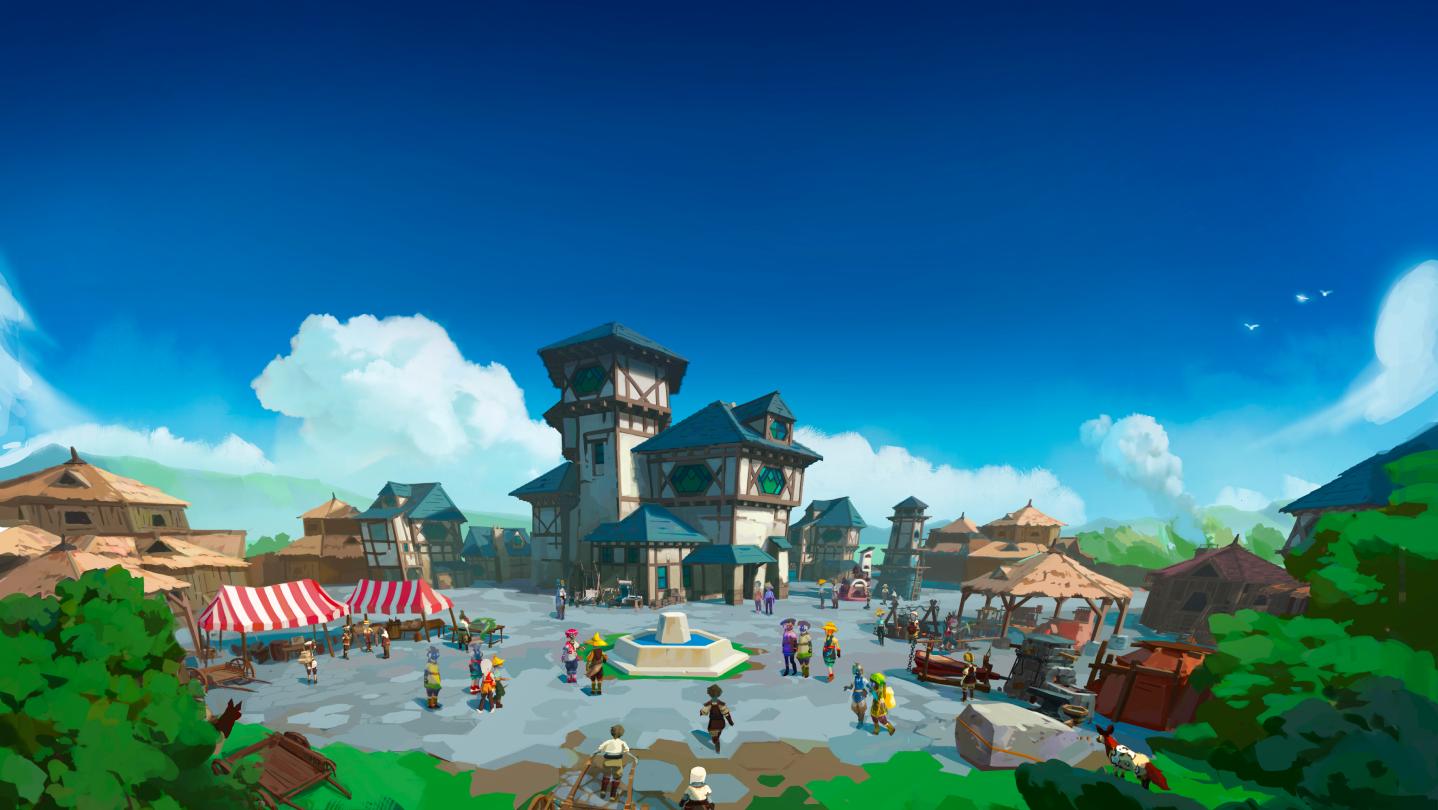
The Strange Things Players Remember but Developers Never Intended

Some of the most unforgettable moments in video games were never designed to become memories. They happened in the corners of virtual worlds, between unfinished animations, behind strange physics interactions, and during ordinary moments that somehow became extraordinary.
There is something fascinating about the relationship between a video game and the person playing it.
A developer might spend months designing a spectacular boss fight, carefully balancing its difficulty, composing its soundtrack, and building an elaborate environment around it. The intention is clear: this is the moment players should remember.
Yet years later, when someone asks a former player about that game, the answer might have nothing to do with the boss.
Instead, they remember a chicken that followed them across half the map. A character who stood motionless in the rain. A strange sound that played whenever they entered a particular room. A vehicle that launched itself into the sky after hitting a small rock. Or a place at the edge of the world where they spent an unreasonable amount of time doing absolutely nothing.
The developer created a game. The player remembers something else.
This is one of the strangest qualities of interactive entertainment: the memories people form while playing do not always correspond to the experiences someone intended to create.
Sometimes, the most memorable parts of a game emerge from systems interacting in unexpected ways. Sometimes, they come from a player’s imagination. And sometimes, an ordinary detail acquires a meaning that nobody involved in development could have predicted.
Understanding why this happens reveals something interesting about games, human memory, and the unpredictable relationship between software and the people who use it.
1. The Glitch That Became More Memorable Than the Main Story
Every complex game contains rules.
Characters have collision boxes. Objects respond to physics. Animations transition between states. Enemies follow behavioral logic. The environment reacts to player input according to thousands of carefully implemented decisions.
Occasionally, these systems produce results that were never intended.
A character might become trapped inside a wall. An enemy might spin uncontrollably. A horse might launch itself into the air after encountering an unusual combination of terrain and physics. A door might remain open when it should have closed.
From the developer’s perspective, these events may represent defects that need to be corrected.
From the player’s perspective, however, they can become unforgettable moments.
Consider the famous reputation of the physics in The Elder Scrolls V: Skyrim. Its expansive world contains serious adventures, complex quests, and dramatic encounters. Yet its unpredictable interactions between objects, characters, and physics have also generated countless stories and humorous memories.
Players do not always remember the exact sequence of events in a major quest. They may remember a giant launching their character into the atmosphere after a single strike.
The unexpected event becomes a story.
Why?
Because human memory is particularly responsive to surprise. When something violates our expectations, it attracts attention. The brain attempts to understand what happened, and the unusual event becomes easier to distinguish from everything else.
A hundred ordinary encounters may blur together. One impossible-looking physics interaction remains vivid.
There is an important distinction here. Not every bug improves a game, and many glitches can destroy progress or make an experience frustrating. But certain harmless errors reveal an accidental kind of entertainment.
They create moments that feel spontaneous because they were not part of the player’s anticipated experience.
The strange thing is that the technical failure may become a storytelling success.
2. The Random Object That Becomes a Personal Landmark
Developers often design landmarks to guide players through a virtual environment.
A mountain may dominate the horizon. A tower may mark the center of a city. A brightly colored building may help players navigate an unfamiliar neighborhood. These features are deliberately placed to make the world easier to understand.
But players frequently develop their own landmarks.
It might be a broken fence near a road, a tree with an unusual shape, a small rock beside a river, or a forgotten cabin that serves no major narrative purpose.
Perhaps the player once became lost near that tree. Perhaps an enemy appeared beside the fence during a difficult encounter. Perhaps a friend was standing next to the cabin when something hilarious happened during a multiplayer session.
The object itself is unremarkable. The experience attached to it is not.
This is how personal geography develops inside games.
Two players can explore the same world for dozens of hours and remember entirely different places. One remembers the castle where the final battle occurred. Another remembers a quiet field where they stopped to watch the sunset.
Neither memory is incorrect. They simply represent different relationships with the same environment.
In an open-world game, the developer may provide the geography, but the player gradually creates a private map of meaningful locations.
That map is not necessarily based on the importance assigned to places by the game.
It is based on experience.
A small corner of a digital world can become more meaningful than an elaborate city because something personal happened there.
This reveals an interesting principle of environmental design: a place does not need to be important to the story to become important to the player.
Sometimes, all it needs is a memory.
3. The Background Character Who Becomes the Main Character
Non-player characters, commonly called NPCs, are usually designed to serve specific purposes.
A merchant sells equipment. A guard protects an entrance. A villager provides information. A quest giver introduces a mission. A passerby helps a city feel populated.
Their behavior may be governed by simple routines, limited dialogue, and a collection of predetermined reactions.
Yet players sometimes become fascinated by characters who were never intended to receive much attention.
Perhaps a villager always appears in the same location. Perhaps a guard repeatedly walks into a wall. Perhaps a shopkeeper delivers a particular line with an unexpectedly funny expression.
The character becomes memorable through repetition.
A player might begin greeting an NPC every time they return to town. They might wonder what happens when the character disappears from their usual location. They might invent an elaborate personality for someone whose entire dialogue consists of two sentences.
The game provides the character’s behavior. The player supplies the interpretation.
This process is especially interesting because it resembles how people develop impressions of others in everyday life. We often assign meaning to repeated behaviors, even when we have only limited information.
In a game, that tendency can become exaggerated.
A character who walks along a predictable route might acquire an imagined daily routine. A merchant who survives several dangerous encounters might become an unofficial companion. An NPC who happens to be nearby during an important event might become associated with the entire experience.
Developers may have intended the character to occupy the background.
The player moves them into the foreground of their memory.
4. The Unimportant Sound That Becomes the Soundtrack of a Memory
Audio designers spend enormous effort shaping the sound of a game.
Music establishes emotional atmosphere. Environmental audio communicates distance and movement. Sound effects provide feedback when players interact with objects. Small audio cues help make virtual environments feel alive.
But the sounds players remember are not always the ones that receive the most attention.
Sometimes, it is a menu sound.
A particular footstep.
The repetitive noise of a machine in the background.
The sound of rain hitting a roof.
A short musical phrase that plays in an ordinary location.
These sounds can become surprisingly powerful memory triggers.
Imagine returning to a game after ten years. You enter an old menu, move the cursor across a few options, and hear a familiar electronic sound.
Suddenly, you remember the room where you used to play, the computer or console you used, the people who were around, and the period of your life associated with the game.
The sound itself has not changed.
Your relationship with it has.
This is partly because memory is associative. Experiences are stored alongside elements of their surrounding environment, including sounds, visual details, and emotional states. Encountering one of those elements again can help retrieve related memories.
A background sound can therefore become a kind of audio time machine.
The developer might have spent weeks composing the game’s central theme, expecting it to define the experience. Yet an incidental sound effect can become equally meaningful to a particular player.
It is a reminder that emotional significance cannot be measured by production complexity alone.
A three-second sound may carry ten years of personal history.
5. The Route Nobody Designed but Everybody Discovers
Game worlds often contain carefully designed paths.
Roads connect locations. Corridors guide players through buildings. Quest markers indicate destinations. Environmental cues suggest where exploration should continue.
However, players are remarkably good at discovering alternative routes.
They climb hills that were intended as scenery. They jump across rooftops. They squeeze through gaps between objects. They use vehicles to reach places that seem inaccessible. They find shortcuts through environments designed to encourage longer journeys.
Sometimes these discoveries involve exploits. Other times, they are perfectly legitimate consequences of flexible movement systems.
In either case, a new route can become one of a player’s most memorable discoveries.
The interesting part is that the route may not have a name, an achievement, or a quest associated with it.
It exists because someone tried something.
Consider the familiar experience of discovering that a difficult journey can be shortened by jumping down a slope rather than following the road. At first, the shortcut saves a few seconds. Eventually, it becomes part of the player’s personal knowledge of the world.
They may even teach the route to friends.
Over time, a path that was never formally documented becomes a small piece of shared community knowledge.
This is one reason players often develop a deeper understanding of game environments than a straightforward playthrough would suggest. They do not merely follow the world. They experiment with its boundaries.
For developers, this behavior can be revealing. A shortcut may expose an opportunity for better level design, while an unintended exploit may reveal a weakness in collision or movement systems.
But from the player’s perspective, there is another dimension.
Finding an alternative route produces a sense of discovery and competence. The player has learned something that was not immediately obvious.
They have converted observation into knowledge.
And knowledge, once acquired, changes the way a world feels.
6. The Ordinary Moment That Became a Legendary Story
Not every memorable gaming experience involves a hidden feature or technical error.
Some emerge from the interaction between ordinary game systems and the unpredictable behavior of players.
Imagine a multiplayer match.
One player makes a mistake. Another attempts an ambitious rescue. A vehicle arrives at precisely the wrong moment. Someone accidentally presses a button. The entire plan collapses.
Nobody wins in the intended way.
Yet everyone involved remembers the incident.
Years later, the participants may still refer to it using a nickname. They may repeat the story whenever they play together. The original match might no longer exist, but the memory continues to shape their shared history.
This is one of the most distinctive qualities of multiplayer games: they generate events that are difficult to reproduce exactly.
Even when the same map, characters, and mechanics are present, the combination of timing, decisions, and player behavior changes every encounter.
A carefully scripted cutscene may be identical for millions of players.
A chaotic multiplayer moment belongs to the people who experienced it.
The developers provide the rules and the environment. Players create the circumstances.
This distinction helps explain why a seemingly insignificant match can become more memorable than a major cinematic sequence.
The memory is not simply about what happened in the game. It is about who was there, what everyone expected, and how unexpectedly everything unfolded.
In this sense, multiplayer games are not just interactive entertainment. They are environments in which people create shared stories.
Some of those stories are funny. Others are frustrating, surprising, or deeply satisfying.
Their importance comes from the fact that they happened to particular people at a particular time.
7. The Empty Place Where Players Go to Do Nothing
One of the most curious behaviors in open-world games is the tendency to stop playing the objective.
Players may reach a beautiful hill and simply stand there.
They might sit beside a virtual lake, watch a sunset, walk through an empty street, or return to a quiet area they visited earlier.
Nothing important is happening.
No quest is being completed. No reward is being collected. No enemy needs to be defeated.
The player is simply present.
This behavior challenges the assumption that every moment in a game must contribute directly to progression.
Many games measure advancement through levels, achievements, equipment, missions, or completed objectives. Yet players sometimes find satisfaction in activities that produce none of these outcomes.
A quiet location can become a destination in its own right.
Part of the appeal may come from the contrast between the game’s active systems and the player’s decision to stop engaging with them. In a world filled with notifications, missions, and visible goals, doing nothing can feel like an entirely different kind of interaction.
The player is no longer asking, “What should I complete next?”
They are asking, “What does it feel like to be here?”
This is especially noticeable in games with rich environments, changing weather, ambient sound, and expansive landscapes.
A virtual world can provide a place to explore without requiring every exploration to produce a measurable reward.
Developers may have created a mountain to establish scale, a lake to improve the scenery, or a distant city to make the world feel larger.
Players may remember those elements as places where they experienced a rare moment of calm.
The scenery was intended to support the game.
For some players, the scenery became the game.
8. The Animation That Accidentally Created a Personality
Animation communicates character.
The way a person walks, turns, reacts, or holds an object can suggest confidence, uncertainty, excitement, or fatigue.
Developers often carefully adjust these movements to create believable personalities.
Yet small animation imperfections can produce interpretations nobody anticipated.
A character might turn their head at an awkward moment. An enemy might pause for too long before attacking. A companion might run in circles while attempting to follow the player. A facial expression might appear completely unrelated to the situation.
The result can be unintentionally funny.
More interestingly, the player may begin interpreting the animation as evidence of a personality.
The character is no longer merely malfunctioning. They are supposedly nervous, confused, suspicious, or unusually enthusiastic.
The player has transformed a technical irregularity into a narrative explanation.
This is a form of spontaneous storytelling. People naturally search for patterns and intentions in observed behavior. When a virtual character behaves unexpectedly, players often create explanations that make the behavior feel coherent.
A companion who repeatedly gets stuck behind a doorway might become known as the least reliable member of the team.
An enemy that hesitates before every attack might seem strangely polite.
A character who appears to stare at the player during an unrelated conversation might acquire an imagined sense of awareness.
None of these interpretations needs to be supported by the underlying software.
The behavior provides the material. The imagination completes the story.
For developers, these incidents can reveal how strongly players respond to the smallest details of character behavior. They also demonstrate that a character’s perceived personality is not determined exclusively by dialogue or scripted narrative.
Sometimes, a single awkward movement says more to a player than an entire conversation.
9. The Rules Players Invent for Themselves
A game comes with a set of rules.
Some are explicitly explained through tutorials and instructions. Others emerge through experimentation. The player learns how movement works, which objects can be interacted with, how enemies behave, and what actions produce rewards.
But experienced players frequently create additional rules.
Someone might decide never to fast-travel because they want to experience the entire journey. Another player might refuse to use a particular weapon. Someone else might collect every item of a specific type, even when doing so offers no advantage.
Players may develop elaborate routines around saving, organizing equipment, decorating virtual homes, or visiting familiar locations before beginning a mission.
These habits can become so important that abandoning them feels like playing a different game.
The interesting part is that the software does not necessarily recognize these rules.
The game may permit fast travel, but the player has decided that walking is part of the experience. The game may reward the strongest weapon, but the player prefers an ordinary one because it makes encounters more interesting.
The official objective and the personal objective have diverged.
This demonstrates that game mechanics do not completely determine how a game is experienced. They establish possibilities, but players decide which possibilities matter to them.
A system designed around efficiency can become an exercise in patience.
A combat game can become a photography simulator.
A racing game can become an experiment in vehicle customization.
A survival game can become an elaborate home-building project.
The player is still interacting with the same software, but the meaning of the activity has changed.
And when players tell stories about these experiences, they often describe their self-imposed rules as if they were fundamental parts of the game.
In their personal version of the world, they are.
10. The Strange Habit That Becomes Part of the Game’s Identity
Some player behaviors become so widespread that they eventually influence how a game is understood by its community.
Players discover unusual ways to use equipment, develop unexpected movement techniques, create elaborate challenges, or turn ordinary environmental objects into recurring jokes.
A behavior may begin with one person experimenting.
Someone shares the discovery. Other players reproduce it. Videos circulate. Communities develop variations. The behavior becomes a recognizable part of the game’s culture.
The original developer may never have anticipated this particular use of the mechanics.
Over time, however, the behavior becomes difficult to separate from the game’s public identity.
Speedrunning provides a clear example.
A game designed to be explored over many hours may become the setting for competitions focused on completing it as quickly as possible. Players examine movement, timing, physics, and level structure with extraordinary precision. They identify shortcuts and techniques that radically change how the game is played.
The game’s systems remain the same, but the priorities are transformed.
A door is no longer merely an entrance. It is part of a timing calculation.
A movement animation is no longer just visual feedback. It may contain a useful mechanic.
A long level becomes a sequence of optimizable decisions.
This process illustrates how communities can discover entirely new dimensions of an existing system.
The developers establish a set of possibilities. Players investigate those possibilities from different perspectives. Eventually, the community develops practices that give the game an additional identity.
The result is not necessarily a departure from the original design.
It is an expansion of what the design makes possible.
11. Why These Unexpected Memories Last
What connects a flying giant, an insignificant sound, a favorite tree, an awkward NPC, and a self-imposed challenge?
At first glance, very little.
Yet these experiences share several qualities that make them memorable.
First, they are distinctive. An unexpected event stands apart from the routine activities surrounding it. Distinctiveness helps a memory remain recognizable.
Second, they invite interpretation. When something unusual happens, players attempt to understand it. That interpretation gives the event additional meaning.
Third, they are connected to action. Unlike a passive story, a game often allows players to influence what happens next. Even a small discovery can feel personal because the player participated in it.
Fourth, they can become social experiences. Players tell friends about funny glitches, unusual discoveries, and surprising encounters. Repeated storytelling can reinforce those memories.
Finally, they may become connected to a particular period of life. Returning to an old game can evoke memories of former routines, friendships, places, and personal experiences.
These qualities help explain why memory does not follow a game’s official hierarchy of importance.
A developer may consider one moment the emotional center of the experience. A player may remember something that happened three minutes before it.
The difference is not necessarily a failure of design.
It is a consequence of creating something interactive.
The developer can influence what players encounter, but cannot completely control what they notice, how they respond, or which experiences become meaningful.
That unpredictability is part of the medium’s character.
12. The Developer’s Blind Spot Is Also a Creative Opportunity
Unexpected player memories are not merely amusing accidents. They can provide valuable insight into how people experience interactive systems.
When players repeatedly gather in an apparently unimportant location, perhaps the environment offers something the designers underestimated.
When a background character becomes popular, perhaps a small behavioral detail has made that character unusually compelling.
When players create their own objectives, perhaps the game supports a style of engagement that could be developed further.
And when a harmless glitch becomes legendary, it may reveal an entertaining interaction between systems that the original design did not anticipate.
Not every unexpected behavior should be preserved. Bugs that cause crashes, undermine accessibility, compromise security, or ruin progress still require attention. But developers can benefit from distinguishing between experiences that damage a game and experiences that reveal its potential.
Sometimes, a surprising interaction suggests a new feature.
Sometimes, a player-created challenge becomes an officially supported mode.
Sometimes, a community tradition inspires future content.
The important step is observation.
Instead of asking only whether players are following the intended path, developers can also ask what players are discovering outside it.
The answers may reveal opportunities that conventional testing cannot easily identify.
After all, testing usually begins with known requirements and anticipated outcomes. Players bring different goals, habits, expectations, and imaginations. Their behavior explores a broader space of possibilities.
A game is therefore not finished in the experiential sense when its code is complete.
Its meaning continues to develop as people interact with it.
The software may remain unchanged while the community discovers new ways to understand it.
Conclusion: The Memories That Were Never in the Design Document
A game developer can design a world, write a story, create characters, compose music, and build systems that respond to player decisions.
What they cannot do is determine every memory that will emerge from those elements.
They cannot guarantee that a dramatic cinematic will become the player’s favorite moment. They cannot predict which background character will inspire affection, which ordinary sound will trigger nostalgia, or which small patch of virtual ground will become a personal landmark.
They can establish the conditions for an experience.
The player completes it in ways that are sometimes impossible to anticipate.
This is what makes interactive entertainment so interesting. A video game is not simply a collection of programmed events waiting to be observed. It is a system of possibilities that becomes meaningful through participation.
The most unforgettable moments may emerge from carefully designed mechanics, accidental interactions, player creativity, or a combination of all three.
Sometimes, the memory comes from defeating the final boss.
Sometimes, it comes from spending twenty minutes trying to get a horse out of a river.
And sometimes, it comes from standing alone on a virtual hill, watching the sun disappear beyond a digital horizon, with absolutely nothing left to accomplish.
The developer may never know that the moment mattered.
The player may remember it for the rest of their life.
Perhaps that is one of the quietest achievements a game can make: creating a world in which people discover experiences that were never explicitly designed for them, yet somehow feel entirely their own.
The code creates the possibilities. The player creates the memories. And somewhere between the two, a game becomes something more than its original design.