
The Movie Props That Became More Famous Than the Characters Who Used Them
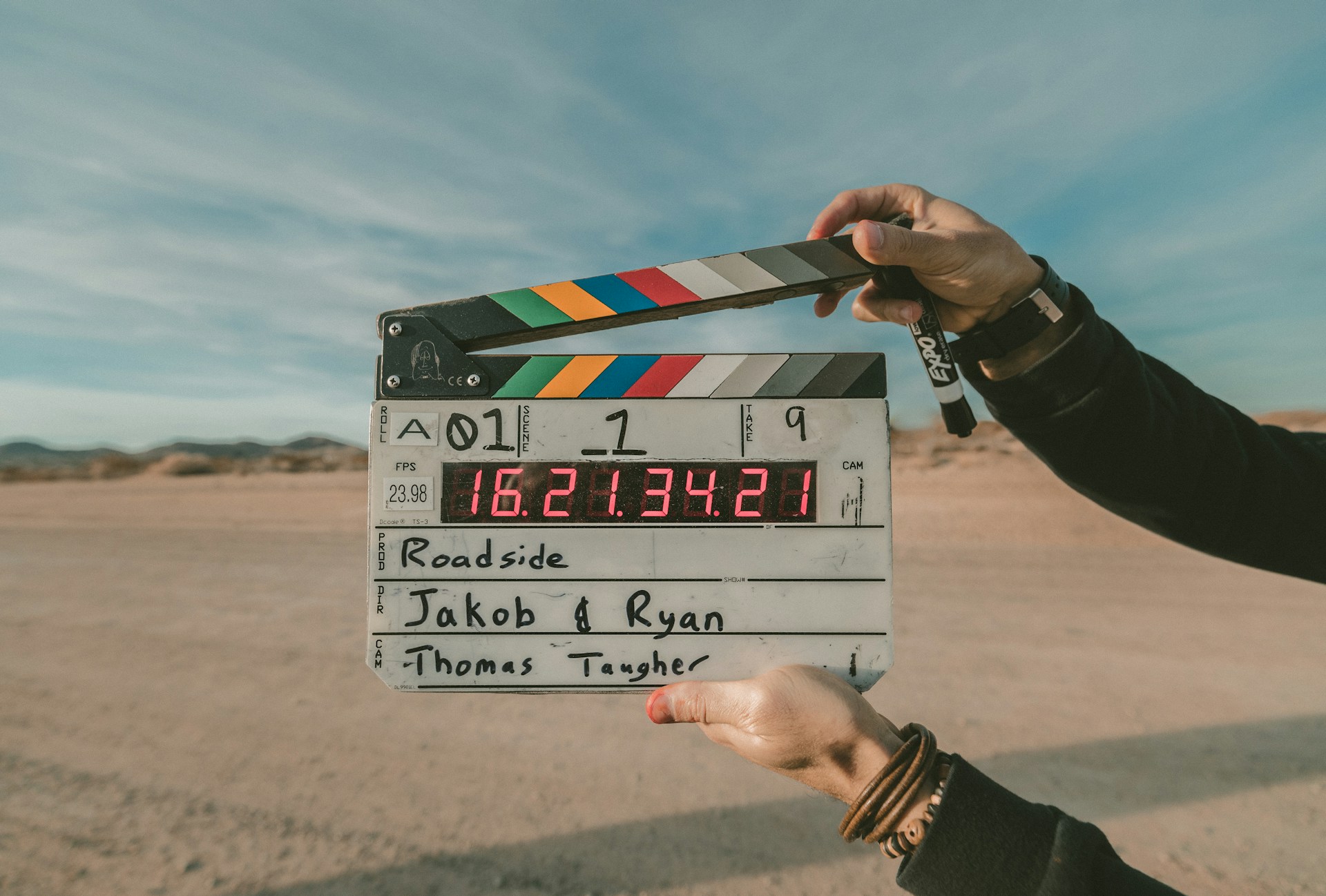
Somewhere between a director shouting “action” and millions of people watching a film, an ordinary object can become a legend. A hat becomes a symbol of adventure. A car becomes a celebrity. A briefcase becomes a mystery that audiences debate for decades. And sometimes, the object becomes so famous that people remember it long after they have forgotten half the characters who touched it.
There is something wonderfully strange about movie props.
A prop is technically just an object used during filming. It might be a wooden stick, a leather jacket, a plastic weapon, a mysterious suitcase, or a vehicle modified to survive the demands of a Hollywood production. Most props exist to serve a practical purpose. They help actors tell stories, make fictional worlds feel believable, and give directors something interesting to place in front of a camera.
But occasionally, something extraordinary happens.
An ordinary object steps into the spotlight, captures the imagination of an audience, and develops a cultural identity of its own. People begin collecting replicas, wearing merchandise inspired by it, quoting the scenes in which it appeared, and paying astonishing amounts of money to own the original.
Eventually, the prop becomes more than a piece of movie equipment. It becomes a symbol of the entire film.
Think about it. You might not remember every character in a particular adventure movie, but you probably recognize Indiana Jones’s hat. You might struggle to describe every scene in Back to the Future, yet the image of a stainless-steel time-traveling car immediately brings the movie to mind.
And then there is a certain briefcase from Pulp Fiction that demonstrates just how powerful a little mystery can be.
Welcome to the fascinating world of movie props that became more famous than the characters who used them.
1. Indiana Jones’s Fedora: The Hat That Became an Adventure
If adventure had a dress code, it would probably include a leather jacket, a whip, and a battered brown fedora.
The hat worn by Indiana Jones, played by Harrison Ford, is one of cinema’s most recognizable accessories. It is so closely associated with the character that even a simple silhouette of the hat can communicate the entire Indiana Jones experience.
The fedora first became iconic in Raiders of the Lost Ark (1981), directed by Steven Spielberg. Indiana Jones was an archaeologist, professor, and treasure hunter who frequently found himself running away from ancient traps, dangerous enemies, and enormous rolling boulders.
His wardrobe helped establish his identity immediately. The leather jacket suggested practicality. The whip provided an unusual tool for escaping trouble. The hat completed the image of an adventurer who looked as though he had spent years exploring dusty ruins.
But the fedora did something that many costume pieces never achieve: it became independently recognizable.
You can place a brown fedora on a table without an actor, a film set, or even a movie poster nearby, and fans may still identify the character associated with it.
That is remarkable branding achieved through storytelling.
The hat also became a favorite object for collectors. Original screen-used examples and production-related hats have attracted attention from memorabilia enthusiasts, while replicas allow fans to own their own piece of cinematic adventure.
Its real achievement, however, is much simpler. The fedora communicates a personality before the character even speaks.
In a world overflowing with superheroes, futuristic armor, and elaborate costumes, Indiana Jones demonstrated that one carefully chosen accessory could become a permanent part of popular culture.
Sometimes, the most powerful costume in cinema is the one you can recognize from across the room.
2. The DeLorean Time Machine: A Car That Made Time Travel Look Cool
Imagine being told that the ultimate time-travel machine would be built from a stainless-steel sports car with gull-wing doors.
It sounds like the beginning of an unusually ambitious engineering project.
In Back to the Future (1985), director Robert Zemeckis and screenwriter Bob Gale gave audiences precisely that idea. The DeLorean DMC-12 became the vehicle through which Marty McFly, played by Michael J. Fox, traveled between different periods of time.
The real DeLorean was already visually distinctive. Its stainless-steel body and upward-opening doors made it look different from the conventional sports cars of its era. The filmmakers transformed that unusual design into something unforgettable by adding fictional time-travel equipment, including the famous flux capacitor.
Suddenly, a production vehicle became a machine capable of carrying an entire franchise.
The movie’s time machine was not merely transportation. It was a character in its own right.
Its dashboard controls, glowing displays, and carefully staged countdown sequences made time travel feel like an activity with technical requirements. The machine needed to reach 88 miles per hour, the flux capacitor had to function, and the clock was always ticking.
The result was a perfect marriage between cinematic storytelling and industrial design.
The DeLorean became so closely connected to the film that it is difficult to see one without thinking about Marty McFly, Doc Brown, and the possibility of visiting another decade.
That association has helped sustain the vehicle’s popularity long after the original trilogy concluded. Screen-used DeLoreans and replica time machines attract collectors, while exhibitions and fan events regularly celebrate the car’s place in film history.
Here is the interesting part: the filmmakers did not invent the DeLorean itself. They took an existing vehicle and gave it a fictional purpose that transformed its cultural meaning.
The real car was manufactured during the early 1980s. The movie car, however, became a machine that could travel through time, alter history, and turn a relatively ordinary road into a gateway between generations.
That is the magic of a great movie prop. It can take an object that already exists and give it an entirely new identity.
3. The Golden Ticket: A Small Piece of Paper With Enormous Power
In Willy Wonka & the Chocolate Factory (1971), a simple golden ticket becomes one of the most desirable objects in the fictional world.
The ticket is not a sophisticated machine. It does not contain advanced technology, and it cannot perform spectacular tricks. It is a piece of paper that grants its holder access to an extraordinary chocolate factory.
Yet the ticket drives the entire story.
Children search chocolate bars hoping to discover one. Families imagine what winning might mean. The possibility of finding a ticket transforms an ordinary purchase into an event filled with anticipation.
Charlie Bucket’s discovery becomes especially meaningful because of his circumstances. For him, the ticket represents a chance to experience something far beyond his everyday life.
The object works because its value is not determined by its material.
A golden ticket would be nearly worthless as a collectible piece of paper without the story surrounding it. Inside the film’s fictional world, however, it represents opportunity, wonder, and access to a place most people can only imagine.
This is a recurring principle in cinema: an object’s emotional value can become far greater than its practical value.
The ticket also benefits from a brilliantly simple design. Gold coloring, recognizable lettering, and an uncomplicated rectangular shape make it easy to reproduce and immediately associate with the movie.
It has become a familiar symbol in popular culture, appearing in references, themed experiences, and countless discussions about once-in-a-lifetime opportunities.
The original prop may have existed only to serve the production, but its fictional meaning has survived for generations.
And there is an interesting lesson here for designers and storytellers. You do not always need to invent a complicated object to create something memorable.
Sometimes, all you need is an ordinary object that opens an extraordinary door.
4. The One Ring: The Smallest Object Carrying the Biggest Story
In The Lord of the Rings film trilogy, a simple golden ring becomes the center of a story involving kingdoms, ancient histories, dangerous journeys, and the fate of Middle-earth.
At first glance, the One Ring looks remarkably modest. It has no elaborate gemstones or complicated mechanical features. Its smooth golden surface gives it an almost ordinary appearance.
That simplicity is part of its power.
The ring’s importance comes from what it represents and what it can do. It carries enormous power, influences those who possess it, and becomes the object around which the central conflict unfolds.
Frodo Baggins, played by Elijah Wood, is entrusted with a task that seems almost absurd when compared with the size of the object he carries. He must travel across a dangerous landscape to destroy a ring small enough to fit on a finger.
The contrast is unforgettable.
Armies march. Towers rise. Creatures battle. Yet the story repeatedly returns to one tiny piece of jewelry.
The films’ production design helped make the ring convincing as both a physical object and a symbol. Close-up shots emphasize its polished surface, while its inscription and the visual effects surrounding it reinforce its supernatural significance.
The ring also demonstrates how an object can become famous without needing to look particularly unusual.
Its cultural identity comes from the narrative attached to it. The One Ring represents temptation, responsibility, and the consequences of power. Fans recognize it not simply as jewelry but as the physical center of an enormous fictional universe.
Replicas have consequently become popular among collectors and fans, with licensed versions allowing people to own their own interpretation of the famous design.
It is an extraordinary achievement for an object that, outside the story, is essentially a small metal circle.
In the hands of a skilled storyteller, even something that fits inside a pocket can carry the weight of an entire world.
5. The Briefcase in Pulp Fiction: Hollywood’s Most Famous Mystery Box?
Some movie props become iconic because audiences understand exactly what they do.
Others become iconic because audiences cannot stop wondering what they contain.
The glowing briefcase in Quentin Tarantino’s Pulp Fiction (1994) belongs firmly in the second category.
Throughout the film, the briefcase is treated as something extraordinarily valuable. Characters pursue it, guard it, and react to its contents with visible fascination.
But the film never provides a definitive explanation of what is inside.
When the briefcase opens, its contents emit a mysterious golden glow. The audience sees the characters’ reactions, but the object itself remains deliberately unexplained.
That decision creates a fascinating storytelling effect.
Viewers naturally want answers. What is inside? Why is it so valuable? Why do the characters react as they do?
The briefcase becomes a mystery that audiences can carry beyond the movie itself.
Various interpretations have circulated among fans over the years, but the important point is that the film does not establish a definitive answer on screen.
This ambiguity gives the prop an unusual kind of longevity. A conventional object might be memorable because of its design or function. The Pulp Fiction briefcase is memorable because of the questions attached to it.
It also demonstrates how much an audience’s imagination can contribute to a film.
The filmmakers do not need to reveal every detail. Sometimes, withholding information creates a more engaging experience than providing a complete explanation.
The briefcase’s fame is therefore a triumph of cinematic suggestion.
A regular briefcase could have disappeared into the background of any crime film. Instead, this one became a recognizable symbol of one of the most discussed mysteries in modern cinema.
The secret, perhaps, is that the audience is doing part of the storytelling.
6. The Proton Pack: The Backpack That Made Ghost Hunting Look Scientific
Before Ghostbusters (1984), a backpack was generally understood as a convenient way to carry books, supplies, or equipment.
After the film, a certain kind of backpack could suggest an entirely different occupation: professional ghost hunting.
The proton pack worn by the Ghostbusters is one of the most recognizable pieces of science-fiction equipment in popular culture. It combines hoses, wires, metallic components, switches, and a bulky backpack design that looks like something assembled in an experimental laboratory.
The fictional device allows the Ghostbusters to capture supernatural entities using streams of energy.
Naturally, this technology does not exist as depicted in the film. Its purpose is to make the fictional science of ghost hunting visually understandable.
The proton pack succeeds because it looks complicated enough to be believable within the movie’s world.
It also gives the characters a distinctive visual identity. When Peter Venkman, Ray Stantz, Egon Spengler, and Winston Zeddemore appear with their equipment, audiences can immediately recognize the team.
The pack’s design is particularly effective because it suggests both scientific ingenuity and practical danger. It looks heavy, powerful, and potentially difficult to operate.
Its memorable silhouette has helped it survive across sequels, animated adaptations, games, toys, and fan-made replicas.
For prop builders, the proton pack is an especially appealing challenge. Recreating its layered components, illuminated details, and mechanical appearance requires a combination of craftsmanship and imagination.
Some fans build highly detailed versions that reproduce the general appearance of the cinematic equipment, while others create wearable replicas inspired by the films.
The object has become an excellent example of fictional technology influencing real-world creativity.
People cannot simply purchase a functioning movie-style proton pack and capture a ghost. They can, however, build one, display one, or use one as inspiration for their own designs.
That is another way movie props become culturally significant: they encourage audiences to become creators themselves.
7. The Batmobile: When a Vehicle Becomes a Superhero
Batman has worn different costumes, used different gadgets, and operated in different versions of Gotham City across decades of storytelling.
Yet one element consistently attracts enormous attention: the Batmobile.
The vehicle has appeared in numerous forms across film and television, from the sleek, futuristic designs associated with earlier screen adaptations to the imposing, heavily modified machines featured in later films.
Each version reflects the interpretation of Batman being presented.
A streamlined Batmobile might emphasize elegance and technological sophistication. A larger, more aggressive design might communicate power, durability, and a practical approach to crime fighting.
This makes the vehicle an unusual kind of recurring movie prop. Unlike the Indiana Jones fedora, which remains recognizable through a relatively consistent design, the Batmobile can change dramatically while retaining its identity.
Its essential features are not limited to a particular shape. Instead, its identity comes from its connection to Batman and the world he inhabits.
That association has transformed the Batmobile into a major attraction at exhibitions, automotive events, and fan conventions. Original screen-used vehicles and replicas have drawn attention from collectors, while miniature versions remain popular with enthusiasts.
Some movie cars are remembered because they look beautiful. Others are remembered because they perform extraordinary fictional tasks.
The Batmobile manages to do both.
It is a vehicle, a technological fantasy, a design exercise, and a recognizable piece of superhero mythology.
And there is something entertaining about the idea that a superhero whose primary mission is to protect a city also possesses one of the most recognizable fictional automobiles ever created.
In Gotham City, the Batmobile is not simply transportation.
It is part of the legend.
8. The Lightsaber: A Weapon That Became a Cultural Language
A glowing sword that makes a distinctive humming sound might seem like an unusual candidate for one of cinema’s most enduring props.
Then Star Wars arrived.
The lightsaber, associated with Jedi and Sith characters throughout the franchise, became one of the most recognizable fictional weapons in entertainment history.
Its design is remarkably economical. A cylindrical handle, a blade of colored light, and a distinctive sound are enough to communicate its identity.
Different characters have used different lightsaber designs and colors, allowing the weapon to become an extension of their personalities and roles within the story.
Luke Skywalker’s lightsaber, for example, is associated with his journey from an inexperienced young man to a Jedi. Darth Vader’s red blade contributes to his intimidating screen presence.
The weapon is therefore more than a tool for combat. It is a visual shorthand for character, conflict, and the larger mythology of the franchise.
The original films relied on practical prop construction and visual effects to create the illusion of illuminated blades. Later productions developed more sophisticated techniques, but the fundamental design remained recognizable.
Today, lightsaber replicas range from simple toys to highly detailed collectibles with illuminated blades and sound effects.
Fans also use them in choreography, costume design, photography, and recreational lightsaber dueling.
That level of participation is remarkable. A fictional object created for a movie has become something people actively use to create their own experiences.
The lightsaber also illustrates the importance of sound design. Its distinctive hum and clash are integral to its identity. Without them, the prop would lose part of the sensory experience that makes it memorable.
In other words, the lightsaber is not just something audiences see.
It is something they hear, imagine, and recognize almost instantly.
9. The Ruby Slippers: Shoes That Became a Piece of Movie History
In The Wizard of Oz (1939), Dorothy’s ruby slippers are among the most important objects in the story.
They are visually striking, covered in red sequins that sparkle against the film’s colorful fantasy world. Their appearance also creates a memorable contrast with Dorothy’s blue-and-white gingham dress.
But the slippers are not merely decorative.
They play a crucial role in Dorothy’s journey and become central to the story’s resolution. Their significance is reinforced by the famous instruction associated with Dorothy’s ability to return home.
The shoes therefore combine visual appeal with narrative importance.
Over the decades, the ruby slippers have become one of the most famous costumes and props in Hollywood history. They represent the magic of classic cinema and the enduring appeal of a story about finding one’s way home.
Their real-world history has also contributed to their reputation. Multiple pairs were created for production purposes, and surviving examples have become important pieces of film memorabilia.
The slippers have attracted significant attention from museums, collectors, and fans. Their cultural and historical value extends far beyond their function as footwear.
That transformation is fascinating.
A pair of shoes is a practical object. It protects the feet, completes an outfit, and helps someone move from one place to another.
The ruby slippers do all of that in the fictional world, but they also carry an emotional meaning that cannot be measured by their materials.
They represent the possibility of returning home.
And because that idea is understandable across generations, the slippers remain meaningful long after the original film’s release.
They remind us that an object’s most important feature is not always its appearance.
Sometimes, it is what the object means to the person who wears it.
10. The Golden Idol: Indiana Jones and the Art of the Perfect Opening Scene
Before Indiana Jones reaches his university classroom or begins another adventure, Raiders of the Lost Ark introduces him through a sequence that establishes his personality almost entirely through action.
The opening scene features an ancient golden idol hidden inside a booby-trapped temple.
Indiana carefully approaches the artifact, studies its position, and attempts to replace it with a bag of sand. The plan triggers a series of traps, launching one of cinema’s most recognizable adventure sequences.
The idol itself is small, golden, and visually distinctive.
But its importance comes from the way the film introduces it.
The object establishes the central ingredients of the Indiana Jones formula: ancient artifacts, archaeological sites, dangerous traps, quick thinking, and the possibility that a seemingly successful treasure hunt can go spectacularly wrong.
The idol is also a useful storytelling device because it gives the audience a clear objective. Indiana wants the artifact, the temple wants to keep it, and the audience understands the danger before every detail is explained.
Its visual simplicity makes it easy to remember.
The idol has consequently become closely associated with the franchise, inspiring replicas, collectible figures, and references in other entertainment.
Its significance is especially interesting when compared with the larger archaeological mysteries explored later in the film. The idol is not the main treasure of the story, yet its opening appearance is so memorable that it has acquired an identity of its own.
In a sense, the idol is a miniature version of the movie’s entire approach to adventure.
It is beautiful, mysterious, valuable, and dangerous to obtain.
And it teaches the audience the rules of Indiana Jones’s world before the main adventure has properly begun.
11. The Infinity Gauntlet: A Glove With Universe-Sized Consequences
Superhero films frequently feature objects with extraordinary abilities. Magic hammers, technological suits, cosmic stones, and mysterious artifacts all contribute to the sense that ordinary rules do not apply.
Few fictional objects have made a bigger impression in recent blockbuster cinema than the Infinity Gauntlet.
In the Marvel Cinematic Universe, the gauntlet becomes the instrument through which Thanos attempts to reshape the universe.
The design combines a large armored glove with spaces for the Infinity Stones, each associated with a different aspect of extraordinary power.
Its visual appeal is straightforward: the object looks heavy, elaborate, and powerful. The colored stones provide a clear focal point, while the metal construction suggests something created for a purpose far beyond ordinary combat.
But the gauntlet’s fame is driven primarily by the scale of the story attached to it.
In Avengers: Infinity War (2018) and Avengers: Endgame (2019), the object becomes central to the fate of countless characters. Its presence creates tension because the audience understands that the consequences of using it could be enormous.
The gauntlet also benefits from its physical simplicity. A glove is a familiar object, but the addition of cosmic powers transforms it into something extraordinary.
That contrast makes the design easy to understand and remember.
Like the One Ring, the Infinity Gauntlet concentrates an enormous amount of narrative importance into a single object. Both demonstrate how a prop can represent a larger conflict without requiring the audience to see the entire conflict at once.
A glance at the gauntlet can communicate danger, ambition, and the possibility of irreversible change.
It is a powerful example of how modern blockbuster filmmaking uses physical objects to make enormous fictional stakes visually accessible.
Why Do Movie Props Become More Famous Than the Characters?
These examples raise an interesting question.
Why do audiences sometimes remember an object more readily than the person who used it?
The answer involves several elements of storytelling, design, and human memory.
First, objects are easy to recognize. A distinctive silhouette can be understood almost instantly. The DeLorean’s gull-wing doors, Indiana Jones’s fedora, and the lightsaber’s glowing blade provide visual information that does not require a lengthy explanation.
Second, objects can carry entire stories. The One Ring represents an enormous struggle, while the ruby slippers represent Dorothy’s journey home. A single object can become a convenient symbol for a much larger narrative.
Third, repetition creates familiarity. When a prop appears in memorable scenes, posters, trailers, merchandise, and sequels, audiences develop a strong association between its appearance and the film.
Fourth, props invite participation. People can wear a fedora, build a proton pack, display a replica lightsaber, or collect miniature versions of famous vehicles. A character may exist primarily on the screen, but a prop can become part of someone’s everyday life.
Finally, there is the power of imagination.
An object can suggest possibilities beyond what the film explicitly shows. The Pulp Fiction briefcase remains fascinating partly because the audience never receives a definitive explanation of its contents. The mystery becomes part of the experience.
A great prop therefore does not merely occupy space in a scene. It gives the audience something to recognize, remember, interpret, and sometimes even recreate.
The Business of Movie Memorabilia
There is also an entire industry built around the objects that survive filmmaking.
Original screen-used props, production costumes, replica vehicles, and licensed collectibles can attract considerable interest from fans and collectors. Their value depends on factors such as authenticity, condition, provenance, rarity, and the cultural importance of the film.
Not every prop becomes valuable, and not every replica is worth a fortune. A mass-produced collectible and an authenticated original used during filming are different kinds of objects with different histories.
Nevertheless, the market demonstrates that audiences often attach emotional significance to physical pieces of fictional worlds.
Owning a replica lightsaber is not simply about possessing a decorative object. For a fan, it might represent childhood memories, an appreciation for film design, or an enduring connection to a beloved franchise.
A model DeLorean can represent the excitement of imagining a future that once seemed impossible. A miniature Batmobile can celebrate decades of superhero storytelling.
These purchases are often about identity as much as ownership.
The collector is not merely buying an object. They are acquiring a tangible reminder of a story that matters to them.
For filmmakers, this also highlights the importance of thoughtful prop design. An object that looks distinctive, works within the story, and carries emotional meaning has a greater chance of remaining recognizable long after production ends.
The most enduring props are not necessarily the most expensive or complicated.
They are the ones that audiences care about.
Final Thoughts: Sometimes, the Real Star Is an Object
Cinema is filled with unforgettable characters. We remember their adventures, their victories, their mistakes, and the relationships that give their stories meaning.
But occasionally, a hat, a ring, a pair of shoes, or a specially modified car manages to achieve something extraordinary.
It escapes the boundaries of the film.
The DeLorean becomes a symbol of time travel. The lightsaber becomes a language of science-fiction adventure. The ruby slippers become a reminder of home. The One Ring becomes a representation of temptation and responsibility. The Pulp Fiction briefcase becomes a mystery that refuses to disappear.
These objects are famous because they were given more than a visual design. They were given a purpose, a history, and an emotional connection to the people watching them.
And that is what separates an ordinary prop from a cinematic icon.
A wooden stick can become a magic wand. A leather jacket can become an adventurer’s uniform. A car can become a time machine. A simple ring can become the center of an entire fictional universe.
The object itself might be made from metal, plastic, leather, wood, or fabric. But its cultural identity is built from imagination.
Perhaps the most fascinating part is that many of these objects would look perfectly ordinary outside their cinematic context. A briefcase is just a briefcase. A ring is just a ring. A hat is just a hat.
Until a filmmaker puts it in the right scene.
Then millions of people remember it.
And somewhere, years after the cameras stop rolling, someone is still trying to build a proton pack in their garage, searching for a miniature DeLorean, or explaining why a certain golden ring is much more dangerous than it looks.
The characters may have delivered the dialogue, performed the stunts, and carried the emotional weight of the story.
But the props?
Some of them became legends in their own right.