
The Evolution of the Football Video Game
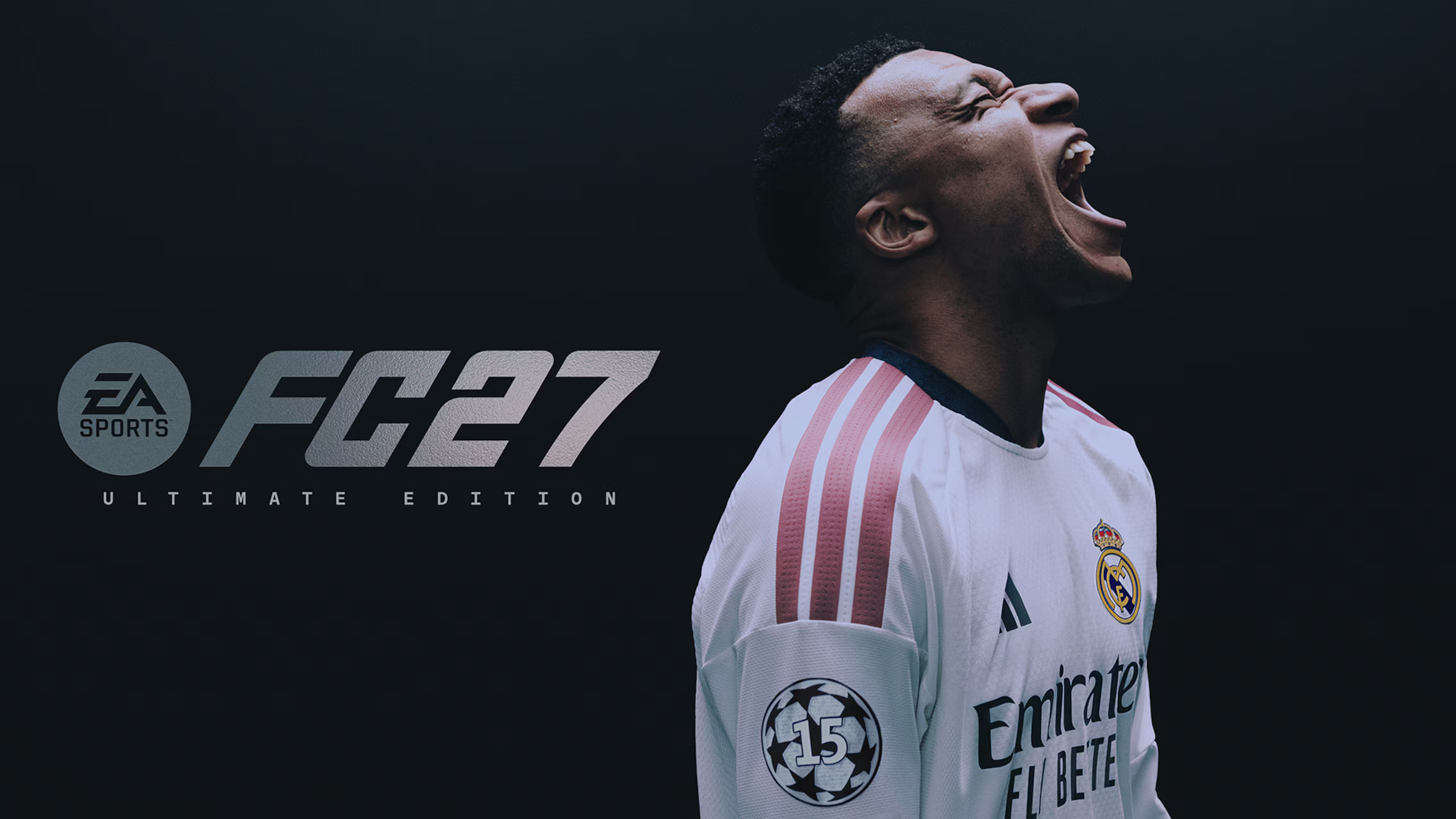
There was a time when playing football meant finding a ball, finding some space, calling your friends, and arguing about whether the ball crossed the imaginary goal line.
Then the television became a football field.
Then the computer became a football field.
Then the console became a football field.
And eventually, the football field moved into our pockets.
The evolution of the football video game is more than a story about graphics becoming better. It is a story about technology learning how humans understand football.
At first, football games were little more than collections of pixels moving around a screen.
Today, virtual footballers can sprint, turn, celebrate, make tactical runs, react to space, and participate in enormous online ecosystems.
Somewhere between those two extremes, something interesting happened.
The football video game stopped being merely a game about football.
It became a simulation of our relationship with football.
When Football Became Pixels
The earliest football video games were wonderfully simple.
There were no photorealistic stadiums.
No detailed player faces.
No massive transfer databases.
No cinematic introductions.
No virtual crowds producing atmosphere.
Sometimes, the players were little shapes moving around a field.
And somehow, that was enough.
This is one of the beautiful things about early video games.
Technology was limited, so imagination had to do some of the work.
A small rectangle on a screen could represent a footballer.
A moving dot could become the ball.
A few lines could become a pitch.
The player sitting in front of the screen completed the illusion.
That same principle appears throughout the history of technology.
A computer does not always need to reproduce reality perfectly.
Sometimes it only needs to give the human brain enough information to complete the picture.
Early football games understood this accidentally.
You did not need to see every detail of the player’s shirt.
You simply needed to know that your little digital character was a footballer.
And suddenly, you were playing a match.
The Arcade Era
As video games became more capable, football entered arcades.
This changed the experience.
Arcade football was not necessarily trying to reproduce ninety minutes of tactical football perfectly.
It was trying to create fun.
The matches were faster.
The controls were simpler.
The action was immediate.
You could walk into an arcade, put a coin into a machine, and within seconds you were competing against someone else.
Football had become an experience that could exist outside the stadium and outside the television broadcast.
The arcade also introduced something important:
Spectacle.
Football games could exaggerate reality.
Shots could feel powerful.
Players could move faster than normal.
Matches could become chaotic.
The objective was not always perfect realism.
It was entertainment.
That distinction would continue to influence football games for decades.
The Console Changes Everything
Then came the home console era.
This was a major transformation because football was no longer something you visited.
It was something you could keep at home.
A football game could become part of the household.
You could play after school.
You could play on weekends.
You could invite friends over.
You could create rivalries that had nothing to do with the real football world.
Your living room could become a stadium.
The controller became your boots.
The television became your pitch.
And the person sitting beside you became the opponent.
This was where football games began developing something beyond mechanics.
They developed memories.
A particular console could become associated with a particular period of someone’s childhood.
A certain football game could remind someone of a particular house, a particular group of friends, or a particular generation.
Technology often becomes emotional when it becomes part of our routines.
The Rise of the Simulation
As hardware improved, developers could attempt something much more ambitious.
They could simulate football.
Instead of simply moving characters around a screen, games could begin representing passing, positioning, shooting, tackling, formations, player attributes, competitions and tactics.
This was a major conceptual shift.
The football video game was becoming a miniature football universe.
The player was no longer simply controlling a character.
The player was managing a system.
Pass the ball here.
Move into space.
Change formation.
Make a substitution.
Protect a lead.
Attack from the wings.
Press higher.
Defend deeper.
Suddenly, football knowledge became useful inside a video game.
Someone who understood how football worked could begin making better decisions inside the digital version of the sport.
The controller became an instrument for expressing football intelligence.
When Real Players Entered the Game
One of the biggest changes in football gaming was the increasing presence of real players and teams.
Suddenly, you were not controlling anonymous digital athletes.
You could control recognizable footballers.
This transformed the emotional connection.
Seeing a familiar name on the screen changed everything.
A player you had watched on television could suddenly be controlled with a few buttons.
You could pass with them.
Shoot with them.
Score with them.
Build a team around them.
The boundary between watching football and interacting with football became smaller.
A football fan no longer had to remain a spectator.
They could participate.
Not physically, of course.
But digitally.
And that was powerful.
The Birth of Career Mode
Then came one of the most fascinating ideas in football gaming:
What if you could build a football career?
The answer became career modes.
Instead of playing individual matches forever, players could manage teams across multiple seasons.
You could buy players.
Sell players.
Develop young talent.
Change formations.
Build squads.
Win trophies.
Lose important matches.
Start again.
The game became a story generator.
This is one of the reasons football games became so addictive.
A match was no longer just a match.
It was part of a larger narrative.
Your young midfielder could become a club legend.
A player you bought for a small amount could eventually become the heart of your team.
A promising season could collapse during its final weeks.
A new manager could completely change the identity of a team.
None of these stories needed to be written by a traditional author.
The player created them.
This is one of the most interesting ideas in interactive entertainment.
A game can provide the world.
The player provides the story.
Football Games Became Data Machines
Modern football games also demonstrate how much football has become connected to data.
Players have attributes.
Speed.
Strength.
Passing.
Shooting.
Positioning.
Dribbling.
Defending.
Stamina.
Reactions.
Potential.
Thousands of numbers can exist behind something that looks like a simple football match.
This is where football and software engineering quietly meet.
A footballer on the screen may look like a person.
Underneath, the computer sees variables.
The game constantly processes information.
Where is the player?
Where is the ball?
What direction is the player facing?
How fast are they moving?
What is their current animation?
What is the distance to the opponent?
What decision should happen next?
A football match becomes a continuously changing mathematical environment.
And yet, the player experiences it emotionally.
That is the magic of software.
Complexity can hide behind simplicity.
The Importance of Physics
Then football games started becoming increasingly concerned with physics.
The ball could no longer simply travel from one predetermined point to another.
Developers wanted it to behave more naturally.
The direction of a kick mattered.
The power of a shot mattered.
The angle mattered.
The movement of players mattered.
Collisions mattered.
Momentum mattered.
Suddenly, a football game was not simply a collection of animations.
It was an interactive physics system.
The ball could bounce differently.
A player could lose balance.
A pass could deflect.
A goalkeeper could react.
A shot could take an unexpected trajectory.
These details made digital football feel less predictable.
And unpredictability is an important part of real football.
You can plan a move.
You cannot completely control what happens next.
Video games began trying to reproduce that feeling.
Graphics Changed the Illusion
Of course, graphics played a huge role.
Early football games gave us symbols.
Later games gave us players.
Then they gave us recognizable faces.
Then realistic kits.
Then detailed stadiums.
Then realistic lighting.
Then crowds.
Then weather.
Then broadcast-style presentation.
The visual evolution is almost strange when viewed as a timeline.
At one point, representing a footballer with a handful of pixels was impressive.
Today, developers spend enormous amounts of time creating tiny details.
The texture of a jersey.
The movement of hair.
The shadows inside a stadium.
The expression on a player’s face.
The movement of the crowd.
The goal is not simply to make the game beautiful.
The goal is to make your brain stop thinking about the technology.
The best illusion is often the one you forget is an illusion.
The Stadium Became Part of the Experience
Football games also learned that football is not only about players.
It is about places.
A stadium has an identity.
The pitch.
The stands.
The lighting.
The tunnel.
The advertisements.
The scoreboard.
The crowd.
The atmosphere.
Modern football games increasingly attempt to reproduce these elements.
This makes the digital match feel like an event.
You are not simply playing on a green rectangle.
You are entering a virtual location.
And this is another example of how games have evolved from mechanics into worlds.
Online Football Changes the Opponent
Then the internet arrived.
This changed everything again.
Previously, your opponent might be sitting beside you.
Now they could be thousands of kilometres away.
The football game became connected.
A player in Zambia could potentially compete against someone somewhere else in the world.
The living room stopped being the boundary.
The internet expanded the stadium.
Football gaming became social in a different way.
The opponent did not need to be your friend from school.
They could be a stranger.
They could become a rival.
They could become someone you played against regularly.
The football game had become a network.
And networks are one of the defining technologies of modern gaming.
Ultimate Teams and Digital Squad Building
Another major development was the rise of squad-building systems.
The football game became part match simulator and part team-building experience.
Players could collect footballers.
Build squads.
Experiment with combinations.
Change formations.
Improve teams.
Complete objectives.
The concept introduced a new layer of strategy.
The game was no longer just about what happened during ninety minutes.
It was also about what happened before the match.
Which players should you use?
How should they fit together?
What formation makes sense?
Which positions need improvement?
The football match became the visible part of a much larger system.
Mobile Football
Then the football game moved into the smartphone.
This was perhaps one of the most natural developments in the entire history of the genre.
People already carried phones everywhere.
The phone had become a camera, music player, communication device, browser, map and entertainment system.
Why not a football stadium too?
Mobile football introduced a different relationship with the sport.
You could play during a short break.
You could manage your team while travelling.
You could play without sitting in front of a television.
The football game became portable.
This was significant because portability changes behavior.
A game that once required a dedicated machine could now exist in your pocket.
The football field became something you could carry.
The Rise of Esports
Competitive gaming added another dimension.
Football games could now become serious competitive environments.
Players could compete in tournaments.
Skills could be practiced.
Strategies could be studied.
Matches could be streamed.
Communities could form around competition.
This created a strange but fascinating situation.
Real football has professional players.
Football video games developed professional players too.
The physical sport and digital sport began developing parallel cultures.
One happened on grass.
The other happened on screens.
Both required practice.
Both involved decision-making.
Both created memorable moments.
The environments were different, but the competitive spirit was familiar.
Artificial Intelligence Enters the Pitch
Modern football games increasingly rely on artificial intelligence.
The computer needs to control players that the human is not controlling.
That means those players need to make decisions.
Should a defender move toward the ball?
Should a midfielder occupy space?
Should a striker make a run?
Should a goalkeeper leave the goal?
Should a teammate support an attack?
These decisions happen constantly.
Artificial intelligence helps create the illusion that the other players understand the match.
This is one of the most interesting parts of modern football gaming.
You are controlling one small part of a much larger system.
The computer controls the rest.
And when everything works together, the match can feel surprisingly alive.
What Comes Next?
The future of football games is difficult to predict precisely, but the direction is fascinating.
Graphics will continue to improve.
Physics will become more sophisticated.
Artificial intelligence will become more capable.
Online worlds will become richer.
Personalization will become deeper.
Virtual and augmented reality may introduce new ways to experience football.
Motion capture and advanced animation will continue to make players feel more natural.
Perhaps one day, football games will become less like traditional games and more like persistent football worlds.
Imagine entering a digital football universe where your club continues to exist even when you are not playing.
Imagine watching a match from inside the stadium.
Imagine interacting with other fans in a virtual environment.
Imagine managing a club, playing matches, developing players and building an identity inside the same connected world.
The technology may eventually make the distinction between watching football and playing football even smaller.
But Something Has Stayed the Same
Despite all the technological changes, one thing has remained remarkably consistent.
People still want to score goals.
That sounds almost too simple.
But it is the foundation of everything.
The first football video games had limited graphics.
Modern football games have enormous worlds.
The earliest games had tiny players.
Modern games have detailed digital athletes.
Early games could barely represent a pitch.
Modern games can recreate entire stadium environments.
But the fundamental joy remains familiar.
Pass the ball.
Find space.
Take the shot.
Watch the ball move toward the goal.
Wait.
Then celebrate.
That moment does not require perfect graphics.
It does not require an enormous online ecosystem.
It does not require the most sophisticated artificial intelligence.
It requires a ball, a goal and the possibility of something happening.
Football Games Are Time Machines
Perhaps this is why football games have such a special place in gaming culture.
They are not only games.
They are time machines.
Someone can remember the first football game they played.
They can remember the console.
They can remember the television.
They can remember playing against a sibling.
They can remember the team they always selected.
They can remember a ridiculous goal.
They can remember an impossible comeback.
They can remember a player who was their favourite long before they understood the importance of player ratings.
Years later, technology may have moved forward.
The graphics may look old.
The controls may feel strange.
The menus may look primitive.
But the memory remains.
That is something technology cannot measure very easily.
A game can be technically outdated and emotionally timeless.
From Pixels to Worlds
The evolution of the football video game is ultimately a story about increasing possibility.
Pixels became sprites.
Sprites became digital footballers.
Digital footballers became realistic athletes.
Matches became seasons.
Seasons became careers.
Local multiplayer became global competition.
Consoles became mobile devices.
Simple games became interconnected football ecosystems.
The technology kept changing.
The imagination kept expanding.
And football kept finding new ways to exist inside machines.
This is what makes the history of football gaming so fascinating.
It is not simply about better graphics.
It is about how programmers, designers, artists, engineers and players gradually discovered new ways to translate something deeply human into software.
Football is movement.
Football is space.
Football is timing.
Football is anticipation.
Football is uncertainty.
And, in many ways, programming is about the same things.
A developer takes rules, systems, inputs and possibilities and creates something that behaves in a particular way.
A football game does exactly that.
It turns the beautiful chaos of football into mathematics, code, animation, sound and interaction.
Then it hands the controller to a human being.
And somehow, from all those lines of code, numbers and digital objects, a feeling emerges.
The feeling of being in a match.
That is the real evolution.
The football video game did not simply learn how to look more like football.
It learned how to make us feel like we were part of it.
And perhaps that is why, after decades of technological change, we still sit down, pick up a controller, choose a team, step onto a digital pitch and wait for the whistle.
The screen changes.
The technology changes.
The football changes.
But the feeling remains.
The game begins.