
The Furniture Designs That Turn Small Apartments Into Transforming Spaces
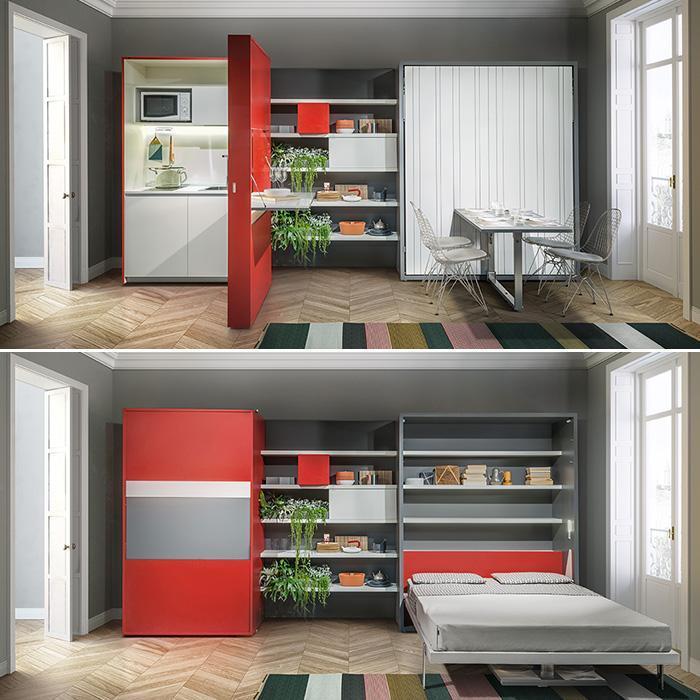
There is something fascinating about a room that refuses to remain the same.
In the morning, it is a quiet place to drink coffee, read a book, or prepare for the day. By afternoon, it becomes a workspace filled with concentration and unfinished ideas. In the evening, a few simple adjustments can transform it into a comfortable living room, a dining area, or even a bedroom ready for rest.
Nothing about the apartment has changed in terms of its actual size. The walls remain where they were, the windows still allow the same amount of sunlight inside, and the floor has not gained a single additional square metre. Yet the experience of living in that space can feel completely different.
This is the fascinating world of transforming furniture.
As cities grow, living arrangements evolve, and people search for more practical ways to organise their homes, furniture designers are discovering that the answer to limited space does not always involve building larger rooms. Sometimes, it involves creating objects that perform several functions, disappear when they are not needed, or change their shape according to the moment.
A bed can become a desk. A dining table can emerge from a wall. A sofa can transform into a sleeping area. Entire rooms can appear to change their purpose without requiring a major renovation.
The result is a new way of thinking about interior design: instead of treating a room as a fixed environment, we can treat it as a flexible space that responds to everyday life.
And the most interesting part is that many of these ideas are not reserved for expensive architectural projects. With thoughtful choices, even a modest apartment can become more comfortable, organised, and visually engaging.
1. The Murphy Bed: Making the Bedroom Disappear
Few furniture designs demonstrate the power of transformation quite as clearly as the Murphy bed.
Also known as a wall bed, this design allows a mattress and its supporting frame to fold vertically into a cabinet or specially designed wall unit when not in use. When the bed is needed, it lowers into position, creating a conventional sleeping area.
When morning arrives, the bed can be folded away again.
Suddenly, the floor that was occupied by a mattress becomes available for something else.
<em>Imagine a small studio apartment where a bed occupies most of the room. During the day, the arrangement makes it difficult to exercise, invite friends over, or work comfortably. Now imagine that same bed folded neatly into a cabinet. The room immediately becomes more flexible.</em>
The transformation is not merely about appearance. It changes how the apartment can be used throughout the day.
Some modern wall-bed systems incorporate shelving, lighting, storage compartments, or even desks. Others are designed to resemble ordinary cabinets, allowing the bed to blend into the surrounding interior.
The most effective designs consider what happens around the bed, not just the bed itself. There should be sufficient clearance for the mechanism, a suitable location for the mattress, and a safe way to operate the unit.
For renters, however, permanent wall installations may not be practical. Freestanding wall-bed cabinets or simpler folding beds can offer alternatives, depending on the available space and budget.
The underlying idea remains remarkably simple: a piece of furniture does not have to occupy the same amount of visible space all day.
Sometimes, the best way to create a larger-feeling room is to make its largest object temporarily disappear.
2. The Convertible Sofa: One Room, Two Different Experiences
The sofa has traditionally belonged to the living room. The bed has belonged to the bedroom. But in a small apartment, these boundaries can become less useful.
A convertible sofa brings the two functions together.
During the day, it provides a place to sit, watch television, read, or entertain visitors. At night, it opens into a sleeping surface.
The simplest versions use a folding backrest or a pull-out mattress. More elaborate designs incorporate adjustable sections, hidden storage, or modular components that can be rearranged according to the room’s needs.
The important distinction is that not every convertible sofa is equally practical.
A design may look attractive in a showroom but become inconvenient if its transformation mechanism is difficult to operate, its mattress is uncomfortable, or it requires moving several other pieces of furniture every evening.
Good design reduces these small inconveniences.
For someone living in a studio apartment, a comfortable convertible sofa can create a useful distinction between daytime and nighttime activities without requiring a separate bedroom.
It can also serve as an occasional guest bed in a one-bedroom apartment, making it easier to accommodate visitors without dedicating an entire room to sleeping.
Colour and proportions matter, too. A sofa with exposed legs and a relatively light visual profile may make a compact room feel more open than a bulky design that sits heavily against the floor.
A neutral sofa can also provide a flexible foundation for cushions, blankets, and other accessories that change the atmosphere of the room.
The furniture itself performs two functions, but its real achievement is giving one room two different identities.
3. The Extendable Dining Table: Small When Necessary, Generous When Needed
Dining tables create an interesting challenge in small homes.
A table large enough to accommodate several people comfortably can occupy a substantial portion of the available floor. Yet a very small table may become inconvenient when friends visit or when a project requires additional working space.
The extendable dining table offers a practical middle ground.
Many designs use sliding sections, hinged leaves, or concealed extensions to increase the tabletop when additional space is needed. Others employ folding sides that remain lowered during ordinary daily use.
A compact table might comfortably serve one or two people during the week and expand to accommodate a larger gathering on special occasions.
This flexibility is particularly useful in apartments where the dining area shares space with the kitchen or living room.
Some tables are designed with storage compartments beneath the tabletop, while others feature benches that slide underneath when the meal is finished. The combination can reduce visual clutter and keep the walking area clear.
There is also an opportunity to rethink what a dining table means.
Outside mealtimes, it can become a temporary workstation, a place for drawing, a surface for board games, or an area where household paperwork is organised.
The best table is therefore not necessarily the largest one available. It is the one that supports everyday activities without dominating the room.
Before purchasing an extendable model, it is worth measuring the fully expanded dimensions, including the space needed for chairs and movement around the table.
A table that expands beautifully but blocks the doorway may solve one problem while creating another.
Transforming furniture works best when its movements are planned as carefully as its appearance.
4. Wall-Mounted Desks: A Workspace That Folds Away
Working from home has changed the way many people think about their living spaces.
A dedicated office may be desirable, but not every apartment has a spare room available for one. In a compact home, a conventional desk can occupy valuable space even when it is not being used.
A wall-mounted folding desk offers another possibility.
The tabletop attaches to a wall or a suitable support system and folds down when work begins. Afterward, it can fold back up, leaving the floor available for other activities.
Some versions resemble shallow cabinets when closed. Others incorporate shelves, compartments for stationery, or small storage areas for laptops and accessories.
The concept is especially useful for people who need a workspace but do not want their entire home to feel like an office.
Consider a living room with a small desk positioned near a window. During working hours, the desk provides a place to concentrate. Once the workday ends, the tabletop folds away, and the room returns to its original purpose.
There is a psychological benefit to this arrangement as well.
Physical environments influence our routines. When work materials remain permanently spread across a table, it can become difficult to distinguish working time from personal time. A fold-away desk creates a visible transition between the two.
Of course, a folding desk must be properly installed and capable of supporting its intended load. The wall structure, mounting hardware, cable management, and available legroom all deserve attention.
For people who cannot drill into walls, a narrow desk, a compact writing table, or a wheeled workstation may provide similar flexibility.
The objective is not to eliminate the workspace. It is to make the workspace fit the life of the person using it.
5. Modular Sofas: Furniture That Changes Its Configuration
Traditional sofas usually have a fixed shape. A modular sofa, by contrast, is built from separate sections that can be arranged in different configurations.
A collection of seats might form a straight sofa against a wall in one arrangement, an L-shaped seating area in another, and separate chairs when additional flexibility is needed.
Some modular systems include movable ottomans, corner units, armrests, and storage sections.
This approach is particularly useful in apartments where furniture must adapt to changing circumstances.
When the room is being used for a quiet evening, the modules can create a comfortable conversation area. When several people visit, individual sections can be repositioned to improve circulation. If the apartment needs more open floor space, some modules can be moved elsewhere.
The advantage is that the furniture does not impose a single permanent layout.
Modular design also makes it possible to build a seating arrangement gradually. Instead of purchasing a large sofa immediately, a homeowner can begin with a few essential sections and add more as circumstances allow.
However, modularity should be judged by practical performance rather than the number of possible arrangements advertised.
The sections need to connect securely, fit through doorways, and maintain a comfortable seating height. Upholstery and dimensions should also be consistent if additional modules might be purchased later.
For small apartments, pieces with a relatively light visual appearance can help preserve a sense of openness.
The broader lesson is that flexibility can be built into the structure of furniture itself. Rather than moving an entire room around one fixed object, people can rearrange smaller objects to suit the occasion.
6. Storage Ottomans: Seats, Tables, and Hidden Compartments
Some of the most effective transforming furniture does not need a complicated mechanism.
The storage ottoman is a good example.
At first glance, it appears to be a padded footrest or a small upholstered seat. Yet beneath its lid, it may contain enough space for blankets, books, toys, spare cushions, or other household items.
Depending on its height and construction, it can also serve as an occasional side table or an extra seat when visitors arrive.
In a small apartment, these secondary functions can be surprisingly valuable.
Every object placed in a room competes for floor space. A separate footrest, storage box, occasional chair, and side table might occupy four different areas. A well-designed storage ottoman can combine several of those purposes in a single footprint.
Some models feature flat, firm tops suitable for holding a tray. Others are designed primarily for seating and storage, making them less appropriate for drinks or fragile objects.
The choice depends on how the furniture will actually be used.
There is also a visual advantage to hidden storage. A room containing fewer visible objects often feels calmer, even if the total amount of personal property has not changed.
The goal is not to hide everything. It is to give everyday belongings a predictable place so that the room remains easier to organise.
A storage ottoman beside a sofa, for example, can hold the blanket used for evening relaxation. A model at the foot of a bed can store spare linen. In a living room, a sturdy version may provide occasional seating without requiring another permanent chair.
This is transformation through combination rather than movement.
The object remains in the same place, but its value extends far beyond its primary function.
7. Nesting Tables: More Surface Area Without Permanent Clutter
Small apartments frequently need additional surfaces.
A cup of tea needs somewhere to rest. A guest may need a place for a phone. A board game may require more room than the coffee table normally provides.
However, keeping several large tables in the room can make the layout feel crowded.
Nesting tables address this problem through a simple arrangement: smaller tables fit underneath or inside larger ones.
When only one surface is required, the tables remain nested together. When additional space becomes necessary, the smaller tables can be pulled out and positioned wherever they are useful.
The design can provide several temporary surfaces without requiring the permanent footprint of several independent tables.
Nesting tables are particularly effective in living rooms where activities change throughout the day. They can be arranged around seating for a social gathering and returned to a compact configuration afterward.
Materials and proportions influence their visual impact. Slim metal frames, wooden tops, and simple silhouettes can complement a range of interiors without overwhelming the space.
They can also introduce variety. Different heights create visual interest, while coordinated finishes help the collection feel intentional rather than improvised.
One practical consideration is stability. Tables used for drinks or electronic devices should have a suitable surface and a sturdy base. Lightweight designs are convenient to move, but they should not become so unstable that ordinary use feels uncomfortable.
The beauty of nesting tables is that they make flexibility almost effortless.
There is no need to unfold a mechanism or rearrange the entire room. A small movement creates another useful surface, and another movement returns everything to its original position.
8. Staircase Storage and Raised Platforms: Using Space That Already Exists
In some apartments, particularly loft-style homes or compact duplexes, the vertical dimension offers opportunities that ordinary furniture arrangements overlook.
Staircases, raised platforms, and elevated sleeping areas can incorporate storage directly into their structure.
A staircase may contain drawers beneath individual steps. A raised bed platform may provide compartments underneath the mattress. A small loft can create space for a desk or seating area below the sleeping zone.
These designs use vertical organisation to separate activities without necessarily requiring additional rooms.
Imagine a compact apartment with a raised sleeping platform. The space underneath could accommodate drawers, shelving, or a small desk, depending on the available height and structural design.
The sleeping area remains accessible, but the floor below performs another function.
This approach requires more careful planning than simply purchasing a new table or sofa. Ceiling height, ventilation, safe access, structural support, and clearance around stairs must all be considered.
Raised platforms are not suitable for every apartment, particularly where ceilings are low or building rules restrict alterations.
Nevertheless, the principle is worth understanding: space exists in three dimensions, even when interior layouts are often planned primarily from a floor-level perspective.
The most effective compact homes make deliberate use of height without sacrificing comfort or safety.
9. The Transforming Coffee Table: From Living Room Centrepiece to Dining Surface
Coffee tables usually occupy the centre of a living room, where they provide a convenient surface for books, drinks, and decorative objects.
But some modern designs can do much more.
A lift-top coffee table raises its surface to a more comfortable working or eating height. Certain models also extend horizontally, creating a larger tabletop when needed.
Others incorporate hidden storage beneath the top or include adjustable sections that change the table’s configuration.
The result is a piece of furniture that can adapt to several activities without needing to be moved to another room.
For someone working on a laptop from the sofa, a lift-top table may bring the screen and keyboard closer to a comfortable height. During a meal, the raised surface can provide a more convenient place to eat.
When the activity ends, the tabletop returns to its lower position, restoring the familiar living-room arrangement.
Some models can even expand into dining-height surfaces, although the exact functionality varies considerably between designs.
The important consideration is whether the mechanism is easy to operate and whether the resulting surface is stable.
A table that requires considerable effort to adjust may become less useful over time, regardless of how impressive it appears in photographs.
It is also important to check the dimensions of the table in every configuration. A larger surface may be convenient, but it should not obstruct the route between the sofa, kitchen, and entrance.
The transforming coffee table illustrates a broader shift in furniture design: objects are increasingly expected to accommodate activities that were once associated with separate pieces of furniture.
One carefully chosen item can make a room more useful without making it feel more crowded.
10. Sliding Panels and Room Dividers: Creating Privacy Without Building Walls
Not every transformation requires furniture to change shape. Sometimes, the transformation comes from changing how a room is divided.
Sliding panels, folding screens, curtains, and movable room dividers allow people to create temporary boundaries within an open layout.
A studio apartment, for example, may contain a sleeping area close to the living room. A folding screen or ceiling-mounted curtain can provide a greater sense of separation when privacy is needed.
During the day, the divider can be opened to preserve the feeling of a larger space. At night, it can be closed to establish a more private sleeping area.
Some room dividers incorporate shelves or storage compartments, allowing them to serve as both boundaries and functional furniture.
Others use translucent materials that allow light to pass through while reducing direct visibility.
The choice depends on the desired effect.
A solid divider creates a stronger visual boundary, while an open shelving unit maintains a connection between the two sides of the room. A lightweight folding screen offers flexibility without requiring permanent construction.
It is worth remembering that a visual divider does not automatically provide sound insulation, complete privacy, or fire separation. Those requirements need different solutions.
Still, a carefully placed divider can make a compact apartment feel more organised by giving different activities their own identifiable areas.
A room does not always need another wall. Sometimes, it needs a more thoughtful way to establish boundaries.
11. Furniture on Wheels: A Room That Can Rearrange Itself
Mobility is another powerful design feature.
Desks, kitchen islands, storage carts, shelving units, and occasional tables can be fitted with suitable casters to make them easier to reposition.
This allows a room to change its arrangement without requiring heavy lifting.
A movable kitchen trolley might serve as extra preparation space while cooking, then roll against a wall when the meal is finished. A compact desk could move closer to a window during working hours and return to a corner later.
A wheeled storage unit might also function as a temporary divider between different parts of an open-plan apartment.
The advantage is especially clear in rooms that serve several purposes.
Instead of permanently dedicating every section of the floor to one activity, the resident can move selected pieces according to immediate needs.
However, wheels should be appropriate for the furniture’s weight and the floor surface. Locking casters are particularly useful for objects that must remain stable while in use.
Heavy appliances, tall cabinets, and furniture carrying fragile items require additional consideration. Not every object becomes safer or more practical simply because it can roll.
When designed properly, mobile furniture introduces a useful kind of freedom: the ability to rearrange a room without treating every change as a major task.
12. The Importance of Choosing Furniture That Fits Real Life
Transforming furniture can be exciting, but the most effective apartment design begins with understanding everyday habits.
A person who works remotely may benefit greatly from a folding desk. Someone who frequently hosts friends might prefer an extendable dining table and a convertible sofa. A person who owns many books may need modular shelving or storage integrated into a bed platform.
There is no single combination that works for everyone.
Before purchasing furniture, it helps to observe how the apartment is used throughout a typical day.
Which areas feel crowded? What objects remain unused for long periods? Where do household items accumulate? Which activities require additional surfaces, privacy, or storage?
These questions reveal opportunities that generic decorating advice may overlook.
Measurements are equally important. A piece of furniture should be evaluated not only in its normal position but also in every configuration it might occupy.
A wall bed needs space to lower. An extendable table needs room for chairs. A convertible sofa requires sufficient clearance to open. A folding desk must remain comfortable to use when deployed.
The room should also retain clear pathways to doors, windows, and essential household facilities.
There is little benefit in creating a multifunctional apartment if every transformation makes ordinary movement more difficult.
Materials and durability matter as well. Hinges, sliding rails, locking mechanisms, and folding supports experience repeated use. A reliable design should be sturdy, easy to maintain, and appropriate for the weight it must support.
Finally, flexibility should not come at the expense of comfort.
A sofa that becomes a bed is only useful if it offers a reasonable sleeping experience. A desk that folds away should still provide an appropriate working position. A storage unit should remain accessible rather than turning everyday objects into difficult-to-reach possessions.
The best transforming furniture makes life easier, not merely more interesting to look at.
13. The Art of Making a Small Apartment Feel Larger
Furniture is only one part of the equation. The way pieces are arranged can influence how spacious an apartment feels.
Light colours, consistent materials, unobstructed windows, and thoughtful lighting can create a greater sense of openness. Mirrors may help distribute available light visually, while wall-mounted shelves can free up floor space.
Furniture with exposed legs can also create a lighter appearance by allowing more of the floor to remain visible.
Storage should be distributed carefully rather than concentrated in a collection of oversized cabinets. Frequently used items should be accessible, while seasonal belongings can occupy less convenient storage areas.
It is also useful to resist the temptation to fill every empty corner.
An empty area is not necessarily wasted space. It may provide the room needed to unfold a sofa bed, pull out a chair, exercise, or simply move comfortably from one activity to another.
In a transforming apartment, empty space is often part of the design.
The room needs somewhere for its furniture to go when it changes configuration. A folding table needs clearance. A movable chair needs a place to stand. A convertible sofa needs room to become a bed.
Leaving space available is therefore not an absence of design. It is a deliberate decision that makes the rest of the design possible.
This is where a small apartment begins to feel less like a collection of compromises and more like a carefully organised environment.
14. The Future of Transforming Furniture
The next generation of compact furniture may combine familiar mechanical ideas with improved materials, more precise manufacturing, and digital technology.
Designers can already explore mechanisms that allow tabletops to rise smoothly, storage compartments to move into position, and modular pieces to connect in different configurations.
In the future, sensors and automated systems could make some transformations easier to operate. A desk might adjust its height at the touch of a button, or a motorised storage system might move a panel into place.
Such features could be useful, although they would also introduce questions about cost, maintenance, electricity consumption, and long-term reliability.
Not every transforming object needs a motor, a sensor, or a smartphone application.
A well-designed hinge can be more dependable than a complicated electronic mechanism. A simple folding table can deliver excellent value without requiring software updates or electrical power.
The real measure of innovation is not the amount of technology inside an object. It is how effectively that object solves a practical problem.
Furniture designers will continue to explore new ways of combining functions, reducing wasted space, and adapting objects to the changing needs of households.
Some of the most successful solutions may look surprisingly ordinary.
A table that folds smoothly, a bed that disappears into a cabinet, or a sofa that converts comfortably into a sleeping surface can make a meaningful difference without drawing attention to its engineering.
Good design often makes complexity feel simple.
Conclusion: A Small Space Can Have a Big Imagination
A small apartment does not have to be defined by the number of rooms it contains or the amount of floor space available.
It can be defined by how intelligently that space is used.
A wall bed can turn a bedroom into a living area. An extendable table can transform a quiet dinner into a gathering with friends. A folding desk can create a workspace without permanently occupying the living room. Modular sofas, nesting tables, storage ottomans, and movable dividers can all introduce new possibilities into familiar surroundings.
Individually, these pieces of furniture solve specific problems. Together, they suggest a different philosophy of interior design.
The home becomes a flexible environment rather than a fixed arrangement of objects.
This idea extends beyond apartments. It applies to student accommodation, guest rooms, small offices, holiday homes, and any environment where people need several activities to coexist within limited space.
The essential skill is learning to distinguish between space that must always be occupied and space that only needs to become available at certain moments.
A bed does not have to dominate the room throughout the day. A dining table does not need to remain fully extended after dinner. A desk does not have to announce the presence of work long after the working day has ended.
With the right furniture, a single room can support several different experiences without losing its sense of comfort or identity.
And perhaps that is the most interesting thing about transforming spaces: the apartment itself does not need to grow for everyday life to become more expansive.
Sometimes, the walls can remain exactly where they are.
All that needs to change is what happens inside them.