
The Sunglasses That Look Like They Belong in a Science Fiction Movie
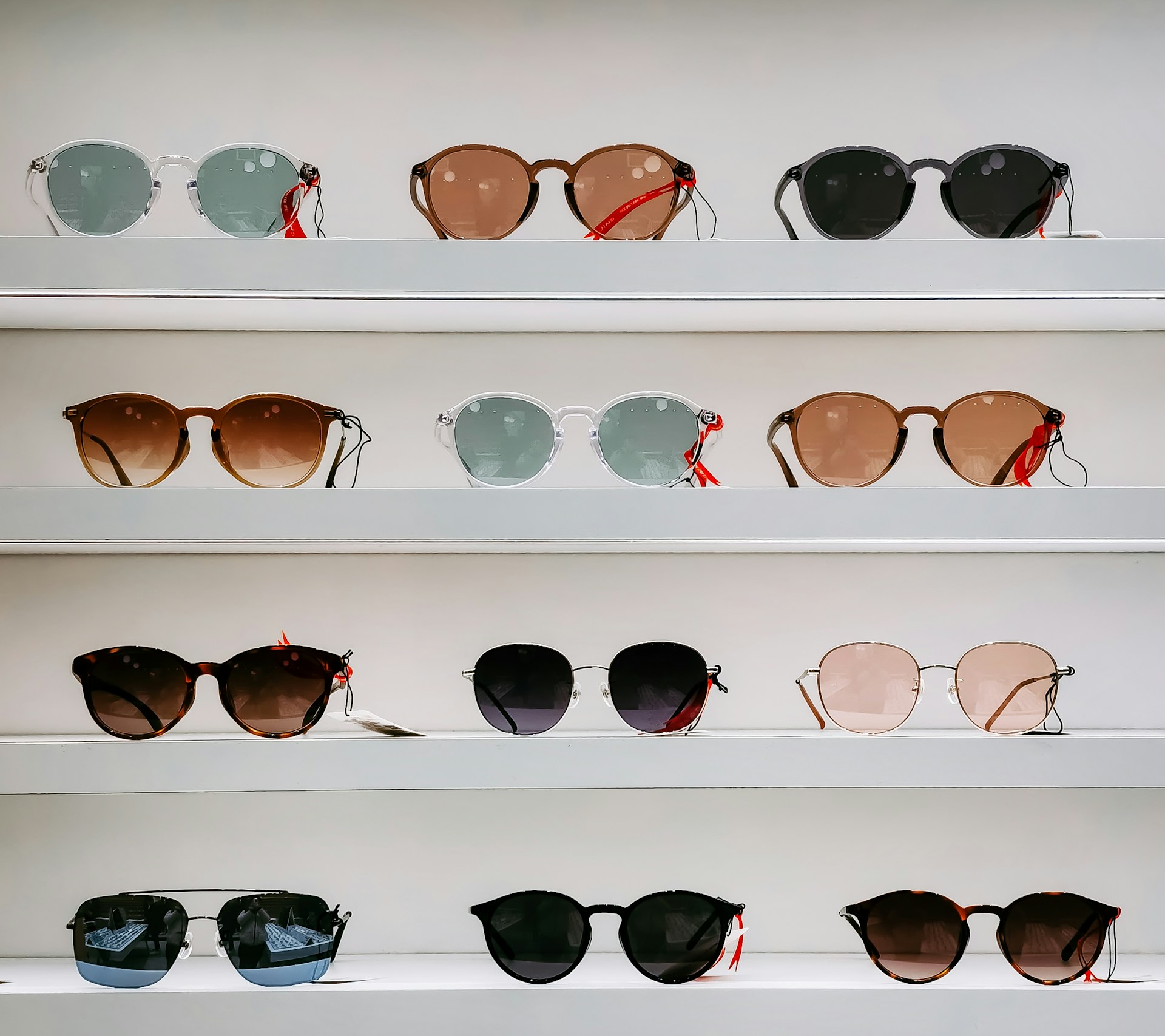
There was a time when the future had a very specific appearance. It was metallic, covered in glowing lights, filled with flying vehicles, and populated by people wearing strange glasses that looked as though they could scan the universe. In old science fiction movies, the characters rarely wore ordinary accessories. Their clothing looked engineered, their shoes appeared aerodynamic, and their sunglasses seemed capable of communicating with satellites.
Fast-forward to the present, and something interesting is happening.
Some sunglasses no longer look like simple objects designed to protect our eyes from sunlight. They look like equipment issued to astronauts, experimental gadgets designed in secret laboratories, or accessories worn by characters who know something about the future that the rest of us have yet to discover.
With futuristic shapes, reflective lenses, unusual materials, and experimental designs, modern eyewear is becoming an intersection of fashion, technology, and imagination.
The most interesting part is that you do not need to board a spaceship to appreciate the aesthetic. Sometimes, all it takes is a pair of sunglasses that makes an ordinary afternoon feel like a scene from a science fiction film.
When Sunglasses Became Something More Than Sunglasses
Traditional sunglasses have a relatively straightforward purpose. They reduce glare, help protect the eyes from sunlight, and complement an outfit. Their designs usually follow familiar patterns: aviators, wayfarers, round frames, or rectangular lenses.
These classics remain popular for good reason. They are practical, recognizable, and remarkably adaptable.
However, fashion has always had a rebellious relationship with familiarity. Every generation eventually produces designers who look at an ordinary object and ask an unusual question: What if we made it look completely different?
Futuristic eyewear emerges from that curiosity.
Instead of two separate lenses held together by a conventional frame, imagine a single curved visor extending across the face. Picture silver lenses that reflect the environment like polished liquid metal. Consider frames with angular edges, exaggerated proportions, or geometric shapes that seem inspired by spacecraft instrumentation.
Suddenly, sunglasses become more than a finishing touch. They become the central character in an outfit.
They also demonstrate something fascinating about design: an object can communicate an entire personality before its owner says a single word.
A conventional pair of black sunglasses might suggest understated elegance. A pair with mirrored chrome lenses and a sculptural frame might suggest someone who enjoys experimentation, futuristic aesthetics, and the possibility that fashion does not have to follow familiar rules.
Neither approach is inherently better. They simply tell different stories.
The Science Fiction Aesthetic Has Entered Everyday Fashion
Science fiction has spent decades imagining what people might wear in the future. From space explorers to cybernetic detectives, futuristic characters often have distinctive visual identities.
Their clothing helps communicate the world they inhabit.
In a film set hundreds of years from now, ordinary contemporary clothing might look out of place. Costume designers therefore experiment with unusual silhouettes, reflective surfaces, unconventional accessories, and materials that appear engineered rather than traditionally tailored.
Eyewear plays a particularly interesting role in this visual language.
Sunglasses naturally cover a prominent part of the face, making them ideal for creating a mysterious or futuristic appearance. A wide visor can make a character appear aerodynamic. Narrow lenses can produce a sharp, almost robotic expression. Mirrored surfaces can conceal the wearer’s eyes while reflecting the surrounding world.
These effects are simple, but their visual impact can be enormous.
Fashion designers have repeatedly explored similar ideas through oversized frames, shield sunglasses, futuristic sports eyewear, and experimental runway accessories. The result is a style that feels connected to both technological imagination and the history of avant-garde fashion.
The future, in other words, is not always invented from scratch. Sometimes, it is assembled from ideas that already exist, rearranged into something unfamiliar.
That is one reason futuristic sunglasses can feel so exciting. They look new without requiring us to abandon everything we already understand about fashion.
The Rise of the One-Piece Visor
If futuristic sunglasses had a visual signature, it might be the shield visor.
Unlike conventional sunglasses, which usually feature two distinct lenses, shield designs create the impression of one continuous surface across the face. Some resemble the protective visors worn by motorcycle riders. Others look closer to the eyewear of futuristic athletes or characters in space adventures.
Their appeal lies in their simplicity and scale.
A large lens creates a dramatic visual line. It can make the face appear more sculptural, especially when paired with a streamlined frame and reflective finish.
Imagine a silver visor catching the afternoon sunlight, reflecting buildings, clouds, and passing cars. The lenses become miniature mirrors, transforming the environment into part of the accessory itself.
Now imagine the same design with a dark finish, paired with a black jacket, minimalist trousers, and clean sneakers.
The result could easily belong in a film about a mysterious traveler arriving in a technologically advanced city.
Yet shield sunglasses are not limited to dramatic outfits. Sport-inspired versions can work with everyday streetwear, particularly when the rest of the clothing is relatively simple.
This is an important styling principle: when one accessory makes a strong visual statement, the surrounding outfit does not necessarily need to compete with it.
Sometimes, the most futuristic look is achieved by allowing one unusual object to do most of the talking.
Chrome, Mirrors, and the Beauty of Reflective Surfaces
Few visual details communicate futuristic design as effectively as reflective materials.
Chrome surfaces, metallic finishes, and mirrored lenses have long been associated with machines, spacecraft, industrial equipment, and advanced technology. They create the impression that an object belongs to a world where materials have been polished to perfection.
On sunglasses, mirrored lenses introduce an interesting contradiction.
They are visually expressive while concealing the eyes behind a reflective surface. Instead of seeing the wearer’s gaze, observers see fragments of the world around them.
A blue mirror lens might reflect the sky. A silver lens could capture the sharp outlines of a city skyline. A red or violet coating might create a striking color contrast against otherwise neutral clothing.
The effect can be playful, mysterious, or dramatically futuristic, depending on the design.
But reflective sunglasses are not merely decorative. Lens color and coating can influence how light is transmitted and perceived. The actual benefits depend on the specific lens construction, so appearance alone should never be treated as proof of eye protection.
A beautiful lens should still perform its essential job.
When choosing sunglasses, look for reliable UV protection and suitable optical quality. A dark tint or mirror finish does not automatically guarantee protection against ultraviolet radiation.
The ideal pair combines visual character with practical performance.
After all, even the most convincing science fiction hero would benefit from seeing clearly.
When Sports Equipment Starts Looking Like Space Technology
Some of the most convincing futuristic sunglasses draw inspiration from performance eyewear.
Cycling glasses, running sunglasses, and specialized sports designs often prioritize lightweight construction, secure fit, broad coverage, and lenses shaped to follow the contours of the face.
These requirements naturally produce designs that look unusually advanced.
Large lenses reduce the appearance of gaps around the eyes. Curved profiles create a streamlined silhouette. Minimal frames emphasize the lens itself, while contrasting materials make the structure appear more technical.
The resulting aesthetic can resemble equipment designed for an extreme environment.
A pair of wraparound sunglasses might look equally appropriate on a cyclist descending a mountain, a character exploring an alien planet, or someone walking through a modern city with headphones playing atmospheric electronic music.
This crossover between sportswear and science fiction is especially interesting because it demonstrates how practical engineering can influence fashion.
The design may originate from a functional problem: how to improve coverage, stability, or visibility during movement. Yet the same features can create a distinctive visual identity.
In fashion, functionality and imagination are not necessarily opposing forces.
Sometimes, the object that looks as though it came from the future is simply an object designed to solve a real problem in an unusual way.
The Cyberpunk Connection
If science fiction provides the imagination, cyberpunk provides the attitude.
Cyberpunk aesthetics combine advanced technology with urban environments, neon colors, unconventional silhouettes, and a sense of individuality. Its visual language often features dark clothing, reflective surfaces, technical accessories, and eyewear that looks more like equipment than jewelry.
Futuristic sunglasses fit naturally into this world.
Picture narrow black frames paired with a technical jacket. Imagine angular silver eyewear against a charcoal outfit. Consider translucent frames, geometric lenses, or oversized designs that resemble experimental prototypes.
The key is contrast.
A polished accessory can look particularly striking against textured clothing. Metallic lenses can stand out against matte black fabric. An exaggerated frame can become more interesting when surrounded by simple shapes.
The result does not have to resemble a costume.
In fact, the most wearable futuristic outfits often borrow only a few elements from cyberpunk fashion. A single unusual pair of sunglasses, combined with familiar clothing, can suggest the aesthetic without making the entire outfit feel theatrical.
Think of it as bringing a small piece of an imagined future into the present.
You do not need a neon-lit city, a robotic arm, or a personal spacecraft. You simply need an accessory that challenges the ordinary.
Can Sunglasses Actually Become Smart Glasses?
Here is where the subject becomes even more interesting.
For years, science fiction has imagined eyewear capable of displaying information, recording experiences, translating languages, identifying objects, and connecting people to digital environments.
Some of those ideas are no longer purely fictional.
Smart glasses already exist in several forms. Depending on the model, they may incorporate cameras, microphones, speakers, voice assistants, or other connected features. Some experimental and specialized systems also explore visual displays that place digital information within the user’s field of view.
These capabilities are different from the appearance of futuristic sunglasses, but the two worlds increasingly overlap.
A pair of smart glasses might resemble ordinary eyewear, hiding its electronics inside familiar frames. Another design might embrace its technological character with visible cameras, unconventional proportions, or a more industrial appearance.
The distinction matters because futuristic-looking sunglasses are not automatically smart glasses. A mirrored visor may contain no electronics at all, while an ordinary-looking frame might have sophisticated digital features.
Still, the convergence of fashion and technology raises an intriguing possibility.
What happens when an accessory becomes both a style statement and a personal computing device?
Imagine walking through a new city while receiving navigation prompts, listening to music without conventional headphones, or capturing a memorable moment without reaching for a phone. Such features already exist in some products, although capabilities vary considerably.
More advanced possibilities remain subjects of research and development.
The challenge is not simply making technology smaller. Designers must also consider battery life, comfort, privacy, durability, heat, accessibility, and how people will use these devices in everyday situations.
A successful pair of smart glasses must work as eyewear first, not merely as a technological demonstration.
The most exciting future may therefore be one in which the technology becomes less distracting while the design becomes more expressive.
The Psychology of Wearing Something Unusual
Why would anyone choose sunglasses that look as though they were designed for a futuristic movie?
Part of the answer is visual curiosity.
People use clothing and accessories to communicate aspects of their personality. A carefully chosen object can express creativity, confidence, humor, or an interest in a particular aesthetic.
Futuristic eyewear offers an especially direct way to do this because it departs from familiar proportions.
A conventional frame is easy to overlook. A dramatically curved visor immediately attracts attention.
That difference can change how an outfit feels to the person wearing it, too. An unusual accessory can encourage experimentation, making familiar clothing appear new again.
A basic T-shirt and jeans can feel different when paired with futuristic silver sunglasses. A minimalist black outfit can acquire a more technical character with a sculptural frame. Even a simple summer outfit can become more distinctive through an unexpected lens shape.
There is also an element of play.
Fashion does not always need to communicate seriousness, status, or timeless elegance. Sometimes, it can be an opportunity to experiment with identity and enjoy the process of looking different.
Wearing futuristic sunglasses can be a small reminder that everyday life leaves room for imagination.
You might be walking to a café, waiting for public transport, or heading to work. Nothing about the surrounding world has changed, but your choice of accessory introduces a different visual perspective.
It is a modest transformation, yet that is often how personal style works.
How to Wear Futuristic Sunglasses Without Looking Like a Movie Extra
The challenge with unconventional eyewear is finding the balance between visual impact and everyday practicality.
Fortunately, a few simple principles can make the process easier.
1. Let the sunglasses lead.
If the frames are oversized, reflective, or unusually shaped, keep the rest of the outfit relatively restrained. Neutral colors and clean silhouettes give the eyewear room to stand out.
2. Experiment with texture.
Matte fabrics, technical outerwear, denim, and structured jackets can complement futuristic frames. Combining contrasting surfaces often creates a more interesting result than matching every material.
3. Choose proportions carefully.
Large shield sunglasses can dominate a smaller face, while narrow frames may create a different balance on broader facial features. Trying several shapes is more useful than assuming that every futuristic design will suit everyone.
4. Consider the setting.
A dramatic visor might be perfect for a festival, a fashion shoot, or a creative event. A subtler metallic frame may be easier to incorporate into an ordinary daily wardrobe.
5. Prioritize comfort and eye protection.
Sunglasses should fit securely without uncomfortable pressure. Check UV protection, lens quality, and whether the design provides suitable coverage for your intended use. For sports, consider whether the eyewear is designed to remain secure during movement.
6. Avoid confusing expensive with futuristic.
A distinctive design does not automatically require a luxury price tag. Shape, proportion, finish, and thoughtful styling often matter more to the overall impression than a famous logo.
The goal is not to look as though you are permanently auditioning for a science fiction film. It is to discover a design that makes your personal style more interesting.
The Future Might Look Stranger Than We Expect
Fashion has a habit of borrowing from the future before the future arrives.
Designers imagine unfamiliar silhouettes, filmmakers create visual worlds, engineers develop new materials, and consumers gradually become comfortable with objects that once seemed unusual.
Over time, yesterday’s futuristic idea can become today’s familiar accessory.
Sunglasses are an excellent example because they occupy a space between utility and self-expression. They are practical enough to remain relevant while offering designers considerable freedom to experiment with shape, material, color, and technology.
The next generation of eyewear could explore lighter materials, improved optical performance, adaptable designs, and more sophisticated integration with digital devices. Some concepts may become everyday products. Others may remain experimental or appeal to small groups of enthusiasts.
Not every futuristic idea needs to become mainstream to be valuable.
Sometimes, a design succeeds simply by showing us a new possibility.
And perhaps that is the real attraction of sunglasses that look like they belong in a science fiction movie. They invite us to imagine a world where ordinary objects can be redesigned with the same creativity used to build fictional spacecraft, futuristic cities, and entirely new civilizations.
The sunglasses themselves might contain nothing more advanced than carefully engineered lenses and a distinctive frame. Their futuristic quality comes from the ideas they represent.
They suggest speed, exploration, technological progress, and the freedom to experiment with personal identity.
They turn a small accessory into a conversation about design.
Conclusion: A Little Piece of the Future on Your Face
The most fascinating thing about futuristic sunglasses is that they do not require the future to arrive before we can enjoy them.
A mirrored visor can evoke a distant planet. An angular black frame can suggest a cybernetic detective. A pair of sports-inspired glasses can look ready for a mission across unfamiliar terrain. Smart glasses can bring some of science fiction’s technological imagination into everyday life.
Each design offers a different interpretation of what tomorrow might look like.
And that is the beauty of fashion: it allows imagination to become tangible.
We cannot all redesign the world, build spacecraft, or invent the next generation of wearable technology. But we can choose objects that reflect our curiosity about what is possible.
Sometimes, that object is a watch. Sometimes, it is a jacket with an unusually architectural silhouette. And sometimes, it is a pair of sunglasses that makes you look as though you have just stepped out of a movie set several decades ahead of our time.
The future is still being written.
Until then, you might as well wear an interesting pair of shades.