The Most Absurdly Expensive Fashion Items That Actually Exist
There is a moment in every person’s life when they walk into a clothing store, look at a jacket, check the price tag, and quietly put it back where they found it.
Perhaps the jacket costs more than their monthly rent. Perhaps the shoes cost more than a laptop. Maybe the handbag is priced so outrageously that buying it would require a family meeting, three financial calculations, and a long conversation with the person responsible for managing the household budget.
Then there is the other side of fashion.
Somewhere in the world, someone is paying hundreds of thousands of dollars for a handbag, millions for a diamond-covered watch, or the price of a luxury house for a pair of shoes. And no, these are not imaginary products designed for a science fiction movie about a civilization that has completely abandoned common sense. Many of these extraordinary items exist, and some have been sold at public auctions for astonishing sums.
Welcome to the fascinating world of ultra-luxury fashion, where materials, craftsmanship, history, rarity, and celebrity can transform ordinary categories of clothing and accessories into objects worth more than entire collections of everyday possessions.
But what makes something so expensive? Is it the gold? The diamonds? The hours of work invested by skilled craftspeople? Or is there something else happening when a familiar object becomes a symbol of extraordinary wealth?
Let’s explore some of the most absurdly expensive fashion items that actually exist and discover why their prices can reach levels that seem almost disconnected from everyday life.
1. The Handbag That Costs More Than a House
Imagine carrying your daily essentials in a bag that costs more than the house you live in.
For certain luxury handbags, this is not an exaggeration.
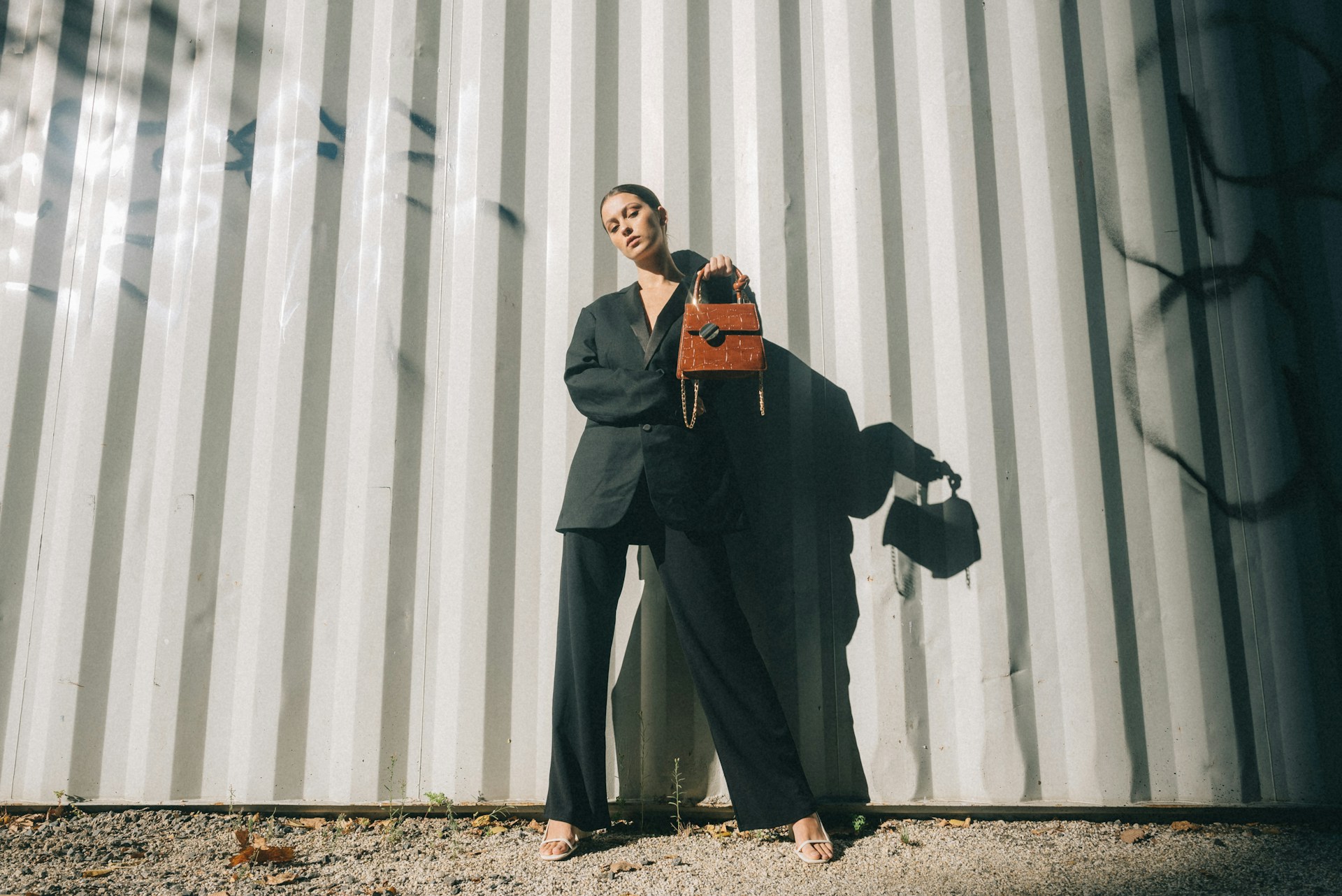
The Hermès Birkin is among the most recognizable symbols of expensive fashion. Named after actress and singer Jane Birkin, the bag has become famous for its craftsmanship, exclusivity, and extraordinary prices on the resale market.
Some Birkin bags sell for tens of thousands of dollars, while particularly rare examples can command hundreds of thousands. Special editions made with exotic materials, precious-metal hardware, or elaborate diamond details can reach even higher prices.
Then there is the world of auction records.
In 2025, Jane Birkin’s original Hermès Birkin bag sold at Sotheby’s in Paris for approximately €8.6 million, including fees. The price was extraordinary even by luxury-fashion standards. However, this was not simply an expensive handbag being purchased from a boutique. It was the original bag associated with the creation of an iconic design, carrying a unique personal history.
That distinction matters.
A regular luxury handbag is one thing. A historically significant object connected to a famous person is another. Collectors may be willing to pay enormous sums for something that cannot be reproduced in quite the same way, regardless of how much money a fashion house invests in making another version.
The fascinating part is that the object itself remains recognizably simple: a bag with handles, a closure, and space for personal belongings.
Its extraordinary value comes from everything surrounding it.
Craftsmanship gives it quality. Brand identity gives it recognition. Scarcity gives it desirability. History gives it a story.
And suddenly, carrying your phone, keys, and wallet becomes a very expensive activity.
2. Shoes That Cost More Than a Supercar
Shoes are supposed to help us walk. Some expensive shoes, however, appear to have been designed for a different purpose: demonstrating how far luxury can go when money is no longer the primary limitation.
Consider the famous ruby slippers worn by Judy Garland in the 1939 film The Wizard of Oz.
These shoes are not merely fashion accessories. They are pieces of cinema history.
Different surviving pairs have been preserved, displayed, and sold through the years. In December 2024, a pair of ruby slippers stolen from the Judy Garland Museum in 2005 sold at Heritage Auctions for approximately $32.5 million, including the buyer’s premium.
That figure is extraordinary for a pair of shoes, but the slippers are valuable for reasons that extend far beyond their appearance.
They represent a recognizable moment in film history, an iconic character, the golden age of Hollywood, and an image that has remained familiar across generations.
Their price is therefore not a measure of how comfortably they fit or how far someone could walk in them.
It reflects their cultural significance and rarity.
Of course, the luxury footwear market has its own modern examples. Designer sneakers, limited-edition collaborations, and shoes associated with famous athletes can sell for thousands or even millions at auction when historical significance and collector demand come together.
The lesson is simple: a shoe can begin as something practical and end up as a collectible artifact.
And if you ever complain about the price of ordinary sneakers, remember that someone, somewhere, has paid millions for footwear that is far too valuable to wear casually.
3. Watches That Turn Time Into a Luxury Sport
A watch tells the time. At least, that is what we expect it to do.
Yet the world’s most expensive watches can cost more than private aircraft, luxury apartments, and entire businesses.
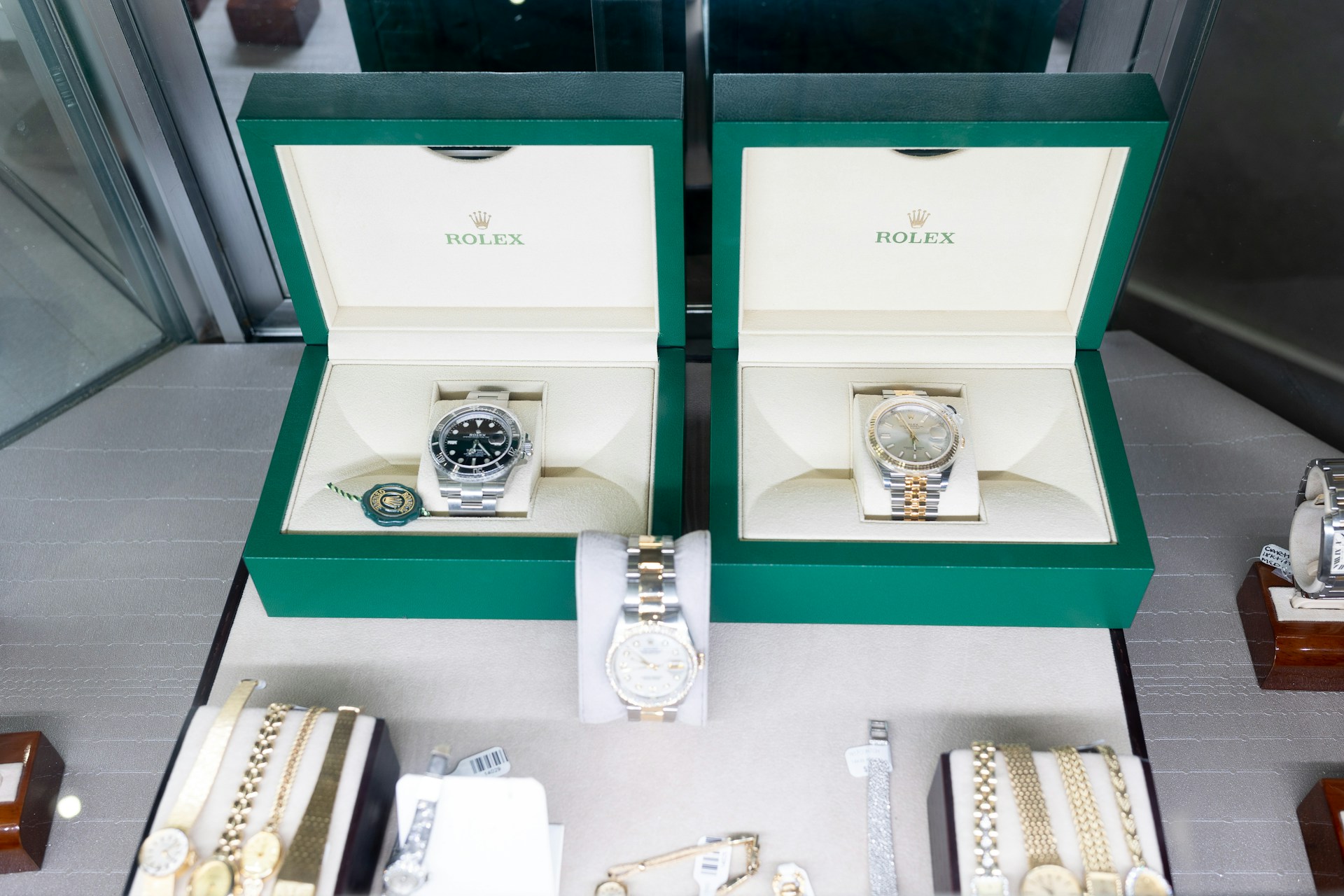
One of the most famous examples is the Patek Philippe Grandmaster Chime Ref. 6300A-010. This unique stainless-steel wristwatch sold at the Only Watch charity auction in Geneva in 2019 for 31 million Swiss francs, approximately $31 million at the time.
It was an exceptional result for a timepiece.
The watch contains an extraordinarily complex mechanical movement, with numerous functions and chiming mechanisms. Its design and engineering required an advanced level of watchmaking expertise.
But technical complexity is only part of the story.
The watch was a unique piece created for a charity auction, and its rarity contributed significantly to its appeal. Buyers were not simply purchasing an instrument for checking whether they were late for a meeting. They were competing for an object that occupied a special place in the history of haute horlogerie.
At this level, watches become miniature mechanical universes.
Inside the case are carefully manufactured components working together with remarkable precision. Tiny gears, springs, levers, and wheels perform coordinated movements, often without the electronic assistance found in modern digital devices.
It is engineering transformed into jewelry.
There is something fascinating about spending millions on an object whose basic function can be performed by a free application on a smartphone.
Your phone can tell you the time, set alarms, track your schedule, and remind you to drink water.
A multimillion-dollar mechanical watch offers something different: craftsmanship, heritage, mechanical ingenuity, rarity, and the experience of owning a remarkable physical object.
Efficiency is not always the goal of luxury.
Sometimes, the goal is to create something extraordinary simply because it can be created.
4. Diamond-Encrusted Everything
Diamonds have long occupied a special position in luxury jewelry. However, the moment precious stones move from rings and necklaces onto everyday objects, things become particularly interesting.
Why put diamonds on a watch when the watch already works perfectly well without them?
Why decorate a handbag with precious stones when its main purpose is to carry personal belongings?
And why stop there when sunglasses, belts, shoes, and even ordinary-looking accessories can be transformed into sparkling displays of wealth?
The answer lies partly in the relationship between fashion and visual identity.
Luxury designers often use precious materials to make objects immediately recognizable. A diamond-covered accessory can become a statement piece, attracting attention before anyone even knows who designed it.
Consider the Mouawad 1001 Nights Diamond Purse, a heart-shaped handbag created using gold and thousands of diamonds. The bag was recognized by Guinness World Records in 2011 as the world’s most valuable handbag, with a reported value of $3.8 million at the time.
Its design resembles something from a royal treasure chamber rather than a conventional handbag collection.
The object combines jewelry-making with accessory design, creating something that sits between fashion and precious-art craftsmanship.
But here is the amusing part.
If you were carrying this bag, you would probably spend more time worrying about where to place it than worrying about what to put inside it.
A normal handbag can be thrown onto a chair, placed beneath a desk, or carried through a busy shopping center. A multimillion-dollar diamond purse belongs to a completely different category of object.
It is less an everyday accessory and more a carefully protected exhibition piece.
The same principle applies to diamond-encrusted watches, jeweled shoes, and luxury accessories covered in precious stones. The materials add monetary value, but the design, labor, and rarity help determine how far that value can climb.
At some point, the accessory stops being merely an accessory.
It becomes a wearable display case.
5. Sunglasses That Could Fund Your Next Car
Sunglasses are among the most democratic items in fashion.
You can find inexpensive pairs in supermarkets, shopping malls, street markets, and online stores. Their purpose is straightforward: protect your eyes from sunlight while adding a little personality to your appearance.
Then luxury designers enter the conversation.
High-end sunglasses can incorporate gold, platinum, precious stones, unusual materials, and painstaking hand-finishing. Their prices may reach thousands of dollars, particularly when they are made as exclusive pieces.
Some designer frames are expensive because of their craftsmanship, limited production, or distinctive design. Others are positioned as jewelry as much as eyewear.
The difference is immediately visible in certain extravagant designs.
Instead of simply using a lightweight frame and tinted lenses, a designer might introduce precious-metal details, intricate engravings, or carefully arranged gemstones.
The result can look less like something you would wear to buy groceries and more like an accessory from a futuristic film about a billionaire who owns a private space station.
There is also an interesting psychological element to luxury eyewear.
Sunglasses occupy a prominent position on the face. Unlike an expensive pair of socks or a watch hidden beneath a sleeve, they are immediately visible. Their shape and color can become part of someone’s recognizable personal style.
That visibility gives designers a powerful opportunity to turn a small object into a statement.
Still, there is a practical limit to the excitement.
If your expensive sunglasses fall out of your pocket while getting out of a car, the experience can turn an ordinary afternoon into a financial thriller.
And if you lose them at the beach, you may spend the rest of the day staring at the sand and calculating how many ordinary pairs you could have purchased instead.
Luxury is enjoyable until gravity gets involved.
6. Dresses That Cost More Than Luxury Apartments
Fashion can become especially expensive when it moves into the world of couture.
Haute couture garments are not simply ordinary clothes produced in different sizes. They can involve extensive handwork, detailed fitting sessions, specialized embroidery, rare materials, and many hours of skilled labor.
Some gowns take hundreds or even thousands of hours to complete, depending on their construction and embellishment.
When precious stones, elaborate beadwork, and unusual fabrics are introduced, costs can climb dramatically.
One famous example is the Nightingale of Kuala Lumpur, a gown designed by Faiyzali Abdullah and presented in 2009. It was reported to have a value of approximately $30 million, with its valuation associated with a dramatic design featuring precious stones, including diamonds.
Such extraordinary valuations should be understood in context. A reported valuation is not necessarily the same as a verified sale price, and the market value of an elaborate garment can be difficult to establish.
Nevertheless, the dress illustrates how fashion can merge with jewelry, spectacle, and luxury craftsmanship.
A couture gown can require careful coordination between designers, pattern makers, embroiderers, seamstresses, and other specialists. Its final appearance may conceal enormous amounts of work beneath the surface.
From a distance, you might see a beautiful dress.
Up close, you may discover thousands of individually placed details, delicate stitching, complex construction, and materials that demand exceptional care.
This is one of fashion’s most interesting contradictions: a garment can look effortless precisely because so much effort has gone into making it look that way.
Of course, spending millions on a dress introduces a practical challenge.
Where exactly do you wear it?
A wedding? A major awards ceremony? A museum exhibition? A private event where the dress has enough room to exist without coming into contact with a plate of food?
For most people, a beautiful outfit is something to enjoy wearing. At the extreme end of luxury, a garment may become so valuable that preserving it becomes almost as important as wearing it.
The dress begins as something to put on.
It ends as something to protect.
7. Luxury Sneakers That Become Investment Objects
Sneakers have evolved far beyond their original role as athletic footwear.
Today, they occupy an unusual position at the intersection of fashion, sports, music, street culture, and collecting.
A limited-edition sneaker can sell out rapidly, appear on resale platforms for several times its original retail price, and become a collectible associated with a famous athlete or cultural moment.
One of the best-known examples is the market for game-worn Michael Jordan sneakers.
In September 2022, a pair of his game-worn Air Jordan XIII sneakers sold at Sotheby’s for approximately $2.2 million. The shoes had been worn during the 1998 NBA Finals, giving them historical significance beyond their design.
They were not simply a pair of fashionable sneakers.
They were physical objects connected to one of the most recognizable athletes in basketball history and a particularly memorable period in his career.
That history helped transform them into valuable collectibles.
The sneaker market also demonstrates how scarcity influences price. When a product is released in limited quantities, demand can exceed supply. If the product becomes associated with a celebrated athlete, musician, designer, or cultural moment, collectors may be willing to pay significantly more than the original retail price.
But not every expensive sneaker is an investment, and not every limited release will increase in value.
Trends change. Collectors’ interests move. Condition deteriorates. Authenticity matters. Resale markets can be unpredictable.
A sneaker that costs thousands of dollars today may not command the same price years later.
So before treating your favorite limited-edition shoes like a retirement plan, remember that collecting and investing are not necessarily the same thing.
Sometimes, the smartest reason to buy sneakers is still the simplest one: you like how they look.
8. Jewelry That Happens to Be Clothing
Some of the world’s most extravagant fashion pieces blur the distinction between clothing and jewelry.
Instead of placing a necklace over a dress, designers may construct the garment itself using gold, precious stones, or elaborate metallic elements.
One striking example is the idea of a gold dress.
Gold has appeared in fashion for centuries, from ceremonial garments to modern red-carpet creations. However, garments incorporating substantial quantities of precious metal can become extremely expensive because of the material’s value alone.
A dress made with gold elements is not necessarily comfortable, lightweight, or practical. Depending on its construction, it may be heavy, delicate, and difficult to maintain.
But practical comfort is not always the main objective of a showpiece.
Fashion exhibitions, luxury events, and couture presentations sometimes feature creations designed to challenge expectations about what clothing can be.
Designers might ask questions such as: What happens when a garment becomes sculpture? Can jewelry become architecture? Can a dress function as a moving work of art?
These questions lead to spectacular creations that prioritize visual impact over everyday convenience.
The same philosophy can be seen in garments covered in pearls, crystals, elaborate embroidery, or intricate metalwork.
The wearer becomes part of the presentation, while the garment becomes an artistic object in motion.
It is a fascinating reminder that clothing has never been exclusively about protecting the body from the elements. Across cultures and historical periods, it has also communicated identity, status, creativity, and belonging.
At the highest end of luxury, those functions can become so elaborate that a dress begins to resemble a traveling exhibition.
9. Designer Coats With Extraordinary Price Tags
A coat is one of the most practical items in a wardrobe.
It keeps you warm, protects you from the wind, and gives you something to wear when the weather refuses to cooperate.
Luxury fashion, however, has a talent for transforming practical objects into premium products.
A designer coat can command a high price because of its fabric, construction, label, limited availability, or specialized craftsmanship. Rare fibers, carefully finished seams, intricate embroidery, and complex tailoring all contribute to the cost.
Some luxury outerwear uses materials such as cashmere, vicuña, or exceptionally fine wool. Vicuña fiber, obtained from a South American camelid, is particularly prized because of its fineness and limited availability under regulated harvesting practices.
Even so, material costs do not explain every expensive coat.
Brand positioning also matters. A coat from a celebrated fashion house carries a name, design identity, and reputation that can influence what customers are willing to pay.
There is also the matter of longevity.
A well-made coat can remain useful for years, particularly if its design is relatively timeless and its owner maintains it carefully.
However, the most expensive coat is not automatically the warmest, most durable, or best choice for every person.
A reasonably priced coat can provide excellent protection from the cold without requiring a second mortgage.
That is the beauty of fashion: personal style does not have to follow the same financial rules as luxury collecting.
You can look extraordinary without spending an extraordinary amount of money.
10. The Real Luxury Is Sometimes the Story
After exploring million-dollar handbags, multimillion-dollar watches, historically significant sneakers, and extravagant couture gowns, an important question remains.
What are people actually paying for?
If the goal is functionality alone, many of these objects are difficult to justify.
A smartphone can tell the time more accurately than a mechanical watch. An ordinary handbag can carry the same everyday essentials as an exclusive designer model. A comfortable pair of sneakers can take you to work without costing the price of a luxury vehicle.
But luxury operates on a different set of motivations.
People may value craftsmanship, exclusivity, aesthetics, historical importance, emotional attachment, or the pleasure of owning something rare.
Collectors may see a particular item as a physical connection to a famous person or an important cultural moment. Fashion enthusiasts may appreciate the technical skill required to create a complex garment. Others simply enjoy the experience of wearing something beautifully designed.
These motivations are not identical, and they do not need to be.
The price of an exceptional fashion item is often the result of several forces working together: materials, labor, brand reputation, scarcity, provenance, and demand.
In some cases, the object becomes valuable because it is genuinely difficult to reproduce. In others, its value comes from a history that cannot be recreated at all.
That is why two objects that look similar can have dramatically different prices.
One may be a product.
The other may be a piece of history.
And sometimes, it is a little of both.
Final Thoughts: Fashion Has Its Own Universe of Possibilities
The most absurdly expensive fashion items reveal something fascinating about human creativity.
We have taken objects designed for everyday life and transformed them into symbols of engineering, artistry, cultural history, and extraordinary wealth.
A handbag can become a collectible artifact. A shoe can become a piece of cinema history. A watch can represent decades of mechanical expertise. A dress can become a sculpture made to move.
These objects occupy a world far removed from the ordinary shopping experience, where most people compare prices, look for discounts, and hope their favorite products last long enough to justify the purchase.
Yet that contrast is precisely what makes the subject entertaining.
Luxury fashion demonstrates how far design can travel when practical limitations become less important than creative ambition, rarity, and prestige.
It also offers a useful reminder: expensive does not automatically mean better for everyone.
A person wearing a simple T-shirt and well-fitting jeans can look just as confident as someone dressed in a collection worth millions. Style is not a mathematical equation in which the highest price produces the best result.
Sometimes, the most memorable fashion choice is the one that reflects your personality rather than your bank balance.
And if you ever find yourself staring at a handbag priced like a house, take a moment to appreciate the craftsmanship, admire the design, and perhaps imagine the conversation you would have with your bank manager.
Then check your own wardrobe.
You might discover that your favorite jacket, your most comfortable sneakers, or the sunglasses you bought years ago already give you everything you actually wanted from fashion.
No auction record required.
No diamonds necessary.
And definitely no multimillion-dollar insurance policy for the walk to the supermarket.