
The New Passport of Style: How African Designers Are Shaping Global Streetwear
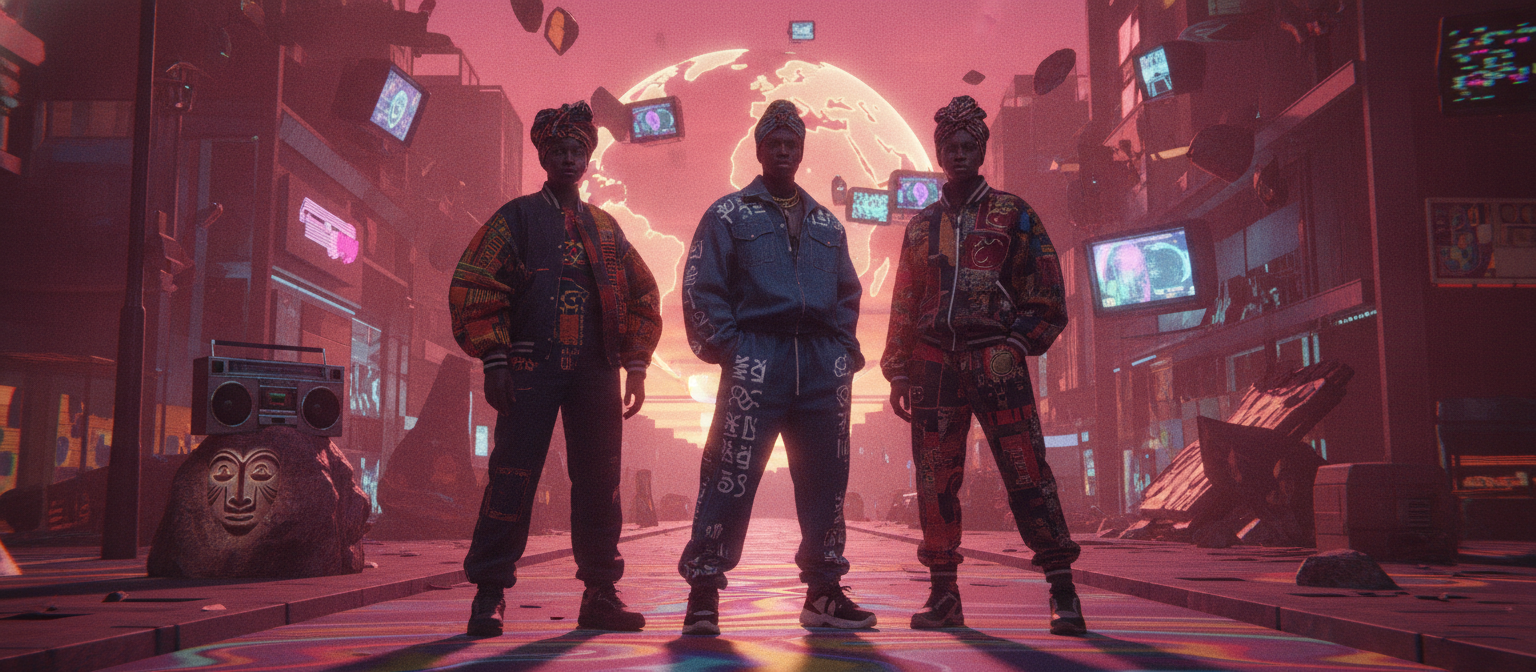
For a long time, fashion moved in one direction.
From Paris to the world.
From Milan to the world.
From London, New York, Tokyo—and then eventually, somehow, to everyone else.
Africa was often placed at the receiving end of that cultural pipeline.
We consumed the trends.
We imported the brands.
We watched the runway shows.
We copied silhouettes from music videos.
We waited for Western fashion magazines to tell us what was cool.
But something changed.
Actually, something has been changing for years.
The world just took a little too long to notice.
Today, African designers are no longer waiting for permission to enter global fashion.
They are building their own doors.
And global streetwear is walking straight through them.
From Lagos to Johannesburg.
From Accra to Nairobi.
From Dakar to Cape Town.
From Kampala to Lusaka.
A new generation of African designers is creating clothing that does something traditional fashion often struggles to do:
It tells people exactly where they come from while simultaneously making them look like they belong in the future.
That is the magic of modern African streetwear.
It is local and global at the same time.
Traditional and futuristic.
Political and playful.
Luxury and DIY.
Deeply African without needing to explain itself to anyone.
And perhaps that is why the influence is becoming impossible to ignore.
African fashion is no longer simply inspiring global streetwear.
Increasingly, it is helping define what global streetwear actually looks like.
Streetwear Has Always Been About Identity
Before streetwear became a billion-dollar industry, it was a language.
A hoodie could say something.
A pair of sneakers could say something.
An oversized jacket could tell you which city someone came from, what music they listened to, what subculture they belonged to, and sometimes even what they believed in.
Streetwear was never really just about clothes.
It was about identity.
And if there is one continent with an extraordinary number of identities, histories, languages, cultures, and visual traditions to draw from, it is Africa.
That matters.
Because modern fashion has become increasingly hungry for authenticity.
People are tired of clothing that feels like it was designed by an algorithm.
They are tired of brands producing the same beige hoodie with a different logo printed on the front.
They are tired of corporations discovering “culture” every three months and turning it into a marketing campaign.
African designers are arriving at a moment when the world desperately wants something real.
And Africa has something the fashion industry cannot manufacture in a boardroom:
context.
The clothes are connected to stories.
The colors mean something.
The fabrics mean something.
The references mean something.
Even when the clothing looks futuristic, there is often history underneath it.
That combination is powerful.
Africa Is Not a Trend
This is probably the most important thing to understand.
Africa is not having a “fashion moment.”
That phrase is too small.
Too temporary.
Too convenient.
Africa has always had fashion.
What is happening now is that global visibility is finally catching up with creativity that has existed for generations.
The problem is that international fashion has often looked at Africa through a very narrow lens.
When people imagined African fashion, they often imagined one of a few predictable things:
Bright Ankara prints.
Traditional garments.
Safari aesthetics.
“Tribal” patterns.
Colorful fabrics presented as exotic decorations.
That image was never enough.
Africa is a continent of more than fifty countries.
Thousands of cultures.
Thousands of visual languages.
Millions of young people living in some of the fastest-changing cities on Earth.
You cannot reduce Lagos to a wax print.
You cannot reduce Johannesburg to beads.
You cannot reduce Nairobi to a Maasai-inspired necklace.
You cannot reduce Lusaka to what a foreign fashion magazine thinks Zambia should look like.
Modern African designers understand this instinctively.
They are designing from the Africa they actually live in.
The Africa of motorcycles, traffic, music studios, gaming cafés, football jerseys, apartment buildings, matatus, minibus stations, smartphones, Afrobeats, Amapiano, hip-hop, internet culture, memes, anime, nightlife, and ambition.
That Africa looks very different from the Africa many global brands imagined.
And that difference is becoming fashion.
The African City Is Becoming a Runway
One of the biggest reasons African streetwear is exploding is simple:
African cities are cultural machines.
Lagos produces energy at an almost unreasonable speed.
Johannesburg has been shaping music, art, and youth culture for decades.
Accra has become an important creative hub.
Nairobi continues to build its own distinct urban identity.
Cape Town blends global fashion with African creative energy.
Dakar has its own powerful artistic language.
And cities across the continent are becoming increasingly connected through the internet.
A young designer in Zambia can now see what someone is creating in Lagos instantly.
A musician in South Africa can influence a fashion brand in Ghana.
A sneaker enthusiast in Kenya can follow Japanese streetwear and remix it through an African perspective.
This is creating something fascinating.
African fashion is no longer developing in isolation.
It is becoming part of a massive conversation.
A designer might combine:
- Japanese streetwear silhouettes
- American hip-hop culture
- African textiles
- European tailoring
- local slang
- futuristic graphics
- football culture
- traditional symbolism
And somehow, the result still feels African.
Not because someone put a map of Africa on the T-shirt.
But because the perspective behind the design is African.
That distinction matters.
The Internet Changed Everything
Twenty years ago, a talented designer needed access to gatekeepers.
Fashion magazines.
Retail stores.
Major fashion weeks.
International distributors.
Big advertising budgets.
Today?
You can create a collection.
Photograph it.
Build a brand identity.
Post it online.
And suddenly someone in London, New York, Berlin, Tokyo, or Seoul is seeing your work.
The internet did not eliminate inequality.
Let’s be honest about that.
African designers still face enormous challenges.
Manufacturing can be expensive.
Shipping can be difficult.
Access to capital remains a problem.
International payment systems are often frustrating.
Import duties can be ridiculous.
And infrastructure is not always designed to support creative businesses.
But the internet did something extremely important.
It removed the monopoly on visibility.
You no longer need to live in Paris to participate in fashion culture.
You can build your own audience.
And African designers are doing exactly that.
Instagram became a runway.
TikTok became a fashion magazine.
Pinterest became a mood board shared across continents.
YouTube became a documentary platform.
And suddenly, the creative distance between Lagos and London became much smaller.
The passport was no longer stamped at an airport.
It was uploaded.
Music Is Carrying African Fashion Across Borders
You cannot talk about African streetwear without talking about music.
Music has always been one of the fastest ways fashion travels.
Hip-hop did it.
Punk did it.
Grunge did it.
K-pop did it.
And now African music is doing it at an incredible scale.
Afrobeats is global.
Amapiano is global.
African artists are performing at international festivals, appearing on global stages, collaborating with major musicians, and building enormous audiences online.
And every time an artist walks onto a stage, appears in a music video, or posts on social media, fashion travels with them.
The artist is not just exporting music.
They are exporting aesthetics.
The sunglasses.
The oversized jackets.
The custom jerseys.
The sneakers.
The jewelry.
The hairstyles.
The attitude.
This is where African streetwear has an enormous advantage.
It is connected to living culture.
The clothes are not sitting quietly in a museum.
They are moving.
Dancing.
Performing.
Sweating under stage lights.
Appearing in music videos.
Walking through airports.
Being worn by people who actually influence culture.
That gives African fashion something money cannot easily buy:
organic distribution.
A musician wears something because they love it.
People see it.
People want it.
The aesthetic spreads.
That is how culture works when it is alive.
The Rise of Afro-Futurism in Streetwear
There is another major force shaping African fashion:
The future.
African designers are increasingly refusing to let the continent be trapped in the past.
For decades, international media often presented Africa through two extremes.
Either ancient tradition.
Or crisis.
But what about the future?
What does a futuristic Lagos look like?
What does cyberpunk Nairobi look like?
What does a Zambian streetwear brand look like in 2040?
What happens when African mythology meets digital culture?
What happens when traditional symbols meet artificial intelligence?
What happens when indigenous storytelling meets sneakers, technical fabrics, and futuristic silhouettes?
That is where Afro-futurism becomes exciting.
It gives African designers permission to imagine.
Not just remember.
Imagine.
Streetwear becomes a kind of science fiction.
A jacket can look like something from the future while carrying symbols from the past.
A graphic can reference a traditional story while looking like a video game interface.
A garment can feel like it belongs in a futuristic African city that does not exist yet.
Or perhaps one that is already beginning to exist.
The future of Africa should not always be designed in Silicon Valley.
Sometimes it should be designed in Lagos.
Sometimes in Johannesburg.
Sometimes in Lusaka.
African Designers Are Changing What “Luxury” Means
Traditional luxury fashion has often been built around scarcity.
Expensive materials.
European heritage.
Exclusive stores.
Old family names.
A certain idea of elegance.
African designers are challenging that.
For younger consumers, luxury is increasingly about cultural relevance.
A brand can be expensive and still feel boring.
A logo can be famous and still feel disconnected from culture.
The new generation wants something else.
They want story.
They want identity.
They want community.
They want clothing that feels like it belongs to their world.
That is why a small independent African streetwear brand can sometimes feel more luxurious than a massive international fashion house.
Not because it costs more.
But because it means more.
The garment might represent a city.
A generation.
A political idea.
A musical movement.
A local joke.
A shared experience.
That emotional value is becoming a new form of luxury.
And the major fashion industry is paying attention.
Because luxury without culture eventually becomes decoration.
The Problem With Global Fashion Loving Africa
Of course, there is a danger here.
The world loves African aesthetics.
Until it has to credit Africans.
This has happened before.
Global fashion has borrowed African patterns, symbols, hairstyles, fabrics, and cultural ideas while African designers themselves remained underfunded and invisible.
A major international brand can take inspiration from a continent, sell millions of dollars worth of clothing, and call it a “global collection.”
Meanwhile, the actual designers from those cultures struggle to access international markets.
That is the uncomfortable reality.
Africa does not just need to become an inspiration board for global fashion.
African creatives need ownership.
Ownership of brands.
Ownership of manufacturing.
Ownership of intellectual property.
Ownership of distribution.
Ownership of the platforms that sell culture.
Because there is a difference between being influential and being powerful.
Africa has always been influential.
The next challenge is turning influence into economic power.
If African streetwear becomes globally dominant but African designers remain broke, then we have not really changed the system.
We have simply made exploitation more fashionable.
The Next Supreme Might Come From Africa
This is not a prediction based on charity.
It is based on demographics and culture.
Africa has one of the youngest populations in the world.
Young people create culture.
They experiment.
They remix.
They challenge traditions.
They build communities around music, fashion, technology, and art.
And the global fashion industry is increasingly driven by youth culture.
That creates an enormous opportunity.
The next globally influential streetwear brand does not necessarily need to come from New York.
It does not necessarily need to come from Tokyo.
It could come from Lagos.
Johannesburg.
Accra.
Nairobi.
Cape Town.
Or a city that the global fashion industry has not even started paying attention to yet.
Why not Lusaka?
Seriously.
Why not?
One of the biggest mistakes we make is believing that global brands must begin in globally famous cities.
That is not how the internet works anymore.
A powerful idea can begin anywhere.
The question is whether the creator understands culture.
And African youth understand culture because they are living through one of the most interesting periods of cultural transformation in the world.
Streetwear Is Becoming More African Without Becoming Less Global
This is the beautiful part.
African fashion does not need to replace American streetwear.
It does not need to defeat Japanese fashion.
It does not need to copy European luxury.
Fashion is not a war where only one culture survives.
The most interesting fashion happens when cultures talk to each other.
African designers are entering that conversation with their own voice.
Not as guests.
Not as background decoration.
Not as a special “Africa collection.”
But as participants.
As leaders.
As innovators.
A hoodie designed in Africa can be worn in Berlin.
A jacket from Lagos can appear in London.
A sneaker collaboration can connect Johannesburg and Tokyo.
A graphic designed in Lusaka can become popular in Los Angeles.
That is the new passport of style.
Not a physical passport.
A cultural one.
The ability for an idea to cross borders.
The Real Revolution Is Confidence
Perhaps the biggest change happening in African fashion is psychological.
For generations, many young Africans were taught—directly or indirectly—that the best things came from somewhere else.
The best technology.
The best universities.
The best music.
The best fashion.
The best brands.
The best opportunities.
Somewhere else.
But a new generation is beginning to ask a different question:
Why can’t we build it here?
Why can’t an African brand become globally desirable?
Why can’t our cities define global aesthetics?
Why can’t our designers create luxury?
Why can’t our youth culture become the reference point?
Those questions are dangerous in the best possible way.
Because once people start believing they can create rather than simply consume, everything changes.
Fashion becomes one battlefield for that confidence.
A T-shirt becomes more than a T-shirt.
It becomes a statement.
We are here.
We are creating.
We are not waiting.
Africa Is Not Entering Global Streetwear. It Is Rewriting It.
The future of fashion will not belong to one city.
It will not belong to one continent.
And it certainly will not belong exclusively to the traditional gatekeepers who have controlled fashion for decades.
The future will be more distributed.
More digital.
More culturally mixed.
More experimental.
And Africa is perfectly positioned for that future.
African designers understand remix culture.
They understand adaptation.
They understand how to make something beautiful with limited resources.
They understand tradition.
They understand change.
They understand the pressure of being connected to global culture while remaining deeply connected to local identity.
That tension produces creativity.
And creativity produces style.
The new passport of style is not issued by an embassy.
It is issued by culture.
It is stamped by originality.
It is carried by musicians, designers, photographers, skaters, gamers, artists, and young people walking through cities that are changing faster than the rest of the world can understand.
African streetwear is not asking for a seat at the table anymore.
It is building a completely different table.
One where Lagos can sit next to London.
Where Johannesburg can talk to Tokyo.
Where Nairobi can influence New York.
Where Lusaka can become part of the global fashion conversation without pretending to be somewhere else.
And that might be the most important part of this entire movement.
The future of African fashion does not depend on becoming more Western.
It depends on becoming more confident in its own contradictions.
More urban.
More futuristic.
More local.
More global.
More experimental.
More unapologetic.
The world is watching Africa now.
But African designers should not create simply because the world is watching.
They should create because they have something to say.
And judging by what is happening across the continent, they have a lot to say.
The hoodie has become a passport.
The sneaker has become a cultural document.
The jacket has become architecture.
The runway has moved into the street.
And the street?
The street is increasingly speaking African.
The new passport of style has arrived.
And this time, Africa is not waiting in line at the border.
Africa is designing the border itself.