Could a Planet Survive After Its Star Disappears?
Imagine waking up on a planet where the Sun is gone.
There is no sunrise. No sunset. No golden light spreading across the horizon. The sky is black, and the stars that once disappeared behind daylight now shine continuously above a frozen landscape. The oceans begin losing their warmth. The atmosphere changes. The familiar rhythm of days and nights becomes a memory of a universe that no longer exists in the same way.
Yet the most interesting question is not what would happen to life on such a world.
It is whether the planet itself could survive.
We often think of planets as permanent objects, massive spheres of rock, metal, gas, or ice that travel through space according to the laws of gravity. But a planet’s existence is frequently connected to the star around which it orbits. That star provides energy, shapes the planet’s environment, and influences the gravitational architecture of its entire planetary system.
Remove the star, and almost everything changes.
But does the planet disappear with it?
Not necessarily.
A planet could survive the disappearance of its star, potentially continuing its journey through space for billions of years. Depending on how the star vanished, the planet’s orbit, internal temperature, atmosphere, and even its capacity to support life could change dramatically.
Some planets might become frozen worlds drifting through interstellar darkness. Others could be thrown into new orbits. A few might retain internal heat for extraordinary periods, creating environments very different from anything found on Earth.
To understand how this could happen, we need to separate three things that are often treated as one: a planet’s existence, its orbit, and its habitability.
They are not the same thing.
A Planet Does Not Need a Star to Exist
The first surprising fact is that a planet does not require a star to remain a planet.
Gravity does not switch off when a star disappears. Matter does not immediately dissolve into space simply because its former source of illumination is gone. A planet made of rock, metal, ice, or gas can remain physically intact without orbiting a star.
The real question is what happens to its motion.
Our solar system provides a useful starting point. Earth travels around the Sun because the Sun’s gravity continually changes the direction of Earth’s motion. Without that gravitational influence, Earth would no longer follow its familiar elliptical orbit.
If the Sun’s mass could somehow disappear instantaneously, Earth would continue moving in approximately the direction it was traveling at that moment. Instead of curving around the Sun, it would follow a path through interstellar space.
The planet would not suddenly stop.
It would not explode.
It would not fall apart merely because the Sun was gone.
It would continue along its new trajectory, carrying its mountains, oceans, atmosphere, and whatever remained of its environment into a different chapter of cosmic history.
Of course, an actual star cannot simply vanish through an ordinary physical process that removes all its mass instantaneously. This thought experiment isolates the gravitational consequences of removing the central object. Real stellar evolution is more complicated, and the outcome depends on how much mass the star loses, how quickly it loses it, and what remains afterward.
Still, the thought experiment reveals something important: a star can be essential to a planet’s environment without being essential to the planet’s physical existence.
The Planet That Escapes Its Solar System
A planet normally remains in orbit because its forward motion and the gravitational pull of its star work together.
Remove enough of that gravitational influence, and the planet may escape.
Imagine Earth traveling around the Sun at roughly 30 kilometres per second. That is an extraordinary speed, even though we do not feel it while standing on the surface.
If the Sun’s gravitational influence suddenly disappeared, Earth would continue moving at approximately that speed relative to its previous orbit. It would leave the old orbital path and travel outward through the galaxy.
From the planet’s perspective, nothing dramatic might happen during the first moments. The ground would remain beneath people’s feet. The atmosphere would still surround the world. The Moon would initially continue moving under Earth’s gravity, although its long-term trajectory would depend on the precise circumstances.
But the sky would change.
The Sun would no longer illuminate the landscape. Earth’s familiar blue daytime sky would disappear, replaced by darkness. The stars would become visible at all hours, assuming an observer could see through the remaining atmosphere.
Over time, the absence of sunlight would transform the surface.
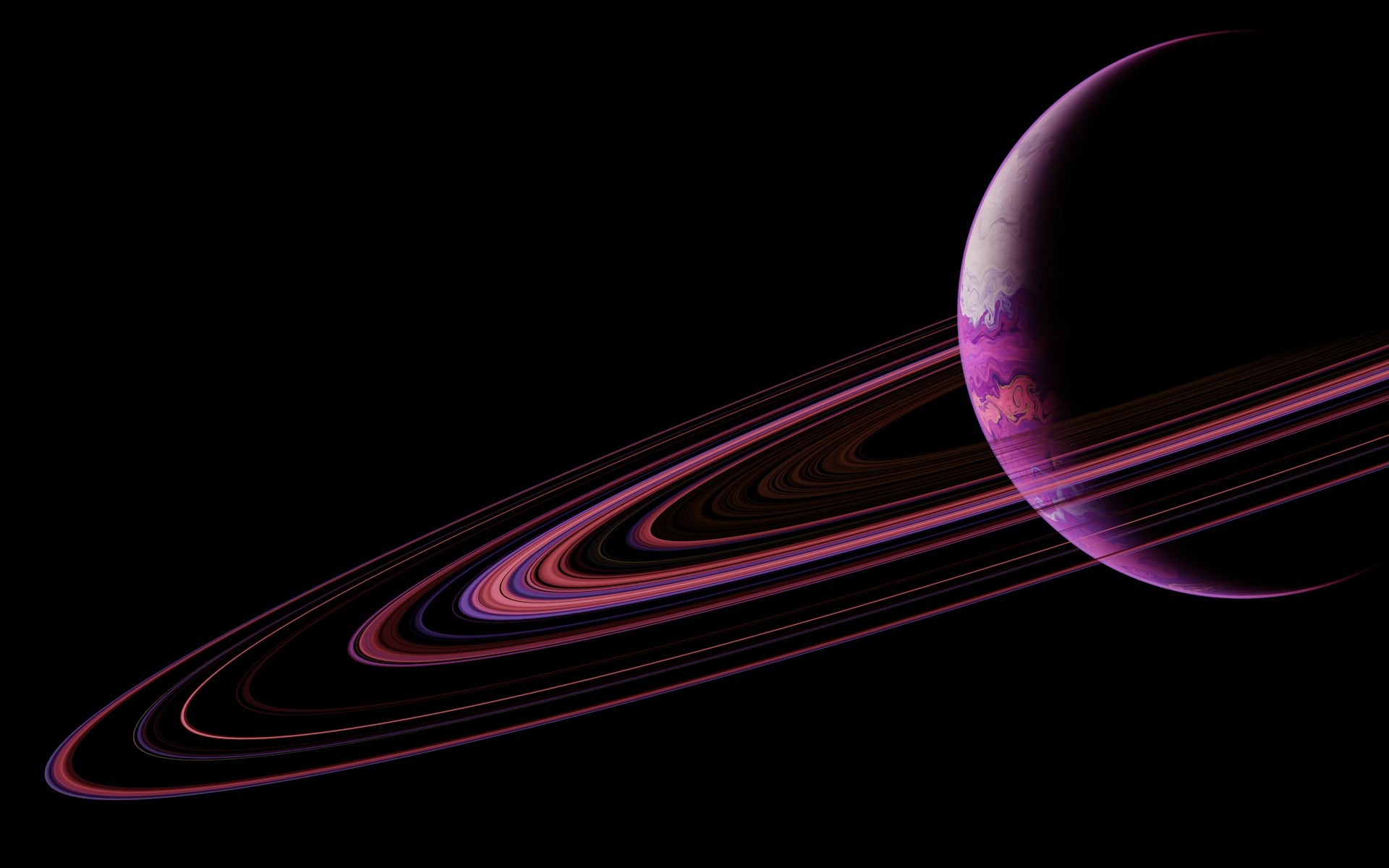
The planet would have become what astronomers call a rogue planet: a planetary-mass object traveling through space without being gravitationally bound to a star.
Rogue planets are not merely an invention for science fiction. Astronomers have evidence for planetary-mass objects that are not currently associated with stars, although determining their exact origins and whether every such object formed as a planet remains challenging.
Some may have formed around stars before being expelled through gravitational interactions. Others may have formed in isolation through processes resembling those that produce stars, making their classification less straightforward.
Either way, a world can travel through space without a permanent stellar companion.
A planet does not need to remain inside the system where it was born.
What If the Star Dies Instead of Disappearing?
The fate of a planet depends heavily on what happens to its star.
Stars do not all end their lives in the same way. Their futures depend primarily on their masses, along with other physical characteristics.
A Sun-like star is expected to expand into a red giant late in its life. It will lose much of its outer material and eventually leave behind a dense stellar remnant called a white dwarf.
That means the Sun is not expected to disappear completely.
Its future is more like a transformation than an erasure.
Earth’s eventual fate is uncertain in the details. The Sun’s expansion will make the inner solar system dramatically different, and Earth could be engulfed during the red giant phase. Even if it avoids direct engulfment, its surface will become uninhabitable long before the Sun reaches its final state.
Some planets farther from their stars could survive the transition. Their orbits might expand as the star loses mass, provided the mass loss occurs slowly enough relative to their orbital periods.
The result would be a planetary system that looks very different from the one that originally formed.
A star’s death, therefore, does not necessarily destroy every planet around it. In some cases, planets may continue orbiting the stellar remnant for billions of years.
Other stars end their lives through much more energetic events.
Massive stars can explode as supernovae, leaving behind neutron stars or black holes. A planet in such a system might be destroyed, heated intensely, stripped of its atmosphere, or thrown into a new orbit.
Yet even here, survival is not governed by a single universal outcome. The planet’s distance from the star, the amount of mass lost, the explosion’s effects, and the gravitational forces acting on the system all matter.
A planet’s future depends not only on whether its star dies, but also on how it dies.
The Great Freeze: What Happens When the Light Goes Out?
For Earth, sunlight supplies most of the energy that keeps the surface warm.
Without it, the planet would begin losing energy to space. Temperatures would fall, although not uniformly or instantly. Oceans, rocks, ice, and the atmosphere would release their stored heat at different rates.
The planet would experience a complicated cooling process rather than an immediate transition into a perfectly frozen sphere.
The atmosphere would continue absorbing and redistributing heat for a time. Oceans would release stored thermal energy. Weather patterns would change as the temperature differences driving them weakened.
Eventually, much of the surface would become extremely cold.
The oceans would begin freezing from the top, but the entire ocean would not necessarily freeze solid. Water has an enormous capacity to store heat, and the deep ocean could retain liquid water beneath an insulating layer of ice for an extended period.
The exact duration would depend on conditions such as ocean depth, geothermal heat, atmospheric composition, and the planet’s initial temperature.
The atmosphere would also change. Some gases could condense or freeze under sufficiently low temperatures, depending on their pressures and chemical properties.
Earth’s surface would become an environment very different from the one that produced its forests, cities, deserts, and oceans.
But the story would not end there.
Even without sunlight, a planet contains energy.
Some of that energy comes from radioactive elements decaying inside its interior. Some is leftover heat from its formation. Gravitational processes can also generate heat, particularly when a planet experiences tidal forces from a nearby massive object.
These sources are much weaker than the Sun’s contribution to Earth’s surface energy budget, but they are not insignificant everywhere.
The absence of a star removes the dominant external energy source. It does not eliminate every possible source of warmth.
Could Life Survive on a Starless Planet?
This is where the question becomes particularly interesting.
Life on Earth depends heavily on sunlight, either directly through photosynthesis or indirectly through food webs that ultimately rely on photosynthetic organisms.
Remove sunlight, and most familiar ecosystems would collapse.
Plants could no longer carry out ordinary photosynthesis. Animals dependent on those plants would lose their primary food source. Marine ecosystems supported by sunlight near the ocean surface would experience enormous disruption.
However, Earth already contains environments where life survives without direct sunlight.
Around hydrothermal vents on the ocean floor, microorganisms can use chemical energy to sustain ecosystems. Instead of relying on sunlight to produce organic matter, these organisms use chemical reactions involving substances such as hydrogen sulfide or hydrogen.
This process is called chemosynthesis.
It demonstrates that sunlight is not the only possible energy source for life.
If a rogue planet retained liquid water, suitable chemistry, and a sufficiently stable internal heat source, certain forms of microbial life might conceivably survive beneath its surface.
An ocean protected by a thick layer of ice could potentially remain liquid because of geothermal heating. In the right circumstances, chemical energy might support organisms within that hidden environment.
This possibility is speculative when applied to an Earth-like planet ejected from its star, but it is grounded in known physical and biological processes.
There is an important distinction here: the survival of a planet does not guarantee the survival of life, and the survival of life does not require a planet to remain habitable at its surface.
A frozen planet might be biologically inactive across most of its exterior while retaining isolated environments beneath the ice.
It could look lifeless from space while preserving a small, hidden ecosystem underground or underwater.
If such worlds exist, detecting their life would be extraordinarily difficult. Without a bright host star, astronomers would have fewer opportunities to study their atmospheres through the methods commonly used for planets orbiting stars.
The universe might contain environments whose existence is much easier to imagine than to observe.
The Hidden Heat Inside a Planet
A planet’s interior is not necessarily cold just because its surface is cold.
Earth’s core remains extremely hot. Radioactive decay and residual heat contribute to the energy flowing outward from the interior.
That internal energy drives processes such as mantle convection and contributes to volcanic activity and plate tectonics. These processes influence the long-term evolution of Earth’s surface.
Without the Sun, Earth’s internal heat would become a much more important part of its overall energy budget, even though the planet would still lose heat to space.
But geothermal energy alone would not make Earth’s exposed surface resemble its present environment.
The heat flowing from Earth’s interior is tiny compared with the sunlight absorbed by the planet. It would not keep forests green or maintain a temperate global climate.
Instead, it could help preserve localized warm environments, especially underground or beneath thick ice.
Imagine a planet covered in darkness, with a frozen surface stretching across continents. Beneath that surface, geothermal activity might sustain liquid water around volcanic regions or deep within the crust.
There could be warm caves, subsurface reservoirs, and perhaps oceans protected by layers of ice.
These environments would be difficult to reach, but they illustrate why a planet’s interior matters when considering its survival.
A planet is not simply a ball heated from the outside. It is a physical system with an internal history.
Its birth, collisions, radioactive materials, composition, and gravitational interactions all contribute to its thermal evolution.
The disappearance of a star changes the balance of energy, but it does not erase that history.
Could a Rogue Planet Have an Atmosphere?
Yes, provided it retains enough gravitational influence and its atmospheric gases are not lost through other processes.
A planet’s atmosphere is held by gravity. It does not require a star to remain attached to the planet.
However, temperature and atmospheric chemistry would change dramatically after the loss of stellar heating.
On a sufficiently cold world, some atmospheric gases could condense onto the surface. Others might freeze, depending on the local pressure and temperature.
The atmosphere could become much thinner in its gaseous form, although the outcome would depend on its original composition and the planet’s conditions.
A massive planet might retain a substantial atmosphere even as its upper layers become extremely cold. A smaller planet with weaker gravity could face different challenges.
The magnetic field, atmospheric escape processes, and the planet’s interaction with its surrounding space environment would also affect the long-term result.
For a world like Earth, the atmosphere would not necessarily disappear the instant sunlight vanished. Its evolution would unfold over time.
This distinction matters because atmospheric survival influences more than breathing.
An atmosphere can distribute heat, protect a surface from certain forms of radiation, and help determine whether liquid water can exist. Even a dark planet may depend on its atmosphere to maintain a stable environment in regions warmed by internal energy.
A rogue planet could therefore remain a complex physical world long after its original climate had disappeared.
What If the Planet Finds Another Star?
A planet escaping its original solar system does not necessarily travel forever without encountering another star.
The galaxy contains enormous numbers of stars, many separated by vast distances. A rogue planet moving through the Milky Way could, in principle, pass near another stellar system.
Could it become part of that system?
Under the right circumstances, gravitational capture is possible. But it is not as simple as a planet passing close to a star and automatically settling into orbit.
For a planet to become gravitationally bound to a star, it must lose enough orbital energy relative to that star. A two-body encounter involving an initially unbound planet and an isolated star generally cannot produce permanent capture on its own while conserving energy.
Additional influences can change the outcome. Interactions with another planet, a binary star system, or a surrounding disk of gas could provide ways for energy and momentum to be redistributed.
Such encounters depend on the geometry, velocities, and gravitational environment involved.
Even if capture occurred, the planet would not necessarily become habitable.
Its orbit might be highly elongated. It could receive too much radiation during part of its journey and too little during another. The new star might be much hotter or cooler than its original one.
A planet that once orbited a familiar yellow star could eventually become associated with a dim red dwarf, or it might enter an orbit that never brings it close enough for substantial warming.
Still, the possibility is fascinating.
Planetary systems need not be completely isolated from the rest of the galaxy. Their members can be rearranged, ejected, captured, or otherwise influenced by gravitational encounters.
The architecture of a planetary system is not always permanent.
Would the Planet Eventually Die?
In one sense, every planet changes over time.
A planet may lose its atmosphere, cool internally, become geologically inactive, or experience collisions that transform its surface. Its oceans might freeze, evaporate, or disappear through other processes.
But these changes do not mean that the planet immediately ceases to exist.
A rocky world could continue traveling through interstellar space long after its surface became frozen and dark. Its mountains would remain, although impacts and geological processes could gradually reshape them. Its interior might retain some heat. Its atmosphere could thin or change composition.
Over immense periods, even a seemingly permanent object becomes part of a larger cycle of change.
The planet might eventually collide with another object, become gravitationally captured, or be disrupted by an extreme encounter. Alternatively, it might continue orbiting the galaxy for an extraordinarily long time.
There is no single expiration date that applies to all planets.
Their long-term survival depends on their physical structure and the environments through which they travel.
The absence of a star is a major change, but it is not automatically a final event.
A World Without a Sunrise
Perhaps the most striking aspect of a starless planet is how much of its identity could survive after its familiar environment disappears.
The mountains might remain mountains.
The oceans might become hidden beneath ice.
The atmosphere might persist in altered form.
The planet could continue moving through the galaxy, following the laws of gravity even after the light that once defined its days had vanished.
Its surface might become inhospitable, but its interior could remain active. In some circumstances, hidden liquid water and chemical energy might even preserve conditions suitable for microbial life.
Such a world would challenge the way we imagine planets.
We tend to picture them as members of systems, each orbiting a star and receiving the energy that makes its environment recognizable. But a planet is also an independent physical object, carrying its own mass, internal heat, composition, and momentum.
A star helps shape a planet’s story. It does not necessarily determine every chapter.
And perhaps that is the most useful lesson hidden inside this cosmic thought experiment.
The universe is full of systems that appear inseparable until we ask what would happen if one of their essential components disappeared. Sometimes, removing that component destroys the system. Sometimes, the remaining pieces reorganize themselves. And sometimes, an object continues to exist in a form so different from its original state that we must reconsider what survival actually means.
Could a planet survive after its star disappears?
Yes. A planet could survive physically, drift through interstellar space, and potentially retain internal heat or even hidden habitats for life. Its fate would depend on how its star was lost, the planet’s composition, its orbit, and the energy sources available to it.
It might never experience another sunrise.
But it could still be there, traveling through the darkness, carrying the remains of an entire world beneath a sky that would never turn blue again.
And somewhere in the Milky Way, there may be planets whose stars are long gone, whose surfaces have frozen over, and whose stories are still unfolding in the dark.