Why Movies Become Part of Our Personal History
There are movies we watch.
And then there are movies we remember.
The difference is bigger than it sounds.
You can watch a movie on a random Tuesday night, enjoy it for two hours, and forget most of it by the following week. Then there are other movies that somehow become attached to a specific version of your life.
You remember where you were.
You remember who you were with.
You remember the television you watched it on.
You remember the room.
You remember what you were eating.
You remember the weather outside.
Sometimes you even remember what your life felt like at the time.
That is the strange power of movies.
They are entertainment, but they can also become timestamps.
A movie can quietly enter your personal history without asking for permission.
Years later, you might hear a particular soundtrack and suddenly find yourself somewhere you haven’t thought about in a long time. You might see an actor and remember the person you used to watch movies with. You might come across an old film on a streaming service and realize that you haven’t just forgotten the movie.
You have forgotten the version of yourself who watched it.
And suddenly, the movie becomes a doorway.
Movies Are Time Machines
One of the most interesting things about movies is that they preserve more than stories.
They preserve moments.
When we watch a movie, our brain does not necessarily store the experience as an isolated piece of entertainment. The experience can become connected to everything happening around it.
The movie becomes part of the environment.
Imagine watching a great movie when you are twelve years old.
Maybe you are sitting in the living room.
The lights are low.
Someone is making food in the kitchen.
A fan is making its familiar sound.
Your phone is nowhere near as important as it is today.
You don’t know exactly what your future will look like.
You are simply watching a movie.
Years later, you hear the opening music again.
Suddenly, you are twelve.
Not literally.
But emotionally.
That is what makes nostalgia so powerful.
The movie itself has not changed.
You have.
The same scenes now carry additional meaning because you are watching them through a completely different life.
Movies can therefore function like time capsules.
They preserve a small piece of who we were.
The Movie Is Sometimes Smaller Than the Memory
There is an interesting phenomenon that happens when we revisit old movies.
Sometimes the movie isn’t as amazing as we remembered.
The special effects may look outdated.
The dialogue may feel simpler.
The pacing may be slower than modern movies.
The visual quality may look strange on a modern screen.
And yet, somehow, you still love it.
Why?
Because you aren’t only watching the movie.
You are watching the memory attached to it.
The movie is only one part of the experience.
The rest exists inside you.
Perhaps you watched it during school holidays.
Perhaps your family had just bought a new television.
Perhaps you watched it at a friend’s house.
Perhaps it was the first movie you remember watching late at night.
Perhaps it introduced you to an actor who later became one of your favorites.
Perhaps you discovered it during a period when you were beginning to understand what kind of stories you liked.
The movie becomes connected to a chapter.
And when you return to it, you are revisiting that chapter.
That is why nostalgia can make ordinary things feel extraordinary.
A movie doesn’t have to be perfect to become important.
It simply has to arrive at the right moment.
Movies Become Associated With People
Cinema is also deeply social.
Even when we watch movies alone, many of our strongest movie memories involve other people.
A movie can remind you of a friend.
A sibling.
A parent.
A cousin.
A partner.
A childhood neighbor.
A group of classmates.
Someone you haven’t spoken to in years.
The movie becomes a shared reference.
You remember laughing at the same scene.
You remember discussing the ending.
You remember arguing about which character was the most interesting.
You remember repeating a funny line.
You remember recommending the movie to someone else.
Eventually, the movie becomes part of the relationship.
This is one reason people sometimes say, “That movie reminds me of you.”
They aren’t really talking about the movie.
They are talking about the memories created around it.
A movie can become a small piece of shared history.
And when the relationship changes, the movie may continue carrying that history.
The Soundtrack Can Bring Everything Back
Music has an incredible relationship with memory.
A few seconds of a familiar soundtrack can sometimes accomplish what an entire conversation cannot.
You hear the opening notes.
And suddenly, something returns.
Maybe it is a road trip.
Maybe it is an old house.
Maybe it is a school holiday.
Maybe it is a particular year.
Maybe it is the feeling of discovering movies when you were younger.
This is partly because sound can become strongly associated with experiences.
Movies take advantage of this naturally.
A great soundtrack gives a scene another emotional layer, but over time, the music can become connected to the viewer’s own life.
That is why movie soundtracks sometimes feel like personal songs.
They may not have been written about us.
But we attached our own memories to them.
A song from a movie can become the soundtrack of an entire period of someone’s life.
Not because the filmmaker intended it that way.
Because the viewer lived alongside it.
Movies Mark Different Versions of Ourselves
We are not the same person at ten, fifteen, twenty, thirty, or forty.
Our interests change.
Our priorities change.
Our understanding of relationships changes.
Our definition of success changes.
Even the kinds of stories we enjoy can change.
This makes movies fascinating records of personal development.
A movie you loved as a child might feel completely different when you watch it as an adult.
When you were younger, you might have identified with the main character.
Years later, you might understand the parent.
Or the teacher.
Or the older sibling.
Or the person you previously considered unimportant.
The story remained the same.
Your perspective changed.
That is one of the beautiful things about art.
It can grow with you.
A movie can meet you at different stages of your life and reveal something different each time.
The first viewing becomes one memory.
The second viewing becomes another.
The third viewing might feel almost like discovering a new movie.
Movies Can Define Eras
Sometimes an entire period of life can be associated with a certain type of movie.
Maybe there was a phase when you watched science fiction constantly.
Another period might have been filled with comedy.
Then came the years when you became interested in documentaries.
Maybe you discovered animation.
Maybe you became fascinated with old cinema.
Maybe you spent an entire summer watching action movies.
These phases can become part of your identity.
When you look back, you don’t just remember the movies.
You remember the person who loved those movies.
This happens with music too.
Our playlists can tell stories about our lives.
So can our movie libraries.
The things we repeatedly watched often reveal what fascinated us at different moments.
Movies can therefore become a kind of informal autobiography.
Not a perfect one.
But an interesting one.
The Places We Watch Matter Too
The cinema itself can become part of the memory.
There is something special about watching a movie in a theater.
The large screen.
The darkness.
The sound.
The anticipation before the movie begins.
The audience reacting together.
The walk home afterward.
But home viewing creates its own memories.
Maybe you had a particular chair where you always watched movies.
Maybe Friday nights meant movies.
Maybe weekends involved watching whatever was available on television.
Maybe your family had a tradition of watching a movie together.
Maybe you discovered an entire world of films through a laptop.
Maybe your first smartphone made it possible to carry movies almost anywhere.
Technology changes how we watch.
But the memories continue.
In fact, the evolution of movie technology can become part of personal history too.
Some people remember DVDs.
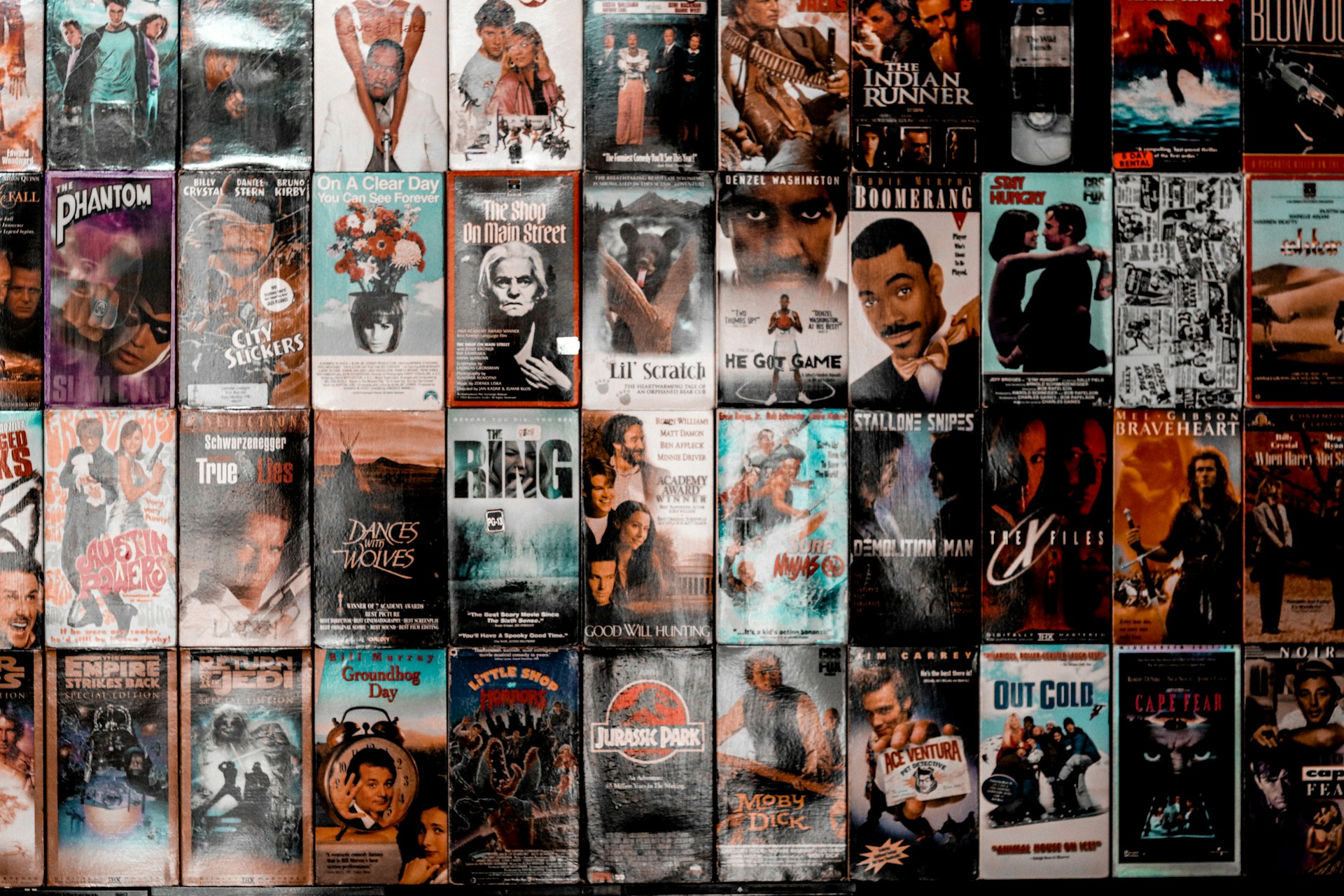
Others remember VHS tapes.
Others remember television schedules.
Others remember downloading movies.
Others remember streaming.
Every generation has its own relationship with the screen.
The First Movie You Loved Can Stay With You
There is often a special place in memory for the first movie that truly captured our imagination.
Not necessarily the first movie we ever watched.
The first one that made us think:
I love this.
Maybe it introduced us to a fictional world that felt enormous.
Maybe a character became an early hero.
Maybe the story made us want to create something.
Maybe the visuals made us curious about filmmaking.
Maybe the music stayed in our head for weeks.
Maybe we simply couldn’t stop talking about it.
Those moments matter because they can influence our relationship with storytelling.
A movie can be an introduction to a genre.
A genre can become an interest.
An interest can become a hobby.
A hobby can become a career.
A career can become an identity.
Not every movie changes someone’s life in such a dramatic way.
But many movies leave small traces.
Those traces accumulate.
Movies Influence How We Remember Certain Years
Sometimes we use movies to locate ourselves in time.
Someone might say:
“I remember when that movie came out. I was in school.”
Or:
“That was the year I moved.”
Or:
“I watched that during my first job.”
Movies become reference points.
They help us organize our memories.
A certain film might remind us of a particular year, even if we don’t remember exactly when everything else happened.
This is especially interesting because popular movies exist in a shared cultural timeline.
Millions of people can remember the same movie.
But each person attaches a different story to it.
The film is public.
The memory is private.
That combination makes cinema special.
The Movie We Watched During a Difficult Time
Movies can also become companions.
Sometimes we watch them when life is complicated.
We may not consciously choose a movie because we need emotional support. We may simply want something familiar.
Something predictable.
Something that gives our attention somewhere to go.
A favorite movie can become comforting because we already know its world.
We know the characters.
We know the jokes.
We know the ending.
There is something reassuring about returning to a story where the unknown has already become known.
Years later, that movie may remind us of the period when we relied on it.
The movie becomes associated with resilience.
Not because it solved our problems.
Because it was there while we worked through them.
Rewatching Is Like Visiting an Old Neighborhood
There is something almost architectural about a familiar movie.
You know where everything is.
You remember the important scenes.
You know which character enters next.
You know when the music changes.
You know how the story moves.
Rewatching can therefore feel like visiting a place you haven’t been to in years.
You recognize everything.
But you are different.
This is why familiar movies can feel surprisingly emotional.
The movie provides a stable environment while your life continues changing around it.
The characters remain the same age.
The story remains the same.
The fictional world waits exactly where you left it.
You return with more experiences than you had before.
Movies Become Part of Our Creative Identity
For people who create things, movies can become especially important.
A filmmaker may study camera movement.
A musician may pay attention to soundtracks.
A writer may become fascinated by dialogue.
A programmer or game developer may study world-building.
An artist may remember the visual atmosphere of a particular film.
A designer may notice its colors, typography, costumes, architecture, or interfaces.
Movies are not only stories.
They are collections of creative decisions.
Someone can watch a movie for entertainment and later realize that it quietly influenced how they think about creativity.
The influence might be subtle.
Maybe it changes the way they imagine a scene.
Maybe it teaches them to appreciate atmosphere.
Maybe it inspires them to make something of their own.
This is how culture travels.
One creative work influences another.
Then another.
Then another.
The Internet Has Made Movie Memory Even More Interesting
Today, movies don’t disappear when the credits roll.
They continue living online.
Clips circulate.
Quotes become memes.
Scenes become reaction images.
Soundtracks appear in playlists.
Fans create edits.
People discuss theories.
Characters become cultural references.
A movie can therefore exist across multiple digital environments.
You might watch the original film today and encounter references to it for years afterward.
This creates another layer of memory.
We don’t just remember watching a movie.
We remember everything we encountered around it.
The reviews.
The conversations.
The memes.
The discussions.
The trailers.
The fan theories.
The social media posts.
The recommendations.
Modern movie culture is no longer limited to the theater or television.
It follows us.
Movies Are Personal Archives
Our memories are not organized like computer folders.
They are messy.
One memory can lead to another.
A smell can remind us of a place.
A song can remind us of a person.
A person can remind us of a year.
A year can remind us of a movie.
And suddenly the movie is carrying an entire network of memories.
That is why movies can become personal archives.
They store pieces of our lives indirectly.
They preserve emotions.
Places.
People.
Interests.
Phases.
Dreams.
Questions.
Even the way we used to think.
A movie can remind you not only of what you watched, but of who you were when you watched it.
That may be its greatest connection to personal history.
We Don’t Own the Movie, But We Own Our Memory of It
This is perhaps the most beautiful part.
Millions of people can watch the same movie.
But nobody experiences it exactly the same way.
Your memory of the movie belongs to you.
Someone else may remember the same scene because they watched it in a completely different place, with different people, during a different chapter of life.
The movie is shared.
The meaning becomes personal.
That is what art does at its best.
It gives us something created by someone else and allows us to attach our own experiences to it.
A filmmaker creates a story.
A composer creates a soundtrack.
Actors create characters.
But the audience completes the journey by bringing their own lives into the experience.
The Movies We Remember Tell a Story About Us
If you looked at every movie that mattered to you, you might discover a strange biography.
You would find your childhood.
Your friendships.
Your family.
Your changing interests.
Your favorite genres.
Your different phases.
Your curiosity.
Your imagination.
Your quiet nights.
Your exciting nights.
Your old technology.
Your new technology.
Your different versions.
The list would probably be imperfect.
But it would tell a story.
Not necessarily the story of what happened.
The story of what stayed with you.
And perhaps that is why movies become part of our personal history.
They arrive as entertainment.
They stay as memories.
A movie might begin as two hours on a screen.
But sometimes those two hours become connected to years of life.
The screen goes dark.
The credits roll.
The theater empties.
The television gets switched off.
The laptop closes.
But the memory remains.
And years later, when the right song plays or the right scene appears again, something opens.
For a moment, you are back there.
You remember the room.
You remember the people.
You remember the feeling.
You remember yourself.
The movie hasn’t traveled through time.
You have.
And somehow, it has been waiting for you there.
That is the strange relationship between movies and memory.
We watch stories.
Then, without realizing it, some of those stories become part of our own.
Movies are not only records of fictional worlds. Sometimes, they become records of who we were when we discovered them.