The Strange Relationship Between Music and Memory
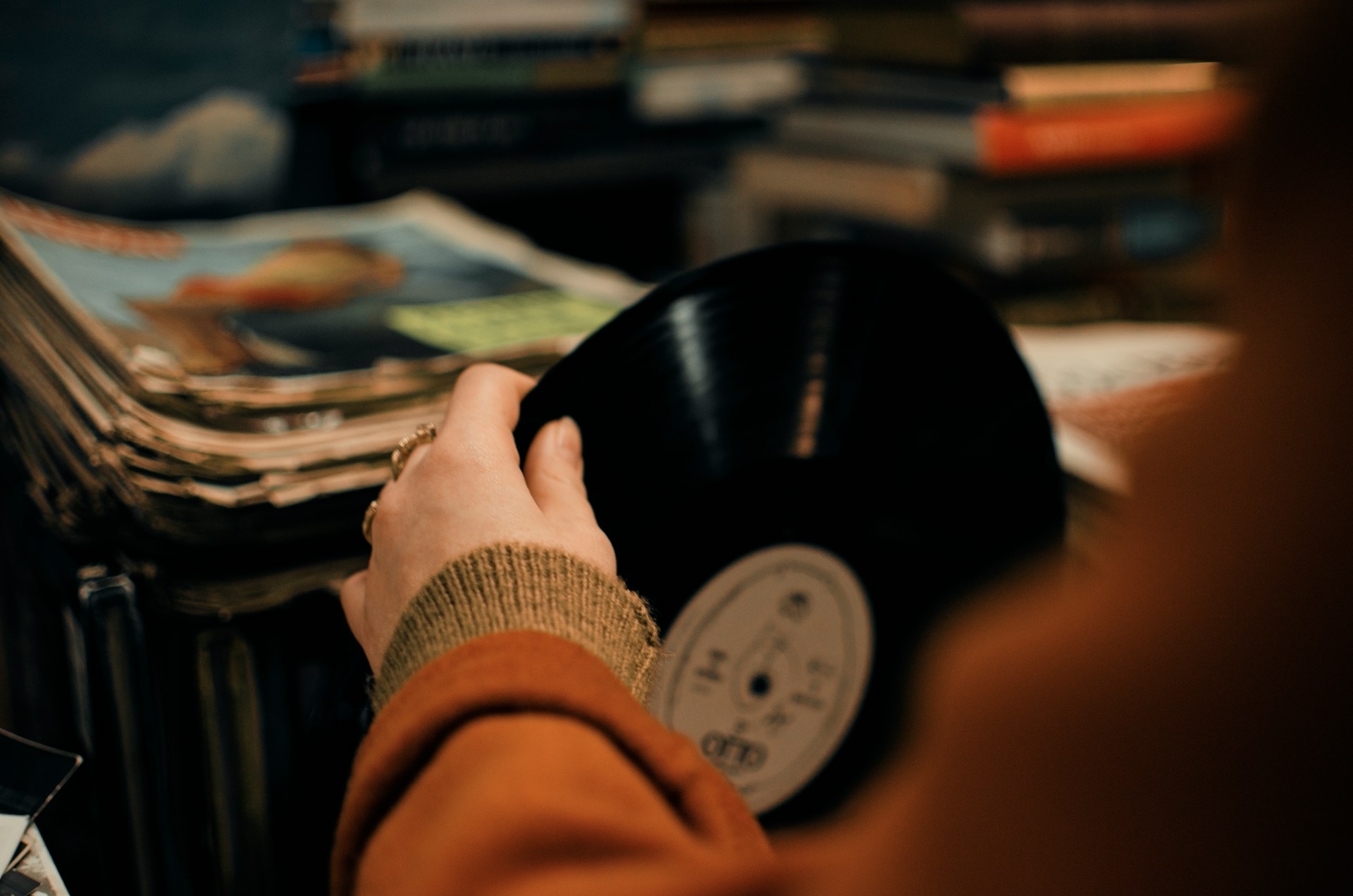
There is something strange about music.
You can forget a name.
You can forget an address.
You can forget what you ate yesterday, where you put your keys, or what you were supposed to do five minutes ago.
But then an old song starts playing.
Suddenly, you are somewhere else.
Maybe you are sitting in an old bedroom. Maybe you are walking down a familiar road. Maybe you are sitting in a car with the windows open. Maybe you are thinking about someone you have not spoken to in years.
Nothing physically changed.
You are still in the same room.
The same phone is in your hand.
The same computer is on the desk.
But your mind has opened a different door.
That is the strange relationship between music and memory.
Music does not simply remind us of things. Sometimes it feels like music carries entire pieces of the past inside it.
A song can become a small time machine.
Music Has a Way of Finding Old Rooms
Memory is complicated.
We do not remember every moment of our lives with the same level of detail. Some days disappear into a blur. Some experiences remain incredibly clear.
Then there are memories connected to music.
Those can feel different.
You might hear a song from ten years ago and immediately remember the atmosphere surrounding the time when you first heard it.
You may remember the weather.
You may remember the people around you.
You may remember the clothes you were wearing.
You may remember what your life felt like.
Sometimes you cannot even remember the exact event.
You simply remember the feeling.
That is one of the most fascinating things about music.
A song does not always give you a photograph of the past.
Sometimes it gives you the atmosphere.
It gives you the color.
It gives you the temperature.
It gives you the emotional background.
It is almost like opening an old computer and discovering that one folder contains far more information than you expected.
Music can be that folder.
A Song Can Become a Timestamp
Technology has timestamps.
A photograph has a date.
A video has a recording time.
A file has metadata.
But human memory has its own timestamps.
Music can create them.
You hear a particular song and your mind says:
That was that year.
That was that summer.
That was when I was in school.
That was when I lived there.
That was when everything felt different.
The song becomes associated with a period of your life.
It becomes part of the soundtrack of a particular chapter.
This is why playlists can sometimes feel like personal diaries.
You can create a playlist without intentionally trying to document your life, only to discover years later that every song represents something.
One song reminds you of a person.
Another reminds you of a city.
Another reminds you of a difficult period.
Another reminds you of a time when you were excited about the future.
Another reminds you of simply being young.
The playlist becomes a map.
Not a geographical map.
A memory map.
The Interesting Part Is That Music Does Not Need Words
One of the most beautiful things about music is that lyrics are not always necessary.
A melody can be enough.
A guitar tone can be enough.
A drum pattern can be enough.
A particular synthesizer sound can be enough.
Sometimes you hear three seconds of an instrumental track and immediately know where your mind is going.
There is something powerful about sound itself.
A certain chord progression can create a familiar emotional landscape.
A particular drum sound can remind you of an era.
A guitar riff can bring back a room.
A keyboard sound can remind you of an old television show.
A production style can remind you of the technology of a particular period.
This is why music is more than language.
Language tells us things.
Music can make us feel things before we even understand what is happening.
The Songs We Discover Become Part of Us
Think about the first time you discover a song that genuinely affects you.
Maybe you hear it randomly.
Maybe someone sends it to you.
Maybe you discover it through a movie.
Maybe you find it while exploring music online at two in the morning.
Maybe you hear it in a car.
At first, it is simply a song.
Then you listen again.
And again.
Eventually, the song becomes associated with your life.
This is an interesting transformation.
The song existed before you found it.
Millions of people may have heard it.
But eventually, it becomes your song.
Not necessarily because you own it.
Because of what you attach to it.
Music is partly about sound, but it is also about personal meaning.
Two people can listen to the exact same song and carry completely different memories afterward.
One person may associate it with happiness.
Another may associate it with a difficult period.
Another may simply enjoy the production.
The song stays the same.
The memories change.
That is the fascinating part.
Music Can Make Ordinary Moments Important
Not every memorable moment is dramatic.
Some of the strongest memories come from ordinary days.
Sitting outside.
Walking home.
Cooking something simple.
Working late.
Playing games.
Talking with friends.
Traveling somewhere.
Looking through an old computer.
Scrolling through songs.
Watching the sunset.
Doing absolutely nothing.
At the time, these moments can feel completely normal.
Then years pass.
A song comes on.
Suddenly, that ordinary afternoon becomes important.
This makes me think that perhaps we underestimate ordinary life.
We spend so much time waiting for major events.
Graduation.
A new job.
A big trip.
A major achievement.
A new relationship.
A major change.
But life is mostly made of smaller moments.
Music has a strange ability to preserve them.
A song can turn an ordinary afternoon into something you can revisit years later.
The Soundtrack of Growing Up
Every generation grows up surrounded by different sounds.
The technology changes.
The platforms change.
The speakers change.
The way people discover music changes.
But the relationship between music and growing up remains remarkably familiar.
There are songs that belong to childhood.
Songs from school.
Songs from teenage years.
Songs discovered during university.
Songs played during early adulthood.
Songs connected to the first years of working.
Songs connected to moving somewhere new.
Songs connected to discovering yourself.
Eventually, your life becomes divided into musical eras.
You may not consciously organize them this way.
But your memory does.
There is an early version of you who listened to certain songs.
Then another version who discovered different artists.
Then another version who started creating music.
Then another version who started understanding music differently.
The songs remain.
You change.
And when you return to the songs, you sometimes meet an older version of yourself.
Music Can Remind You Who You Were
This might be one of the strangest parts.
We change constantly.
Our interests change.
Our responsibilities change.
Our environment changes.
Our ambitions change.
Our understanding of ourselves changes.
Sometimes we become so focused on the person we are becoming that we forget the people we used to be.
Then an old song appears.
For a few minutes, you remember.
You remember what mattered to you.
You remember what excited you.
You remember what you were dreaming about.
You remember the things you were learning.
You remember the version of yourself who had not yet experienced certain things.
Music can therefore become a conversation between different versions of ourselves.
The person you were hears the person you are.
And sometimes they recognize each other.
Why Certain Songs Stay With Us
There are probably countless reasons why particular songs become deeply connected to memory.
Repetition matters.
Emotion matters.
Context matters.
Timing matters.
People matter.
Places matter.
The more connections a song accumulates, the more powerful its memory network can become.
Imagine listening to a song while traveling somewhere for the first time.
You hear it repeatedly during that trip.
Now the song is connected to the journey.
It is connected to the location.
It is connected to the people you were with.
It is connected to what you were thinking about.
It is connected to the feeling of discovering something new.
Years later, hearing the song can bring pieces of that entire experience back.
The song became more than a song.
It became a container.
Artists Understand This Differently
For people who create music, the relationship becomes even more interesting.
When you write a song, you are not simply creating sound.
You are documenting a moment.
Sometimes you do not realize how much of yourself has entered the recording until you hear it again years later.
The production choices.
The instruments.
The lyrics.
The vocal performance.
The mistakes.
The imperfections.
The atmosphere.
All of it can become part of the timestamp.
This is why artists sometimes have complicated relationships with old songs.
A song may sound completely normal to everyone else.
But the artist remembers making it.
They remember where they were.
They remember the equipment.
They remember the room.
They remember the emotions.
They remember what was happening in their life.
The listener hears a song.
The artist may hear an entire chapter.
Music Is Also a Form of Personal Technology
I often think of music as a kind of biological storage system.
Not in the literal computer-science sense.
But conceptually, it works like storage.
We store information in photographs.
We store information in documents.
We store information in videos.
We store information in social media posts.
And somehow, we also store information in songs.
A song can become an emotional file.
You press play and something opens.
There is no password.
No login screen.
No complicated interface.
Just sound.
That is a remarkable form of human technology.
Long before we had cloud storage, smartphones, digital cameras, and streaming platforms, humans were already using music to carry stories.
Songs carried culture.
Songs carried experiences.
Songs carried celebrations.
Songs carried sadness.
Songs carried history.
Songs helped people remember.
The Future Will Create New Memory Systems
Technology is changing how we interact with music.
Streaming has made enormous libraries accessible almost instantly.
Algorithms can recommend songs based on listening habits.
Artificial intelligence can help people discover, create, organize, and transform music.
Smartphones mean that enormous parts of our musical history can travel with us.
This creates something interesting.
People can now carry years of musical memory in their pockets.
A teenager today can have access to more recorded music than previous generations could easily imagine.
That changes discovery.
It also changes memory.
The soundtrack of someone’s life can become enormous.
There may be thousands of songs attached to different moments.
Different playlists can represent different periods.
Different albums can represent different versions of the same person.
The archive becomes almost endless.
But the Human Part Remains the Same
Despite all the technology, the fundamental relationship remains simple.
We hear something.
We feel something.
We remember something.
That connection is deeply human.
A song does not need perfect audio quality to become meaningful.
It does not need to be technically complicated.
It does not need to be popular.
It simply needs to arrive at the right moment.
Sometimes the smallest songs create the biggest memories.
A track that only a few people know can become the soundtrack to an entire chapter of someone’s life.
That is because memory does not care about popularity.
Memory cares about connection.
The Strange Beauty of It
Maybe that is why music feels so strange.
It exists in the present while carrying pieces of the past.
You hear a song now.
But part of you hears it from years ago.
The technology playing it may be completely different.
The speakers may be better.
The headphones may be better.
The recording may be streaming from a server somewhere on the other side of the world.
But the feeling can still be familiar.
That is incredible.
Music crosses time without physically moving through it.
A song recorded decades ago can suddenly become part of your afternoon.
A melody written by someone you have never met can become connected to your personal history.
A few minutes of sound can hold an entire season of your life.
And perhaps that is why we keep returning to old songs.
We are not always returning because the song is perfect.
Sometimes we return because of what the song remembers for us.
We Are All Carrying Soundtracks
Every person probably has a private soundtrack.
Some songs belong to childhood.
Some belong to friendships.
Some belong to places.
Some belong to dreams.
Some belong to mistakes.
Some belong to celebrations.
Some belong to quiet evenings.
Some belong to moments that cannot be explained.
And some songs simply exist because they make us feel like ourselves.
The strange thing is that we may not understand the importance of these songs until much later.
A song can be completely ordinary today and incredibly meaningful ten years from now.
That means we are constantly creating future memories.
Every time we listen to something during an important moment, we may be unknowingly attaching that sound to the experience.
The song becomes part of the archive.
One day, years later, it may play again.
And suddenly, the past will knock on the door.
Not with a photograph.
Not with a document.
Not with a notification.
With a melody.
That is the strange relationship between music and memory.
Music does not simply remind us of where we have been.
Sometimes, it reminds us of who we were while we were there.
And maybe that is why a song can last longer than a moment.
The moment disappears.
The song keeps playing.
And somewhere inside those sounds, a small piece of the past keeps waiting for us.