
The Video Game Strategies That Sound Like Terrible Advice but Actually Work
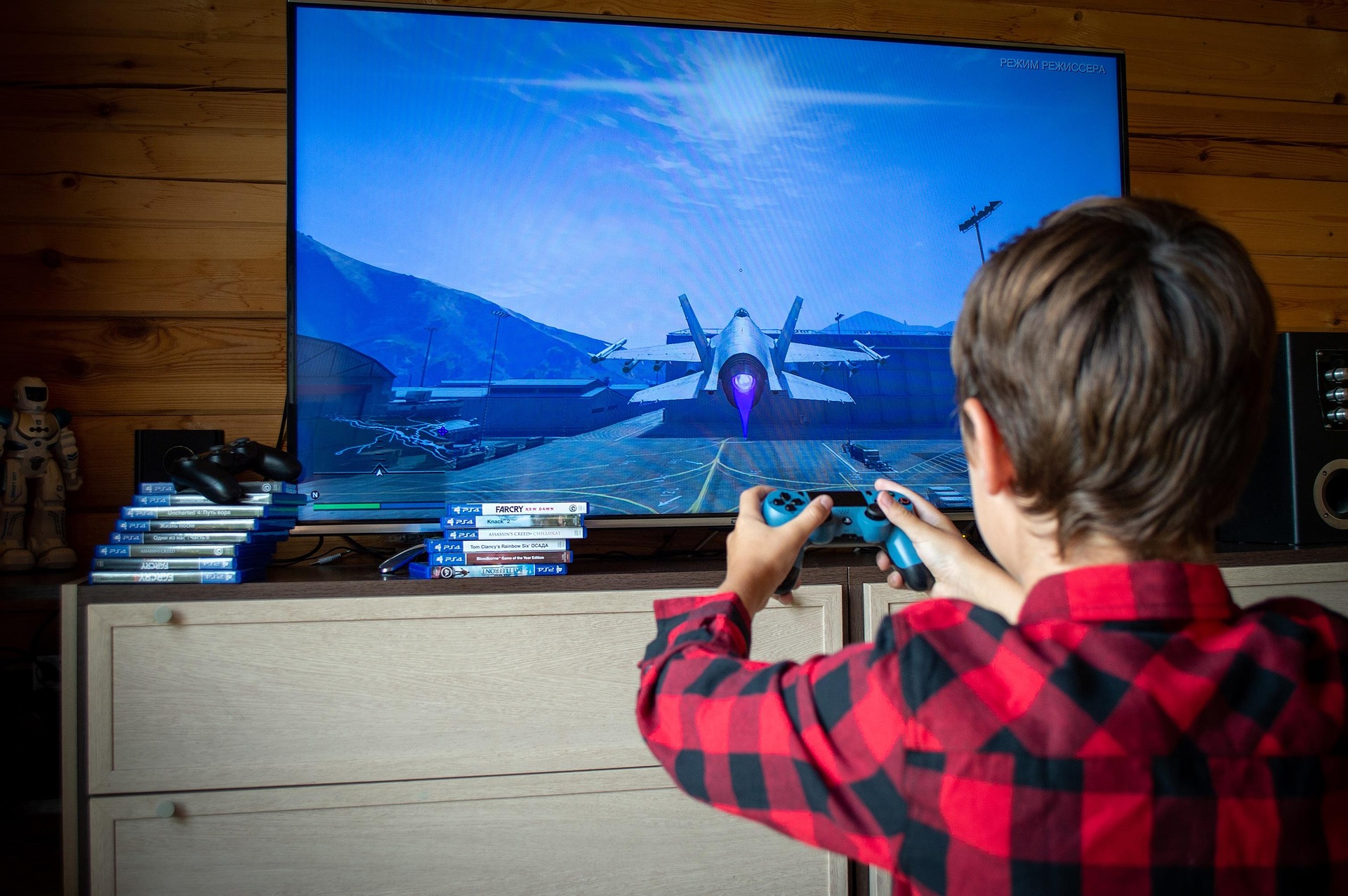
There is a strange moment in every video game when the smartest thing you can do looks suspiciously like the stupidest thing imaginable.
You are surrounded by enemies, your health bar is almost empty, and your inventory contains three healing items you have been saving for the final boss. Your instincts tell you to retreat, find cover, and develop a sensible plan. Instead, an experienced player charges directly into danger, throws away a valuable weapon, jumps off a cliff, or deliberately allows an enemy to hit them.
Somehow, it works.
The boss is defeated. The mission is complete. The player walks away victorious, while everyone watching wonders whether they have just witnessed extraordinary skill or a spectacular misunderstanding of basic survival.
Welcome to the wonderfully strange world of video game strategy, where conventional wisdom frequently gets turned upside down.
Games are fascinating because they create artificial worlds governed by rules. Once players understand those rules, they can discover opportunities that are invisible to beginners. Sometimes, the most effective strategy is not to become stronger, move faster, or acquire better equipment. Sometimes, it is to do something that would get you fired from an actual military operation, dismissed from a professional driving job, or permanently banned from a sensible approach to problem-solving.
Here are some of the most entertaining examples of video game strategies that sound like terrible advice but can produce surprisingly brilliant results.
1. Run Directly Toward the Enemy
Most people learn the same basic lesson from action games: if something dangerous is approaching, create distance.
It sounds reasonable. Enemies have weapons. Weapons cause damage. Therefore, remaining far away from enemies should increase your chances of survival.
Except that many games do not reward distance as consistently as players expect.
In certain action games, fighting games, and boss encounters, getting closer can actually make an opponent easier to handle. Some enemies are designed to punish players who retreat too frequently. They might launch projectiles, execute long-range attacks, or use abilities that become increasingly difficult to dodge when the player remains at a distance.
Approaching the enemy can eliminate some of those advantages.
Consider a boss that fires a series of projectiles across an arena. From a distance, the player has to dodge several attacks while trying to aim accurately. At close range, the boss might struggle to use those same attacks effectively, creating a brief opportunity for direct damage.
The same principle appears in many fighting games, where aggressive pressure can prevent an opponent from comfortably preparing their next move.
Of course, this is not a universal rule. Charging toward a heavily armed enemy in a shooter can be an excellent way to discover the game’s respawn screen.
The trick is understanding what the enemy is designed to do.
A strategy that looks reckless from the outside may actually exploit a predictable weakness in the game’s combat system.
Sometimes, the safest place is not the furthest point from danger. It is the position where danger has the fewest useful options.
2. Stop Moving to Become Harder to Hit
In many games, movement is survival.
Players sprint between buildings, jump over obstacles, strafe during gunfights, and perform elaborate maneuvers that make their characters look like professional athletes with unlimited energy.
Standing still feels wrong.
Yet there are situations in which remaining completely motionless can be surprisingly effective.
Consider stealth games. An enemy might detect movement more easily than a stationary target. If the player stops in a shadow, behind an obstacle, or outside an enemy’s direct field of vision, doing nothing can become the most effective action available.
The same idea appears in certain survival games, where movement generates noise that attracts nearby enemies. Running away from danger might save the player in the short term, but it can also alert additional threats and turn one problem into five.
Even in some competitive shooters, a brief pause can improve accuracy when a weapon’s firing mechanics reward controlled positioning.
The important distinction is between inactivity and deliberate stillness.
A player who freezes because they have no idea what to do is not necessarily using a strategy. A player who recognizes that movement creates a disadvantage is making a calculated decision.
There is a useful lesson here: action is not automatically progress.
Sometimes, moving less gives you more information, reduces unnecessary risks, and creates a better opportunity to act.
Video games occasionally reward players for resisting the instinct to do something simply because they feel they should.
3. Let the Enemy Waste Its Best Attack
Imagine fighting a powerful opponent with a devastating special move.
You could attack continuously, hoping to defeat them before they use it. You could spend valuable resources defending yourself. Or you could deliberately wait for the opponent to unleash their strongest attack.
That last option sounds suspiciously like volunteering to be eliminated.
However, many games build their combat systems around predictable attack patterns, cooldowns, and recovery windows.
A boss might spend several seconds preparing a powerful strike. The attack itself could be difficult to withstand, but missing it leaves the boss temporarily vulnerable. Once the player learns the pattern, the battle becomes less about dealing constant damage and more about choosing the correct moment to attack.
The player waits.
The boss prepares its enormous, screen-shaking attack.
The player dodges at the last moment.
Suddenly, the supposedly terrifying opponent is standing helplessly in the middle of the arena.
Now is the time to strike.
This strategy is particularly satisfying because it changes the emotional experience of a difficult encounter. Initially, the boss appears overwhelmingly powerful. After several attempts, the player realizes that its strength comes with a predictable rhythm.
The enemy is not simply attacking. It is following a schedule.
Learning that schedule can be more valuable than acquiring another weapon upgrade.
The same principle applies to fighting games, turn-based combat, and many action-adventure titles. Defensive play can create offensive opportunities, and patience can produce more damage than aggression.
The terrible advice is to let the enemy attack first.
The actual strategy is to make the enemy spend its strongest move at the least convenient possible moment.
4. Use Cheap Tactics Against Expensive Opponents
Every competitive game has moments when a player discovers a surprisingly effective technique that looks almost embarrassingly simple.
Perhaps a character has a quick attack that interrupts a complicated combination. Perhaps a basic defensive move defeats an elaborate offensive strategy. Perhaps a low-cost unit can distract an expensive enemy long enough for another unit to destroy it.
The natural assumption is that advanced opponents require advanced solutions.
Games often disagree.
In strategy games, a player might send inexpensive units toward a powerful defensive position, not because those units are expected to win, but because their presence forces the opponent to respond. Every second spent dealing with the distraction is a second the player can use to expand, collect resources, or attack somewhere else.
In fighting games, a simple move that interrupts an opponent’s predictable behavior may be more effective than attempting a technically demanding combination.
In multiplayer games, a basic ability used at exactly the right moment can completely disrupt a carefully prepared plan.
This is an example of efficiency beating complexity.
A strategy does not become ineffective simply because it is easy to execute. Likewise, an expensive strategy does not become brilliant simply because it requires substantial resources.
What matters is the relationship between the cost of an action and the advantage it produces.
Experienced players often understand that winning is not about making every move impressive. It is about making moves that solve the problem.
Sometimes, the best answer to an elaborate plan is an embarrassingly simple one.
5. Intentionally Take Damage to Gain an Advantage
This one sounds particularly unreasonable.
Your character has a limited amount of health. You are trying to survive. Why would you deliberately allow an enemy to hit you?
Because certain games reward players for understanding how damage, invulnerability, and movement interact.
In some action games, taking a hit triggers a brief period during which the character cannot be damaged again. This temporary protection can sometimes allow a player to move through a dangerous cluster of enemies without being repeatedly hit.
Other games feature mechanics that allow players to trade health for a powerful attack, activate a special ability, or gain a temporary advantage.
In some platformers and speedrunning challenges, experienced players may deliberately take damage to bypass a dangerous section or maintain momentum. The decision can save more health or time than attempting a difficult sequence without getting hit.
Fighting games offer another interesting example: players may accept a small amount of damage to escape a dangerous position or avoid a more devastating follow-up attack.
The mathematics can be surprisingly simple.
Suppose a player has 100 health points. An unavoidable obstacle deals 10 damage, but attempting to avoid it requires crossing an area containing enemies capable of dealing 40 damage.
If the game allows the player to absorb the small hit safely, taking damage might be the better option.
Naturally, the decision depends on the mechanics involved. Some games punish every hit severely, while others provide temporary protection or special movement opportunities.
The lesson is not to ignore your health bar.
It is to understand that health is a resource, and resources are meant to be evaluated in context.
A perfect run is not always the most efficient run.
6. Lose a Small Battle to Win the Entire Match
Players often become emotionally attached to individual victories.
They want to win every encounter, protect every unit, complete every objective, and emerge from every confrontation looking completely unstoppable.
Unfortunately, strategy games frequently reward players who can distinguish between a local victory and an overall victory.
Imagine a real-time strategy match in which an opponent launches an attack against one of your bases. You could spend all your resources defending that base, potentially leaving your main army too weak to protect the rest of your territory.
Alternatively, you could retreat, preserve your strongest units, and use the opponent’s commitment to attack as an opportunity to strike somewhere more valuable.
You might lose the base.
You might even lose several units.
But if your opponent spends so many resources capturing that base that you can destroy their main production facilities, the apparent defeat may become the turning point of the match.
This idea appears in tactical games, grand strategy titles, and even multiplayer objective-based shooters.
Sometimes, surrendering a position allows you to preserve the resources required to achieve the real objective.
The crucial distinction is between a deliberate sacrifice and a careless loss.
A deliberate sacrifice has a purpose. The player knows what they are giving up, what they expect to gain, and why the exchange is worthwhile.
A careless loss is simply a loss.
The strategy works when the value of the larger objective exceeds the value of the immediate victory.
It sounds like terrible advice because humans naturally prefer visible success. Losing a battle feels bad, even when it improves the chances of winning the war.
Good strategy requires looking beyond the scoreboard of the current moment.
7. Explore the Wrong Way
Open-world games encourage exploration, but players often approach their maps like organized tourists.
They follow the main road, activate nearby objectives, visit marked locations, and move steadily toward the next mission.
There is nothing wrong with that approach.
However, some of the most memorable discoveries happen when players deliberately ignore the obvious route.
Walk toward the suspicious mountain. Investigate the empty building. Follow the strange path that appears to lead away from the objective. Jump onto the platform that looks purely decorative.
Game developers frequently hide secrets in locations that players are unlikely to visit during ordinary progression.
These might include hidden equipment, optional quests, environmental storytelling, secret bosses, or shortcuts that connect distant areas.
In some games, the main route is designed to provide a relatively controlled experience, while the surrounding world rewards curiosity.
This is especially noticeable in games with interconnected environments, where a seemingly insignificant corridor may eventually lead to an important shortcut.
The strategy sounds terrible because it appears inefficient. You are spending time away from the objective, potentially wandering into areas where enemies are much stronger.
Yet the reward can be substantial.
An optional weapon discovered early might make several later encounters easier. A shortcut could reduce the time required to travel between important locations. A hidden upgrade might improve your character more than the next several ordinary rewards.
The key is knowing when exploration has value.
If you are attempting a timed mission, wandering into every abandoned building may be a mistake. If you are beginning a long adventure, investigating unusual details can produce advantages that compound over time.
Sometimes, the fastest route to success begins by taking the route that appears to lead nowhere.
8. Play Badly on Purpose to Learn How the Game Works
There is a difference between playing a game and understanding it.
A player can complete an entire campaign without knowing why certain strategies work. They might defeat enemies through repetition, upgrade equipment whenever possible, and rely on instinct to survive difficult encounters.
Then they reach a challenge that instinct cannot solve.
At that point, experimentation becomes essential.
One useful technique is to deliberately test the limits of the game.
What happens if you ignore the objective? Can an enemy follow you into another area? Does a boss continue attacking after you leave its immediate range? Can a vehicle survive a jump that appears impossible? Will a particular ability interrupt an opponent’s special move?
The point is not to win every experiment.
The point is to discover the rules.
In a sandbox game, you might deliberately create a disastrous situation to see how the simulation responds. In a racing game, you might test the consequences of braking at different points on a corner. In a platformer, you might repeatedly attempt an unusual jump to discover the limits of the character’s movement.
Failure becomes a source of information.
This approach is closely related to the scientific method: form a hypothesis, test it, observe the result, and adjust your understanding.
For example, suppose you believe that a particular enemy becomes more aggressive when its health falls below half. Instead of assuming the behavior is random, you can observe multiple encounters and compare the enemy’s actions at different health levels.
Eventually, you may discover a pattern that makes the encounter much easier.
Of course, experimentation has a cost. Some games have limited lives, expensive repairs, or consequences that persist after failure. In those situations, testing should be deliberate rather than reckless.
Still, a failed experiment can be more valuable than a successful attempt that teaches you nothing.
Sometimes, the best way to become better at a game is to stop trying to play it properly for a moment.
9. Make Your Character Weaker to Become More Effective
Video games are full of progression systems designed to make players stronger.
You collect experience points, acquire better equipment, unlock abilities, and gradually transform an ordinary character into a walking disaster for anything unfortunate enough to stand nearby.
Naturally, removing upgrades seems like the opposite of progress.
Yet certain games reward players who understand the trade-offs associated with their equipment and abilities.
A heavier weapon might inflict more damage but reduce movement speed. Heavier armor might improve defense while making stamina management more difficult. A powerful ability might consume resources that would be more useful for healing or escaping.
In these cases, increasing one statistic can weaken the overall build.
Consider a character who carries a massive weapon that deals tremendous damage but attacks slowly. Against a large, predictable boss, the weapon might be excellent. Against a fast opponent who frequently interrupts attacks, a lighter weapon could produce more reliable damage over time.
The weaker weapon may be stronger in practice.
The same logic applies to equipment loadouts in tactical shooters, ability selections in role-playing games, and vehicle configurations in racing simulators.
An upgrade is only an improvement if its advantages suit the situation.
Some games even allow players to respec their characters, change equipment, or remove abilities to create specialized builds. A player who adapts their setup to a particular challenge may outperform someone who simply equips whatever has the highest displayed statistics.
This is a reminder that optimization is not the same as maximizing every number.
A good build is not necessarily the one with the largest damage value, the most impressive equipment, or the highest possible level.
It is the one that performs best under the conditions that matter.
10. Let Other Players Think You Are Losing
Competitive games introduce an additional resource that many players underestimate: information.
Your opponent does not necessarily know your full strategy. They observe your movements, interpret your decisions, and attempt to predict what you will do next.
That creates opportunities for deception.
In a strategy game, a player might appear to be building a defensive force while secretly preparing an unexpected attack. In a tactical multiplayer game, a team might make noise in one location to draw attention away from its actual objective.
In certain competitive games, a player might deliberately adopt a passive-looking position, encouraging an opponent to become overconfident and take unnecessary risks.
These tactics work because opponents make decisions based on what they believe is happening.
However, deception is not magic. It requires the player to understand what information the opponent can observe and how that information influences their decisions.
If your opponent has access to a complete map of your units, pretending to conceal an army may accomplish very little. If your movements are predictable, a supposedly clever distraction might simply reveal your intentions.
Successful misdirection depends on credibility.
Your opponent must have a reasonable explanation for the behavior they observe, and that explanation must lead them toward a decision that benefits you.
The most entertaining part is that a strategy can become more effective precisely because it looks like a mistake.
A retreat might encourage an opponent to advance too far. A seemingly weak defense might tempt them to commit resources prematurely. A visible distraction might create an opening somewhere else.
In games where information is incomplete, what your opponent believes can be almost as important as what you actually do.
11. Repeat the Same Move Until Your Opponent Proves It Can Be Stopped
Players sometimes assume that skilled gaming requires constant creativity.
They imagine expert competitors inventing elaborate combinations, discovering mysterious techniques, and executing complex maneuvers that ordinary players cannot comprehend.
But one of the most effective competitive habits is considerably less glamorous: repeat a simple, effective action until your opponent demonstrates that they can counter it.
This idea appears in fighting games, sports games, multiplayer shooters, and strategy titles.
Suppose a fighting-game opponent repeatedly fails to defend against a particular attack. You could switch to a complicated combination in an attempt to appear unpredictable.
Or you could continue using the attack that already works.
Why introduce unnecessary risk when the current approach is producing results?
The situation changes when the opponent adapts. If they begin blocking the attack, punishing it, or positioning themselves to prevent it, you now have a reason to change your approach.
Until then, unnecessary variation can create problems.
This is sometimes described as exploiting a weakness, but it also reflects a broader principle of efficient decision-making: do not abandon a successful strategy merely because it appears too simple.
Of course, predictable behavior becomes a disadvantage when an opponent has an effective counter. Repeating a move blindly is not the same as repeating it intelligently.
The important part is observation.
Use what works. Watch for changes. Adapt when the evidence tells you to adapt.
There is no requirement to make every victory look complicated.
Sometimes, the winning move is the one you have already used five times.
12. Stop Playing When You Are Most Determined to Win
This may be the most frustrating piece of advice in gaming.
You have lost three matches in a row. You know you can do better. Your opponent is beatable. One more attempt should be enough to recover your ranking, restore your confidence, and end the evening on a positive note.
So you queue again.
And again.
Eventually, your decisions become rushed. You stop checking corners, forget familiar attack patterns, and begin making mistakes you would normally recognize immediately.
The game has not necessarily become more difficult.
You may simply be tired, frustrated, or distracted by the desire to recover your previous results.
Taking a break can be a surprisingly effective strategy.
Competitive games require attention, timing, pattern recognition, and emotional control. When concentration deteriorates, even well-practiced skills can become less reliable.
A short break allows you to return with a clearer perspective. Reviewing a replay, practicing a difficult sequence, or switching to a less demanding activity can sometimes produce more improvement than immediately starting another match.
This is especially relevant in ranked games, where players may become so focused on recovering lost points that they stop evaluating their decisions carefully.
There is nothing inherently wrong with playing for several hours. The problem arises when continuing becomes less useful than resting.
A player who recognizes that their performance is declining has identified an important part of the problem.
Stopping is not necessarily surrender.
It can be a strategic decision to preserve attention, avoid unnecessary mistakes, and return when the conditions are better.
Sometimes, the best move in a video game is to put down the controller.
The Real Secret Behind These Apparently Terrible Strategies
What connects all these techniques?
At first glance, they seem unrelated. Charging toward an enemy, deliberately taking damage, sacrificing a base, exploring in the wrong direction, and abandoning an exhausting match are very different actions.
But they share a common principle: effective strategy depends on understanding the system rather than blindly following conventional advice.
In video games, familiar rules are useful starting points. Avoid damage. Protect valuable resources. Upgrade your equipment. Follow the objective. Keep moving when danger approaches.
These rules work often enough to become habits.
However, every game contains specific mechanics, constraints, and opportunities that can change the value of a decision.
A movement mechanic might make approaching an enemy safer than retreating. A temporary invulnerability window might turn a hit into an opportunity. A strategically chosen sacrifice might create a decisive advantage elsewhere. A seemingly useless path might contain the upgrade that transforms the rest of the adventure.
The player who understands these relationships can make decisions that appear irrational to someone who sees only the immediate action.
This is also why experienced players often describe difficult games differently from beginners.
A beginner sees a powerful boss and thinks about how to deal enough damage to defeat it.
An experienced player asks different questions.
What triggers its strongest attack? How long does its recovery animation last? Which abilities can interrupt it? What happens if I change my position? Can I avoid the entire sequence instead of fighting through it?
The difference is not simply reflexes or experience. It is the ability to identify the rules governing the situation.
Once those rules become visible, apparently impossible challenges can become manageable problems.
Conclusion: Sometimes, Bad Advice Is Just Good Strategy in Disguise
Video games have a remarkable ability to reward curiosity.
They encourage players to experiment, question assumptions, recognize patterns, and discover possibilities that were not obvious at the beginning. Sometimes, the conventional approach is correct. Other times, a supposedly terrible decision produces a better result because it takes advantage of a mechanic that most players overlook.
The important skill is knowing the difference.
Charging directly toward an enemy is not always courageous or clever. Taking damage is not automatically efficient. Losing a battle does not guarantee a strategic victory. Repeating a move is not a substitute for adaptation.
Every technique depends on context.
But that is precisely what makes these strategies interesting. They remind us that the quality of a decision cannot always be judged by how it looks in isolation.
A player who runs toward danger might understand the enemy better than someone who runs away. A player who sacrifices a base might be protecting a much larger advantage. A player who appears to be doing nothing might be waiting for the exact moment when action becomes worthwhile.
And the player who walks away from a losing streak might be making the smartest decision of the evening.
In the end, the best gamers are not necessarily those who follow the most rules. They are the ones who understand why the rules exist, recognize when the circumstances change, and know when an unconventional approach is worth trying.
So the next time someone tells you to never take damage, never sacrifice a unit, never abandon the main quest, or never repeat the same move, remember that video games are built from systems of rules and consequences.
Sometimes, the most interesting discovery is not learning how to play correctly.
It is discovering why the thing that looks completely wrong works so remarkably well.