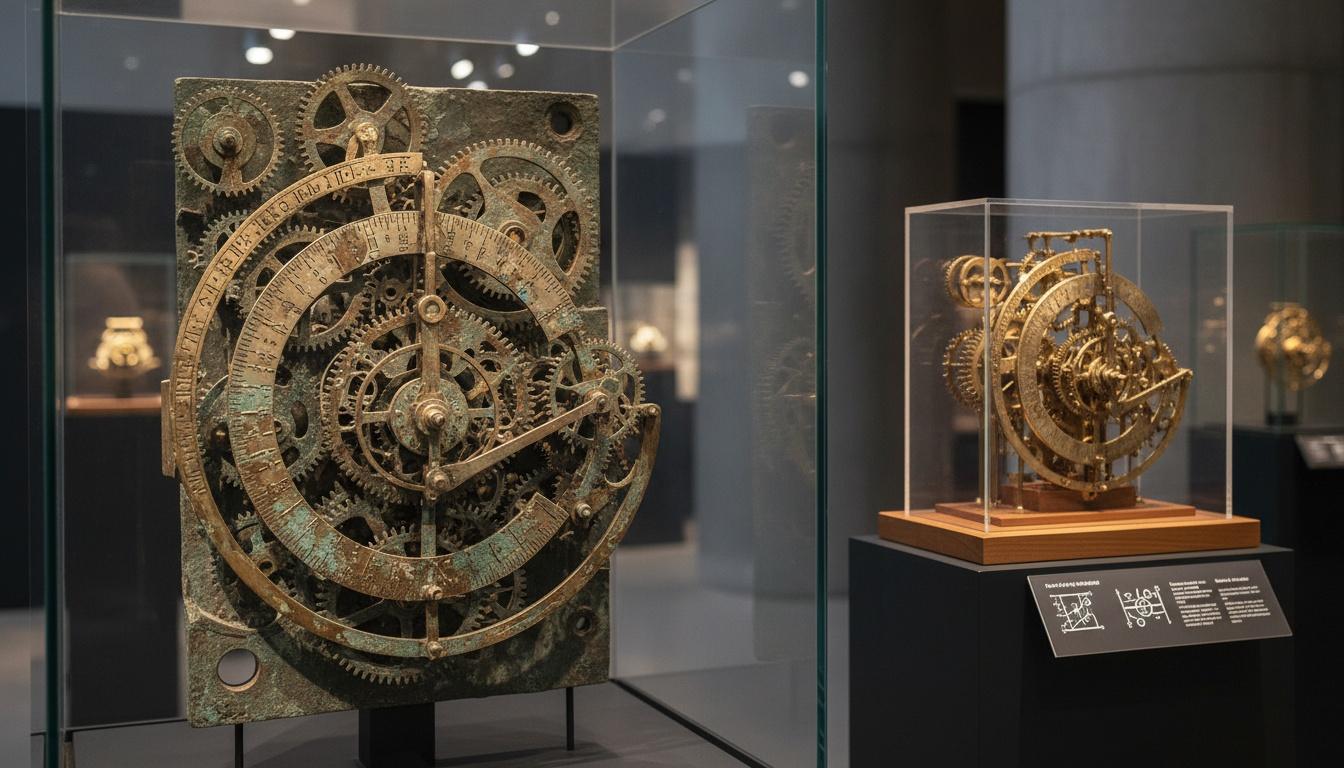
The Unexpected Ways Old Technology Keeps Influencing New Inventions
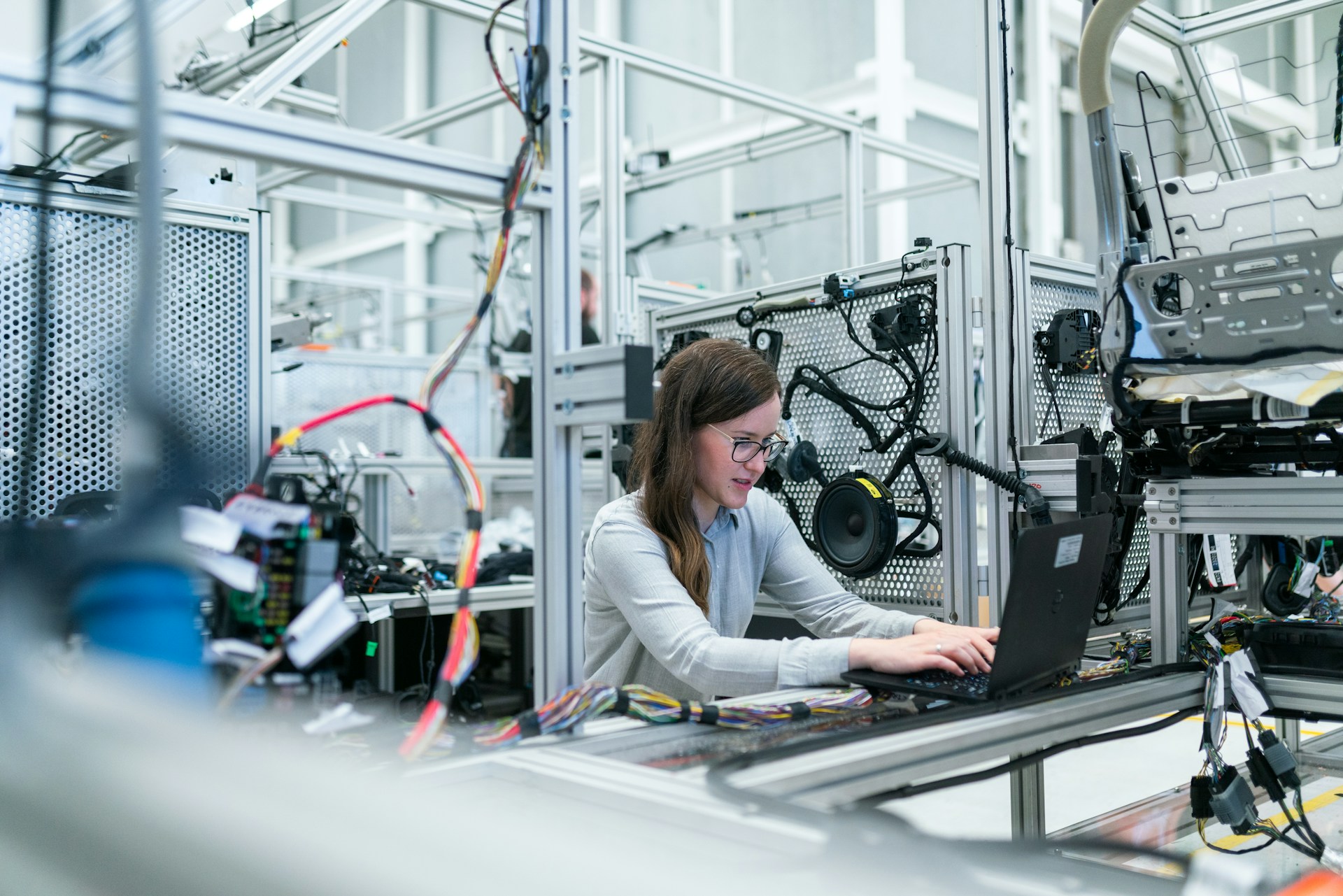
We live in an age when technology seems to reinvent itself every few months. Artificial intelligence can generate images, write software, and compose music. Smartphones have replaced cameras, calculators, maps, music players, and even some of the functions once performed by entire offices. Meanwhile, robots are learning to perform increasingly complicated tasks, spacecraft are exploring distant worlds, and scientists are developing materials that would have seemed like science fiction a century ago.
Looking at all this progress, it is tempting to imagine that the future is built by abandoning the past.
But there is a fascinating problem with that assumption.
Some of our most advanced inventions still carry the fingerprints of technologies that existed long before the internet, computers, or electricity became part of everyday life. The past is not merely a collection of obsolete machines gathering dust in museums. It is a library of ideas, mechanical principles, design decisions, and solutions that continue to influence how we build the future.
A modern computer might contain principles inherited from nineteenth-century mathematics. A spacecraft can depend on the same fundamental laws of motion that helped engineers design steam engines. A digital artist might use techniques inspired by centuries-old printing methods. Even the way we organize information online reflects ideas that existed long before anyone imagined a website.
Technology rarely develops in a straight line. Sometimes it advances by replacing an old invention. Sometimes it advances by improving it. And sometimes it discovers that an idea dismissed as outdated was simply waiting for the right materials, tools, or circumstances.
The future, as it turns out, has a surprisingly good memory.
1. The Mechanical Calculator That Helped Shape Modern Computing
Before computers could fit inside our pockets, calculations were performed using mechanical devices, handwritten tables, and human labor.
One of the most remarkable figures in this history was Charles Babbage, an English mathematician who designed mechanical calculating machines during the nineteenth century. His proposed Analytical Engine was especially ambitious. Although it was never completed as originally envisioned during his lifetime, its design included concepts resembling a processing unit, memory, and programmable operations.
The machine was mechanical, not electronic. Instead of electrical circuits switching billions of times per second, it would have relied on gears, shafts, and other physical components.
Yet the underlying ambition was familiar: create a machine that could follow instructions to perform calculations.
Ada Lovelace, who studied Babbage’s proposed machine, recognized that such a device could potentially manipulate symbols according to rules rather than simply calculate numerical answers. Her famous notes included an algorithm intended for the Analytical Engine, making her an important figure in the history of programming.
The connection to modern computing is not that today’s processors are direct copies of Babbage’s machinery. They are radically different in their physical construction and capabilities. The deeper connection lies in the ideas of programmable computation, stored operations, and machines capable of executing sequences of instructions.
Today’s software developers write instructions in Python, JavaScript, Rust, or other programming languages. Those instructions are eventually translated into operations that electronic hardware can execute.
The gears have disappeared, but the broader ambition remains.
We still want machines that can perform complicated operations reliably, follow instructions, and transform inputs into useful results.
This is a recurring pattern in technological history: the physical mechanism changes, but the conceptual problem survives.
2. Ancient Navigation Is Still Influencing Digital Maps
Imagine a sailor several centuries ago, standing on the deck of a ship with a compass, a map, and an understanding of the stars.
Now imagine someone today opening a navigation app and watching a blue dot move across a digital map.
The two experiences seem worlds apart. One involves wooden ships and astronomical observations; the other involves satellites, software, wireless signals, and sophisticated mathematical models.
But both are attempts to solve the same fundamental problem: determining where you are and how to reach another place.
Navigation has always depended on combining observations with a model of the world.
Early navigators used landmarks, celestial bodies, magnetic compasses, and charts. Over time, improvements in cartography, measurement, and maritime instruments made navigation more reliable.
Modern satellite navigation adds an extraordinary layer of precision. Systems such as GPS use signals from satellites to help receivers estimate their positions. Digital maps then combine those positions with geographic data, road networks, and routing algorithms.
The hardware has changed dramatically, but the basic questions remain remarkably stable.
Where am I? Where do I want to go? What route connects those points? How can I estimate the distance and time required?
Even the mathematics behind route planning has deep historical roots. Graph theory, which provides a way to represent networks of connected points, became a formal mathematical field in the eighteenth century through Leonhard Euler’s work on the famous Königsberg bridge problem.
Today, related ideas help computers find paths through road networks, communication systems, and transportation infrastructure.
The next time a navigation app suggests a faster route around traffic, remember that it represents the latest chapter in humanity’s long effort to turn geography into something understandable and navigable.
The map may now live inside a phone, but the desire to find our way has never gone out of fashion.
3. The Printing Press Left Its Mark on the Digital World
The printing press transformed how people produced and distributed written information. Movable type made it possible to reproduce texts more efficiently than copying every page by hand.
The result was not simply a better way to make books. It changed the economics of information.
Ideas could travel farther. Documents could be reproduced in large quantities. Readers could encounter the same text in different places, and publishers could develop increasingly standardized methods of presenting information.
Centuries later, the internet would take information distribution in a radically different direction.
A digital document can be copied almost instantly. A blog post can reach readers across continents. An online publication can update its content without printing another edition.
Nevertheless, the digital world retains several ideas associated with print culture.
Consider typography. Fonts, headings, paragraph spacing, columns, and page layouts continue to influence how websites and applications present information. Designers still make decisions about readability, hierarchy, contrast, and the relationship between text and images.
Digital publishing also inherits the challenge of organizing large quantities of content into recognizable structures.
Books have chapters. Newspapers have sections. Encyclopedias have entries. Websites have pages, categories, tags, and search functions.
These are not identical systems, but they address related problems: helping people find, understand, and navigate information.
Even the familiar page metaphor survives in digital interfaces. We scroll through pages, turn virtual pages in reading applications, and arrange digital documents using conventions that evolved through centuries of publishing.
There is an interesting irony here.
The internet has made physical printing unnecessary for many forms of communication, yet much of its visual language still reflects the technology it helped transform.
The old medium did not simply disappear. It left behind a vocabulary that the new medium continues to speak.
4. The Steam Engine’s Legacy Lives On in Modern Engineering
The steam engine helped transform transportation, manufacturing, and industrial production. Its development depended on advances in thermodynamics, mechanical engineering, materials, and the practical management of energy.
Modern electric vehicles, aircraft, and spacecraft look nothing like nineteenth-century steam engines. Their power sources, control systems, and materials are different.
Yet engineers continue to work with many of the same fundamental questions that confronted earlier generations.
How can energy be converted into useful work? How can mechanical forces be controlled? How can friction and heat be managed? How can a structure withstand repeated stress without failing?
These questions belong to engineering itself, not to any single generation of machines.
Thermodynamics, which became a formal scientific discipline partly through the study of heat engines, remains essential to understanding engines, refrigeration systems, power stations, and thermal management in electronics.
Modern computers, for example, generate heat as their components consume electrical power. Data centers must remove that heat to keep equipment operating within appropriate temperature ranges.
This creates a surprising connection between industrial machinery and digital infrastructure.
A nineteenth-century engineer concerned with heat in a steam engine and a modern engineer designing a cooling system for a large computing facility are dealing with different technologies, but both must understand how energy moves through a physical system.
The same is true of structural engineering. The principles of stress, strain, leverage, and material strength remain essential whether the object is a railway bridge, a wind turbine, or a rocket.
New inventions often depend on old scientific principles applied under new conditions.
Sometimes progress means discovering something entirely new. Sometimes it means understanding an old principle well enough to use it in a more sophisticated way.
5. The Telephone’s Influence on Smartphones Goes Beyond Calling
The smartphone is one of the clearest examples of technological convergence.
A single device can combine communication, photography, music playback, navigation, computing, entertainment, and access to vast information networks.
Yet one of its most familiar functions—voice communication—comes from a much older technological tradition.
Early telephone systems were designed primarily to transmit speech over electrical connections. Over time, improvements in switching systems, transmission methods, and network infrastructure expanded the reach and capabilities of telephone communication.
Mobile phones removed the need for a permanent wired connection to the user’s device. Smartphones then combined telephony with general-purpose computing.
The result is a device that can make a voice call while simultaneously running software, connecting to the internet, recording video, and processing sensor data.
But the legacy of older telecommunication systems is not limited to voice calls.
Communication networks must still solve problems involving signal transmission, interference, routing, reliability, and the efficient use of limited resources.
Modern wireless networks use advanced digital techniques, but the fundamental challenge remains recognizable: move information from one place to another accurately and efficiently.
Even the familiar telephone icon in many applications is a small piece of technological history. A symbol representing an older communication device continues to mean “call,” even on a screen that may never have been connected to a traditional landline.
This is how technologies survive culturally as well as technically.
A machine can become obsolete while its purpose, interface conventions, or symbolic identity remain useful.
6. The QWERTY Keyboard Is a Reminder That History Shapes Design
One of the strangest things about modern computing is that many people still type using a keyboard layout developed during the era of mechanical typewriters.
The QWERTY layout became associated with typewriters in the nineteenth century and subsequently became widely established. Its history is often explained through simplified stories about preventing typewriter mechanisms from jamming, but the actual development and adoption of keyboard layouts involved several factors.
Whatever the precise mix of historical influences, QWERTY demonstrates an important feature of technological evolution: once a design becomes widely adopted, replacing it can be difficult even when alternatives exist.
Millions of people learn the same layout. Schools teach it. Businesses use it. Manufacturers produce compatible hardware. Software developers build interfaces around it.
A competing layout may offer advantages for particular users or languages, but switching involves costs that go beyond the physical keyboard.
People must relearn habits. Organizations must retrain workers. Existing equipment and expectations must be reconsidered.
Economists and historians sometimes describe this phenomenon through the idea of path dependence: the choices made earlier can influence which options remain practical later.
Technology is not designed from a blank page every morning. It develops inside an existing world of habits, infrastructure, standards, and expectations.
This is particularly important for software developers.
A technically elegant replacement does not automatically win. Adoption, compatibility, familiarity, and migration costs all matter.
Sometimes the most successful invention is not the one with the most impressive specifications. It is the one that solves a problem while fitting into the world people already understand.
7. Ancient Mathematics Is Still Running Inside Modern Artificial Intelligence
Artificial intelligence often appears to belong entirely to the future.
Modern AI systems can recognize images, generate text, summarize documents, and help researchers analyze complicated problems. Their capabilities depend on powerful hardware, large datasets, sophisticated algorithms, and years of research.
But beneath these modern systems lies mathematics with a much longer history.
Algebra, geometry, probability, and mathematical optimization are essential to many areas of contemporary computing. Their development spans centuries and involves contributions from many cultures and generations of mathematicians.
Linear algebra, for example, provides tools for representing and manipulating vectors and matrices. These mathematical structures are central to many machine-learning systems.
Neural networks use numerical parameters and mathematical operations to transform inputs into outputs. During training, optimization algorithms adjust those parameters to reduce a chosen measure of error.
Probability and statistics help researchers reason about uncertainty, estimate relationships in data, and evaluate model performance.
None of this means that modern AI is merely ancient mathematics wearing a futuristic costume. Today’s systems incorporate decades of scientific discoveries, engineering advances, and computational experimentation.
However, it does demonstrate that new inventions often emerge when established knowledge is combined in unfamiliar ways.
A mathematical technique developed long before electronic computers can become a building block for a system that generates images in seconds.
An old equation can find an unexpected application when hardware becomes powerful enough to perform calculations on a massive scale.
This is one reason technological progress can accelerate so dramatically.
Humanity does not need to rediscover every mathematical principle before inventing something new. Each generation inherits a growing collection of tools that can be recombined.
The breakthrough may be modern, even when some of its foundations are centuries old.
8. The Bicycle Helped Inspire Ideas About Human-Machine Interaction
The bicycle is a relatively simple machine compared with an autonomous vehicle or a modern robotic system. It uses familiar mechanical principles: wheels, gears, chains, brakes, and a frame designed to support a rider.
Yet bicycles also illustrate an important design challenge: creating a machine that works in partnership with a human being.
A bicycle does not simply move. It responds to steering, balance, pedaling, and braking. Its usefulness depends on how the rider and machine interact as a combined system.
Modern technology increasingly faces similar questions.
A robotic arm must respond to human instructions. A powered wheelchair must translate a user’s intentions into controlled movement. A driver-assistance system must communicate information clearly enough for a person to understand what the vehicle is doing.
In each case, technical capability alone is insufficient.
The machine must be controllable, predictable, and understandable to the person using it.
The bicycle’s design history also demonstrates the importance of iteration. Its familiar form emerged through generations of experimentation with frame geometry, steering, wheel size, braking, and drivetrain design.
Designers learned by building machines, observing their behavior, and making adjustments.
Modern engineering follows a comparable process, although computer simulations, sensors, and automated testing can make experimentation faster and more precise.
The bicycle is not the direct blueprint for every modern robot, nor does every new control system descend from bicycle engineering. Its broader lesson is that useful technology must be designed around the relationship between a machine, its environment, and the human being operating it.
That principle remains relevant whether the machine has two wheels or thousands of lines of code.
9. Old Building Techniques Continue to Influence Sustainable Architecture
Long before air conditioning became widespread, builders in many parts of the world developed ways to make buildings more comfortable using local materials, shade, ventilation, and an understanding of the climate.
Traditional architecture varied enormously across regions. Some buildings used thick walls to moderate temperature changes. Others incorporated courtyards, high ceilings, shaded openings, or carefully positioned windows to encourage airflow and reduce direct sunlight.
These approaches developed in response to local environments, available materials, cultural practices, and construction traditions.
Today, architects and engineers are revisiting many passive-design principles as they work to improve energy efficiency and indoor comfort.
A modern building may use advanced sensors, automated blinds, sophisticated insulation, and computer modeling while still benefiting from the basic idea of reducing unwanted heat before relying on mechanical cooling.
The relationship is particularly interesting because old techniques are not automatically suitable for every modern building. Climate, humidity, occupancy, safety standards, and local conditions all affect performance.
Instead, architects can study traditional approaches, measure what works, and combine useful principles with contemporary materials and engineering.
This is a form of innovation that does not require pretending the past was perfect.
It requires recognizing that people solved practical problems long before today’s technology existed.
In some cases, an older solution may provide a useful starting point for addressing a modern challenge. In others, new research may reveal how to improve it.
Either way, history becomes a source of design knowledge rather than merely a collection of architectural photographs.
10. The Sewing Machine’s Principles Still Matter in Modern Manufacturing
The sewing machine transformed clothing production by mechanizing a task that had traditionally required extensive manual labor.
Its development involved intricate coordination between needles, thread, fabric movement, and mechanical timing. Producing a reliable stitch required several components to work together in a carefully controlled sequence.
Modern manufacturing systems operate on a much larger scale, using industrial robots, programmable controllers, computer vision, and precision machinery.
Yet the broader engineering challenge remains familiar: coordinate multiple operations to transform raw materials into a finished product.
A garment factory may use automated cutting equipment and computerized pattern systems while retaining the basic logic of joining pieces of fabric through stitching.
More broadly, the sewing machine illustrates how mechanization can change the speed, consistency, and economics of production without changing the fundamental purpose of the task.
Similar patterns appear in electronics manufacturing, food processing, and automated assembly.
A modern production line may look almost unrecognizable compared with an early workshop, but it still depends on carefully ordered operations, repeatable movements, quality control, and reliable coordination.
The lesson for anyone interested in invention is that a technology does not need to remain physically recognizable to preserve its underlying logic.
An old machine may be replaced by a more advanced system, while the problem it was designed to solve continues to guide the next generation of equipment.
11. Musical Instruments Are Influencing Digital Sound Design
Music technology provides another fascinating example of the past influencing the future.
Long before digital audio workstations existed, musicians developed instruments capable of producing distinctive sounds through strings, membranes, air columns, and resonating bodies.
The acoustic guitar, piano, violin, and drum kit each have physical characteristics that shape their sound. Their designs influence how musicians perform, how instruments respond to technique, and how different sounds combine in an arrangement.
Electronic synthesizers expanded the possibilities by generating and manipulating sound through electrical and electronic systems.
Digital audio workstations expanded them further, allowing musicians to record, edit, arrange, and process audio using software.
Despite these changes, modern music production frequently draws inspiration from older instruments.
Digital synthesizers can imitate the sound of a piano or an analog synthesizer. Drum machines can reproduce familiar rhythmic patterns. Software effects can emulate the characteristics of vintage recording equipment.
These recreations are not always exact, and many producers deliberately explore sounds that traditional instruments cannot create.
Nevertheless, the history of musical instruments continues to shape the vocabulary of digital sound.
The piano roll found in many music applications is another example. It provides a visual way to arrange musical notes across time, borrowing its name and conceptual association from mechanical player-piano rolls.
A modern producer can compose an entire track without touching an acoustic instrument, yet still work through an interface shaped by earlier musical technologies.
This is what makes technological history so interesting: the influence of an invention can survive long after its original mechanism has disappeared.
The instrument becomes a sound, the sound becomes a software preset, and the software preset becomes part of a new musical tradition.
12. The Future of Technology May Depend on Rediscovering the Past
Perhaps the most unexpected lesson is that old technology does not only influence inventions through direct inheritance. It can also inspire entirely new approaches to familiar problems.
Engineers studying nature-inspired materials may find useful ideas in historical construction techniques. Software designers may revisit older algorithms when modern applications require predictable performance. Manufacturers may discover that a previously abandoned process becomes practical with improved materials or automated controls.
Even obsolete devices can teach valuable lessons about reliability, simplicity, repairability, and the consequences of design decisions.
Of course, the past should not be romanticized.
Older technologies often had significant limitations. Some were inefficient, difficult to maintain, expensive to operate, or unsuitable for particular environments. Modern inventions frequently surpass them in performance, safety, precision, and accessibility.
The point is not that old technology is secretly better than new technology.
The point is that progress benefits from understanding what came before.
A developer who understands the history of computing may better appreciate why certain abstractions exist. An engineer familiar with mechanical principles may recognize a problem that is difficult to solve through software alone. A designer who studies traditional architecture may discover a useful approach to energy efficiency.
Knowledge accumulates, but it also requires interpretation.
The challenge is to distinguish between an outdated implementation and an enduring idea.
A mechanical calculator may no longer be the practical way to perform billions of operations. A traditional paper map may be less convenient than satellite navigation for a driver in an unfamiliar city. An old recording device may not match the capabilities of a modern studio.
Yet the concepts associated with these technologies—computation, spatial representation, and sound capture—remain essential.
When a new generation of inventors encounters a difficult problem, it does not begin in an intellectual vacuum. It inherits the successes, failures, experiments, and unfinished questions of earlier generations.
That inheritance is one of humanity’s most powerful technologies.
Conclusion: The Future Is Built on More Than New Ideas
The next revolutionary invention may involve quantum computing, advanced robotics, artificial intelligence, biotechnology, or a technology that has not yet captured the public imagination.
Its physical form may be completely unfamiliar. Its capabilities may exceed what we currently consider possible.
But beneath its novelty, it may still rely on principles that humans have explored for centuries.
A modern computer can reflect ideas about programmable machines. Digital navigation continues the ancient search for reliable ways to determine location. Artificial intelligence draws on mathematics developed across generations. Modern architecture can benefit from traditional knowledge about climate, materials, and airflow.
Even the interfaces we use every day preserve traces of older tools.
This does not make modern technology less impressive. If anything, it makes the story of invention more remarkable.
Human progress is not simply a race to create something nobody has ever seen before. It is also a process of discovering new uses for knowledge that already exists.
One generation builds a machine. Another improves it. A third discovers that its underlying principles can solve an entirely different problem.
Eventually, an idea that once required gears and levers may become a line of code. A technique developed by traditional builders may inform a sophisticated architectural simulation. A mathematical concept conceived centuries ago may help train an artificial intelligence system.
The form changes. The context changes. The possibilities expand.
And somewhere inside the newest invention, an old idea may still be doing important work.
Perhaps that is the real secret of technological progress: the future does not need to forget the past to move beyond it.
Sometimes, the most innovative thing we can do is look backward, understand what earlier generations discovered, and ask a different question.
Not simply, “What can we invent next?”
But, “What have we already learned that we have not yet learned how to use?”