

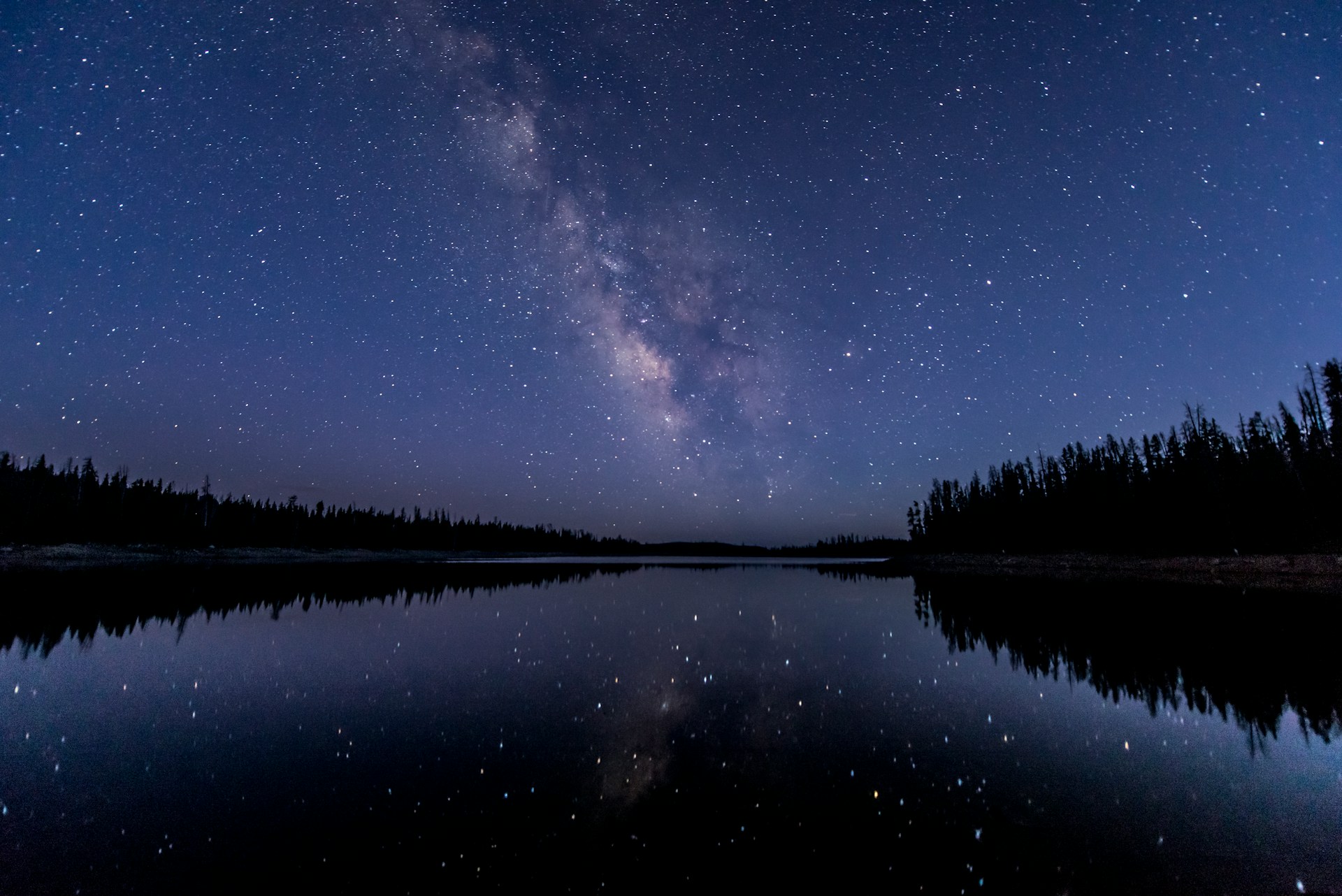
The Planets That Wander Through Space Without a Star
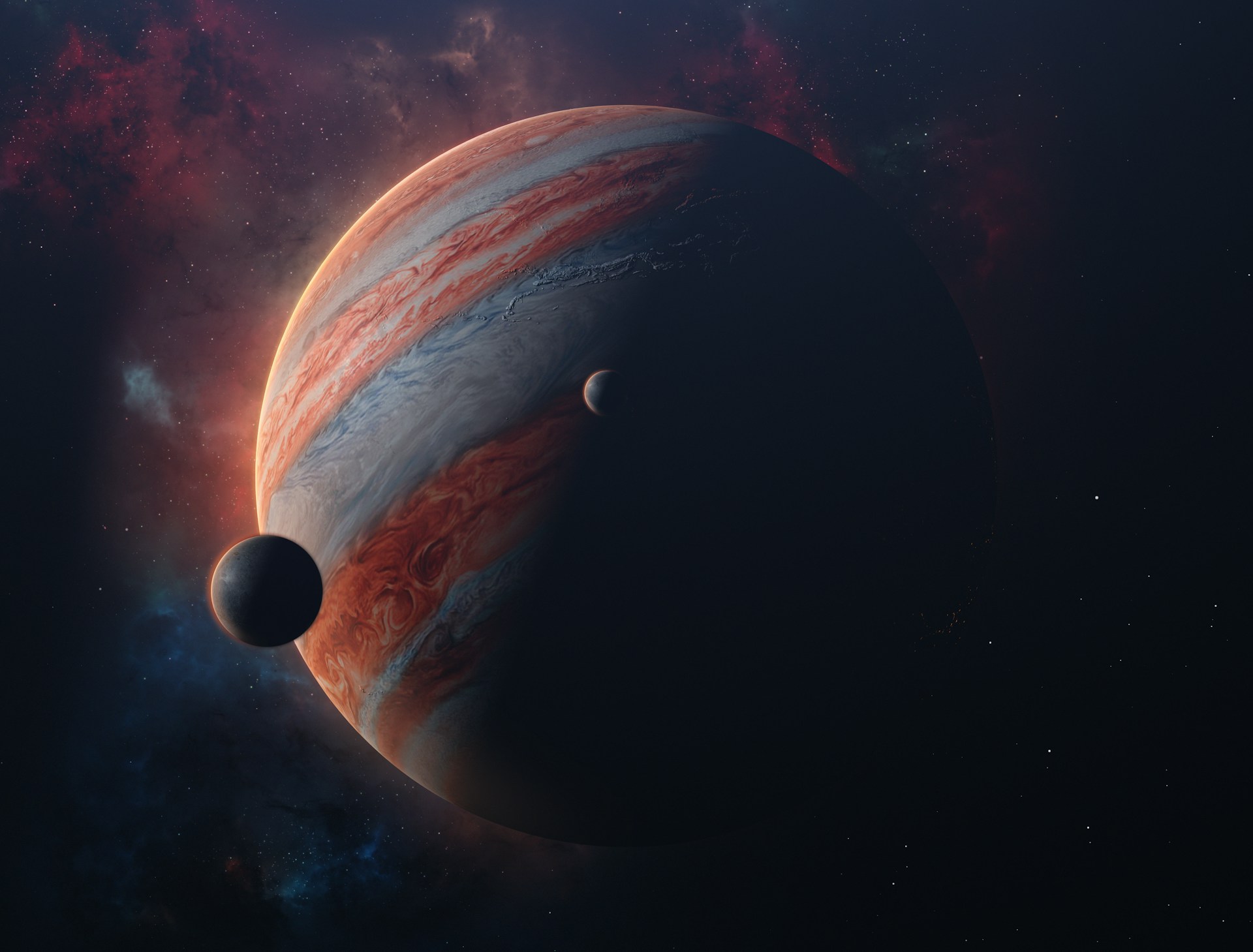
Imagine a planet drifting through the darkness of space, far from the warmth of a sun, without a sunrise to announce the beginning of a new day. There is no familiar horizon illuminated by morning light, no golden sunset stretching across an atmosphere, and no star dominating the sky. There is only the immense darkness of interstellar space, scattered with distant points of light that may be hundreds, thousands, or even millions of times farther away than anything on the planet itself.
It sounds like the opening scene of a science-fiction film. Yet astronomers have discovered compelling evidence that planets can exist without orbiting a star.
These objects are known as rogue planets, free-floating planets, or, more broadly, planetary-mass objects that travel through space without being gravitationally bound to a host star. Some may have formed around stars before being thrown into interstellar space. Others may have emerged from collapsing clouds of gas and dust through processes resembling those that create stars.
Whatever their origins, they challenge one of our most familiar assumptions about the universe: that a planet needs a sun.
For most of human history, our understanding of planets has been shaped by the arrangement of our own solar system. Earth orbits the Sun. Mars follows its own path around the same star. Jupiter, Saturn, Uranus, and Neptune occupy increasingly distant orbits, while countless smaller objects travel through the gravitational environment that the Sun dominates.
This arrangement feels natural because it is the only planetary environment we experience directly.
But the universe is not obligated to reproduce the conditions of our neighbourhood everywhere.
Somewhere between the stars, there may be worlds that have no permanent stellar address, travelling through the galaxy in isolation. Their existence introduces an extraordinary possibility: planetary systems may be only one way that planets exist, rather than the universal pattern.
1. A Planet Does Not Necessarily Need a Sun
The first challenge is understanding what makes something a planet.
In everyday conversation, the word usually describes a large celestial body orbiting a star. That description fits the eight planets in our solar system, but it does not capture every object that astronomers investigate as a potential planetary-mass world.
A rogue planet is generally understood to be a planetary-mass object that is not gravitationally bound to a star. Instead of following a stable orbit around a stellar companion, it travels independently through space.
The distinction is important.
A planet does not need to orbit a star to possess gravity, an atmosphere, an internal structure, or a geological history. Its physical characteristics do not suddenly disappear when it leaves a planetary system.
Imagine taking Earth and removing the Sun from the equation. Earth would not cease to be a physical world. Its oceans, mountains, atmosphere, and core would not instantly vanish. The planet would continue moving through space according to the laws of gravity and inertia.
Of course, the consequences would be catastrophic for Earth’s familiar surface environment. Without sunlight, the planet would lose its primary source of energy, temperatures would fall, and the climate would change dramatically.
Yet the underlying object would remain.
This thought experiment helps separate two ideas that we often treat as inseparable: being a planet and belonging to a solar system.
One describes a world. The other describes its gravitational relationships.
The universe can accommodate both.
2. How Does a Planet Become a Wanderer?
There is no single explanation for every free-floating planetary-mass object. Astronomers investigate several possible formation pathways, and different objects may have different histories.
One possibility begins with a planet that forms normally inside a planetary system.
Young planetary systems are dynamic environments. Planets interact gravitationally with one another, and their orbits can change as the system develops. A large planet may influence a smaller planet’s trajectory, particularly during a close gravitational encounter.
Under the right conditions, these interactions can accelerate an object enough to eject it from its original system.
Imagine several billiard balls moving across a table. Their paths change when they collide, transferring momentum between them. Gravity does not work exactly like billiard-ball collisions, but the analogy captures one essential idea: interactions can redirect motion and redistribute energy.
In a planetary system, a gravitational encounter with a massive planet can dramatically change another object’s orbit.
If the smaller planet gains enough energy to escape the gravitational binding of its host star, it may begin a long journey through interstellar space.
This process is called planetary ejection.
It offers a fascinating possibility. A planet could have spent millions of years orbiting a star, perhaps forming as part of a system containing several worlds, before a sequence of gravitational encounters changed its destiny.
Its history would include a home it no longer possesses.
Another possibility is that some planetary-mass objects form independently, without first becoming conventional planets in a star-centred system.
Stars develop when sufficiently dense regions of molecular clouds collapse under gravity. The resulting material can fragment, producing multiple objects. In some circumstances, the same broad family of processes may produce isolated objects with masses comparable to those of planets.
The distinction between an ejected planet and an independently formed planetary-mass object can be difficult to establish. Their present-day masses alone may not reveal their origins.
This is why astronomers study more than size. They examine temperatures, atmospheric properties, motions, ages, and surrounding environments to reconstruct the possible histories of these distant objects.
Sometimes the most interesting question about a world is not simply what it is, but how it came to exist where it does.
3. The Problem of Finding Something That Barely Shines
Finding a planet around a star can already be difficult. Finding one without a star presents a different challenge.
Astronomers often discover exoplanets by observing how they affect their host stars. A planet can produce a slight dimming when it passes in front of its star. Its gravity can also cause the star to move in a small, repeating pattern.
Both techniques depend on a relationship between the planet and a visible stellar companion.
A rogue planet may offer neither opportunity.
It can travel through a region where there is no nearby star whose brightness it regularly interrupts. Nor is there necessarily a star whose movement reveals the object’s gravitational influence.
Instead, astronomers must use other methods.
One important technique is gravitational microlensing.
Einstein’s theory of general relativity tells us that gravity influences the paths of light. When a massive object passes between a distant star and an observer, its gravitational field can bend and magnify the star’s light.
If the alignment is favourable, astronomers observe a temporary brightening of the background star.
The foreground object may be invisible. Researchers infer its presence from the way it changes the light reaching their instruments.
A planet can therefore announce itself without emitting a visible signal of its own.
The event may last only hours or days, depending on the mass of the object and the geometry of the alignment. Astronomers must monitor enormous numbers of stars and identify brief changes that match the expected pattern.
Microlensing does not automatically prove that an object is a rogue planet. The lens could belong to a planet in a wider system, and interpreting the signal may require additional evidence.
Nevertheless, it provides a powerful method for investigating otherwise difficult-to-detect objects.
Astronomers can also search for isolated planetary-mass bodies using infrared observations. Young objects may retain heat from their formation and emit detectable infrared radiation even when they have no nearby star illuminating them.
As these objects cool, they become increasingly difficult to observe directly.
The result is an unusual astronomical problem: the objects may be numerous, yet many could remain hidden because they produce little light and occupy vast distances from one another.
In this part of astronomy, discovery depends as much on recognising an object’s influence as on seeing the object itself.
4. What Would the Sky Look Like on a Rogue Planet?
Picture standing on the surface of a hypothetical rocky rogue planet.
There is no Sun to illuminate the landscape. If the planet has an atmosphere, the sky might still scatter light from distant stars, but the familiar blue dome of Earth’s daytime would not exist in the same way. Without a nearby bright star, the surface would receive very little external illumination.
The stars could remain visible above the horizon, but they would not provide anything close to the energy Earth receives from the Sun.
There would be no ordinary day-night cycle defined by a star rising and setting. A planet might still rotate, creating a repeating sequence of local orientations, but rotation alone would not produce the familiar alternation between bright daylight and darkness.
Its calendar would be a very different invention.
On Earth, our sense of time is tied to astronomical rhythms. The rising Sun gives us a daily reference. Earth’s orbit provides the basis of our year. Seasonal changes influence agriculture, migration, and countless biological processes.
A free-floating planet would not have a local year defined by orbiting a host star.
It might still possess moons, rotate on its axis, or travel through the galaxy in a measurable trajectory. Scientists could establish timekeeping systems using these motions. But the cultural meaning of morning, evening, and the changing seasons would be fundamentally different.
Imagine a civilisation that had never experienced a sunrise.
Its understanding of the sky might be built around rotation, internal energy, the movement of distant stars, and the behaviour of moons rather than the passage of a bright celestial body across the horizon.
Such a scenario is speculative, of course. We have not established that technological civilisations exist on rogue planets.
But it reveals something interesting about our own experience: many of the concepts we treat as universal are shaped by the particular astronomical environment in which we evolved.
The Sun is not merely an object in Earth’s sky. It is a central reference point for our perception of time, climate, and life itself.
Without it, the meaning of an ordinary day would have to be reconsidered.
5. Could a Rogue Planet Support Life?
This is where the subject becomes especially intriguing.
Life as we know it depends on a collection of conditions, including suitable chemistry, a source of energy, and an environment capable of maintaining liquid water for at least some period.
On Earth, sunlight drives photosynthesis and influences almost every major component of the surface ecosystem. Removing that energy source would disrupt the biological systems on which most visible life depends.
However, sunlight is not the only possible source of energy.
Earth itself contains heat left over from its formation, as well as heat generated by the radioactive decay of elements within its interior. These processes contribute to the energy that drives geological activity.
Some of that internal heat reaches the surface, while some helps maintain liquid water in underground environments.
On Earth, hydrothermal systems on the ocean floor demonstrate that ecosystems can exist without depending directly on sunlight. Certain microorganisms use chemical energy, supporting communities that include more complex organisms.
This does not prove that a rogue planet could support life. It demonstrates that sunlight is not the only energy source available to living systems.
Now imagine a rogue planet with a substantial atmosphere and a deep ocean beneath a thick layer of ice.
If the planet retains sufficient internal heat, the ocean might remain liquid beneath the frozen surface. Depending on the planet’s composition, internal structure, and history, geothermal energy could sustain conditions that merit scientific investigation.
An atmosphere could also influence how quickly the planet loses heat. A sufficiently thick atmosphere containing effective greenhouse gases might slow the escape of thermal energy into space.
Under particular conditions, the combination of atmospheric insulation and internal heat could extend the period during which liquid water remains possible.
These ideas are subjects of scientific investigation, not established descriptions of known inhabited rogue planets.
There are significant obstacles. A world must retain enough heat, maintain suitable chemical conditions, and avoid losing its atmosphere or water. Its internal energy will also change over time.
Even if liquid water exists, that alone does not establish that life will emerge or survive.
Still, the possibility of subsurface environments changes the question.
Instead of asking whether life could exist on a planet without a star, scientists can ask a more precise question: could a planet maintain a suitable environment using energy sources other than direct stellar illumination?
That is a much more productive starting point.
The universe may contain environments that are difficult to recognise because they do not resemble the surface of Earth.
6. A World That Keeps Its Heat
One of the most important differences between a planet and its environment is the way each stores energy.
A star continuously supplies enormous amounts of energy to nearby planets. Earth receives sunlight across its surface, and its climate depends on the balance between incoming solar energy and outgoing heat.
A rogue planet loses this external source of energy.
Its surface would generally cool over time, although the speed of cooling would depend on its composition, atmosphere, initial temperature, and internal heat supply.
A rocky planet could retain geothermal energy for a long period. A large planet might hold substantial internal heat because of its size and formation history. A thick atmosphere could slow the loss of heat from the surface.
A planet with a substantial hydrogen-rich atmosphere might, under suitable conditions, retain enough heat to keep some water liquid at temperatures where an exposed surface would otherwise freeze. The precise outcome would depend on atmospheric pressure, composition, and the planet’s available energy.
This is not a guarantee of habitability. The amount of heat available and the ability to preserve a suitable environment would vary enormously between objects.
But it demonstrates a useful physical principle: a planet’s present environment does not depend exclusively on its current surroundings.
Its internal structure preserves information about its past.
A world can carry the thermal consequences of its formation long after the events that created it have ended.
In a sense, its interior becomes a record of an earlier cosmic chapter.
The same principle appears throughout planetary science. Volcanic activity, magnetic fields, geological structures, and atmospheric composition can reveal processes that began billions of years earlier.
For a rogue planet, these internal properties could be particularly important because they may provide the difference between a completely frozen environment and one containing pockets of persistent liquid water.
The absence of a star does not eliminate the laws of thermodynamics. It changes the balance of energy that those laws govern.
7. How Many Rogue Planets Are Out There?
The honest answer is that astronomers do not yet know the total number with confidence.
The population is difficult to measure because free-floating objects are faint, widely dispersed, and challenging to distinguish from other astronomical bodies.
Microlensing surveys provide one way to estimate their abundance, while infrared surveys can identify certain relatively young and warm objects. Each method has its own sensitivity limits and selection effects.
A survey may detect some objects while missing others because they are too faint, too distant, or too short-lived in the observational signal they produce.
It is also important to distinguish between objects that have been directly observed, candidates whose planetary nature remains uncertain, and statistical estimates of the larger population.
These are different kinds of evidence.
Over time, improved instruments and more extensive surveys can refine the estimates.
The important point is that rogue planets are not simply imaginary worlds invented to make science fiction more interesting. Astronomers have observed free-floating planetary-mass objects and identified events consistent with planets that are not bound to stars. Research continues to determine how many exist, how they formed, and how their properties compare with those of planets in established systems.
Some estimates suggest that free-floating planets could be common in the Milky Way, potentially numbering in the billions or more, depending on the definition used and the population being estimated.
Such figures should be treated as model-dependent estimates rather than a confirmed census.
Even so, the possibility of a large hidden population has important implications.
Our familiar solar system might represent only one visible arrangement within a much larger diversity of planetary environments.
For every planet that announces itself through a bright neighbouring star, there may be other objects whose existence requires more indirect methods to uncover.
The galaxy could be full of worlds that are easy to overlook precisely because they do not fit our usual expectations of where planets belong.
8. The Journey Between the Stars
A rogue planet does not necessarily travel through space in a perfectly straight line.
Like every massive object, it responds to gravity. The Milky Way contains stars, gas, dark matter, and other structures that collectively influence the movement of objects through the galaxy.
A free-floating planet follows a trajectory determined by its velocity and the gravitational environment through which it moves.
It may travel for millions or billions of years without becoming bound to another star.
That journey could carry it through regions of varying stellar density. It might pass relatively close to other stars without becoming part of their planetary systems. In other circumstances, gravitational interactions could alter its path.
Capture by another star is physically possible under suitable circumstances, although it requires the object to lose enough orbital energy relative to the star and its surroundings for a lasting bound orbit to result.
Most passing encounters would not automatically produce capture.
The distances involved are enormous, and the gravitational conditions vary from one encounter to another.
A rogue planet therefore should not be imagined as a lost object necessarily searching for a new home. It has no known destination or purpose. It follows a physical trajectory through a galaxy whose structure is governed by gravity.
The language of wandering gives the phenomenon a poetic quality, but the underlying process is mathematical.
Velocity, mass, distance, and gravitational potential determine the object’s motion.
There is something remarkable about this combination. A planet can lose its place in a planetary system without losing its place in the universe.
It remains part of the galaxy, participating in its large-scale movement while carrying its own history through space.
Its journey may be difficult to observe, but it is not outside the reach of physical explanation.
9. What Rogue Planets Reveal About Our Assumptions
Astronomy advances partly by discovering objects that force us to reconsider familiar categories.
Before the discovery of planets orbiting other stars, our solar system provided the primary example of planetary architecture. Today, astronomers know that planets can occupy a wide variety of orbits and that planetary systems differ considerably in their arrangements.
Rogue planets extend that diversity even further.
They remind us that a planet’s relationship with a star is not necessarily permanent. Gravitational systems evolve. Orbits change. Objects interact. A world that once belonged to a planetary system may eventually travel beyond it.
They also reveal the limits of observation.
The objects most familiar to us are often those that are easiest to detect. A bright star makes a planet easier to study. A regularly repeating transit creates a recognisable signal. A large object close to Earth can be examined in greater detail than a small, distant object.
When we study the universe, our observations are influenced by the capabilities of our instruments and the methods we use.
An invisible or faint object is not necessarily rare. A difficult discovery is not necessarily an unusual phenomenon. Sometimes the challenge lies in the method rather than the object.
Rogue planets illustrate this distinction particularly well.
Their existence encourages astronomers to look beyond conventional planetary systems and develop ways of detecting objects that do not cooperate with the methods designed for familiar worlds.
The broader lesson extends beyond astronomy.
Whenever we build a model of reality, we choose which features to measure and which relationships to treat as fundamental. Those choices determine what becomes visible within the model.
If we assume that every planet must be associated with a star, we risk overlooking objects whose defining characteristic is precisely their independence from one.
The universe does not become less interesting when it violates our expectations. Our expectations become more useful when we revise them.
10. The Meaning of a Planet Without a Home Star
There is a temptation to describe rogue planets as lonely worlds.
The image is understandable. A planet without a nearby star seems isolated from the luminous architecture that makes planetary systems visually compelling.
But loneliness is a human interpretation, not an astronomical property.
A rogue planet does not need to experience its circumstances as a loss. It does not possess an established destination simply because we imagine one. Its existence can be described through physics without assigning it an emotional condition.
Still, the image of a world moving through interstellar darkness provides a powerful way to think about the scale of the universe.
On Earth, our lives unfold beneath a star that has shaped our climate, biology, and sense of time. We measure days through rotation, years through orbital motion, and seasons through the geometry of our planet’s journey around the Sun.
These patterns are so familiar that it is easy to mistake them for universal requirements.
A rogue planet invites us to separate the physical necessities of a world from the particular circumstances of our own.
It may be cold. It may possess an atmosphere or lack one. It may have moons, an internal ocean, or a frozen surface. It may retain considerable internal heat or have cooled almost completely.
Each object has its own properties, and those properties determine what is physically possible.
There is no single rogue-planet environment.
There are instead many potential combinations of mass, composition, temperature, atmosphere, and history, each producing a different kind of world.
Some may be small, rocky bodies. Others may be gas-rich objects with masses comparable to those of giant planets. Some may have formed in isolation, while others may carry the gravitational history of a planetary system that expelled them long ago.
Their diversity is part of what makes them worth studying.
A planet does not need to resemble Earth to teach us something about planetary physics. It does not need to support life to reveal information about how worlds form and evolve. And it does not need a bright star nearby to become scientifically significant.
Conclusion: The Universe Is Larger Than Its Familiar Patterns
The planets that wander through space without a star occupy an unusual place in our understanding of the cosmos.
They are worlds without the familiar gravitational arrangement that defines our solar system. Some may have been ejected from planetary systems through gravitational encounters. Others may have formed through processes resembling those that create stars. Their origins, abundance, and physical characteristics remain important subjects of astronomical research.
Finding them requires techniques that do not depend on a planet regularly passing in front of a bright star. Gravitational microlensing, infrared observations, and statistical studies allow researchers to investigate objects that would otherwise remain difficult to detect.
Their environments raise equally fascinating questions. Without a nearby star, their surfaces would generally receive little external energy. Yet internal heat, atmospheric insulation, and other physical properties may allow some to preserve environments worth investigating, including the possibility of subsurface liquid water under suitable conditions.
None of this means that rogue planets are necessarily inhabited, or that they are more common than planets in stellar systems. Those questions require evidence, careful measurements, and continued research.
What their existence does demonstrate is that the universe does not have to follow the arrangement that feels most familiar to us.
A planet can exist without orbiting a star. It can travel through a galaxy without belonging to a conventional planetary system. It can preserve a complex internal structure even when its surroundings offer little light or warmth.
Somewhere in the Milky Way, planetary-mass objects are moving through the spaces between stars, following trajectories shaped by gravity and carrying histories written into their compositions, temperatures, and motions.
Most may never become visible to the naked eye. Many may remain difficult to detect even with powerful telescopes.
Yet their existence expands the meaning of a world.
We often imagine the universe as a collection of stars surrounded by planets, each system forming a small island of order in the darkness. Rogue planets suggest a broader picture: the spaces between those islands may contain worlds of their own.
The darkness between stars is not necessarily empty.
Sometimes, it contains a planet.

