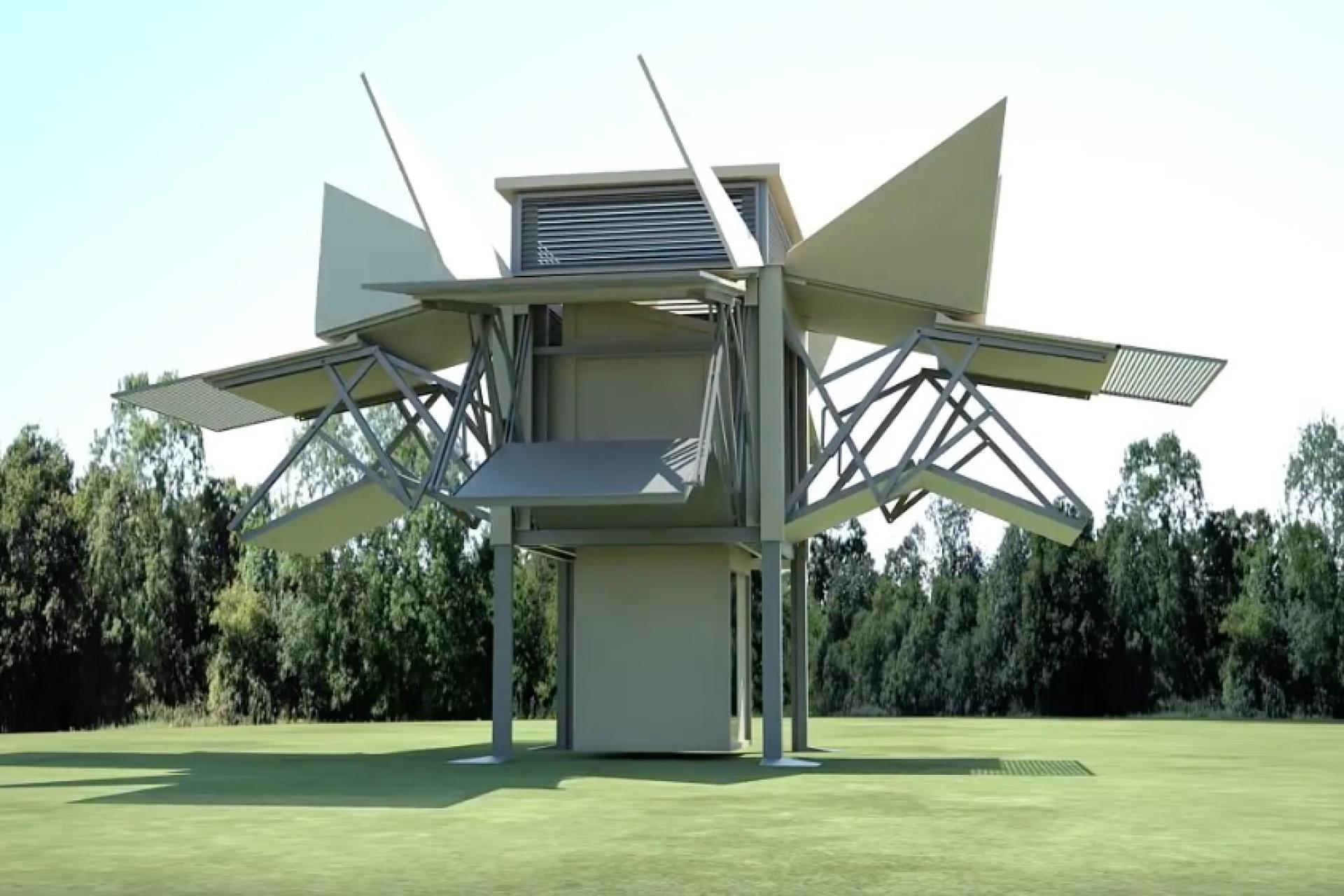
The First Industry That Might Exist Entirely in Space
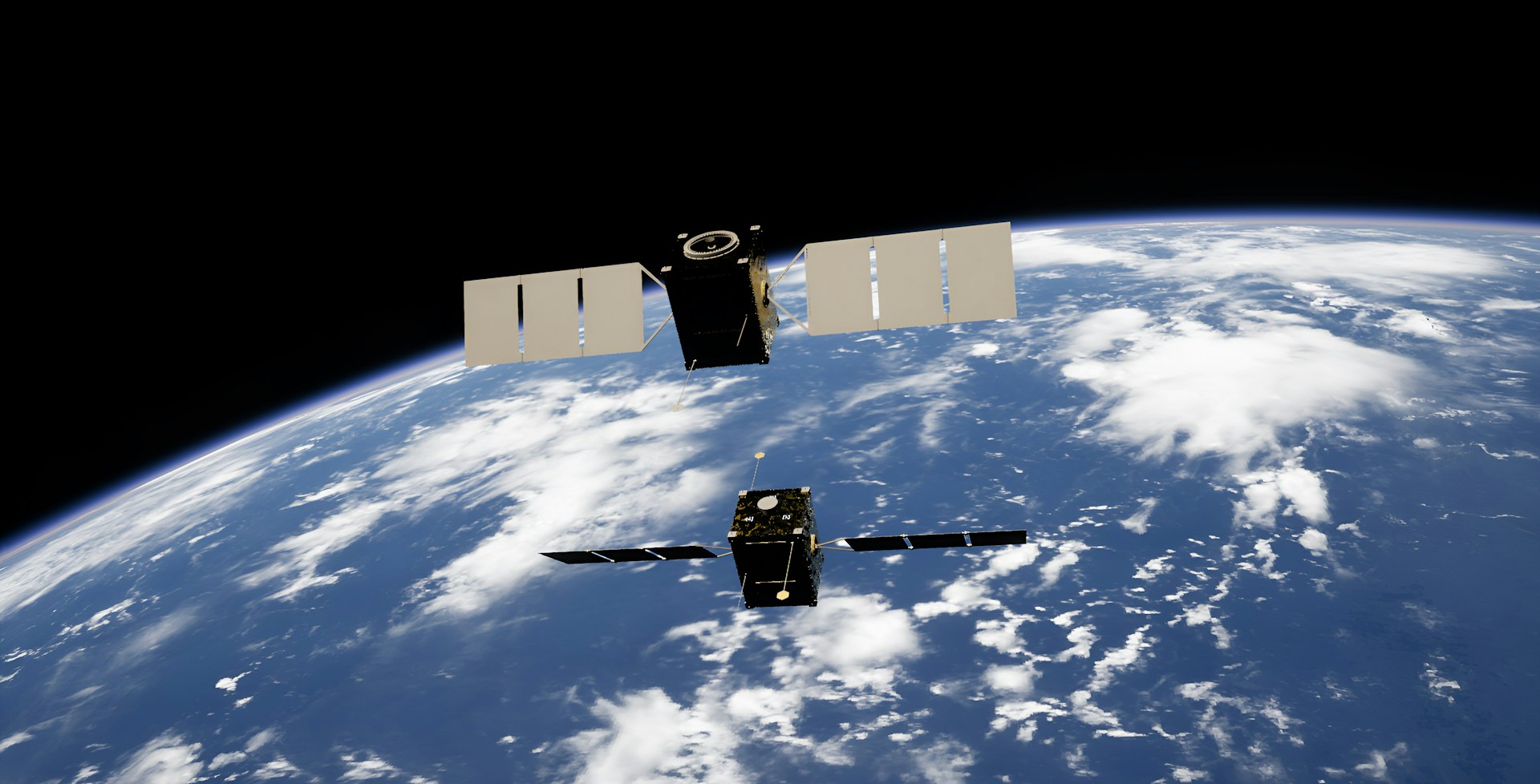
Imagine a factory that never touches the ground. Its raw materials arrive from asteroids, its machines operate in orbit, its workers are robots, and its products are delivered to satellites, spacecraft, or other facilities hundreds of kilometres above Earth.
There are no highways leading to its front gate. No trucks arrive at dawn. No warehouses sit beside a railway line. Instead, the factory moves through the darkness of space, surrounded by the very environment that makes its existence possible.
It sounds like science fiction.
But the underlying idea is connected to several technologies that already exist: reusable rockets, robotic spacecraft, satellite servicing, in-orbit manufacturing, and experiments involving materials produced in microgravity.
The question is no longer simply whether humans can build things in space. We have already demonstrated that some forms of manufacturing and scientific experimentation are possible beyond Earth’s atmosphere.
The more interesting question is this:
What happens when an industry becomes so dependent on space that operating on Earth no longer makes economic sense?
The answer might reveal the first industry capable of existing almost entirely beyond our planet.
1. Every Industry Begins With a Place
Industries do not emerge in isolation. They develop around resources, infrastructure, transportation networks, energy supplies, and customers.
Steel production developed near the resources and transportation systems needed to support it. Oil refining grew around petroleum supplies and distribution networks. Semiconductor manufacturing evolved into a highly specialized industry supported by enormous investments in precision equipment, clean rooms, and technical expertise.
The location of an industry is rarely accidental.
A factory is placed somewhere because that location makes production possible, affordable, or convenient.
Space introduces a different set of conditions.
Microgravity, vacuum, exposure to solar radiation, orbital motion, and the availability of certain extraterrestrial resources create opportunities that do not exist in quite the same form on Earth’s surface.
At the same time, space introduces serious disadvantages. Equipment is expensive to transport, repairs are difficult, energy systems must be designed for the environment, and every kilogram sent from Earth carries a cost.
These conditions create an unusual economic puzzle.
Some activities may benefit from being performed in space, but they must benefit enough to compensate for the difficulty of getting there.
This is why the first space-based industry is unlikely to be an ordinary factory moved beyond the atmosphere simply because the idea sounds futuristic.
It will probably be an industry whose most important advantage comes specifically from operating in space.
2. The Most Likely Beginning: Manufacturing in Orbit
One promising candidate is in-space manufacturing.
The concept involves producing, assembling, or processing useful materials and equipment beyond Earth’s atmosphere.
At first, these activities may be relatively simple. A spacecraft could assemble large structures from smaller components delivered separately. A robotic system might manufacture replacement parts for orbital equipment. Specialized facilities could process materials for scientific instruments or future spacecraft.
Over time, more complex production systems might emerge.
Consider the challenge of building a very large communications satellite or space telescope.
When launched from Earth, the entire structure must fit within the physical limits of a rocket’s payload compartment. Designers must account for vibration during launch, acceleration, structural loads, and the mechanical complexity of folding large components into compact spaces.
A facility in orbit could approach the problem differently.
Instead of transporting a finished structure from the ground, manufacturers could deliver its components separately and assemble them in space. If the required technology becomes sufficiently reliable, some components could eventually be manufactured or repaired on-site.
The production facility would no longer need to be designed around every constraint associated with launching a complete object from Earth.
That does not eliminate engineering challenges. Assembly still requires precise alignment, thermal management, reliable robotics, and protection against the space environment.
However, it changes the design problem.
Rather than asking how to fit the largest possible structure inside a rocket, engineers could ask how to construct the largest useful structure using equipment that can be transported and assembled economically.
That distinction could become the foundation of an entirely new industrial sector.
3. Why Space Might Be a Manufacturing Advantage
Space is not automatically a better manufacturing environment. In many cases, Earth remains vastly more convenient.
Factories on Earth benefit from abundant infrastructure, accessible maintenance, established supply chains, and comparatively inexpensive transportation between production facilities and customers.
Nevertheless, certain processes may benefit from the unusual physical conditions found in orbit.
Microgravity and material formation
On Earth, gravity influences how liquids move, how particles settle, and how materials behave during certain manufacturing processes.
In microgravity, some of these effects are reduced.
This can make it possible to investigate different approaches to growing crystals, processing biological materials, mixing substances, and producing specialized structures.
For example, researchers have investigated the production of protein crystals in space because crystal growth under different gravitational conditions can sometimes provide useful scientific results.
Researchers have also explored the behaviour of materials and fluids in microgravity to better understand processes that are difficult to isolate on Earth.
These experiments do not mean that space automatically produces superior materials. Results depend on the specific substance, process, and production conditions.
The commercial opportunity lies in identifying products for which the advantages are substantial enough to justify the additional expense.
A material that costs slightly less to manufacture on Earth will probably remain an Earth-based product.
A material that cannot be produced to the required specifications on Earth, or that becomes significantly more valuable when manufactured under particular space conditions, could present a different opportunity.
Vacuum and specialized processing
Space also provides a natural vacuum.
On Earth, many industrial processes require vacuum chambers, pumps, seals, and carefully controlled environments. In space, the surrounding environment already offers extremely low pressure, although a production facility still needs controlled conditions for many operations.
Certain materials processing and scientific applications could potentially take advantage of this environment.
However, vacuum alone is not a sufficient reason to relocate an entire factory. Maintaining equipment, controlling temperature, and managing contamination remain difficult engineering tasks.
The important principle is that a space-based factory must exploit several meaningful advantages rather than depend on one attractive feature.
4. The First Customers Might Already Be in Orbit
An industry needs customers before it can become an industry in its own right.
This is where the economics of orbital manufacturing become particularly interesting.
The earliest customers may not be people on Earth. They may be satellites, space stations, robotic explorers, and spacecraft.
Imagine a communications satellite that requires a replacement component.
If the satellite cannot be repaired economically, its operator might eventually need to replace the entire spacecraft. Depending on the satellite’s design and circumstances, that replacement could involve a new launch, additional deployment operations, and the loss of useful remaining hardware.
Now imagine a future orbital service facility equipped with robotic arms, diagnostic instruments, replacement parts, and limited manufacturing capabilities.
The facility could inspect damaged equipment, replace selected components, or assemble new structures from standardized modules.
Not every satellite could be repaired this way. Some failures would remain impossible or uneconomical to address. Yet even a limited ability to extend the useful life of expensive spacecraft could create a valuable market.
The first commercial space factories might therefore look less like traditional manufacturing plants and more like highly specialized workshops.
Their customers would purchase repairs, assembly, replacement components, or processing services.
Over time, these facilities could develop the same features seen in mature industries: standardized components, specialized suppliers, predictable service contracts, and repeatable production processes.
An industrial ecosystem could grow around the equipment already operating in space.
5. The Resource Question: Could Asteroids Supply the Factory?
Manufacturing in orbit is one possibility. Extracting raw materials from space is another.
Asteroids contain varying amounts of minerals and metals. Some also contain hydrated minerals and other compounds that could be useful for future resource-processing systems.
The theoretical opportunity is enormous.
If future spacecraft could identify suitable asteroids, reach them, extract useful material, and process it economically, some resources might be obtained without launching every kilogram from Earth.
But there is an important distinction between discovering a resource and developing a commercially viable supply chain.
An asteroid containing valuable metals does not automatically represent an accessible deposit. Its composition must be characterized, the material must be extracted, and the resulting product must be processed and transported to a place where someone can use it.
The cost of prospecting, robotics, propulsion, communications, and equipment reliability could be substantial.
There is also a basic economic question: where should the extracted material go?
Transporting raw asteroid material back to Earth may be less attractive than using certain resources directly in space. Earth already has extensive mining operations and established material-processing industries.
By contrast, future orbital facilities might need structural metals, shielding materials, or other supplies that are expensive to transport from the ground.
If those materials could be obtained and processed locally, the economics might gradually change.
This suggests a possible long-term industrial sequence:
- Robotic spacecraft identify promising resources.
- Specialized missions investigate and extract small quantities.
- Processing systems convert raw material into usable feedstock.
- Orbital factories use that feedstock to manufacture selected components.
- Additional facilities consume the products and support further industrial activity.
Each step depends on the success of the previous ones.
The sequence is not guaranteed to happen, but it provides a plausible framework for understanding how a space-based industrial economy could develop.
6. The Industry Could Begin With Robots
One of the most interesting features of a future space industry is that it might not require a large human workforce at the beginning.
Operating in space introduces risks and logistical complications for human workers. Crews need life support, radiation protection, safe living quarters, emergency procedures, and reliable transportation.
Robots have different requirements.
A robotic manufacturing system can operate without oxygen, food, or a pressurized living space, although its electronics, lubricants, sensors, and other components must be designed for the environment.
It can also perform repetitive tasks without the need to maintain a comfortable human working area.
This makes automation particularly attractive for early industrial operations beyond Earth.
A robotic factory could inspect incoming components, position structural elements, tighten mechanical connections, perform measurements, and monitor production quality.
More advanced systems might diagnose certain equipment failures and adapt their operations to changing conditions.
Artificial intelligence could help coordinate these tasks, interpret sensor information, plan robotic movements, and identify unusual operating patterns.
However, autonomy would need careful engineering. A mistake that would be inexpensive to correct in a terrestrial factory could become a serious problem when a machine is hundreds of kilometres above Earth and cannot be reached by a technician.
For that reason, early systems would probably combine automation with remote supervision, extensive testing, fault detection, and conservative operating procedures.
The goal would not necessarily be to create a completely independent factory immediately.
It would be to build a system that can perform increasingly complex tasks with fewer costly interventions from Earth.
7. Energy Could Shape the Entire Business Model
Energy is another important part of the equation.
Solar power is already widely used by spacecraft because sunlight can be converted into electricity without transporting conventional fuel for continuous operation.
A space-based manufacturing facility could use solar arrays to power equipment, electronics, communications systems, and selected industrial processes.
However, available power would depend on the facility’s orbit, its solar array design, periods of darkness, and its energy-storage systems.
Not every manufacturing process can operate efficiently using the power available to a small spacecraft.
High-temperature processing, energy-intensive material conversion, and some large-scale industrial operations could require substantially more power than early orbital platforms can provide.
This means the first factories would likely focus on processes with relatively manageable energy requirements and high-value outputs.
As power-generation technology, thermal management, and orbital infrastructure improve, the range of feasible operations could expand.
Energy availability might even determine where particular industries develop.
One facility could specialize in precision assembly, another in materials research, and another in maintaining satellites.
Rather than building a single enormous factory, the early space economy could consist of multiple specialized facilities connected through transportation and communications networks.
The structure might resemble a distributed industrial system more than a traditional industrial park.
8. The Real Breakthrough May Be Infrastructure
A factory does not exist independently of its supporting systems.
It requires transportation, communications, maintenance, spare parts, quality control, and a reliable method of delivering finished products.
This is particularly true in space, where failures can be difficult to resolve and transportation between locations requires careful orbital planning.
For this reason, the first industry that exists almost entirely in space might not be recognizable as a conventional manufacturing industry at all.
It could be an infrastructure industry.
Consider the systems that would support future orbital factories:
- Robotic spacecraft that move equipment between locations.
- Standardized docking and attachment interfaces.
- Facilities that inspect and repair satellites.
- Orbital depots that store fuel or replacement components.
- Autonomous systems that assemble large structures.
- Networks that coordinate traffic, communications, and maintenance.
Each service could support multiple other industries.
A satellite manufacturer would not necessarily need to develop its own robotic servicing spacecraft. An orbital construction company might purchase transportation, inspection, and assembly services from separate providers.
This specialization could reduce duplication and make complex missions easier to organize.
The same pattern has appeared in terrestrial industries. Companies often rely on external logistics networks, cloud infrastructure, payment processors, and specialized manufacturing partners instead of building every supporting capability themselves.
Space could eventually develop its own version of this industrial specialization.
The most important company might not be the one that manufactures the most impressive object. It might be the one that makes it cheaper and easier for everyone else to operate beyond Earth.
9. What Would a Space-Only Industry Actually Mean?
The phrase space-only industry needs a little clarification.
A factory operating in orbit would still depend on Earth for some time. Its initial machinery might be launched from the ground. Its engineers might work in terrestrial control centres. Its software could be developed on Earth, and some of its replacement parts might initially come from conventional manufacturers.
Even a highly automated facility would remain connected to a wider supply chain.
Therefore, an industry existing entirely in space would probably emerge gradually rather than appear as a completely independent economic system overnight.
At first, most of its equipment and resources might come from Earth.
Later, certain facilities could manufacture replacement components, assemble structures, and maintain other orbital equipment. Some raw materials might eventually be obtained from extraterrestrial sources.
The proportion of industrial activity performed in space could increase as the supporting infrastructure expands.
A mature system might include resource extraction, processing, manufacturing, energy generation, storage, transportation, and repair facilities operating beyond Earth’s atmosphere.
Yet even then, it would not necessarily be completely independent of Earth. Specialized electronics, advanced materials, software development, and scientific expertise might continue to move between terrestrial and orbital operations.
The more useful definition is functional independence: an industry whose primary production processes, customers, resources, and operating infrastructure are located in space.
Such an industry could be connected to Earth without depending on Earth for every stage of production.
That would represent a major change in how humans organize industrial activity.
10. Why the First Space Industry Might Be Surprisingly Ordinary
There is a tendency to imagine space industries through spectacular images: enormous rotating stations, asteroid-mining fleets, and factories producing spacecraft by the thousands.
Those possibilities are interesting, but the earliest commercially successful activities may be much less dramatic.
They might involve repairing a satellite, producing a specialized material, assembling a large antenna, or manufacturing a replacement component that would otherwise be difficult to launch.
These are ordinary industrial problems.
Their significance comes from where they are solved.
A small orbital facility that reliably produces a valuable component could be more economically important than an enormous factory that cannot operate profitably.
The history of technology offers a useful lesson here. Industries often emerge from narrow applications before expanding into broader markets.
A specialized tool becomes a platform. A small service becomes infrastructure. A technical experiment becomes a repeatable commercial process.
Space manufacturing could follow a similar path.
The initial market would likely be small, expensive, and highly specialized. As launch costs, automation, and operational reliability improve, more applications could become practical.
But growth would depend on measurable economics rather than imagination alone.
A successful space factory would need to demonstrate that its products or services justify the cost of building, launching, operating, and maintaining the facility.
That is the test every proposed space industry must eventually pass.
11. A New Kind of Supply Chain
If space-based production becomes economically viable, supply chains could begin to change in a fundamental way.
Today, most industrial supply chains ultimately depend on terrestrial transportation. Raw materials are extracted, processed, manufactured, assembled, and delivered through networks built on Earth’s surface.
A future space supply chain could operate across several environments.
Raw materials might originate on Earth or from extraterrestrial sources. Components could be assembled in orbit. Robotic spacecraft might transport them to another facility. Finished structures could be installed on satellites or used in deep-space missions.
Some products might never return to Earth’s surface.
This last possibility is particularly important.
A factory does not need to manufacture products for terrestrial consumers to be commercially useful. It only needs a customer willing to pay for its output.
If a growing number of spacecraft, orbital stations, and robotic missions require equipment that can be manufactured or maintained in space, the demand for orbital production could expand alongside those activities.
The factory and its customers would occupy the same general environment.
That could eliminate certain transportation steps and create opportunities for specialized services.
It would not eliminate the need for transportation altogether. Materials and equipment would still need to move between locations. However, the supply chain could become increasingly focused on serving customers already operating beyond Earth.
In that sense, space manufacturing might eventually become a local industry for a new kind of industrial neighbourhood.
Its neighbourhood would simply be measured in orbital distances rather than streets and roads.
12. The Challenges That Could Slow Everything Down
Despite the opportunities, several obstacles remain.
Cost is the first challenge. Launching equipment, replacing damaged machinery, and transporting raw materials remain expensive activities. A technically impressive process is not commercially useful if its costs exceed the value it creates.
Reliability is the second. Space equipment must withstand radiation, temperature changes, vibration, and other environmental stresses. Manufacturing systems must also maintain precision while operating in conditions that differ from terrestrial factories.
Maintenance is the third. Robots can perform many tasks, but they cannot eliminate every failure. A viable industrial system needs strategies for inspection, repair, component replacement, and recovery from unexpected events.
Demand is the fourth. Space manufacturing needs enough customers to justify the capital investment. A factory designed for a market that never develops could become an expensive demonstration project rather than a sustainable business.
Resource processing is the fifth. Obtaining material from an asteroid or another extraterrestrial source is not the same as producing a consistent industrial feedstock. Extraction, refining, storage, and transportation must all work together.
Finally, there is the challenge of scale.
A process that works for one experimental component may behave differently when applied to thousands of components or a continuous production line.
The transition from demonstration to reliable commercial production is often the most difficult stage of industrial development.
Space will not be exempt from that reality.
The most promising path is likely to involve gradual expansion: prove one valuable service, establish a repeatable business model, develop the supporting infrastructure, and expand into more demanding applications only when the economics justify doing so.
13. The First Space Industry May Change How We Define a Factory
For most of human history, a factory has been a place.
It has walls, machinery, storage areas, workers, entrances, and exits. Its location is fixed, and its production processes are organized around a physical site.
A future space factory might be different.
It could consist of several connected spacecraft, autonomous manufacturing units, robotic assembly platforms, and material-storage facilities distributed across multiple orbital locations.
Some components could move between facilities. Other systems might remain attached to a space station or operate independently.
The factory would be defined less by a single building and more by the coordinated activity of machines, software, transportation systems, and production equipment.
This is already a familiar concept in distributed computing.
A software system can operate across many servers without existing on one physical machine. Its identity comes from the way its components coordinate and deliver a service.
An industrial system in space could eventually follow a comparable principle.
Its physical components would remain important, but its production capability could emerge from the interaction of many separate machines.
The factory would become a network.
And the network could expand as additional facilities join it.
Such a system would require sophisticated engineering, communication protocols, fault tolerance, and coordination. Yet it offers an intriguing possibility: industrial production might eventually be organized around distributed infrastructure rather than a single physical location.
Space could become an environment in which that model makes particular sense.
Conclusion: The Factory That Never Comes Home
The first industry to exist almost entirely in space will probably not be the most spectacular one.
It may not begin with asteroid-mining fleets or giant factories constructing entire spacecraft from raw materials.
It could begin with something much smaller: a robotic system that repairs satellites, an orbital facility that assembles large structures, or a specialized manufacturing process that produces components more effectively in microgravity.
From there, a larger ecosystem could develop.
Manufacturing facilities would need transportation. Transportation networks would need maintenance. Maintenance facilities would need spare parts. Those parts might eventually be produced in orbit, using materials obtained from increasingly capable supply chains.
Each new capability could make another one more practical.
Eventually, the distinction between a spacecraft and a factory might become less obvious. A satellite could be manufactured in orbit, repaired by robots, supplied by an orbital depot, and eventually dismantled by another automated facility.
The entire process could occur without the finished product ever returning to Earth.
That is the deeper possibility behind a space-based industry.
Humanity would not simply be moving factories from one location to another. It would be developing an industrial environment with its own customers, resources, infrastructure, and production systems.
The transition would be gradual, and many proposed applications may never become commercially viable. Earth will remain an extraordinarily capable place to manufacture most goods for the foreseeable future.
But some products and services may eventually find their natural industrial home beyond our planet.
Perhaps the most interesting question is not whether humans will build factories in space.
It is which industry will discover that space is not merely a place to operate, but the place where its entire business model finally makes sense.
When that happens, the factory of the future may not have a street address.
It may have an orbit.