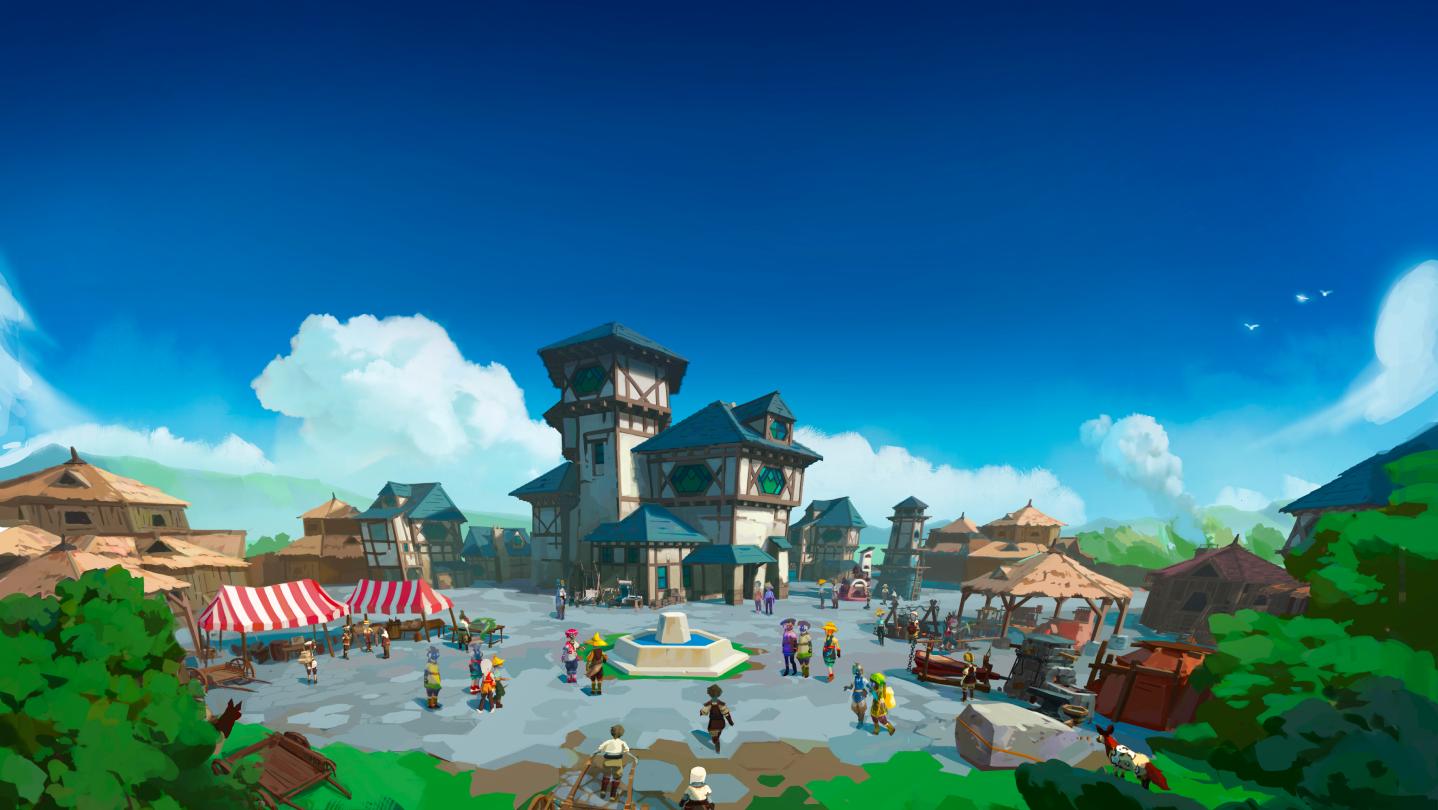
The Strange Relationship Between Order and Chaos
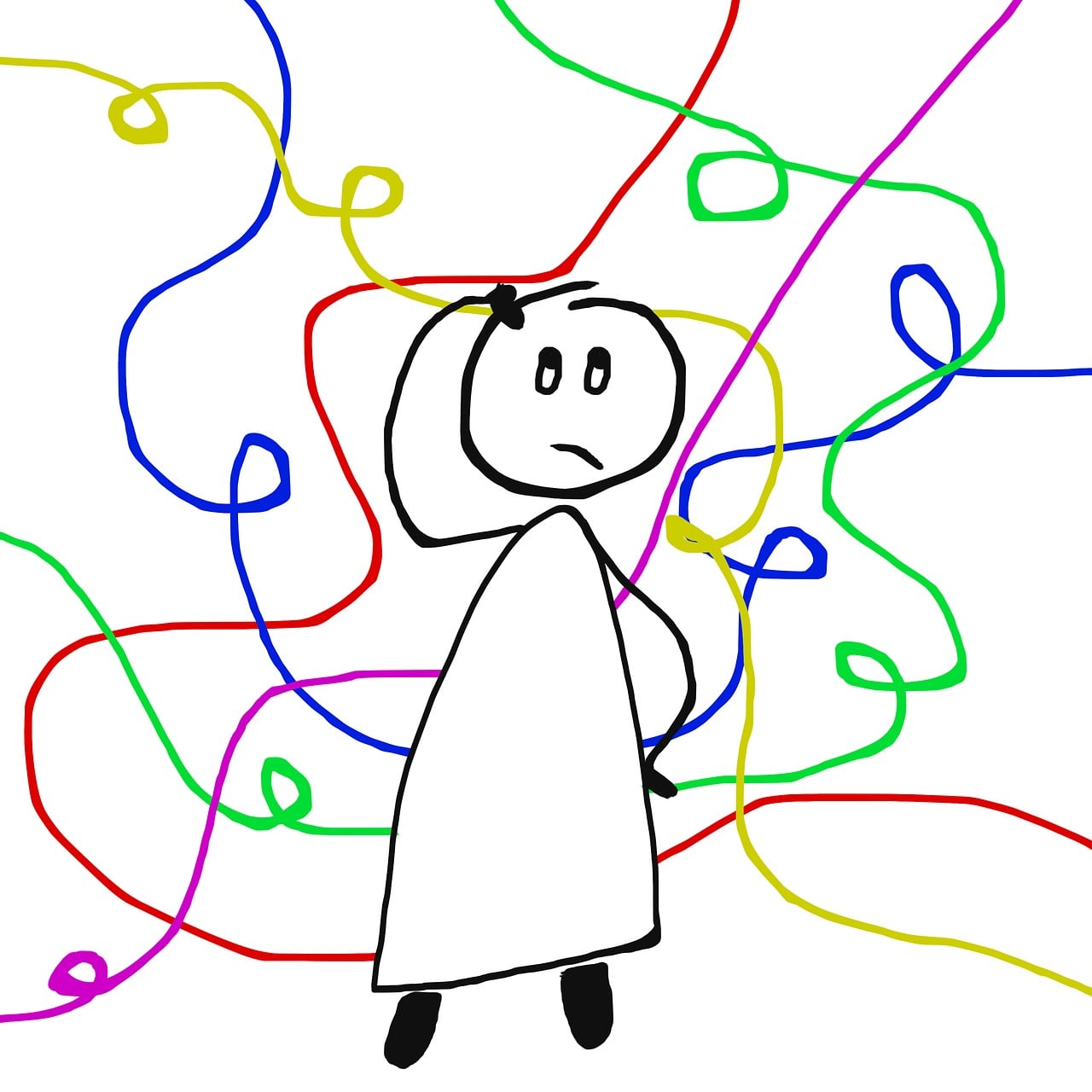
There is something strangely beautiful about the way order and chaos exist together.
We often imagine them as opposites.
Order is the clean desk, the organized database, the carefully planned schedule, the symmetrical building, the algorithm that behaves exactly as expected.
Chaos is the messy room, the unexpected error, the sudden change of direction, the storm, the idea that arrives without warning.
One feels controlled.
The other feels unpredictable.
But look closely at almost anything interesting, and the boundary between them begins to disappear.
A city has streets, buildings, traffic lights, addresses, schedules, and systems. Yet every morning, thousands of individual decisions create movement that nobody completely planned.
A forest has patterns, cycles, and rhythms. Yet no two trees grow in exactly the same way.
A piece of music follows timing, harmony, rhythm, and structure. Yet a small change in emphasis can make the same notes feel completely different.
Even software, which we often think of as pure logic, lives between order and uncertainty. We write rules, but users behave in ways we did not anticipate. We design systems, but real-world data rarely arrives as perfectly as our test cases.
Perhaps order and chaos are not enemies.
Perhaps they are partners.
And perhaps some of the most interesting things in life happen in the space between them.
The Comfort of Order
Human beings naturally appreciate order.
We like patterns.
We recognize faces, repeated sounds, familiar routes, predictable interfaces, and recurring routines.
Order gives us something valuable: a sense of understanding.
When we know where something belongs, we spend less energy searching for it.
When a system follows predictable rules, we can learn how to use it.
When a story has a beginning, middle, and end, we can follow it.
When a programming language follows consistent syntax, we can build increasingly complex ideas from relatively simple rules.
Order is therefore more than appearance.
It is a form of communication.
A well-organized bookshelf communicates where things belong.
A good user interface communicates what can be clicked.
A well-designed road communicates where vehicles should move.
A clean API communicates how software components should interact.
Good order reduces unnecessary mental effort.
It allows us to concentrate on the thing that actually matters.
But there is an interesting problem.
Perfect order can become lifeless.
If everything is completely predictable, there is little room for discovery.
A song where every note has exactly the same intensity may be technically consistent, but it may not feel alive.
A landscape made entirely of identical shapes may be orderly, but it may not feel natural.
A story in which nothing unexpected ever happens may be easy to follow, but difficult to remember.
This is where chaos begins to become interesting.
Chaos Is Not Always Destruction
The word “chaos” often sounds negative.
We imagine something breaking apart.
But chaos can also mean uncertainty, variation, movement, and possibility.
Consider a blank page.
Before anything is written, there is no structure.
It is almost completely open.
From that apparent disorder can come a poem, a software architecture, a business idea, a drawing, or an entirely new concept.
The initial state may look chaotic.
But creativity often begins there.
A programmer might start with a vague idea.
An artist might begin with a rough sketch.
A musician might record a strange sound without knowing where it belongs.
A writer might write a paragraph that seems disconnected from everything else.
Later, patterns begin to appear.
The chaos becomes material.
The material becomes structure.
The structure becomes something recognizable.
This is one of the strange relationships between order and chaos: sometimes chaos provides the raw material from which order is created.
Nature Rarely Looks Perfectly Organized
Look closely at a tree.
Its branches appear organized, but they are not identical.
One branch grows toward the light.
Another grows around an obstacle.
Some branches become thicker.
Others remain small.
Leaves appear across the structure according to countless local conditions.
The result is neither perfect symmetry nor complete randomness.
It is something in between.
A snowflake has structure, yet every snowflake develops its own intricate form.
Clouds have recognizable shapes, yet they are constantly changing.
Waves follow physical patterns, yet no two moments of a moving ocean are exactly identical.
Nature repeatedly produces this fascinating combination:
rules plus variation.
The rules create coherence.
The variation creates uniqueness.
That combination appears everywhere.
It is one reason natural environments rarely feel like machines, even though physical systems follow underlying principles.
Cities Are Living Systems
A city might be one of the clearest examples of order and chaos existing together.
There are roads.
There are traffic signals.
There are addresses.
There are public transportation routes.
There are buildings with designated purposes.
There are laws, schedules, maps, and planning documents.
From above, a city can look like a giant diagram.
But walk through it and something different happens.
People move at different speeds.
Cars change lanes.
Businesses open and close.
Someone discovers a new shortcut.
A conversation changes someone’s plans.
A restaurant becomes unexpectedly busy.
A quiet street becomes crowded because of an event.
The city follows structure without being completely predictable.
That is what makes it feel alive.
A perfectly controlled city might function efficiently, but it would lack the organic character created by millions of individual choices.
The interesting part is not that the city has order.
The interesting part is that order provides a framework within which unpredictable behavior can occur.
Software Lives Between Rules and Reality
Software developers spend much of their time creating order.
We define data structures.
We create functions.
We establish APIs.
We design databases.
We write validation rules.
We build authentication systems.
We create tests.
We document expected behavior.
All of these things create structure.
But then real users arrive.
And reality begins.
Someone enters an unexpected value.
Someone clicks a button twice.
A network connection disappears.
A device runs out of storage.
A database receives more traffic than expected.
A user interprets a feature differently from the way the developer imagined it.
A third-party service changes its response.
Suddenly, the perfectly organized system encounters the messy world.
This is why robust software is not simply software that works under ideal conditions.
It is software that knows how to behave when conditions are imperfect.
Good architecture creates boundaries.
Inside those boundaries, the system can remain understandable.
Outside them, uncertainty can be managed.
This is one of the most important lessons of engineering:
You cannot eliminate uncertainty, but you can design for it.
The Beauty of Constraints
At first, constraints sound like the enemy of creativity.
But often the opposite is true.
Give someone unlimited possibilities and they may not know where to begin.
Give them a small canvas, a limited color palette, or a particular theme, and suddenly ideas start appearing.
Constraints create structure.
Structure creates direction.
Direction makes experimentation easier.
A programmer working with a small set of tools may discover a clever solution because they cannot simply add another dependency.
A musician working with a limited number of instruments may develop a distinctive sound.
A photographer working with a fixed lens may become more creative with composition.
A writer given a specific theme may discover ideas they would not have found with complete freedom.
Order does not always restrict creativity.
Sometimes it gives creativity a place to move.
Chaos Can Reveal Hidden Structure
One of the most fascinating things about uncertainty is that patterns can exist inside it.
Imagine watching people enter a train station.
At first, their movement might appear random.
One person walks quickly.
Another stops.
Someone changes direction.
A group moves together.
Another person waits.
Individually, the actions seem unpredictable.
But observe the entire crowd for long enough and patterns emerge.
People tend to avoid collisions.
They follow available paths.
They cluster around entrances.
They slow down near obstacles.
What appears chaotic at the individual level can produce recognizable behavior at the larger level.
This idea appears repeatedly in complex systems.
Small actions can combine into larger patterns.
And sometimes those larger patterns are easier to understand than the individual actions that created them.
That is a fascinating reminder:
complexity does not necessarily mean meaninglessness.
The Programmer’s Version of Order and Chaos
There is a particular feeling developers experience when looking at unfamiliar code.
At first, everything appears chaotic.
There are files everywhere.
Functions call other functions.
Data moves through layers.
Configuration values appear in unexpected places.
A database table connects to another table.
An API endpoint triggers several internal operations.
Nothing seems to make sense.
Then something happens.
You discover the architecture.
You notice the naming convention.
You understand the data flow.
You recognize the pattern.
Suddenly, what looked like chaos becomes a system.
The code has not changed.
Your mental model has changed.
This is an important distinction.
Sometimes disorder exists in the system.
Sometimes disorder exists only in our understanding of the system.
The difference matters.
A complex system can become much easier to work with once we discover the right abstraction.
Good abstractions are essentially maps through complexity.
They allow us to see the structure without examining every individual detail.
Too Much Order
There is such a thing as excessive order.
Imagine a world where every day is identical.
The same conversations.
The same weather.
The same music.
The same routes.
The same discoveries.
The same outcomes.
Everything would be predictable.
But predictability alone does not create meaning.
We often appreciate familiar patterns because they give us stability, but we also appreciate variation because it gives us something to notice.
This is why repetition and surprise work so well together.
A rhythm establishes expectations.
A small variation catches our attention.
A familiar melody creates a framework.
A different note changes the emotional character.
A predictable interface lets us work quickly.
A subtle new feature gives us something to explore.
The relationship between expectation and surprise is one of the simplest ways order and chaos interact.
Too Much Chaos
The opposite problem is equally interesting.
If everything changes constantly, patterns become difficult to recognize.
Imagine an interface where buttons move every time you open the application.
Imagine a programming language where the same syntax means something different every time.
Imagine a road system where directions change without warning.
Imagine a book where the meaning of every word constantly changes.
There would be enormous variation.
But very little usability.
Order gives us something to hold onto.
It creates continuity.
It allows learning to accumulate.
This is why good systems often change gradually rather than randomly.
Evolution happens through variation, but recognizable structure remains.
Software can improve while maintaining familiar concepts.
A city can develop while preserving its roads and landmarks.
A person can grow while retaining aspects of their identity.
Change becomes easier to navigate when something remains stable.
The Middle Ground
Perhaps the most interesting space is neither perfect order nor complete chaos.
It is the middle.
A place where patterns exist but are not absolute.
Where rules exist but allow variation.
Where systems are predictable enough to understand and flexible enough to adapt.
This middle ground appears in many creative disciplines.
Music needs rhythm and variation.
Architecture needs structure and imagination.
Writing needs grammar and voice.
Programming needs rules and abstraction.
Games need mechanics and unexpected player behavior.
Photography needs composition and imperfection.
Design needs consistency and personality.
The magic often happens when structure creates enough stability for variation to become meaningful.
Why Imperfection Can Feel Human
There is something strangely appealing about small imperfections.
A handwritten note.
A slightly uneven brushstroke.
An old photograph.
A scratched guitar.
A building showing signs of age.
A song containing a tiny variation in timing.
These things remind us that something happened there.
Perfect symmetry can be beautiful.
But imperfection can communicate history.
It tells us that something was made, touched, used, changed, and experienced.
In digital environments, this becomes especially interesting.
Software can be perfectly repeatable.
A computer can render the same interface thousands of times.
Yet designers often introduce subtle differences in motion, typography, spacing, sound, or interaction to make the experience feel more natural.
The goal is not necessarily to make things imperfect.
It is to make them feel alive.
Order Gives Chaos Meaning
Consider a joke.
A joke needs structure.
There is usually a setup.
Then there is an expectation.
Then something unexpected happens.
The unexpected part is funny partly because the audience understood the structure that came before it.
Without the setup, the surprise may not mean much.
The same principle appears in storytelling.
A plot twist works because the audience has formed an expectation.
A sudden change in music works because a pattern has already been established.
A visual contrast works because the viewer recognizes the surrounding structure.
Surprise needs context.
In this sense, order gives chaos meaning.
And chaos gives order character.
The Hidden Rhythm of Life
Perhaps this is why life rarely feels completely predictable.
We build routines.
Then something changes.
We make plans.
Then circumstances shift.
We learn systems.
Then encounter an exception.
We understand a pattern.
Then discover something that does not fit.
The goal does not always have to be eliminating the unexpected.
Sometimes the better goal is learning how to move through it.
A flexible person can have structure without becoming rigid.
A good system can have rules without becoming fragile.
A good creative process can have discipline without eliminating experimentation.
A good architecture can have boundaries without preventing change.
The strongest structures are often not those that resist every disturbance.
They are the ones capable of adapting without losing their identity.
Designing for the Unexpected
This idea is especially important in technology.
When designing a system, it is easy to think only about the ideal path.
The user logs in.
The request arrives.
The database responds.
The page loads.
Everything works.
But real systems have another story.
Requests arrive late.
Inputs are malformed.
Services become unavailable.
Users behave unexpectedly.
Data grows.
Networks fluctuate.
Devices differ.
Dependencies change.
The real skill of engineering is not merely creating the happy path.
It is understanding the relationship between the expected and the unexpected.
A resilient system creates order around uncertainty.
It establishes predictable responses to unpredictable situations.
That might mean retries.
Validation.
Timeouts.
Fallbacks.
Caching.
Logging.
Monitoring.
Graceful degradation.
Clear error messages.
These mechanisms do not eliminate chaos.
They give chaos boundaries.
The Same Principle Applies to Creativity
Creativity also benefits from structure.
A completely unstructured creative process can become overwhelming.
There are too many possibilities.
Too many directions.
Too many ideas.
A simple routine can change everything.
Write every morning.
Sketch for thirty minutes.
Build one small prototype.
Record one musical idea.
Read a few pages.
Experiment with one new technique.
The routine creates order.
Inside that order, unexpected ideas can emerge.
This is perhaps one of the quiet secrets of creativity.
Freedom does not always come from removing structure.
Sometimes freedom comes from building a structure that makes experimentation safe.
Order and Chaos Are a Conversation
Maybe we have misunderstood the relationship between them.
Maybe order is not the opposite of chaos.
Maybe order is what allows chaos to become interesting.
And maybe chaos is what prevents order from becoming empty.
One creates stability.
The other creates movement.
One gives us expectations.
The other gives us surprises.
One helps us understand.
The other encourages us to explore.
One builds the map.
The other reminds us that the territory is always larger than the map.
This relationship appears in code, cities, music, nature, design, architecture, stories, and everyday life.
We create structures because we need something stable.
We encounter uncertainty because reality refuses to remain perfectly still.
Between those two forces, something remarkable happens.
We adapt.
We learn.
We invent.
We redesign.
We discover patterns we could not see before.
The Beautiful Space Between
There is a strange beauty in systems that are neither perfectly ordered nor completely chaotic.
A forest is beautiful because its structure is recognizable but never identical.
A city is fascinating because its architecture provides order while millions of people create movement.
Music is memorable because rhythm provides stability while variation creates emotion.
Software becomes powerful because precise rules interact with unpredictable human behavior.
A creative practice becomes meaningful because discipline creates a foundation for imagination.
Perhaps this is the deeper lesson.
We do not necessarily need to choose between order and chaos.
We need to understand how they cooperate.
Order gives us a foundation.
Chaos gives us possibility.
Order allows us to build.
Chaos gives us reasons to rebuild.
Order helps us recognize patterns.
Chaos helps us discover new ones.
And somewhere between the two lies one of the most interesting features of existence:
the ability for structure to produce something we did not completely predict.
That is where systems become alive.
That is where creativity begins.
That is where curiosity becomes useful.
And perhaps that is why the world remains interesting.
There is enough order for us to understand it.
And enough uncertainty for us to keep looking.