


The Animals That Can Survive Being Frozen and Come Back to Life
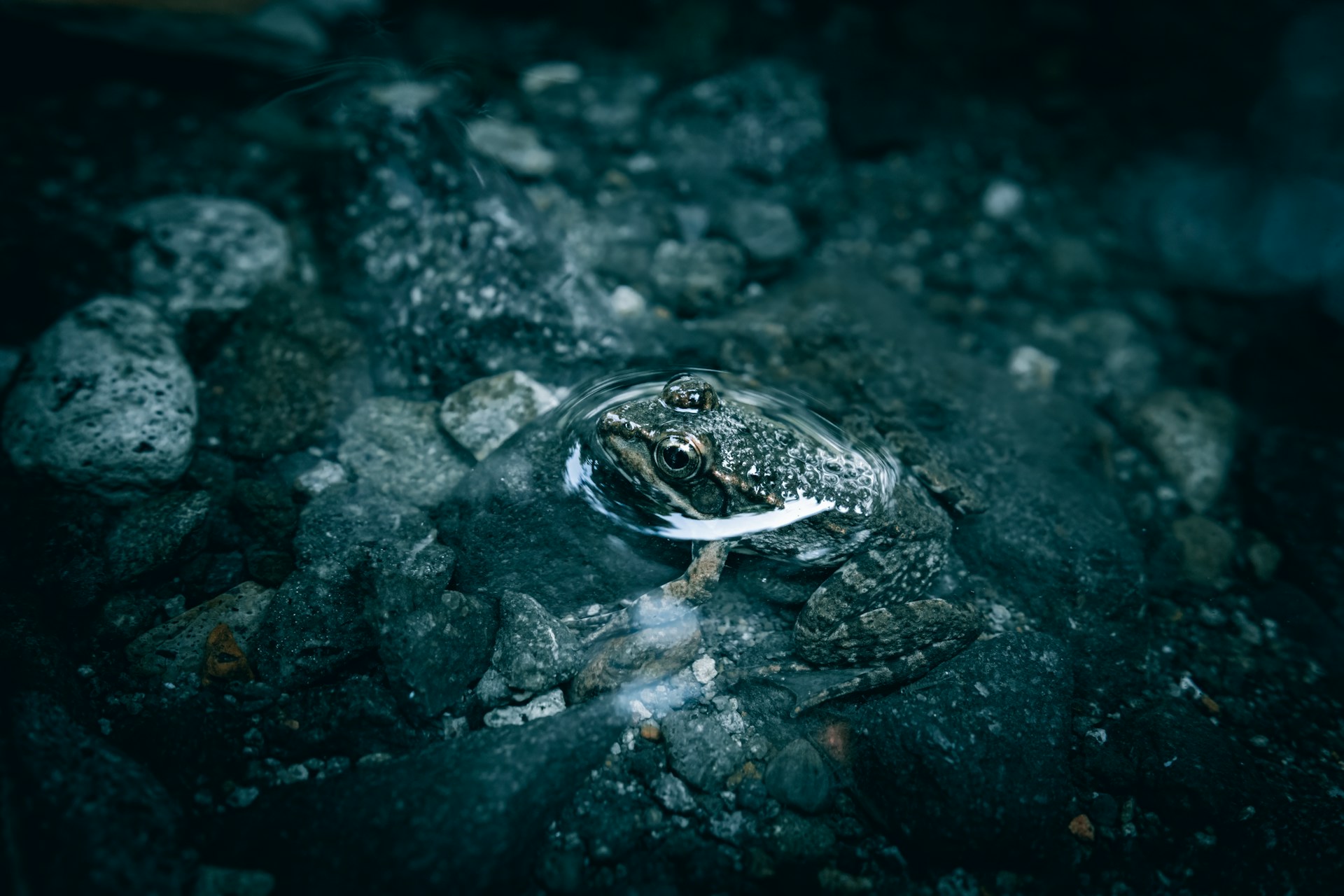
Imagine waking up one morning, stepping outside, and discovering that the entire world has turned into a giant freezer. The lakes are solid, the ground is frozen, and the temperature has dropped so dramatically that even the smallest puddle has become a sheet of ice.
For most animals, this would be a disaster. Their bodies depend on carefully regulated temperatures, functioning cells, and liquid water to keep essential biological processes running. Freeze their tissues extensively, and ice crystals can rupture cells, damage organs, and destroy the delicate machinery that keeps them alive.
But nature has a few extraordinary exceptions.
Some animals can survive having much of the water in their bodies freeze. Others can dry themselves out until their metabolism becomes almost undetectable, remaining in a suspended state for months or even years before becoming active again when conditions improve. Certain microscopic creatures can endure conditions that would be fatal to almost any other animal.
In these cases, what looks like death can be a temporary biological pause.
The remarkable part is that these animals do not accomplish this through magic, supernatural abilities, or science-fiction technology. They survive through millions of years of evolutionary adaptation, developing biological strategies that allow them to endure conditions that would otherwise be impossible.
From frogs that spend winter frozen beneath the forest floor to microscopic creatures that can survive extreme dehydration, the natural world contains some truly astonishing examples of survival.
And the deeper we look, the stranger the story becomes.
1. The Wood Frog: The Amphibian That Turns Into a Frog-Sized Ice Cube
If there were a competition for the most impressive winter survival strategy, the wood frog would deserve a place near the top.
Found across parts of North America, including regions with exceptionally cold winters, the wood frog has developed a remarkable ability to survive partial freezing. While many frogs escape the cold by hiding beneath the water or retreating into sheltered environments, wood frogs can endure winter temperatures that cause ice to form inside their bodies.
Yes, actual ice.
When temperatures fall, ice begins forming in spaces outside the frog’s cells. As this happens, water moves out of the cells toward the growing ice, concentrating the remaining substances inside them. The frog also produces large quantities of glucose, a simple sugar that helps protect its cells from the damaging effects of freezing.
This natural antifreeze-like strategy is not identical to pouring antifreeze into a car radiator. Instead, glucose acts as a cryoprotectant, helping cells tolerate the stresses associated with freezing and dehydration.
The frog’s heart can stop beating. Its breathing ceases. Blood circulation comes to a halt, and the animal may become stiff and apparently lifeless.
For a casual observer, the frog might look like a tiny amphibian that has lost its battle against winter.
But the story is not over.
As temperatures rise in spring, the ice melts. The frog gradually regains its normal physiological functions, its heart begins beating again, and it resumes breathing and moving.
The animal can return to ordinary activity after surviving a period in which several major signs of life temporarily disappeared.
There is an important limitation, however: wood frogs cannot survive unlimited freezing. Their tolerance depends on factors such as temperature, duration, and the proportion of their bodies that freezes. The process is carefully constrained by their biology.
Nevertheless, the wood frog demonstrates something extraordinary: an animal can survive the temporary cessation of several essential bodily functions without suffering the irreversible damage that would ordinarily follow.
Nature, it seems, has developed its own version of a biological emergency mode.
2. The Arctic Woolly Bear Caterpillar: The Insect That Can Wait Years for Better Weather
Some animals do not simply survive a single cold winter. They can endure repeated freezing while waiting for conditions suitable for growth.
Meet the Arctic woolly bear caterpillar, the larval stage of the Arctic woolly bear moth.
Living in the harsh Arctic environment, this caterpillar faces a challenge that would make most creatures reconsider their life choices. The growing season is extremely short, and temperatures can remain too low for much of the year.
Instead of completing its development in a single summer, the caterpillar can spend several years growing through successive seasonal cycles.
During the warmer months, it feeds on vegetation and gradually develops. When winter arrives, it enters a state of dormancy and can survive freezing conditions. Its development slows dramatically, allowing it to conserve energy while waiting for another opportunity to grow.
The caterpillar uses physiological adaptations that help it tolerate the cold, including changes in its body chemistry and the accumulation of substances that protect its tissues.
Its strategy is particularly impressive because survival is not the only challenge. The caterpillar must eventually accumulate enough energy to complete metamorphosis and become an adult moth.
This can take several years.
Imagine being an animal whose childhood lasts through multiple Arctic winters, with each summer providing only a short window for progress.
While humans plan their lives around calendars, the Arctic woolly bear operates according to a much harsher schedule dictated by temperature, sunlight, and the availability of food.
Its life is a reminder that survival does not always mean moving quickly. Sometimes, the most successful strategy is to slow down, conserve resources, and wait for the environment to become favorable again.
3. The Antarctic Midge: A Tiny Insect With an Extraordinary Cold-Weather Strategy
Antarctica is famous for its enormous ice sheets, powerful winds, and temperatures that can fall far below freezing. It is not exactly the first place most people would choose to establish a thriving insect population.
Yet one insect has managed to make a home there.
The Antarctic midge, Belgica antarctica, is a small, wingless insect native to the Antarctic Peninsula and nearby islands. It is widely recognized as the continent’s only entirely terrestrial insect.
Its larval stage can tolerate severe environmental stress, including freezing, dehydration, and prolonged periods of limited activity.
Rather than depending on constant movement and feeding, the larvae can enter periods of dormancy when conditions become unfavorable. Their bodies possess adaptations that help them survive the repeated environmental challenges of their habitat.
One particularly important feature of Antarctic life is the relationship between freezing and dehydration. As ice forms in the environment, liquid water becomes less available. Organisms must cope not only with low temperatures but also with the difficulty of maintaining sufficient water inside their tissues.
The Antarctic midge has evolved ways to withstand these combined pressures.
Its survival strategy is not simply about being able to endure a cold day. It involves managing the cumulative effects of freezing, drying, and limited opportunities for growth.
And all of this happens in an insect small enough to escape the notice of many people who visit cold environments.
The Antarctic midge illustrates a fascinating principle of evolution: an organism does not need to be large, powerful, or particularly fast to succeed. Sometimes, being exceptionally good at surviving a difficult environment is enough.
4. The Tardigrade: The Microscopic Animal That Can Enter Survival Mode
If the animal kingdom had a collection of extreme survival specialists, tardigrades would be among its most famous members.
Often called water bears, these microscopic animals live in environments ranging from moss and soil to freshwater and marine habitats.
Under ordinary conditions, tardigrades move through their surroundings using eight short legs. Their appearance under a microscope can make them look like tiny, soft-bodied creatures from an animated science-fiction movie.
But their most remarkable abilities emerge when their environment becomes hostile.
Some tardigrade species can enter a state known as anhydrobiosis, a form of suspended activity associated with extreme water loss.
When their surroundings dry out, these tardigrades can lose most of the water in their bodies and contract into a compact form known as a tun. Their metabolism becomes extremely low, and many ordinary biological activities are effectively suspended.
In this state, certain tardigrades can tolerate conditions that would quickly kill many other animals, including severe dehydration and, under suitable circumstances, freezing.
When water becomes available again, surviving individuals can rehydrate and resume activity.
The important distinction is that tardigrades do not simply freeze solid and remain unaffected by everything. Their survival depends on species, environmental conditions, and the particular stresses involved. Not every tardigrade survives every extreme, and a dormant animal is not necessarily invulnerable.
Still, their ability to enter a state of dramatically reduced activity is remarkable.
Researchers have investigated the biological mechanisms that help tardigrades protect their cells and other structures during dehydration and environmental stress. These mechanisms vary across species and may involve specialized proteins, protective molecules, and other cellular adaptations.
Tardigrades have even survived certain exposures to the vacuum of space under experimental conditions, particularly when dried and appropriately protected. However, this does not mean they can live indefinitely in space or survive every hazard found there.
Their real achievement is impressive enough without exaggeration.
A tardigrade can transform its biological priorities from growing, feeding, and reproducing to preserving the basic integrity of its body until conditions improve.
It is the microscopic equivalent of putting nearly every nonessential process on pause.
5. The Antarctic Nematode: A Worm That Can Survive Freezing and Drying
Nematodes are tiny roundworms found in environments ranging from gardens and oceans to deserts and polar regions.
Although many species are almost invisible without magnification, some have developed remarkable strategies for surviving environmental extremes.
One example is Panagrolaimus davidi, a nematode associated with Antarctic environments.
This species has attracted scientific interest because it can survive substantial dehydration and freezing under appropriate conditions.
Its survival strategy involves preparing for environmental stress rather than simply enduring it without adjustment. Depending on the circumstances, the worm can reduce its activity and enter a state of dormancy that helps it withstand periods when liquid water is unavailable.
Freezing and dehydration present related but distinct challenges.
When water freezes, ice crystals can form and water becomes less available to cells. During dehydration, the animal loses water directly, potentially disrupting the structure of proteins, membranes, and other essential components.
A successful survival strategy must limit the damage caused by these changes.
Studies of cold-tolerant nematodes have helped scientists investigate how small animals maintain cellular integrity during freezing and drying. Such research also raises broader questions about how organisms survive in environments where favorable conditions may be brief or unpredictable.
The Antarctic nematode is not necessarily an animal that can remain frozen indefinitely. Survival depends on the conditions before, during, and after freezing, as well as the duration of exposure.
But it demonstrates how an organism with a very simple body plan can possess surprisingly sophisticated biological defenses.
In nature, complexity is not always measured by the number of organs an animal has. Sometimes, the real complexity lies in the chemistry happening inside its cells.
6. The Common Lizard: A Cold-Blooded Survivor With Important Limits
Not every animal that survives freezing is a microscopic organism or an amphibian.
Certain reptiles can tolerate temperatures close to freezing, and some species can survive limited freezing of body tissues under specific circumstances. However, freezing tolerance is not widespread among reptiles, and it would be misleading to assume that ordinary lizards can simply become blocks of ice and recover.
Lizards are ectotherms, meaning that their body temperatures depend heavily on external conditions. They often respond to cold by seeking shelter, reducing activity, and entering periods of seasonal dormancy.
These behaviors help them avoid dangerous exposure in the first place.
The distinction matters because cold tolerance and freeze tolerance are not the same thing.
An animal that can remain inactive through a cold winter is not necessarily capable of surviving ice formation inside its body. Many reptiles must keep their tissues from freezing and may die if temperatures fall too low.
A few cold-adapted reptiles can tolerate conditions that would be dangerous to other species, but their abilities are specific to their biology and habitat.
This example provides an important counterpoint to the more dramatic stories of frozen frogs and dormant microscopic animals.
Nature does not give every creature the same survival equipment. Evolution produces solutions suited to particular environments, and a strategy that works beautifully for one species may be completely ineffective for another.
Sometimes, the best way to survive winter is not to freeze and come back to life. It is to avoid freezing altogether.
7. The Goldenrod Gall Fly: An Insect Larva With Its Own Antifreeze Chemistry
The goldenrod gall fly, Eurosta solidaginis, has a life cycle that includes a particularly challenging winter.
Its larvae develop inside spherical growths, called galls, on goldenrod plants. These structures provide shelter, but they do not eliminate the cold. During winter, the larvae may experience temperatures low enough to freeze much of their surroundings.
The larvae respond by accumulating substances such as glycerol and other protective compounds that help them survive freezing conditions.
Glycerol is especially interesting because it can act as a cryoprotectant. It helps reduce the damaging effects of freezing and the associated movement of water out of cells.
Like the wood frog, the goldenrod gall fly larva can tolerate ice formation under suitable conditions. But its strategy is not identical to that of the frog, and its protection depends on a carefully regulated combination of physiology and environmental conditions.
The larva’s body essentially prepares for winter before the most severe cold arrives.
This preparation is crucial. Freeze-tolerant organisms often need time to adjust their physiology, accumulate protective substances, and modify how their cells respond to falling temperatures.
Survival is not merely a reaction to ice. It can begin long before the first ice crystal forms.
The goldenrod gall fly demonstrates how even an insect living inside a plant gall can develop a sophisticated response to seasonal stress.
It also shows why the word antifreeze is so useful when discussing biology, provided we remember that natural cryoprotectants work through specific mechanisms rather than functioning exactly like the products used in engines.
8. How Can Animals Survive When Their Hearts Stop?
The obvious question is how any animal can survive a process that interrupts essential bodily functions.
After all, the human body depends on continuous circulation, oxygen delivery, and carefully regulated cellular activity. A prolonged interruption of these processes can cause irreversible damage.
Freeze-tolerant animals have evolved ways to reduce that damage.
The first important factor is water.
Water is essential for life, but freezing changes its physical behavior. Ice crystals can mechanically damage tissues, while the formation of ice outside cells can draw water out of them, creating a dehydrating effect.
Animals that survive freezing must manage these dangers.
Some produce protective compounds such as glucose, glycerol, or other substances that help stabilize cells and limit injury. Others adjust their metabolism, alter membrane properties, or use a combination of mechanisms.
Another important factor is energy use.
When an animal enters dormancy, its metabolic rate may fall dramatically. This allows it to conserve energy while food is unavailable or environmental conditions prevent normal activity.
However, reduced metabolism alone does not explain freeze tolerance. An animal must also prevent or repair the damage associated with the particular stress it experiences.
The wood frog, for example, tolerates ice formation in parts of its body while protecting vulnerable tissues. Its heart can stop temporarily, but the animal’s cells must remain sufficiently intact for normal function to resume after thawing.
This is fundamentally different from irreversible death.
A frozen animal that successfully recovers has not been brought back from biological death in the same sense that a person might imagine after watching a science-fiction film. Instead, the animal has survived a period of extreme physiological disruption without losing the capacity to recover.
The distinction is important because the phrase “coming back to life” makes for an excellent headline, but the underlying science is even more interesting.
These animals have not defeated the laws of biology. They have evolved ways to operate within them.
9. Could Scientists Use These Animals to Freeze Humans in the Future?
The abilities of freeze-tolerant animals naturally raise another question: could humans eventually use similar biological mechanisms to survive freezing?
The idea is fascinating, particularly for medicine, organ preservation, and long-distance space travel.
At present, however, an animal’s ability to survive freezing cannot simply be transferred to a human being.
Human tissues are vulnerable to ice formation, dehydration, and the disruption of normal circulation. Different organs also respond differently to cold, and the formation of ice can cause damage that is difficult to reverse.
Scientists are investigating ways to preserve biological materials at low temperatures, including improved methods for storing cells, tissues, and organs. Cryopreservation and related techniques already have important medical applications, but preserving an organ successfully is not the same as freezing an entire human body and restoring it to normal function.
The difference is enormous.
A whole organism contains many interconnected systems that must recover together. The brain, heart, blood vessels, immune system, and other organs must all remain sufficiently intact and functional.
Some animals have evolved specialized mechanisms over millions of years to meet their own survival requirements. Human beings have not evolved the same natural tolerance to freezing.
Research into freeze-tolerant organisms may nevertheless reveal useful information about cellular protection, tissue preservation, and the management of damage caused by extreme conditions.
The goal is not necessarily to turn humans into frozen superheroes. Even small improvements in preserving organs or protecting cells could have meaningful applications.
Nature, as it often does, provides a starting point for scientific questions that engineers and researchers are still working to answer.
10. The Real Secret: Survival Is About Waiting for the Right Conditions
There is a common assumption that survival always means remaining active.
We picture animals running, hunting, migrating, fighting, and searching for food. We associate life with movement and visible activity.
But the animals in this story demonstrate a different strategy.
Sometimes, survival means reducing activity almost to zero.
The wood frog waits beneath the winter landscape. The Arctic woolly bear caterpillar progresses through years of short growing seasons. Tardigrades can enter an extraordinarily resistant dormant state. Antarctic nematodes and insects rely on specialized adaptations that help them withstand freezing, dehydration, or both.
Each species has a different biological toolkit, but the general principle is remarkably consistent: when the environment becomes hostile, survival may depend on changing how the body operates until conditions improve.
These animals are not invincible. They have limits, and their survival depends on temperature, exposure time, hydration, species-specific adaptations, and other environmental factors.
Their abilities are extraordinary precisely because they operate within those limits.
They have evolved ways to endure conditions that would otherwise be fatal, sometimes allowing them to resume ordinary activity when the world becomes suitable for life again.
And perhaps that is the most interesting lesson.
Life does not always need to move forward at the same speed. Some organisms can survive by slowing down, conserving what matters, and waiting for another opportunity.
Final Thoughts: Nature’s Most Unexpected Comeback Stories
The next time you see frost covering a field, ice forming on a pond, or snow settling across a landscape, remember that the natural world is full of organisms responding to winter in ways that are almost impossible to imagine.
A wood frog may survive with ice in its body. A tiny Arctic caterpillar may endure multiple winters before completing its development. A microscopic tardigrade may lose most of its water, enter a dormant state, and resume activity when moisture returns.
These are not supernatural abilities. They are examples of evolution producing remarkable solutions to difficult environmental problems.
They also remind us that the visible signs of life do not always tell the whole story. An animal that is motionless, inactive, or apparently frozen may still retain the biological capacity to recover.
Of course, not every frozen animal can survive thawing, and not every species possesses these abilities. Most animals would not survive the same conditions that these specialists can tolerate.
But the exceptions are extraordinary.
In a world where cold can destroy delicate tissues and interrupt essential biological processes, some animals have developed the ability to endure the seemingly impossible.
They do not need a time machine, a futuristic laboratory, or a science-fiction spaceship.
Sometimes, they simply need the right biological adaptations, a little protection from the environment, and the arrival of warmer days.
Nature has spent millions of years experimenting with survival.
And occasionally, the result is an animal that can freeze, wait, and return to the business of being alive.


