Australia Declared War on 20,000 Emus—and Somehow, the Birds Won
The Great Emu War of 1932 is one of history’s strangest episodes, a real-life story involving machine guns, determined farmers, a military operation, and thousands of remarkably difficult birds.
History is full of wars fought over land, resources, territory, and survival. Some lasted for decades. Others changed the course of entire nations. And then there was the Great Emu War of 1932, a peculiar episode in Australian history in which the government sent soldiers armed with machine guns to deal with a problem involving thousands of large, flightless birds.
The result was not quite what anyone had expected.
Imagine preparing for a military operation, loading ammunition, organizing personnel, and heading into the countryside with what appears to be an overwhelming technological advantage. Your objective is straightforward: deal with a large population of birds damaging agricultural land.
Now imagine discovering that your targets are fast, unpredictable, surprisingly difficult to hit, and completely uninterested in cooperating with your carefully planned operation.
Welcome to the Great Emu War, one of those historical events that sounds like a comedy sketch until you discover that the basic story is true.
The year was 1932. Western Australia was experiencing serious agricultural difficulties, farmers were struggling to make ends meet, and thousands of emus had entered farming areas in search of food. What followed became a memorable demonstration of the difference between possessing powerful equipment and actually solving a problem.
And the emus? They simply kept running.
The Setup: When Farming Became a Battlefield
To understand how Australia ended up deploying military personnel against birds, we need to travel back to the years following the First World War.
Australia had encouraged former servicemen to settle on agricultural land, including in Western Australia. The intention was to help returning veterans establish new lives while expanding the country’s agricultural production.
For many settlers, farming offered an opportunity to build something lasting after years of uncertainty. Wheat production became an important part of their livelihoods, and the success of their farms depended on predictable weather, manageable expenses, reasonable market prices, and healthy crops.
Unfortunately, the 1930s brought a combination of circumstances that made farming exceptionally difficult.
The Great Depression had placed enormous pressure on agricultural markets. Wheat prices had fallen, making it harder for farmers to earn enough money from their harvests. Many were already dealing with financial uncertainty when another problem appeared across the landscape.
Emus began moving into agricultural areas in large numbers.
These large, flightless birds are native to Australia and are well adapted to moving across open country. Seasonal conditions can influence their movements, and farmland can offer attractive sources of food and water.
To an emu, a wheat field is not an investment that requires months of labor, expensive equipment, or careful financial planning. It is simply a place containing plenty of food.
To a farmer who has spent months cultivating that same field, however, a large flock of hungry birds can represent a serious threat to an already fragile livelihood.
The birds ate crops, trampled vegetation, and damaged fences. Their movements could also create openings that allowed other animals to enter cultivated land.
The problem was not simply that emus were eating wheat. It was that the farmers were already struggling, and every additional loss mattered.
In the face of these difficulties, some farmers sought government assistance. Their requests eventually reached Australia’s political leadership, setting the stage for an unusual experiment in wildlife management.
The government would send in the military.
Enter the Australian Army
By late 1932, the emu problem had attracted enough attention for the Australian government to authorize military assistance.
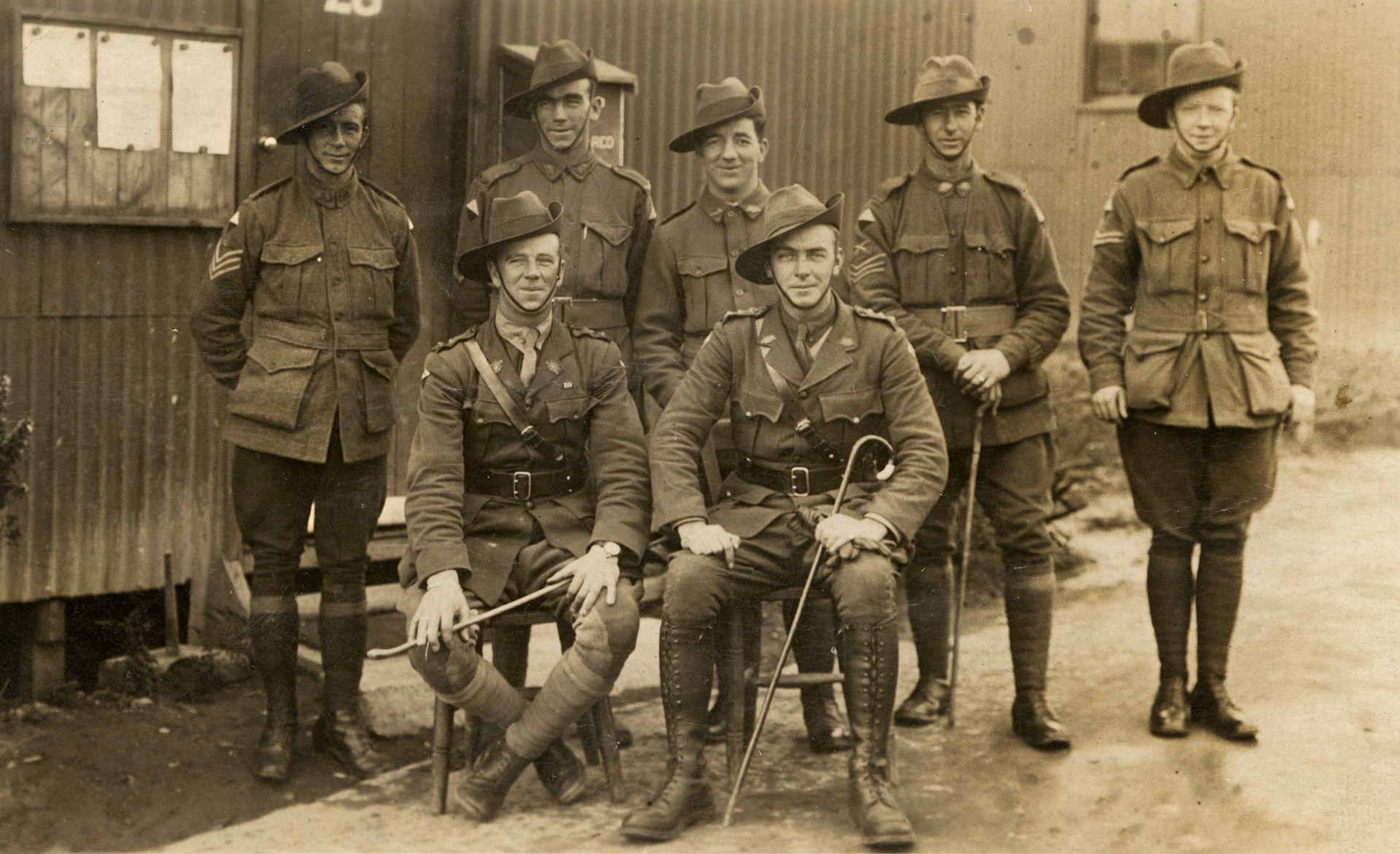
The operation involved Major G. P. W. Meredith of the Royal Australian Artillery, accompanied by military personnel and equipped with two Lewis automatic machine guns.
The team also had access to approximately 10,000 rounds of ammunition.
On paper, the arrangement appeared straightforward. Large groups of birds were damaging crops, farmers needed relief, and the military possessed equipment capable of firing rapidly at targets.
The challenge was finding the targets, engaging them effectively, and achieving a result that would make a meaningful difference to the agricultural problem.
This was where the plan encountered reality.
Machine guns were designed to provide formidable firepower, but the Australian countryside was not a shooting range. The terrain was uneven, the birds were mobile, and the flocks did not remain conveniently grouped together when people approached.
The soldiers could bring military equipment to the fields, but they could not make the emus behave like stationary targets.
And that distinction would become the defining feature of the campaign.
November 2: The First Encounter
The military operation began in early November 1932.
One of the initial encounters involved a flock of approximately 50 emus. The soldiers anticipated that they might be able to engage the birds effectively while they were gathered together.
Instead, the emus scattered.
This was a serious practical problem. A group of birds that appears concentrated from a distance can become dozens of moving targets within seconds. Once the flock disperses, the opportunity for effective engagement becomes much more limited.
Emus can run at impressive speeds, with reported top speeds reaching around 50 kilometers per hour under suitable conditions. Their long legs allow them to cover considerable distances, while the open landscape provides plenty of room to escape.
The soldiers had brought equipment capable of delivering sustained fire. What they needed, however, was a reliable opportunity to use it effectively.
The birds did not provide one.
Rather than remaining together, the emus moved away in different directions, making it difficult for the soldiers to concentrate their efforts.
The first encounter offered an early lesson: overwhelming firepower does not automatically translate into an effective solution when the targets are fast, scattered, and difficult to predict.
The operation was already proving more complicated than anticipated.
November 4: The Dam Ambush That Disappointed
The next phase involved an attempt to take advantage of a location where emus were expected to gather.
Water sources could attract birds, particularly in dry agricultural regions. If a large group gathered near a dam, the soldiers might have a better opportunity to engage them than when they were spread across open farmland.
The plan was reasonable in theory.
But wildlife does not follow a military timetable.
When the soldiers attempted to engage the birds, the situation failed to develop as hoped. The emus dispersed, and the operation did not produce the decisive result the military had been seeking.
Mechanical difficulties also complicated the effort. Accounts of the campaign describe problems with the equipment, including a machine gun that jammed during an engagement.
This was an especially frustrating combination of circumstances. The soldiers were dealing with moving targets, uncertain conditions, and equipment that required reliable operation to be effective.
The birds, meanwhile, continued moving through the countryside.
There was no dramatic moment when the entire emu population gathered in one place and surrendered control of the wheat fields.
There was simply another unsuccessful attempt to reduce the problem through military force.
November 8: The Truck Experiment
One of the most memorable aspects of the Great Emu War involved an attempt to make the operation more mobile.
If the birds were too fast to engage effectively from stationary positions, perhaps the soldiers could pursue them.
A truck offered a possible solution. It could transport personnel and equipment across the farmland, allowing the military team to move more quickly between locations.
Unfortunately, the idea encountered a problem familiar to anyone who has tried to perform a delicate task while riding over rough ground.
The truck bounced.
Driving across uneven agricultural terrain was not the same as traveling along a smooth road. The vehicle’s movement made it difficult for a gunner to maintain a steady aim while attempting to engage moving birds.
The emus, meanwhile, were perfectly comfortable running across the landscape.
A vehicle might have offered greater mobility, but it could not eliminate the difficulties of tracking wildlife in motion.
The episode captured the central irony of the entire operation. The soldiers possessed technology that was extraordinarily powerful under the right circumstances, yet the environment and behavior of the birds made that technology far less useful than anticipated.
The emus did not need sophisticated equipment or a complicated strategy. Their ordinary behavior was enough to frustrate the operation.
They ran. They scattered. They disappeared into the surrounding country.
And the military campaign continued to struggle.
Were the Emus Really Using Military Tactics?
One reason the Great Emu War remains so entertaining is that the birds are often described as though they were an organized military force.
Stories about the campaign frequently portray emus as employing guerrilla warfare, using lookouts, dispersing into small groups, and exploiting the weaknesses of their opponents.
It is an amusing comparison, and it captures something real about the difficulty of dealing with mobile wildlife.
However, the emus were not consciously planning a military campaign. Their behavior can be understood through ordinary animal instincts and survival responses.
Emus are alert, mobile animals. When they sense a threat, they may flee, scatter, or change direction. A flock that is feeding in one place can quickly become dispersed when disturbed.
Some observers also described larger birds appearing to watch their surroundings while others continued feeding. Such behavior can look like a coordinated warning system, even when it arises from individual vigilance and responses to danger.
From the soldiers’ perspective, the result was remarkably inconvenient.
A stationary target presents one set of challenges. A moving target that can accelerate, change direction, and disappear across open terrain presents another.
A flock of birds that disperses also becomes much harder to engage as a group. The same event that allows the animals to escape danger can make it difficult for people to control the encounter.
In this sense, the emus demonstrated an important principle without needing to understand it: an organism adapted to its environment can be difficult to manage using a method that ignores its natural behavior.
The birds were not generals. They did not hold strategy meetings. They did not understand the significance of the Lewis machine guns.
They simply behaved like emus.
That was enough to make the story extraordinary.
The Major’s Remarkable Assessment
Major Meredith’s experiences during the operation became part of the legend surrounding the Great Emu War.
Accounts attributed to him describe his frustration with the birds’ ability to evade concentrated fire. One widely repeated remark compares the emus’ apparent resilience to that of tanks and imagines how formidable a military division might be if it possessed similar qualities.
The comparison is humorous because it reverses our expectations.
Military technology is usually associated with precision, control, and overwhelming force. Birds, by contrast, seem like unlikely opponents for a modern military unit.
Yet the campaign revealed that the usefulness of any technology depends on the conditions in which it is deployed.
A machine gun may deliver substantial firepower, but it cannot guarantee that a moving target will be hit. A truck may increase mobility, but it cannot necessarily provide a stable platform on rough terrain. A plan may appear convincing in advance, but its assumptions can collapse when confronted with real-world conditions.
The emus had no armor, no weapons, and no interest in fighting.
Their advantage was that they could leave.
And sometimes, avoiding a confrontation is more effective than participating in one.
Who Actually Won the Great Emu War?
By November 8, the initial military operation was effectively ending.
The campaign had failed to deliver the decisive reduction in the emu problem that its supporters had hoped for. Although birds were killed during the operation, the broader agricultural challenge remained.
The soldiers could not simply eliminate the emu population from the affected region, and the practical difficulties of pursuing and shooting the birds made the approach inefficient.
It is important to distinguish the popular version of the story from the historical record. Australia did not literally lose a conventional war to an enemy army. The episode was a short and unsuccessful military-assisted attempt to manage a wildlife problem.
Nevertheless, the phrase Great Emu War stuck because it describes the absurd contrast between the scale of the military response and the outcome.
The government had deployed soldiers and machine guns against birds, and the birds had proved much harder to manage than expected.
In the popular telling, the emus won.
In the more practical telling, the military approach failed to solve the farmers’ problem.
Both descriptions point toward the same conclusion: the chosen method was not delivering the desired results.
The Problem Did Not Disappear
The end of the military operation did not mean the farmers suddenly stopped experiencing difficulties.
Emus continued to move through agricultural areas, and crop damage remained a concern. Farmers needed ways to protect their fields without relying on a military operation that had already demonstrated its limitations.
Requests for additional assistance followed in later years, but the long-term response increasingly emphasized practical measures rather than another large-scale deployment of troops.
Fencing was an important part of the solution.
A well-designed barrier could help protect cultivated land by limiting the movement of emus into fields. Unlike an operation that required soldiers to locate and engage individual groups of birds, a fence offered a continuing means of reducing access to crops.
Fencing was not a perfect solution. It required money, maintenance, and careful planning, and its effectiveness depended on local conditions. But it addressed the problem in a fundamentally different way.
Instead of attempting to defeat the birds after they entered the fields, farmers could work to prevent them from entering in the first place.
This is a surprisingly modern lesson.
When a problem repeatedly defeats an expensive intervention, the answer may not be to repeat the intervention with greater intensity. It may be to redesign the environment so that the problem becomes less likely to occur.
The Great Emu War became memorable because the original approach was so dramatic. Its quieter lesson was that durable solutions often emerge from understanding the problem rather than simply increasing the force applied to it.
The Great Emu War Was Really a Lesson in Problem-Solving
There is a reason this strange episode continues to fascinate people nearly a century later.
It combines a serious economic problem with an almost unbelievable response. Farmers were struggling to protect their livelihoods, the government attempted to help, and military personnel applied their skills and equipment to an unusual task.
Nobody needed to be foolish or incompetent for the operation to encounter difficulties. The situation itself was poorly suited to the method being used.
That distinction matters.
In engineering, a system can fail even when its individual components function as intended. A powerful tool can be ineffective when it is applied to the wrong problem. A strategy that looks excellent in a controlled environment can become impractical when conditions change.
Software developers encounter similar situations.
Imagine building an elaborate application to solve a problem, only to discover that the real difficulty lies somewhere else entirely. You can add more servers, write more code, increase processing capacity, and introduce increasingly sophisticated algorithms.
But if you misunderstand the user’s needs, the system may remain ineffective.
The solution is not necessarily more technology. Sometimes it is a better model of the problem.
The Great Emu War illustrates this principle in an unusually entertaining way. The military had powerful equipment, but the problem involved mobile wildlife, open terrain, agricultural economics, and the behavior of animals responding to perceived danger.
The equipment was not designed to make all those factors disappear.
A fence, by comparison, was a much less dramatic intervention. Yet it addressed an important part of the problem directly.
The lesson is not that technology is useless. It is that technology becomes useful when it matches the task.
Why This Historical Oddity Still Matters
The Great Emu War occupies a special place in the collection of historical events that sound fictional but are rooted in reality.
It has everything required for a memorable story: an unexpected opponent, an ambitious plan, a series of frustrating encounters, and a conclusion that invites laughter.
But beneath the humor is a genuine account of people attempting to respond to a difficult situation with the tools available to them.
The farmers needed to protect their crops. The government tried a military solution. The soldiers encountered the limitations of their equipment and methods. Eventually, attention shifted toward more practical approaches to reducing the damage.
The emus did not understand any of this. They were following the basic requirements of survival: finding food, moving through their habitat, and avoiding danger.
That is what makes the story so fascinating.
Human beings are remarkably good at building systems intended to control the world around them. We construct roads, machines, computers, farms, and cities. We develop strategies and assume that sufficient planning will produce predictable results.
Nature has a way of reminding us that the world is not obligated to follow our plans.
Sometimes the challenge is not overcoming an opponent. It is understanding the conditions that created the problem in the first place.
And sometimes, the most useful lesson comes from an animal that has never read a military manual.
Conclusion: Never Underestimate the Power of Running Away
The Great Emu War of 1932 remains one of Australia’s most unusual historical episodes.
Thousands of emus entered agricultural areas, farmers struggled to protect their crops, and the government authorized a military operation involving Major Meredith, two Lewis machine guns, and thousands of rounds of ammunition.
The results were disappointing. The birds scattered, the terrain complicated the use of the equipment, and the operation failed to provide the decisive answer that had been anticipated.
In the end, the emus continued their lives, while farmers and officials had to consider more practical ways to protect agricultural land.
The episode is funny because of its extraordinary contrast: powerful military machinery on one side, large flightless birds on the other, and an outcome that did not match anyone’s expectations.
Yet it is also a reminder that success depends on choosing the right response to a problem.
More power does not always mean more control. More complexity does not always mean greater effectiveness. And a plan that works beautifully on paper can struggle when reality introduces a few unexpected variables.
For the farmers of Western Australia, the emus were a serious agricultural challenge. For historians and curious readers, the resulting campaign became an unforgettable story about the limits of force and the importance of practical solutions.
The birds never needed to win a battle in the conventional sense.
They only needed to keep doing what emus do best.
They ran.
And almost a century later, Australia’s Great Emu War remains a reminder that sometimes the most extraordinary historical stories begin when a perfectly reasonable plan meets a very unreasonable reality.
Software in My Mind. Rock in My Soul. And somewhere in Australia, an emu is still minding its own business.