The Strange Psychology of Open-World Games
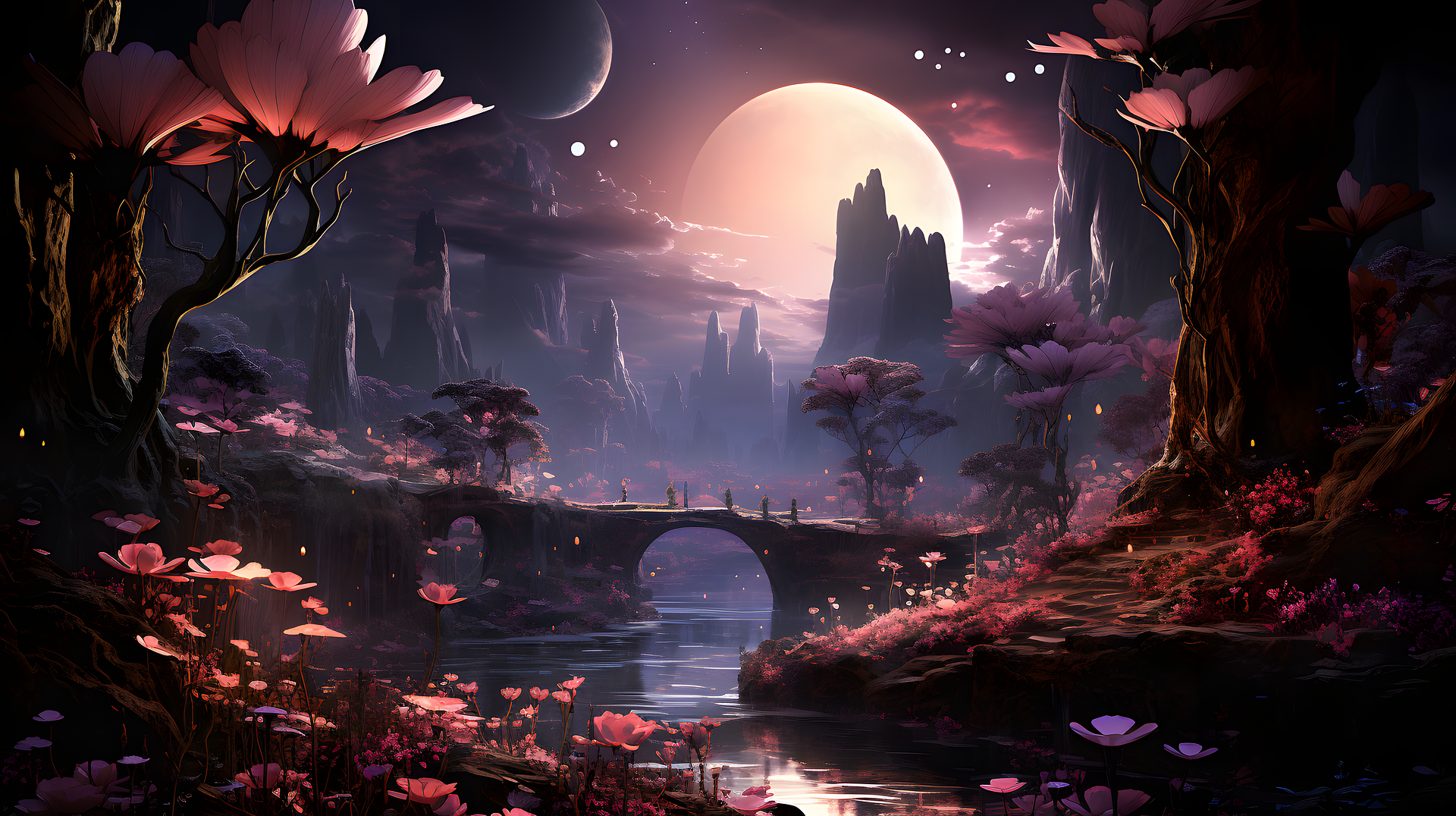
There is something strange about open-world games.
They give us enormous maps, thousands of possible destinations, countless objects to interact with, characters to meet, missions to complete, and stories to discover.
Then, somehow, we spend twenty minutes driving in the opposite direction from the objective because we saw an interesting mountain.
That is one of the most fascinating things about open-world games.
They are not simply large games. They are experiments in curiosity.
A traditional game can tell you where to go. An open-world game can give you a direction and then quietly ask:
“What do you want to do instead?”
That question changes everything.
The psychology of open-world games is not only about entertainment. It is about exploration, autonomy, discovery, repetition, memory, curiosity, imagination, and the strange satisfaction of existing inside a digital place.
As a programmer and someone who enjoys games, I have always found this interesting. A game world is technically a collection of systems: maps, databases, physics, artificial intelligence, rendering, animations, audio, quests, interaction systems, and countless lines of code.
But when all those systems work together, something unusual happens.
The player stops seeing the systems.
They start seeing a world.
The Feeling of Being Somewhere
One of the first psychological effects of an open-world game is the feeling of presence.
You are not simply completing levels.
You are somewhere.
There may be a city with streets, buildings, traffic, shops, parks, mountains, rivers, forests, deserts, beaches, or abandoned structures. Some locations may be important to the story. Others may exist simply because the world would feel incomplete without them.
That distinction matters.
A traditional level often exists because the player needs to complete something there.
An open world can exist because the world itself needs to feel believable.
You might walk through a virtual city without completing a single mission.
And somehow, that can still feel meaningful.
This is where game design becomes interesting.
The environment becomes part of the experience rather than merely becoming a container for gameplay.
A mountain is no longer just a collection of polygons.
It becomes a place you want to climb.
A strange building becomes a question.
A distant light becomes a destination.
A road becomes an invitation.
The world begins generating its own curiosity.
Curiosity Is a Powerful Game Mechanic
Humans naturally want to know what is behind the next door.
Open-world games turn that instinct into a gameplay system.
You see something unusual.
You investigate.
You discover something.
That discovery creates another question.
Then you investigate again.
This creates a loop:
Notice → Wonder → Explore → Discover → Remember → Explore Again.
The interesting part is that the game does not always need to reward you with something valuable.
Sometimes the reward is simply knowledge.
You discover a beautiful location.
You find an unusual character.
You stumble upon an unexpected event.
You discover a shortcut.
You find a hidden path.
You see something happening in the distance.
The discovery itself becomes the reward.
This is one reason exploration can be more satisfying than following a carefully optimized route.
The player feels like they found something rather than being shown something.
The Psychology of Choice
Open-world games also create a powerful feeling of autonomy.
You may have a main mission waiting for you.
But you do not have to do it immediately.
You can explore.
You can customize your character.
You can collect objects.
You can drive around.
You can hunt for secrets.
You can experiment with the environment.
You can simply walk.
That freedom creates an interesting psychological relationship between the player and the game.
The game provides possibilities.
The player provides priorities.
This is different from being given a fixed sequence of activities.
Instead of asking:
“What does the game want me to do?”
the player begins asking:
“What do I want to do?”
That small difference is enormous.
It transforms the game from a sequence of instructions into a space for personal decisions.
Why We Ignore the Main Mission
There is a funny phenomenon in open-world games.
The developers may spend months creating an important cinematic mission.
The player looks at the objective.
Then notices a small icon somewhere on the map.
And suddenly the main story can wait.
This behavior is not necessarily about avoiding the story.
It is about opportunity.
The player sees several possibilities at once.
A main mission represents the known path.
An unexplored location represents uncertainty.
And uncertainty can be attractive.
The player already knows what the mission objective is.
They do not know what is waiting around the corner.
That makes exploration psychologically interesting.
Sometimes the most memorable moment in a game is not the event the developers intended to become memorable.
It is the random thing that happened while you were doing something else.
Digital Worlds Create Personal Stories
This is one of my favorite things about open-world games.
Two people can play the same game and remember completely different experiences.
One player might remember an important story mission.
Another might remember getting lost in the mountains.
Someone else might remember discovering a hidden village.
Another player might remember a ridiculous interaction with an NPC.
The game provides the world.
The player provides the memories.
This is why open-world games can feel personal.
The same map becomes different depending on how you move through it.
Your route becomes part of your story.
Your mistakes become part of your story.
Your discoveries become part of your story.
Even the strange accidents become part of your story.
In that sense, an open-world game is not only telling a story.
It is giving the player a place where they can create smaller stories around the main one.
The Map Is More Than a Map
Game maps are fascinating psychological objects.
At first, a map is mostly information.
There are roads.
Markers.
Locations.
Regions.
Icons.
Objectives.
But as you explore, the map becomes memory.
You begin recognizing places without reading their names.
You know where a particular road leads.
You remember where you found something interesting.
You know which mountain gives you a good view.
You remember where a difficult mission happened.
The map slowly changes from a technical interface into a mental landscape.
This happens because exploration creates associations.
A location becomes connected to an event.
A road becomes connected to a memory.
A building becomes connected to a character.
A particular area becomes connected to a feeling.
The virtual world becomes easier to navigate because the player is no longer thinking only in coordinates.
They are thinking in experiences.
Why Getting Lost Can Be Fun
Modern navigation systems are designed to prevent us from getting lost.
Open-world games sometimes do the opposite.
Getting lost can be one of the most enjoyable parts.
When you do not know exactly where you are, the environment becomes more important.
You start paying attention to landmarks.
You look for roads.
You recognize buildings.
You observe the landscape.
You create your own mental map.
The process becomes more engaging because you are actively interpreting the environment.
There is a strange satisfaction in eventually realizing:
“I know where I am.”
The game did not simply tell you.
You figured it out.
The Pleasure of Small Progress
Open-world games also teach us something about progress.
Progress does not always have to mean completing a major objective.
Sometimes it means discovering a new area.
Finding better equipment.
Unlocking a new ability.
Completing a small side activity.
Collecting something.
Improving a character.
Learning the geography of the world.
These small achievements create a continuous feeling of movement.
You are gradually becoming more capable.
At the beginning, a large world can feel overwhelming.
Later, the same world can feel familiar.
That transformation is important.
The player does not only progress through the game.
The player develops a relationship with the environment.
Why Repetition Can Feel Comforting
There is another strange psychological feature of open-world games: repetition.
You may perform similar activities dozens of times.
Drive.
Walk.
Collect.
Fight.
Explore.
Upgrade.
Return.
Repeat.
Yet repetition does not automatically make the experience boring.
When the environment changes, repeated actions can feel different.
Driving through the same city at night can feel different from driving through it during the day.
Walking through a familiar forest during a storm can feel different from walking through it under clear skies.
The action may be similar.
The context changes.
That is an important principle in game design.
The brain does not experience an action in isolation.
It experiences the action together with its environment, timing, expectations, and memories.
Open Worlds and Imagination
Open-world games also provide something that traditional storytelling sometimes cannot provide as easily:
space for imagination.
A carefully designed world can suggest stories without explaining everything.
An abandoned house makes you wonder who lived there.
A strange structure makes you wonder why it exists.
A locked door makes you wonder what is behind it.
A distant city creates questions about what might happen there.
The environment becomes a collection of unfinished sentences.
The player completes them mentally.
This is particularly powerful because imagination is participatory.
The game does not need to explain every detail.
Sometimes leaving something unexplained makes it more interesting.
NPCs Make Worlds Feel Alive
Non-player characters are another important part of this psychology.
An NPC does not necessarily need a complicated personality to make a world feel alive.
They need context.
People walking somewhere.
Vehicles moving through streets.
Characters having conversations.
Shops opening and closing.
Characters reacting to weather or time.
Small behaviors create the impression of a functioning environment.
The player begins to believe that the world continues beyond their immediate actions.
That illusion is powerful.
A good open world feels like something larger than the player.
You are not the entire universe.
You are simply inside it.
The Importance of Atmosphere
Sometimes the most memorable part of an open-world game is not gameplay.
It is atmosphere.
Music.
Lighting.
Weather.
Architecture.
Sound.
Landscape.
Color.
Movement.
Silence.
A player might stop on a hill simply to watch the sunset.
Nothing mechanically important is happening.
No mission is being completed.
No reward is being collected.
Yet the moment feels valuable.
This is because games can create spaces where the player can simply exist.
That is a different kind of entertainment.
It is closer to visiting a place than completing a task.
Open Worlds Are Systems of Possibility
From a software perspective, an open-world game is an enormous collection of interconnected systems.
The weather system affects the environment.
The environment affects visibility.
Artificial intelligence controls characters.
Physics controls objects.
The economy may control prices.
The quest system controls missions.
The inventory system tracks possessions.
The progression system tracks abilities.
The rendering system creates the visual world.
The audio system creates atmosphere.
None of these systems alone creates the feeling of an open world.
The experience comes from their interaction.
That is something programmers can appreciate.
A large game world is almost like a living software architecture.
The interesting behavior emerges from connections.
A small change in one system can produce a different experience somewhere else.
This is one reason open-world games are technically fascinating.
They are not merely collections of features.
They are networks of interacting systems.
Why We Return to Familiar Worlds
Perhaps the strangest thing about open-world games is that we often return to worlds we already know.
We have seen the city.
We know the roads.
We know the characters.
We know the map.
Yet we return.
Why?
Because familiarity can be enjoyable.
A familiar game world can feel like a digital place you know.
You remember where things are.
You understand how the systems behave.
You can move through the environment without constantly thinking about controls.
The world becomes comfortable.
And once a virtual environment becomes familiar, revisiting it can feel less like starting a game and more like returning somewhere.
The Player Becomes Part of the World
The best open-world experiences gradually change the player’s relationship with the environment.
At first, the world is unfamiliar.
Then it becomes understandable.
Then it becomes familiar.
Eventually, it becomes personal.
The player develops routines.
Maybe they always use the same road.
Maybe they always return to a particular location.
Maybe they collect certain objects.
Maybe they spend unnecessary amounts of time customizing vehicles.
Maybe they explore every corner of the map.
None of these behaviors necessarily matters to the game’s central narrative.
But they matter to the player’s experience.
The world becomes partly theirs.
The Strange Beauty of Doing Nothing
There is one final idea that makes open-world games particularly interesting.
Sometimes the best thing to do is nothing.
Stand on a rooftop.
Watch traffic.
Listen to the soundtrack.
Walk through a forest.
Watch the rain.
Look at the horizon.
Sit beside a virtual ocean.
In a medium built around interaction, moments of inactivity can become surprisingly powerful.
They remind us that the world itself has become the content.
The game does not always need to ask you to accomplish something.
Sometimes it simply gives you somewhere to be.
Conclusion: We Do Not Only Play Open Worlds
The psychology of open-world games is ultimately about the relationship between freedom and discovery.
A large map alone does not create an interesting world.
The interesting part is what happens inside the player’s mind.
Curiosity turns a mountain into a destination.
Choice turns a map into a playground.
Exploration turns locations into memories.
Repetition turns roads into familiar paths.
Atmosphere turns graphics into places.
Systems turn software into environments.
And personal decisions turn a predefined game into a unique experience.
That is the strange beauty of open-world games.
The developers build the possibility.
The player builds the journey.
The code creates the world.
The player creates the meaning.
Maybe that is why we keep getting distracted from the main mission.
We are not always looking for another objective.
Sometimes we are simply wondering what is over the next hill.
And in a well-designed open world, that question can be enough to keep us moving.