

The Weirdest Objects in Space
By Derek Mwale
Space has a way of making the familiar feel strange.
On Earth, we are surrounded by objects that behave according to rules we have learned since childhood. A rock falls. Water flows. A clock moves forward. Light travels. Stars appear as distant points in the night sky.
Then we look deeper into the universe.
Suddenly, our ordinary intuition starts to break.
There are stars that rotate hundreds of times every second. There are planets that wander through space without orbiting a star. There are objects so dense that a teaspoon of their material would weigh an unimaginable amount. There are galaxies shaped like cosmic wheels, clouds that resemble enormous bubbles, and remnants of exploded stars that continue racing through space.
The universe is not simply large.
It is wonderfully strange.
Some of its strangest objects are not science-fiction inventions. They are real astronomical objects observed by scientists using telescopes, spacecraft, gravitational measurements, and other instruments.
And perhaps the most interesting thing about them is that they remind us how much bigger reality is than our everyday experience.
1. Neutron Stars: Stars Compressed Beyond Imagination
Imagine taking a star more massive than the Sun and squeezing much of its material into a sphere roughly the size of a city.
That is the basic idea behind a neutron star.
Neutron stars can form when massive stars reach the end of their lives and undergo powerful stellar explosions. Under enormous pressure, much of the remaining stellar material becomes extraordinarily dense.
The result is an object with an incredible combination of properties.
It can have a mass comparable to that of the Sun while having a diameter of only around 20 kilometers.
That means a neutron star is not simply a small star.
It is a cosmic object operating under conditions that are almost impossible to reproduce on Earth.
The surface can be incredibly energetic, while the interior may contain matter in states that scientists continue to study.
Neutron stars also demonstrate one of the great themes of astronomy:
size does not tell you how powerful something is.
A relatively small object can contain an enormous amount of mass.
It is a reminder that the universe does not always follow our everyday relationship between size and strength.
2. Pulsars: Cosmic Lighthouses
Some neutron stars become pulsars.
A pulsar is a rapidly rotating neutron star that emits beams of electromagnetic radiation from its magnetic poles.
As the star rotates, those beams can sweep across space like the light from a lighthouse.
If Earth happens to lie in the path of one of those beams, astronomers can detect regular pulses.
Tick.
Tick.
Tick.
Except the “clock” is a star.
Some pulsars rotate incredibly quickly, completing hundreds of rotations every second.
Think about that for a moment.
An entire stellar object, containing more mass than Earth by an enormous margin, can rotate hundreds of times in a single second.
These objects are so regular that pulsars have been used as extremely precise natural clocks.
It is one of the strangest transformations imaginable:
A violent stellar remnant becomes a cosmic timekeeper.
3. Rogue Planets: Worlds Without Suns
Most planets we learn about orbit stars.
Earth orbits the Sun.
Jupiter orbits the Sun.
Thousands of exoplanets have been discovered orbiting other stars.
But there may also be planets that do not orbit a star at all.
These are often called rogue planets or free-floating planets.
Imagine standing on a planet where the sky is permanently dark because there is no nearby star illuminating the surface.
There would be no familiar sunrise.
No sunset.
No warm afternoon.
No bright star dominating the sky.
The planet would simply travel through the galaxy.
Some rogue planets may have been ejected from their original planetary systems through gravitational interactions. Others may have formed in different ways.
Their existence challenges one of our most comfortable assumptions about planets:
that planets naturally belong to stars.
Perhaps planets can also exist as solitary travelers.
The galaxy may contain countless worlds wandering through the darkness.
4. Black Holes: Objects Defined by Gravity
Few astronomical objects are more mysterious than black holes.
A black hole forms when matter becomes compressed enough that gravity becomes extraordinarily strong.
Around a black hole is a boundary called the event horizon.
Once something crosses the event horizon, it cannot return to the outside universe through ordinary travel.
Black holes are strange because they are not simply giant cosmic vacuum cleaners.
They do not automatically pull in everything around them.
From a sufficient distance, their gravity behaves like the gravity of any other object with the same mass.
But get close enough, and the situation changes dramatically.
Matter falling toward a black hole can become extremely hot and form an accretion disk.
Some black holes are surrounded by spectacular structures that can shine brighter than entire collections of stars.
The strangest part is that we cannot directly see a black hole itself.
We observe its effects.
We see stars orbiting something invisible.
We see glowing matter moving around it.
We observe gravitational waves produced when black holes collide.
In other words, black holes reveal themselves through their fingerprints.
5. Magnetars: Magnetic Monsters
If neutron stars are already extreme, magnetars take things even further.
A magnetar is a type of neutron star with an extraordinarily powerful magnetic field.
Its magnetic environment is among the strongest known in the universe.
These magnetic fields can produce powerful bursts of radiation.
The name itself tells the story:
magnet + star.
A magnetar is essentially a stellar remnant whose magnetic properties have become one of its defining characteristics.
It is difficult to imagine such an object because Earth’s magnetic field is something we experience as a quiet background feature.
A magnetar turns magnetism into a defining cosmic force.
It is another example of how familiar physical concepts can become completely different when placed under extreme conditions.
6. White Dwarfs: The Ghosts of Stars
Not every dead star becomes a neutron star or black hole.
Stars like our Sun are expected to eventually leave behind white dwarfs.
A white dwarf is the compact remnant of a star after it has exhausted much of the nuclear fuel that powered it.
It is roughly Earth-sized but contains a substantial fraction of the mass of the original star.
Imagine compressing a star into something comparable in size to a planet.
That is a white dwarf.
White dwarfs do not continue ordinary hydrogen fusion like the Sun does.
Instead, they gradually cool over extremely long periods.
They are like stellar embers.
Quiet remnants of stars that once illuminated their surroundings.
There is something poetic about that.
A star can spend billions of years producing energy, then eventually become a small, dense object slowly fading through cosmic time.
7. Diamond-Like Worlds
The universe also contains planets with compositions very different from Earth’s.
Some exoplanets may contain unusually high proportions of carbon, and scientists have investigated whether extreme pressures inside such worlds could produce diamond-like material.
One frequently discussed example is the exoplanet 55 Cancri e, although the precise composition of distant planets can be difficult to determine.
The broader idea is fascinating.
On Earth, diamonds are relatively rare gemstones.
Elsewhere, carbon-rich planetary interiors may experience pressures and temperatures capable of producing structures very different from what we encounter here.
Space does not necessarily produce exotic substances from completely unfamiliar ingredients.
Sometimes it takes ordinary ingredients and places them under extraordinary conditions.
Carbon.
Pressure.
Heat.
Time.
The result can be something that looks completely alien.
8. Quasars: Cosmic Beacons
A quasar is one of the brightest types of objects observed in the distant universe.
At its center is an actively feeding supermassive black hole.
As enormous amounts of matter fall toward the black hole, the material can form an extremely energetic accretion disk.
The resulting object can release tremendous amounts of energy.
Some quasars are so bright that they can be observed across billions of light-years.
This creates one of astronomy’s most beautiful contradictions:
Something incredibly distant can appear incredibly bright.
When astronomers observe a quasar, they are often looking deep into cosmic history.
The light has traveled for billions of years before reaching Earth.
So a quasar is not just a bright object.
It is also a message from the distant past.
9. Planetary Rings That Defy Expectations
Saturn is famous for its rings.
But ring systems are not exclusive to Saturn.
Other planets have rings too, and astronomers have discovered rings around some smaller bodies.
What makes planetary rings strange is their enormous scale combined with the tiny size of many of their individual particles.
A ring system can stretch across huge distances while consisting largely of ice, dust, rock, and other fragments.
From far away, it looks like a perfectly constructed structure.
Up close, it is more like an enormous collection of particles following orbital paths.
The universe often creates beautiful structures without needing a designer.
Gravity can organize chaos.
Millions of fragments can become a ring.
10. Brown Dwarfs: Almost Stars
Brown dwarfs occupy an interesting middle ground.
They are more massive than most planets but not massive enough to sustain the same kind of long-term hydrogen fusion found in ordinary stars.
They are sometimes described as “failed stars,” although that phrase can be misleading because brown dwarfs are fascinating objects in their own right.
They form through processes related to star formation, but their masses are too low to become normal hydrogen-burning stars.
They exist in the space between categories.
Planet?
Star?
Neither description tells the whole story.
Brown dwarfs are a reminder that nature does not always care about the categories humans create.
We like boxes.
The universe likes gradients.
11. Interstellar Objects: Visitors From Somewhere Else
In 2017, astronomers detected an object passing through our Solar System that appeared to have originated outside it.
It was named ʻOumuamua.
Its discovery was remarkable because it was the first confirmed interstellar object observed passing through our Solar System.
Later, another interstellar object, 2I/Borisov, was identified as a comet originating from outside our Solar System.
These objects are fascinating because they provide an opportunity to study material that formed around another star.
Imagine finding a stone on Earth and discovering that it came from another planetary system.
That is essentially what makes interstellar objects so exciting.
They are travelers.
They cross the enormous distances between stars and, for a brief period, pass through our cosmic neighborhood.
The galaxy suddenly feels less like a collection of isolated systems and more like a connected ocean.
Objects can wander between worlds.
12. Cosmic Voids: The Strange Emptiness
Perhaps one of the strangest “objects” in space is something that contains almost nothing.
Cosmic voids are enormous regions of space with relatively few galaxies.
The universe on large scales resembles a cosmic web.
Galaxies gather into filaments, clusters, and walls.
Between these structures are enormous regions of lower density.
These voids can span hundreds of millions of light-years.
That means emptiness itself can have structure.
It is strange to think about.
We normally think of space as empty.
But cosmic voids show us that even emptiness can exist at different scales and densities.
The universe is not simply a random scattering of galaxies.
It has architecture.
There are dense regions.
There are thin regions.
There are filaments.
There are enormous gaps.
The emptiness has a shape.
13. Planetary Systems That Look Nothing Like Ours
Our Solar System feels normal to us because it is the only planetary system we experience directly.
But exoplanet discoveries have shown that planetary systems can be remarkably different.
There are hot Jupiters orbiting extremely close to their stars.
There are planets orbiting two stars.
There are worlds with enormous orbital periods.
There are systems containing multiple planets packed relatively close together.
Some planets may be tidally locked, meaning the same side permanently faces their star.
Imagine a world where one hemisphere experiences perpetual daylight while the other remains in perpetual night.
Between those regions could exist a permanent boundary between light and darkness.
Such worlds demonstrate something important:
Earth is not necessarily the template for every planetary system.
It is one example among many.
14. Stellar-Mass Black Hole Mergers
Some of the universe’s most spectacular events are invisible to ordinary telescopes.
When two black holes orbit one another and eventually merge, they produce gravitational waves.
These are ripples in spacetime itself.
The event can release enormous amounts of energy in the form of gravitational radiation.
For most of human history, nobody could directly detect such waves.
Then technology became sensitive enough to measure them.
Suddenly, humanity gained another way to observe the universe.
Not through visible light.
Not through radio waves.
But through the movement of spacetime.
It was like gaining a new sense.
The universe had been making these signals all along.
We simply had not yet learned how to listen.
15. The Universe Is Stranger Than Science Fiction
The strangest objects in space are not necessarily the ones with the most dramatic names.
Sometimes the truly strange thing is that they exist at all.
A star can become a city-sized sphere of ultra-dense matter.
A planet can wander without a star.
A magnetic field can become unimaginably powerful.
A black hole can reveal itself without being directly visible.
A cloud of particles can organize itself into enormous rings.
A distant object can travel across interstellar space and pass through our Solar System.
And enormous regions of near-emptiness can become part of the large-scale architecture of the universe.
The deeper we look, the more our definition of “normal” changes.
Perhaps that is one of the most beautiful things about astronomy.
It does not simply tell us what is out there.
It teaches us to expand our imagination.
Looking Up
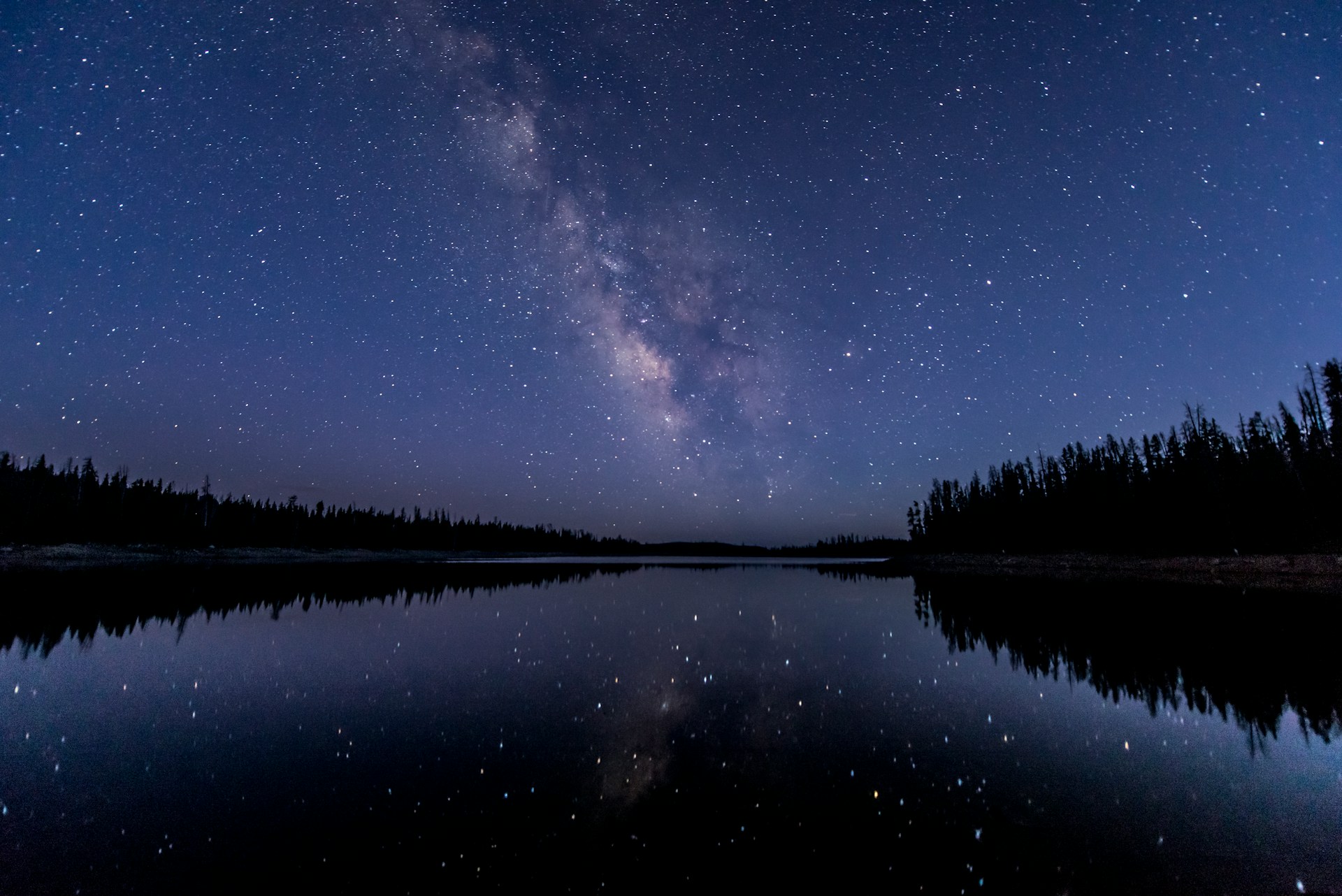
There is a strange comfort in knowing that the night sky contains objects we may never fully understand.
Every point of light is part of a much larger story.
Some stars are ancient.
Some are young.
Some are surrounded by planets.
Some have already died.
Some have become compact remnants.
Some may eventually collide with other objects.
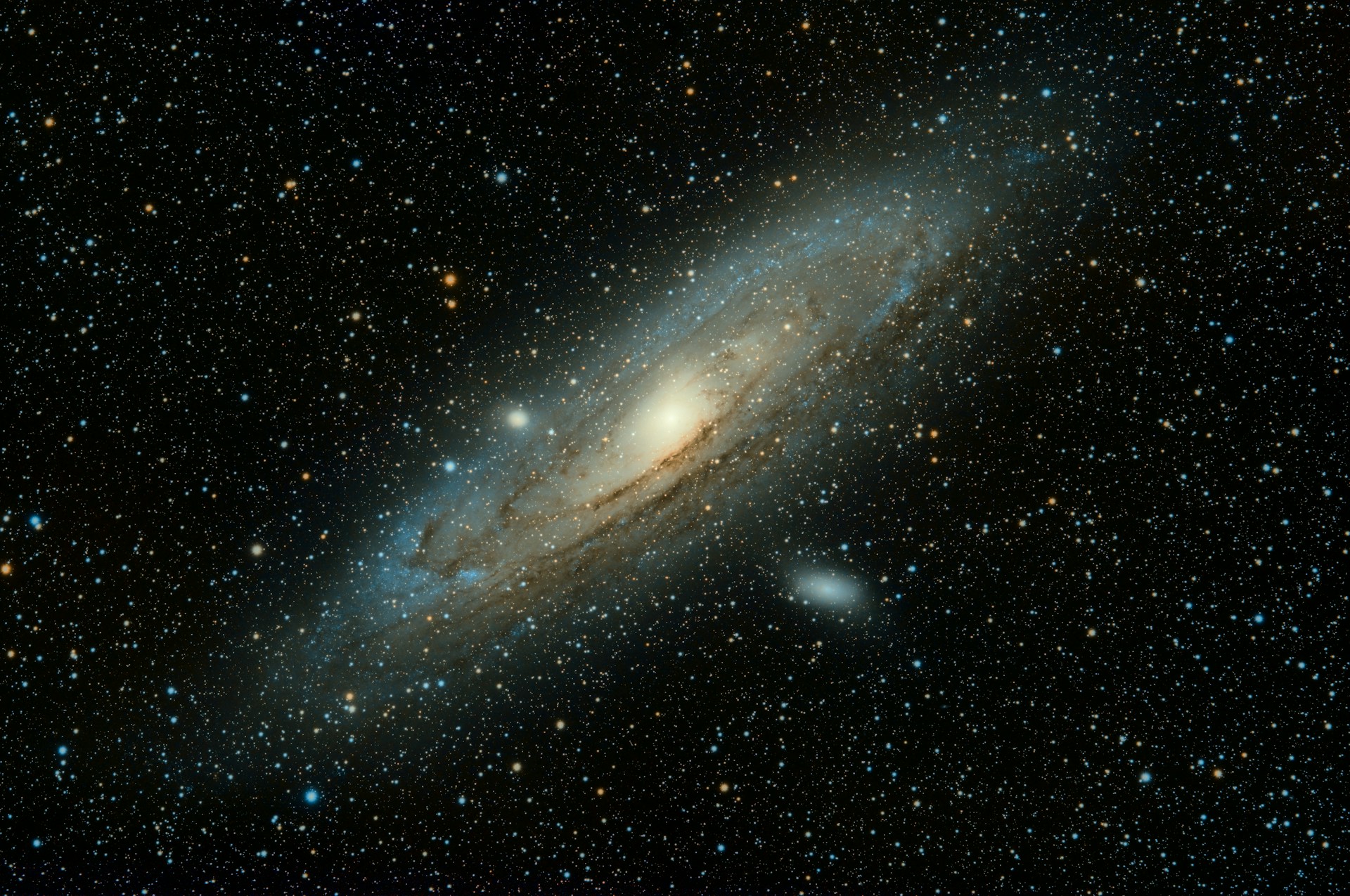
And somewhere beyond our familiar neighborhood, galaxies continue moving through a universe that is still unfolding.
We stand on one small planet and look outward.
For thousands of years, humans have looked at the stars and wondered what they were.
Today, we have telescopes capable of seeing farther than our ancestors could have imagined.
We have instruments capable of detecting invisible radiation.
We can measure gravitational waves.
We can study planets orbiting distant stars.
We can reconstruct the lives of stars from the light they send across space.
Yet the universe continues to surprise us.
That may be the most interesting object of all:
our curiosity.
Because every strange planet, every black hole, every neutron star, every quasar, every interstellar visitor gives us another reason to ask a question.
What else is out there?
What else have we not discovered?
What other forms can matter take?
What other environments exist beyond our experience?
The universe is enormous.
Our planet is small.
Our lives are brief.
But our ability to wonder reaches surprisingly far.
And perhaps that is why we keep looking at the stars.
Not because we expect the universe to become familiar,
but because we enjoy discovering how wonderfully unfamiliar it really is.
Derek Mwale
Software in My Mind. Rock in My Soul.

