Strange Inventions That Actually Exist
There is a strange moment that happens when you discover an invention that sounds completely fictional.
You read about it and think, Surely somebody made that up.
Then you search for it.
And there it is.
A real object. A real prototype. Sometimes even a real product that people can buy, use, or find in a museum.
Human beings have always been remarkably creative at solving problems. Sometimes the problem is enormous. Sometimes it is incredibly specific. And sometimes the solution is so unusual that you wonder how anybody thought of it in the first place.
A machine can be built to translate thoughts into computer commands. A device can help plants communicate information about their environment. There are shoes designed to make walking easier, keyboards that look nothing like traditional keyboards, and robots created to perform tasks that seem strangely specific.
The fascinating thing about unusual inventions is that they reveal something important about technology.
Innovation does not always look like a futuristic laboratory.
Sometimes it looks ridiculous.
Sometimes it looks simple.
Sometimes it looks like something from a science-fiction movie.
And sometimes it looks like something you would build at two o’clock in the morning because you suddenly had an idea.
Here are some strange inventions that actually exist.
1. The Self-Stirring Mug
Let’s begin with something wonderfully simple.
The self-stirring mug is exactly what its name suggests: a mug capable of stirring its contents.
Instead of reaching for a spoon, the user presses a button and a small mechanism at the bottom of the cup spins, helping mix the drink.
It is not going to change civilization.
It probably will not appear in a history textbook as one of humanity’s greatest achievements.
But that is precisely what makes it interesting.
Someone looked at the ordinary act of stirring a cup of coffee and thought:
Could we automate this?
The answer was yes.
This is one of the recurring patterns in invention. A problem does not have to be enormous before someone tries to solve it.
Sometimes innovation begins with a tiny inconvenience.
And once you understand that, almost everything around you starts looking like an opportunity for engineering.
2. The Keyboard That Doesn’t Look Like a Keyboard
The traditional QWERTY keyboard is so familiar that we rarely question its shape.
Rows of keys.
Letters.
Numbers.
Symbols.
A space bar.
But alternative keyboards actually exist.
Some use curved layouts. Others divide the keyboard into separate sections. Some are designed around ergonomics, while others are built to reduce hand movement or provide alternative ways of typing.
There are even keyboards where the letters are arranged in ways that initially look completely unfamiliar.
This is a reminder that technology often becomes invisible through familiarity.
We see a keyboard and think, That’s just what a keyboard looks like.
But there is no universal law saying that keyboards must look exactly the way they do.
The layout is a design decision.
The shape is a design decision.
The interaction model is a design decision.
Once you realize that, you start seeing interfaces differently.
A button is not naturally a button.
A menu is not naturally a menu.
A keyboard is not naturally QWERTY.
Someone designed all of it.
And someone else can redesign it.
3. Smart Glasses
Glasses have existed for centuries.
Computers have existed for decades.
Putting the two ideas together sounds like science fiction.
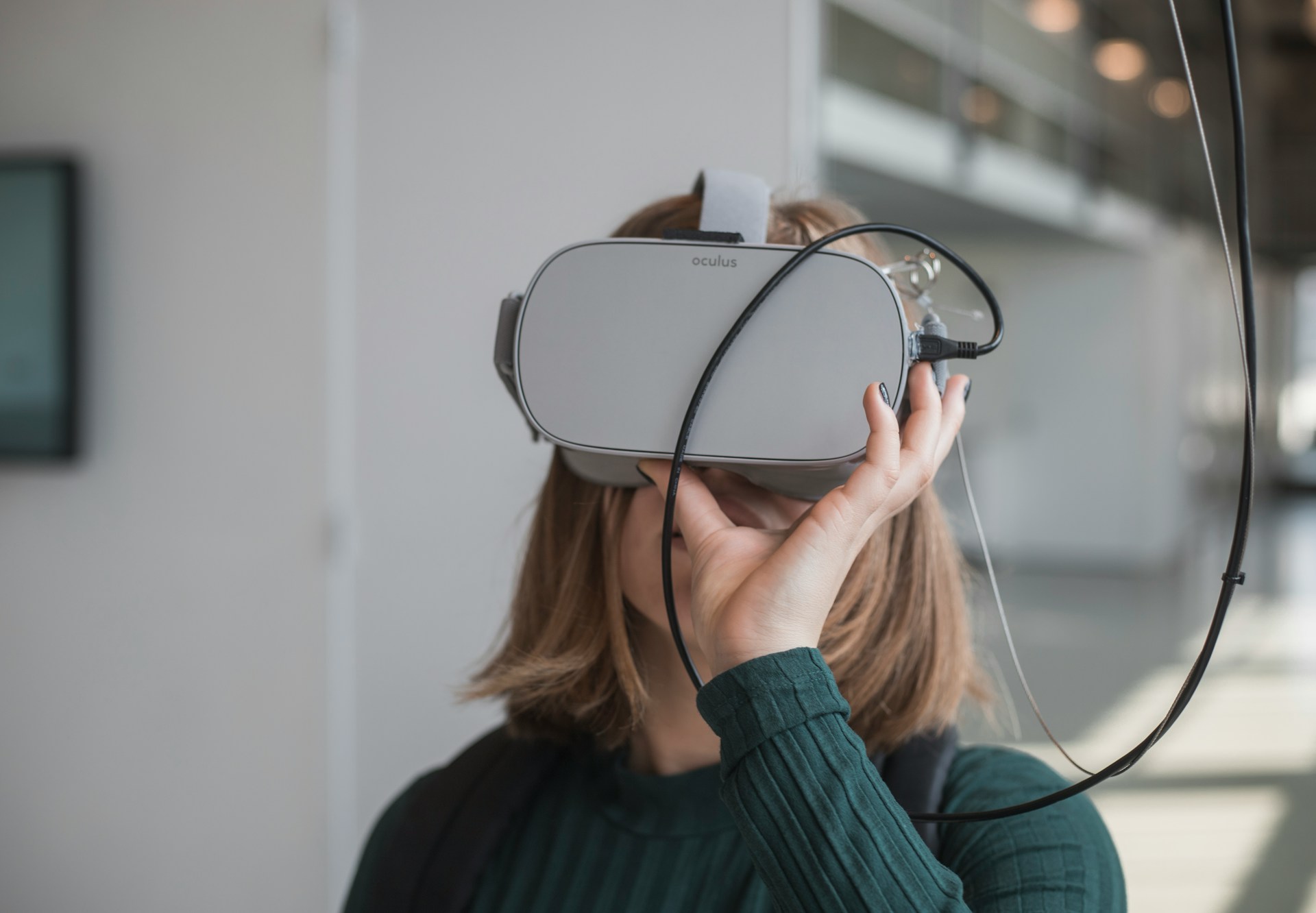
Yet smart glasses are real.
Modern smart glasses can include cameras, microphones, speakers, sensors, displays, and wireless connectivity.
Depending on the device, they can provide navigation information, capture photos, play audio, display information, or interact with digital assistants.
The interesting part is not simply the technology.
It is the direction of computing.
For decades, we interacted with computers by sitting in front of them.
Then computers moved into our pockets.
Now technology is increasingly exploring what happens when computing becomes something we wear.
The screen does not necessarily have to be somewhere across the room.
It could be in front of your eyes.
That changes the relationship between humans and machines.
The computer starts becoming less like a separate object and more like part of the environment.
4. Robotic Vacuum Cleaners
A vacuum cleaner that moves around your house by itself sounds like a joke from an old cartoon.
But robotic vacuum cleaners are very real.
These machines can navigate floors, detect obstacles, map spaces, return to charging stations, and clean according to schedules.
Some models can even recognize different areas of a home and coordinate cleaning patterns.
The strange part is watching one work.
It quietly moves around furniture as if it knows where it is going.
It disappears under a chair.
It changes direction.
It returns to its charging station.
There is something almost amusing about watching a small machine perform a task humans have been doing manually for generations.
But there is also a deeper idea here.
Automation often begins by taking repetitive tasks and turning them into systems.
The machine does not need to understand your entire life.
It only needs to understand the task.
Clean the floor.
Detect an obstacle.
Change direction.
Continue.
Return home.
Simple instructions can create surprisingly sophisticated behavior.
That is one of the fundamental ideas behind software engineering too.
5. Shoes With Built-In Navigation
Imagine walking through an unfamiliar city while your shoes help guide you.
That sounds strange.
Yet experimental and commercial footwear concepts have explored exactly this idea.
Some smart shoes use vibration or other forms of feedback to provide navigation instructions.
Instead of looking continuously at a phone, the wearer can receive information through the shoes.
A vibration on one side could indicate a direction.
Another signal could mean something different.
It is a fascinating example of interface design.
Most navigation systems rely on screens.
But humans have more than one sense.
We can see.
Hear.
Feel.
Touch.
Technology does not necessarily have to communicate through a rectangle of glass.
Sometimes the interface can be something we wear.
This opens an interesting question:
What if the next generation of interfaces becomes less visible?
Maybe technology will not always need to show us information.
Maybe sometimes it will simply tell us through touch, sound, or movement.
6. A Pen That Scans Text
A pen is normally used to write.
But some digital pens can do much more.
Certain scanning pens are designed to read printed text and transfer it into digital form. Some can work with dictionaries, translation tools, or computers.
Imagine reading a physical book and finding a word you do not understand.
Instead of typing the word manually, you could scan it.
The pen becomes a bridge between the physical and digital worlds.
This is an important technological pattern.
For a long time, computers mostly understood information that was already digital.
A photograph stored on a computer.
A document created in software.
A database record.
But the real world is full of physical information.
Books.
Signs.
Receipts.
Labels.
Paper documents.
Scanning technology helps computers interact with that physical world.
The strange pen is therefore more than a pen.
It is a tiny data acquisition device.
7. Transparent Displays
A screen does not necessarily have to be an opaque rectangle.
Transparent displays exist.
They can show digital information while allowing the viewer to see through the display.
This technology has applications in areas such as vehicles, retail environments, industrial systems, exhibitions, and specialized interfaces.
The concept feels futuristic because our traditional mental model of a screen is simple:
A screen blocks part of your view and displays something else.
A transparent display changes the relationship.
The digital information becomes an additional layer on top of reality.
Imagine looking at a machine and seeing information about its components without needing to open it.
Imagine a display integrated into glass.
Imagine information appearing without completely hiding the environment behind it.
This is where computing begins to resemble augmented reality.
The physical world remains.
The digital world is added on top.
8. 3D Printers That Make Food
3D printing is already fascinating.
You give a machine a digital design, provide material, and the machine constructs an object layer by layer.
But what happens when the material is food?
Food 3D printers exist.
They can deposit edible materials according to programmed patterns.
Instead of plastic or resin, the machine may work with ingredients such as chocolate, dough, purees, or other suitable food materials.
The idea sounds unusual because cooking is traditionally associated with human hands.
But once again, technology asks us to separate the result from the traditional method.
The goal is not necessarily to replace cooking.
It is to explore another way of creating food shapes, textures, and designs.
It is a perfect example of how manufacturing concepts can migrate into unexpected industries.
A technique originally associated with industrial fabrication can eventually find its way into kitchens.
9. Robot Fish
Fish swim.
Robots move.
Put the two ideas together and you get robotic fish.
Researchers and engineers have developed robotic fish for scientific research, education, underwater exploration, environmental monitoring, and other applications.
Some are designed to imitate the movement of real fish.
Why?
Because nature has already spent millions of years solving movement problems.
Fish have evolved bodies capable of moving efficiently through water.
Engineers can study these designs and use them as inspiration.
This approach is called biomimicry: learning from biological systems to solve engineering problems.
And once you notice it, you start seeing examples everywhere.
Birds inspired aviation.
Gecko feet have inspired adhesive research.
Whale and dolphin movement has influenced underwater engineering.
Nature is full of designs.
Sometimes the strangest machine is simply an attempt to copy something that already exists in nature.
10. Electronic Paper
Paper is one of humanity’s oldest information technologies.
It is lightweight.
Portable.
Easy to read.
And does not require a battery to remain visible.
Electronic paper attempts to combine some of the advantages of traditional paper with digital technology.
E-readers are one familiar example.
Electronic paper displays can maintain text or images while consuming very little power compared with traditional constantly illuminated displays.
The result is something that looks somewhat like paper but behaves like a digital screen.
It is another example of technology borrowing ideas from older tools.
Instead of asking, How do we make paper obsolete?
Engineers can ask:
What made paper useful in the first place?
Low power.
Portability.
Readability.
Simplicity.
Then they can attempt to recreate those qualities digitally.
Good engineering often works this way.
It does not always throw away the past.
Sometimes it studies the past carefully.
11. Wearable Airbags
Airbags are usually associated with cars.
But airbags can also be worn.
Some companies have developed wearable airbag systems designed for activities such as cycling and other forms of movement where a fall may occur.
The basic concept is fascinating.
A device monitors movement.
It detects a sudden event that resembles a fall.
It rapidly deploys an airbag.
The goal is to provide an additional layer of protection.
It is a good example of how sensors have changed what objects can do.
A jacket used to be simply a jacket.
A helmet was simply a helmet.
A watch was simply a watch.
Now wearable devices can contain accelerometers, gyroscopes, processors, wireless connections, and sophisticated algorithms.
The object still looks ordinary from the outside.
Inside, however, it may contain a miniature computer.
12. Smart Mirrors
Mirrors have existed for thousands of years.
They perform one basic function:
They reflect an image.
Now imagine a mirror that can also display digital information.
Smart mirrors have been developed with features such as lighting controls, clocks, weather information, fitness interfaces, entertainment features, and other digital functions.
The concept is strange because mirrors have traditionally been passive.
You look at them.
They show you your reflection.
A smart mirror adds another layer.
The reflection remains, but information can appear alongside it.
It transforms a familiar household object into an interface.
This is another example of technology disappearing into everyday objects.
Instead of carrying another device, information can become part of the object already in front of you.
13. Programmable Tattoos
The word “tattoo” usually makes us think about ink permanently placed beneath the skin.
But researchers have explored electronic and temporary tattoo technologies that can incorporate sensors or electronic functionality.
Some experimental approaches use flexible materials that can attach to the skin and measure biological or environmental information.
These devices are sometimes called electronic tattoos or e-tattoos.
The fascinating part is the idea of turning the skin itself into a technological surface.
For centuries, humans have decorated their bodies.
Now engineering can also explore ways to place sensors and electronics on the body.
It is a strange intersection between biology, design, electronics, and computing.
The future of wearable technology may not always look like a smartwatch strapped around the wrist.
Sometimes it might look like almost nothing at all.
14. Machines That Fold Clothes
Laundry is one of those tasks that seems simple until you have a large pile of it.
Wash.
Dry.
Fold.
Repeat.
Researchers and companies have explored machines capable of automating parts of the clothing-folding process.
The challenge is surprisingly complicated.
A computer can easily calculate how to move a robotic arm.
But fabric is flexible.
It bends.
Wrinkles.
Collapses.
Changes shape.
A shirt does not behave like a metal block.
This makes clothing a fascinating robotics problem.
A robot that can reliably manipulate fabric has to deal with uncertainty.
It needs cameras or sensors.
It needs movement planning.
It needs to understand shapes.
It needs to adapt.
Something as ordinary as folding a shirt can therefore become a serious engineering challenge.
Sometimes the strangest inventions teach us that everyday activities are more complicated than they appear.
15. The Computer Mouse That Uses Air
The computer mouse has been redesigned many times.
There have been vertical mice, trackballs, ergonomic mice, gaming mice, touch-sensitive mice, and other variations.
There have also been experimental pointing devices that attempt to reduce or eliminate the need for a traditional surface.
Some concepts use gestures, motion sensing, or other forms of interaction.
The broader idea is interesting.
The mouse is not actually the computer pointer.
It is simply one way of controlling the pointer.
Once you separate the function from the physical object, many possibilities appear.
Maybe your hand can become the controller.
Maybe your voice can.
Maybe your eyes can.
Maybe your movement can.
This is one of the most exciting aspects of human-computer interaction.
The interface is never truly finished.
16. Solar-Powered Backpacks
A backpack normally carries things.
Books.
Clothes.
A laptop.
Food.
Maybe a water bottle.
But some backpacks include solar panels designed to generate electricity.
The idea is simple.
Carry your belongings while also carrying a small energy-generation system.
The solar panel captures sunlight and can provide power for compatible electronics through an integrated system.
It is an elegant example of combining two ordinary objects or functions into one.
Backpack plus solar panel.
Clothing plus sensors.
Glasses plus computing.
Mirror plus display.
The future often arrives through combinations.
A new invention does not always require a completely new physical principle.
Sometimes it simply connects two existing ideas in an unexpected way.
17. The Tiny Computer Inside Everyday Objects
Perhaps the strangest invention is not one particular device.
It is the idea that almost anything can become a computer.
A light bulb can connect to a network.
A watch can run applications.
A refrigerator can have a display.
A doorbell can contain a camera.
A speaker can respond to commands.
A car can contain dozens of computers.
A small sensor can send information across the internet.
We are surrounded by machines that would have seemed extraordinary to earlier generations.
The strange part is how quickly they became normal.
That may be the most interesting invention of all: the ability to make advanced technology feel ordinary.
The Weirdness Is the Point
Strange inventions are easy to laugh at.
A self-stirring mug?
Why?
Smart shoes?
Really?
A robot fish?
What’s the point?
But that reaction can miss something important.
Innovation is often weird before it becomes useful.
Every technology begins as an idea that does not yet belong in everyday life.
Someone has to experiment.
Someone has to build a prototype.
Someone has to test an unusual idea.
Sometimes the idea fails.
Sometimes it works.
Sometimes it leads to something completely different.
The history of technology is full of these strange branches.
Some disappear.
Some become products.
Some inspire other inventions.
And some simply teach engineers what is possible.
That is why unusual inventions are worth paying attention to.
They remind us that technology is not a straight road.
It is more like a giant tree.
There are thousands of branches.
Some become highways.
Some become dead ends.
Some become discoveries nobody expected.
And somewhere on that tree, another strange idea is probably being built right now.
Maybe it is a machine that solves a tiny inconvenience.
Maybe it is a robot inspired by an insect.
Maybe it is a new kind of computer interface.
Maybe it is something that sounds completely ridiculous today.
But there is a beautiful possibility hidden inside every strange invention:
What if it works?
That question has powered an extraordinary amount of human creativity.
The next strange invention might not look important.
It might fit inside someone’s hand.
It might sit on a desk.
It might be made from a few sensors, a microcontroller, and some code.
It might begin as a weekend experiment.
And years later, people might wonder how they ever lived without it.
That is the strange beauty of invention.
You never really know which weird idea is going to become the next normal thing.