The Computer Tricks That Still Feel Like Magic

Software in My Mind. Rock in My Soul.
There is a particular kind of wonder that never really disappears.
It is the feeling you get when a machine does something that seems impossible, even when you understand the engineering behind it.
A photograph becomes sharper than the original. A search engine finds exactly what you meant instead of what you typed. A video call travels across continents with barely a delay. A game world remembers thousands of details without falling apart. A phone recognizes a song after listening for only a few seconds.
We live among these small miracles every day.
As programmers, engineers, designers, and curious people, we know that these systems are made from mathematics, algorithms, electricity, storage, and countless hours of human effort. Yet even after learning how they work, some ideas still retain their magic.
Perhaps that is one of the most beautiful things about technology: understanding does not always remove wonder. Sometimes understanding increases it.
Computers are full of tricks that feel almost magical, not because they break the rules of reality, but because they use those rules in clever and elegant ways.
Let us explore some of these quiet miracles.
1. Compression: Making Large Things Small
Imagine reading a thousand-page book and being able to summarize it into only a few pages without losing important details.
That is what compression does.
A movie that would occupy enormous amounts of storage becomes a manageable file. A song travels across the internet in seconds. Entire applications fit into a phone that sits comfortably in your pocket.
Compression is one of the hidden powers of the digital world.
Computers look for patterns.
If something repeats, they store the pattern instead of storing every detail again and again.
This sounds simple, but the effect is extraordinary.
Without compression, streaming platforms would struggle. Websites would load slowly. Storage devices would fill up quickly.
The magic is not in shrinking data.
The magic is in recognizing that information contains rhythm, repetition, and structure.
In a way, compression teaches us something larger: the world itself is often full of patterns waiting to be discovered.
2. Search Engines: Finding Needles in Planet-Sized Haystacks
Type a few words into a search engine.
A fraction of a second later, millions of pages are organized into useful results.
Even people who study algorithms sometimes pause to appreciate how incredible this is.
Imagine a library containing almost every book ever written, constantly changing, growing every second, and somehow always finding the page you need.
This is not simple searching.
It is indexing, ranking, relationships, language understanding, and vast systems working together.
Search engines do not merely store information.
They build maps.
Invisible maps of words, ideas, links, topics, and connections.
Perhaps that is why search still feels magical.
It turns chaos into order.
And in software engineering, creating order from complexity is one of the highest forms of craftsmanship.
3. Undo Buttons: Quiet Time Machines
The undo button is one of humanity’s greatest inventions.
Write something wrong?
Undo.
Delete a file accidentally?
Undo.
Move an object to the wrong place?
Undo.
This small feature feels ordinary today, but it is a fascinating idea.
A computer remembers history.
It records actions.
It keeps snapshots.
In a sense, software creates tiny time machines.
Programmers know that implementing undo systems can be surprisingly difficult. Applications must remember enough information to reverse actions without consuming too much memory.
Yet users rarely think about this complexity.
They simply press Ctrl + Z and move backward through time.
Perhaps the best technology feels invisible.
Its complexity disappears, leaving behind only simplicity.
4. Auto-Complete: Machines Guessing Human Intent
Sometimes you type only a few letters and your device predicts the rest.
You begin a sentence, and your phone knows where you are going.
This still feels magical.
Not because machines can read minds.
But because they have become very good at recognizing patterns.
Language itself contains structure.
Words appear together.
Ideas follow certain paths.
Computers learn these patterns and make educated guesses.
Good software often feels intelligent because it anticipates what humans need before they ask.
This is not only true for keyboards.
Recommendation systems, search suggestions, and many modern tools work the same way.
The hidden lesson here is fascinating:
Prediction is often the art of finding patterns in history.
5. Graphics: Millions of Calculations Becoming Beauty
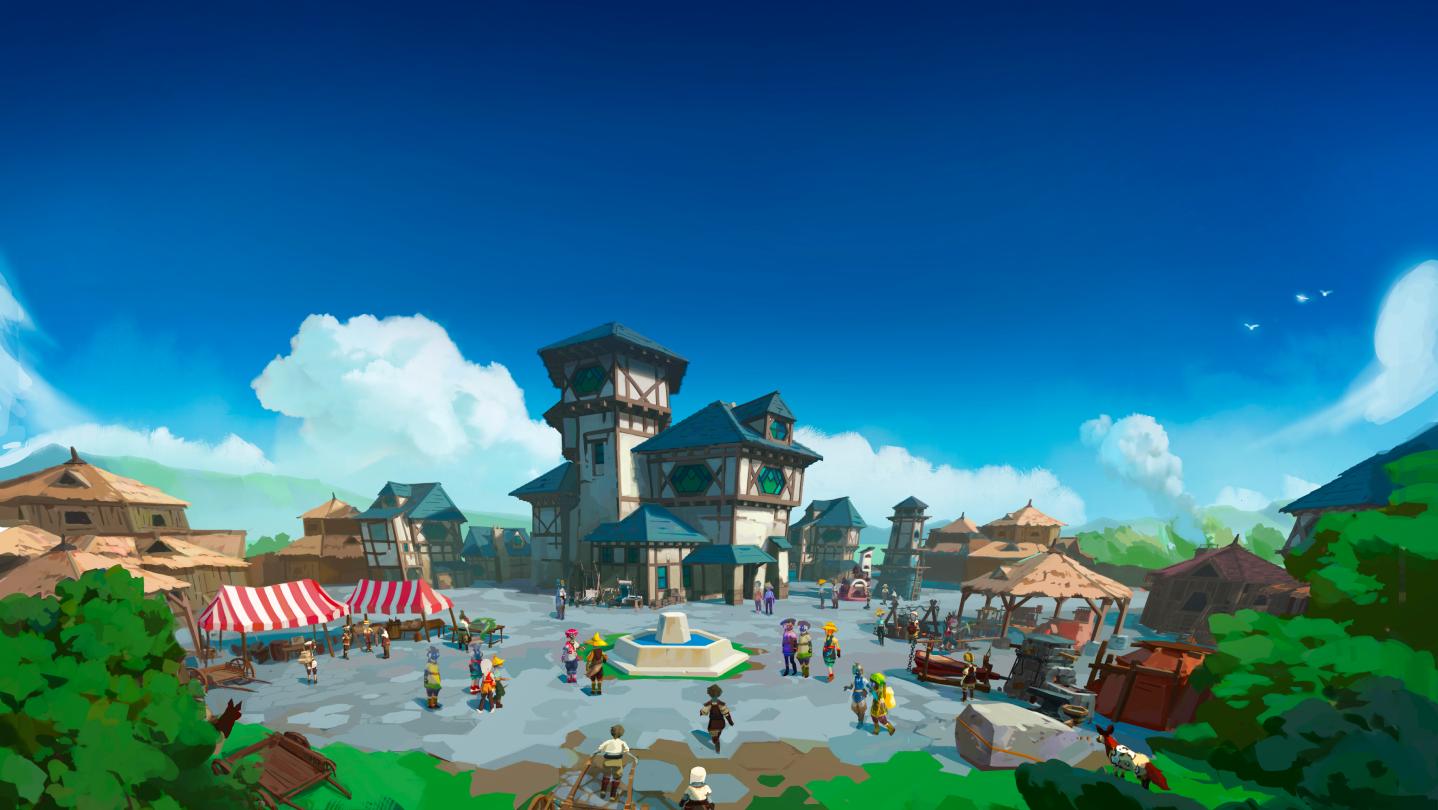
Video games remain one of the greatest examples of computer magic.
A modern game may contain cities, forests, characters, weather, lighting, sound, physics, and complex interactions.
Yet underneath it all is mathematics.
Triangles.
Vectors.
Matrices.
Light calculations.
Algorithms.
Numbers.
Millions or billions of calculations transform into worlds that feel alive.
This transformation still feels extraordinary.
Imagine explaining to someone decades ago that mathematics could become mountains, oceans, football stadiums, galaxies, and stories.
The idea would sound like science fiction.
Yet this is what graphics processors do every second.
A computer takes abstract equations and turns them into experiences.
Perhaps this is why programming often feels creative.
Code is not merely logic.
Code is imagination translated into systems.
6. Caching: Remembering the Future
Caching is one of my favorite computer tricks.
A system keeps useful information nearby because it predicts that you may need it again.
Web browsers do this.
Applications do this.
Databases do this.
Processors do this.
The result is speed.
Pages load quickly.
Apps respond instantly.
Users remain happy.
Caching feels magical because the system seems prepared before you even ask.
It is as if software quietly says:
“I thought you might need this.”
Some of the best engineering is invisible anticipation.
The user sees speed.
The engineer sees careful design.
7. Maps and Navigation: Turning Earth Into Data
Modern maps are extraordinary.
A device can know where you are, where you want to go, and the best route between the two.
It can avoid traffic.
Estimate arrival time.
Suggest alternatives.
All of this feels natural now.
But step back for a moment.
The Earth is enormous.
Roads change.
Conditions change.
People move constantly.
Yet software transforms all this complexity into a simple blue line on a screen.
Behind that blue line are graphs, algorithms, satellites, databases, and vast systems working together.
What feels like magic is often many simple ideas connected beautifully.
That is true in software.
And perhaps it is true in many parts of life.
8. Error Correction: Recovering What Was Lost
Data travels through cables, airwaves, storage devices, and networks.
Errors happen.
Signals become noisy.
Bits change.
Yet systems often recover automatically.
Music plays correctly.
Files remain intact.
Messages arrive.
Error correction is one of the quiet heroes of computing.
It allows systems to detect problems and repair them.
This feels magical because information seems to survive difficult journeys.
A message can travel thousands of kilometers and still arrive exactly as intended.
That is not luck.
That is engineering.
And engineering, at its best, often looks like magic.
9. The Illusion of Simplicity
Perhaps the greatest trick computers perform is making complexity disappear.
We press buttons.
Swipe screens.
Open applications.
Everything feels simple.
Behind this simplicity are millions of lines of code, networks, protocols, databases, servers, and systems.
The user sees one action.
The machine performs thousands.
Great technology hides effort.
Like a good piece of music, the complexity exists beneath the surface.
The listener hears harmony.
The musician hears structure.
The programmer sees both.
10. The Human Magic Behind the Machine
The most magical thing about computers may not be computers themselves.
It may be people.
Human beings imagined these ideas.
Compression.
Search.
Graphics.
Networks.
Artificial intelligence.
Games.
Databases.
Entire digital worlds.
All of this began with curiosity.
Someone looked at a difficult problem and asked:
“What if there is a better way?”
Technology is a story of questions.
And software engineering is often the art of turning questions into systems.
That is why coding remains exciting.
Not because computers are mysterious.
But because human creativity is endless.
Final Thoughts
The longer I spend around technology, the more I realize that computers have not lost their magic.
We have simply become familiar with it.
A search result in milliseconds.
A map that guides us home.
A video call across oceans.
A game world generated from mathematics.
A machine predicting words before we finish typing.
These are ordinary experiences today.
But ordinary does not mean unremarkable.
Beneath every screen is a hidden universe of ideas.
Patterns.
Algorithms.
Connections.
Systems.
People.
Perhaps that is the real lesson.
The world is full of invisible structures.
Software merely teaches us how to see them.
And maybe that is why coding, engineering, and technology continue to inspire so many people.
Because every line of code carries a quiet possibility:
To take something complex, understand it deeply, and transform it into something that feels, to someone else, like magic.
And that is a beautiful thing.