10 Young Stars Who Could Become World Cup Legends in 2026
Every World Cup creates legends.
Pelé announced himself to the world in 1958. Diego Maradona became immortal in 1986. Ronaldo Nazário captivated football fans in 2002. Lionel Messi completed football’s greatest story in 2022. Kylian Mbappé transformed from a rising star into a global icon in 2018.
The World Cup has always been more than just a football tournament. It is where careers are defined, where nations dream, and where young talents become household names overnight.
As the 2026 FIFA World Cup approaches, football finds itself entering a new era. The Messi-Ronaldo generation is fading into history, while a fresh crop of young stars is preparing to take center stage.
Some are already starring for Europe’s biggest clubs. Others are quietly building their reputations before exploding onto the global scene. But all of them possess something special—the potential to become the faces of football’s future.
Here are ten young stars who could become World Cup legends in 2026.
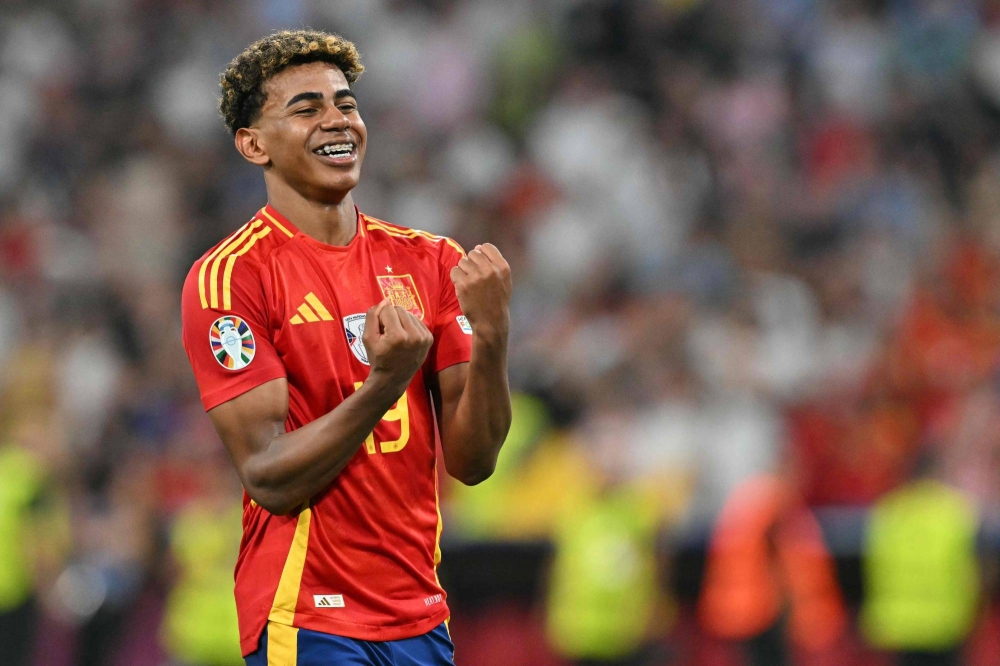
1. Lamine Yamal (Spain)
If there is one player who seems destined to dominate football for the next decade, it is Lamine Yamal.
The Spanish sensation has already accomplished feats that many footballers spend entire careers chasing. Blessed with exceptional dribbling, vision, creativity, and confidence, Yamal looks like a player born for the biggest stages.
What separates him from many wonderkids is his fearlessness. He does not play like a teenager. He plays like someone who believes he belongs among football’s elite.
Every time he receives the ball, something feels possible. Defenders hesitate. Fans rise from their seats. Coaches run out of instructions.
Spain’s possession-heavy style perfectly suits his strengths, and by 2026, he could be the centerpiece of a team capable of challenging for the trophy.
The World Cup has a habit of creating new global superstars. Yamal may already be next in line.
2. Michael Olise (France)
If there is one player capable of changing a game with a single touch, it is Michael Olise.
The French winger combines elegance, intelligence, and creativity in a way that makes football look effortless. Whether he is threading impossible passes, beating defenders one-on-one, or curling shots into the top corner, Olise possesses the rare ability to produce moments that leave fans speechless.
Unlike many young talents, Olise is already proving himself at the highest level. His performances have demonstrated not only technical brilliance but also maturity and consistency.
What makes him particularly dangerous is his unpredictability. Opponents know he is left-footed. They know he wants to create. Yet they still struggle to stop him.
France is already blessed with incredible attacking talent, but Olise brings something different. He offers imagination. He offers flair. He offers the unexpected.
If France makes another deep World Cup run, Michael Olise could emerge as one of the tournament’s defining stars.
3. Estêvão Willian (Brazil)
Brazil has produced countless footballing icons, and Estêvão Willian could be the next name added to that legendary list.
Nicknamed “Messinho,” the young Brazilian has attracted enormous attention thanks to his extraordinary dribbling ability, creativity, and technical skill.
Watching Estêvão feels like watching old-school Brazilian football return. There is flair in everything he does. There is confidence in every touch.
Brazilian football has always celebrated players capable of entertaining as much as winning. Estêvão embodies that tradition perfectly.
The pressure will be enormous, but great players embrace pressure. If he shines in 2026, the world may witness the arrival of Brazil’s next superstar.
4. Arda Güler (Turkey)
Turkey has produced many talented footballers, but Arda Güler feels like a once-in-a-generation talent.
The gifted attacking midfielder combines vision, composure, and technical quality rarely seen in players his age. He sees passing lanes before they exist and executes difficult plays with remarkable ease.
Perhaps his greatest strength is his calmness.
Big matches do not seem to intimidate him. Pressure does not rush him. He simply plays football.
Turkey may not enter the tournament among the favorites, but World Cups often create heroes from unexpected places.
If Güler delivers a few memorable performances, he could become one of the breakout stars of the competition.
5. Warren Zaïre-Emery (France)
Every great team needs balance.
While attackers grab headlines, midfielders often decide tournaments.
Warren Zaïre-Emery looks perfectly equipped for that responsibility.
Strong, intelligent, technically gifted, and tactically mature, he represents the modern midfielder. He can defend, attack, create, and control games.
Despite his age, he already plays with the authority of a seasoned professional.
France has an abundance of attacking firepower, but Zaïre-Emery could be the player who makes everything function smoothly behind the scenes.
World Cups are often won in midfield, and France may have found their next great commander.
6. Endrick (Brazil)
Few young players have generated as much excitement as Endrick.
The Brazilian striker possesses the qualities that fans love: pace, power, aggression, and goals.
He plays every match as if he has something to prove.
What stands out most about Endrick is his hunger. He attacks defenders relentlessly and never stops searching for opportunities.
Brazilian football fans have spent years waiting for the next great striker capable of leading the Seleção back to World Cup glory.
Endrick could be that player.
If Brazil goes deep into the tournament, expect his name to dominate headlines worldwide.
7. Kobbie Mainoo (England)
England’s football future looks bright, and Kobbie Mainoo is one of the biggest reasons why.
The young midfielder combines technical excellence with tactical intelligence. He remains calm under pressure, rarely wastes possession, and consistently makes smart decisions.
Mainoo’s style is not built on flashy tricks or spectacular moments.
Instead, he controls games through intelligence and composure.
Every successful World Cup team needs players capable of maintaining order during chaotic moments. Mainoo appears perfectly suited for that role.
England’s hopes of finally ending decades of World Cup heartbreak could depend heavily on players like him.
8. Désiré Doué (France)
Some footballers play within systems.
Others redefine them.
Désiré Doué belongs to the second category.
The French attacker possesses exceptional dribbling ability, explosive acceleration, and the confidence to challenge defenders repeatedly.
What makes him particularly exciting is his willingness to take risks.
Football’s biggest tournaments are often decided by moments of inspiration rather than tactical plans. Doué has the creativity to produce those moments.
France’s squad is filled with stars, but tournaments often reveal new heroes.
Doué could become one of them.
9. Jorrel Hato (Netherlands)
The Netherlands has a rich tradition of producing intelligent defenders, and Jorrel Hato looks ready to continue that legacy.
Comfortable on the ball and tactically disciplined, Hato represents the evolution of modern defending.
Today’s defenders must do far more than tackle and clear danger. They must build attacks, break lines, and remain composed under pressure.
Hato excels in all those areas.
While attackers often steal attention, every successful World Cup campaign is built upon defensive excellence.
If the Netherlands makes a deep run, Hato could emerge as one of the tournament’s most respected young defenders.
10. Kendry Páez (Ecuador)
World Cups often introduce the world to players from nations outside football’s traditional powerhouses.
Kendry Páez could be next.
The Ecuadorian playmaker possesses vision, creativity, and confidence well beyond his years. He is the type of player who wants the ball when everyone else is hiding from it.
That mentality matters.
The biggest stages reward brave players.
Ecuador may not enter the tournament among the favorites, but football history is filled with stories of underdogs exceeding expectations.
If Páez helps guide Ecuador on an unexpected run, his reputation could soar overnight.
Why World Cups Create Legends
The difference between a talented player and a football legend often comes down to one tournament.
Domestic success matters.
Champions League success matters.
But nothing compares to the World Cup.
The tournament commands the attention of billions of people. Every goal becomes history. Every assist becomes a highlight. Every magical moment becomes part of football folklore.
Think about Pelé in 1958.
Think about Maradona in 1986.
Think about Ronaldo in 2002.
Think about Mbappé in 2018.
These players did not simply participate in World Cups. They used them as launching pads to immortality.
The same opportunity now awaits a new generation.
The Future of Football Is Already Here
For nearly two decades, football revolved around Lionel Messi and Cristiano Ronaldo.
Their rivalry defined an era unlike anything the sport had ever seen.
But football never stops evolving.
New stars emerge. New stories unfold. New legends are born.
The 2026 World Cup may mark the beginning of football’s next great chapter.
Lamine Yamal, Michael Olise, Estêvão Willian, Arda Güler, Warren Zaïre-Emery, Endrick, Kobbie Mainoo, Désiré Doué, Jorrel Hato, and Kendry Páez all possess the talent to shape that future.
Some will meet expectations.
Others will exceed them.
A few may even surprise the world.
That is what makes the World Cup special.
Somewhere among these ten young stars is a player who will leave North America as football’s newest global icon.
And when that moment arrives, the world will remember where their legend truly began.