
Black Lives Matter: Ending Police Brutality in Africa
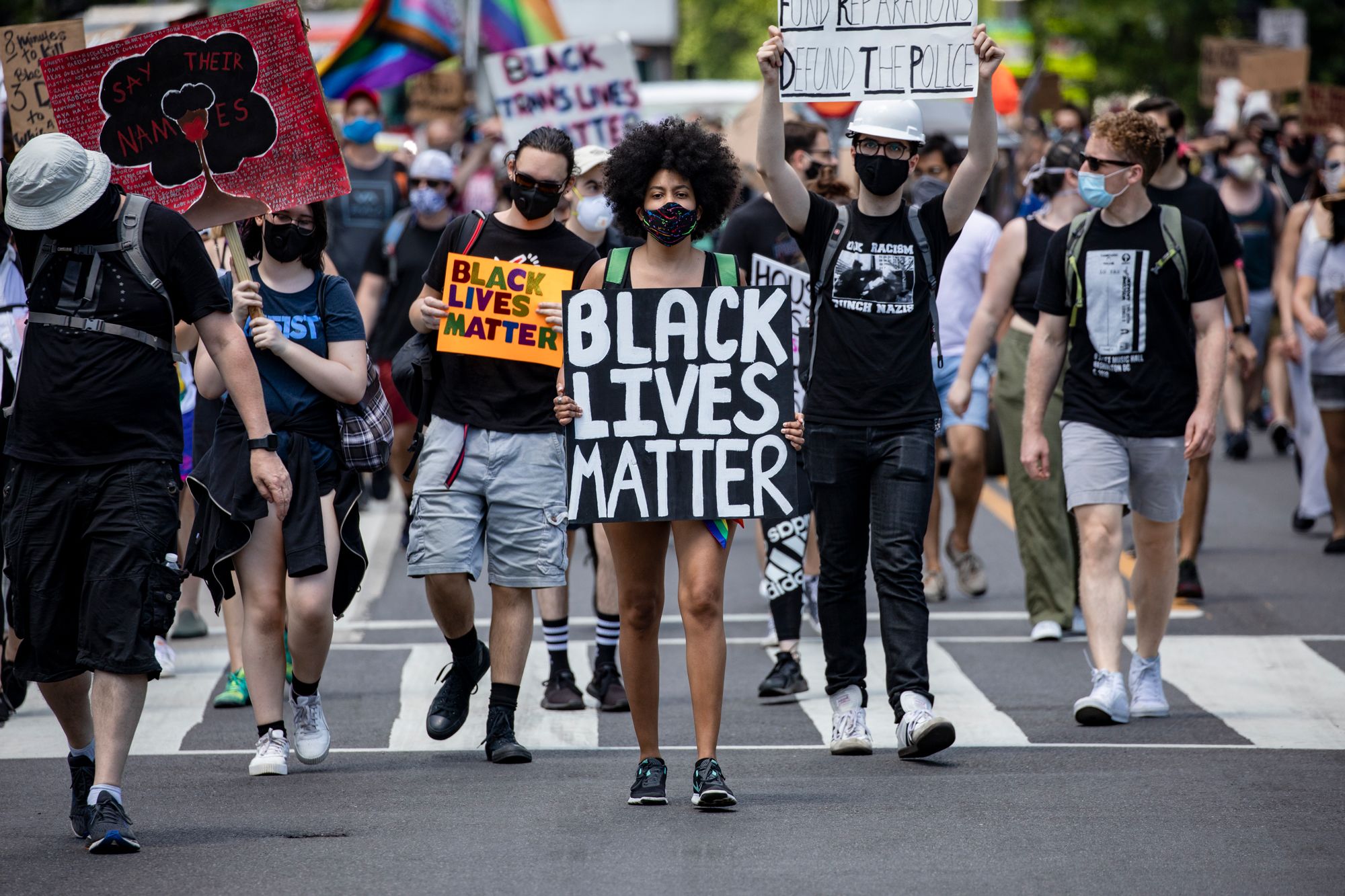
No Badge Above the Law.
There are moments in life that change the way you see the world forever. Not because someone convinced you with a speech or because social media made a topic trend for a week, but because you experienced something that stayed with you long after the moment had passed.
Police officers have one of the most difficult jobs in any society. Every day they respond to dangerous situations, protect communities, investigate crimes, and often put their own lives on the line. Most people want a police service that is professional, courageous, and respected.
But respect for the police should never mean silence when abuses occur.
Supporting police accountability and supporting good police officers are not opposing ideas—they are two sides of the same commitment to justice.
When I think about the phrase “Black Lives Matter,” I don’t see a political slogan first. I see a reminder that every human being deserves equal protection under the law, regardless of race, ethnicity, social class, or where they were born. I see a call to recognize that when people are mistreated because of systems that fail them, society has a responsibility to respond.
Across Africa, millions of people interact with law enforcement every single day. Most of these interactions end peacefully. Yet reports from various countries have documented cases where individuals have experienced excessive force, unlawful detention, or other abuses by members of security services. These incidents affect not only the victims and their families but also public trust in institutions.
The challenge is bigger than individual cases.
It is about creating systems where accountability is expected rather than optional.
History has left Africa with complex institutions shaped by colonial administrations, post-independence politics, economic pressures, and evolving legal systems. Those historical realities should be understood, but they should never be used to excuse present-day abuses. Every generation inherits institutions, yet every generation also has the opportunity to improve them.
Justice should evolve.
It should become stronger with every generation.
As someone who believes in solving problems, whether in software engineering or in everyday life, I have learned that every system can be improved. A programmer doesn’t ignore bugs simply because the application mostly works. The bugs are identified, tested, and fixed because reliability matters.
Institutions are no different.
If there are weaknesses in recruitment, training, oversight, or accountability, those weaknesses deserve attention—not because society hates law enforcement, but because society depends on it.
Trust is built through consistency.
People trust systems that are transparent.
People trust institutions that admit mistakes.
People trust leaders who choose accountability over denial.
That applies in technology.
It applies in business.
It applies in government.
And it certainly applies to policing.
One of the greatest dangers in conversations about police brutality is polarization. Some people begin to believe that criticizing misconduct means being anti-police. Others assume that supporting police means ignoring victims.
Neither assumption helps.
We can appreciate officers who serve with integrity while insisting that misconduct be investigated and addressed fairly. Holding individuals accountable when evidence supports wrongdoing strengthens the credibility of the many officers who carry out their duties honorably.
Communities deserve safety.
Police officers deserve safe working conditions.
Victims deserve justice.
These goals are compatible.
Across the continent, young Africans are building startups, creating music, developing technology, writing books, producing films, and competing on the global stage. Africa is full of ambition and creativity. A generation that believes in innovation also deserves institutions that earn and maintain public confidence.
Economic development depends on trust.
Investment depends on trust.
Community cooperation depends on trust.
Justice depends on trust.
Without trust, people become afraid to report crimes.
Witnesses become reluctant to cooperate.
Communities become divided.
The relationship between citizens and law enforcement grows weaker.
That benefits no one.
The future of Africa should not be defined by fear.
It should be defined by opportunity.
Imagine a future where every child grows up believing that a police officer represents safety rather than uncertainty.
Imagine police stations becoming places where citizens confidently seek help.
Imagine officers receiving excellent training in communication, de-escalation, human rights, and community engagement alongside traditional law enforcement skills.
Imagine independent oversight mechanisms that investigate complaints fairly and transparently.
Imagine communities and police working together instead of viewing one another with suspicion.
That future is worth pursuing.
The Black Lives Matter movement has sparked conversations around the world about race, justice, accountability, and equal treatment. While different countries have different histories and contexts, many of the underlying principles—equal protection under the law, accountability for misconduct, and respect for human dignity—are broadly relevant.
Every nation must find solutions that fit its own legal system, history, and communities.
There is no single policy that solves every problem.
Real progress requires sustained work.
Better recruitment.
Better training.
Better leadership.
Effective oversight.
Reliable investigations.
Fair judicial processes.
Respect for constitutional rights.
Support for officers facing difficult and dangerous responsibilities.
Support for victims seeking justice.
These are not radical ideas.
They are foundations of a healthy society.
As a computer scientist, I often think about optimization.
How do we improve a system without destroying what already works?
That question applies beyond technology.
We don’t improve healthcare by eliminating doctors.
We improve healthcare by strengthening standards.
We don’t improve education by attacking teachers.
We improve education by supporting quality instruction.
Likewise, we don’t improve policing by assuming every officer acts improperly.
We improve policing by encouraging professionalism, addressing misconduct when it occurs, and reinforcing public confidence through accountability.
The goal is not division.
The goal is excellence.
A society where citizens trust law enforcement is stronger than one where fear dominates every interaction.
Young people across Africa are watching.
They are learning what leadership looks like.
They are deciding whether institutions deserve their confidence.
Our actions today shape their expectations for tomorrow.
I believe that every African nation has the potential to build institutions that are respected both at home and internationally.
That future requires honesty.
It requires courage.
It requires listening to people who have suffered injustice.
It requires recognizing the dedication of officers who serve with integrity.
And it requires a commitment to continuous improvement rather than complacency.
Justice is not about choosing sides.
Justice is about choosing principles.
Human dignity.
Accountability.
Fairness.
Equality before the law.
Respect for every life.
Those principles should never depend on political affiliation or geography.
They should define who we are.
When we stand against police brutality, we are not standing against public safety.
We are standing for policing that reflects the highest ideals of service.
When we call for accountability, we are not weakening institutions.
We are helping strengthen them.
When we insist that every life deserves equal protection, we affirm a simple but powerful truth: no person’s humanity should ever be diminished by the very systems created to protect it.
Africa’s future will not be built solely through technology, business, or economic growth.
It will also be built through justice.
Because prosperous societies require trusted institutions.
Strong institutions require accountability.
And accountability begins when we recognize that every human life carries equal worth.
Black lives matter.
African lives matter.
Human dignity matters.
And a future built on justice is a future worth working toward.