The Man-Made Islands That Should Not Exist but Somehow Do
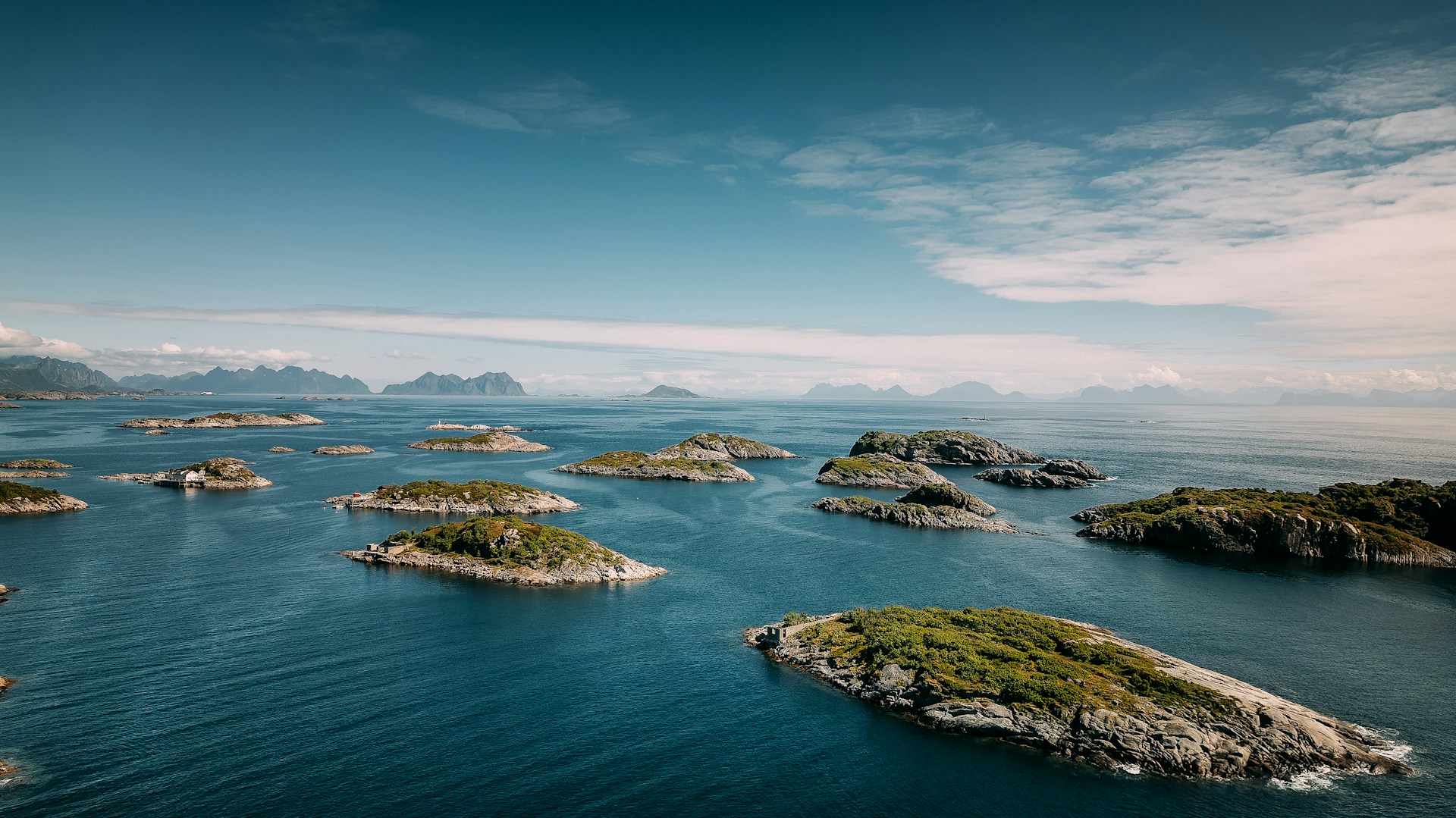
There are places on Earth where the map appears to have been edited by someone with an unusually ambitious imagination. Islands shaped like palm trees rise from turquoise waters. Artificial neighborhoods stretch across the sea, complete with roads, luxury hotels, and private beaches. Entire communities live on floating platforms made from reeds, while engineers construct new coastlines using millions of tonnes of sand, rock, and concrete.
These places seem to challenge a simple geographical assumption: islands are supposed to be natural.
For most of human history, an island was something people discovered, inhabited, mapped, and occasionally fought to reach. It was a piece of land surrounded by water, shaped by geological forces that operated over thousands or millions of years. Humans could build houses on islands, but creating the islands themselves was another matter entirely.
Then we developed dredging machines, reinforced concrete, satellite navigation, and the ability to move mountains of material with industrial precision.
Suddenly, the ocean became something more than a boundary. In certain places, it became a construction site.
Today, artificial islands exist in some of the world’s most surprising locations. Some are ancient communities that have floated above lakes for generations. Others are modern engineering projects designed to expand crowded cities, support airports, or create entirely new destinations for tourism.
Their stories are fascinating because they reveal something unusual about humanity: we do not always accept the landscape as we find it. Sometimes, we decide to redesign it.
And occasionally, we build something so extraordinary that it seems as though it should not exist at all.
1. The Palm-Shaped Islands of Dubai
Imagine looking down at the ocean and seeing a palm tree made of land.
Not a drawing. Not a floating sculpture. An actual collection of artificial islands, complete with roads, buildings, beaches, and residential neighborhoods.
That is the idea behind Palm Jumeirah in Dubai, United Arab Emirates.
Palm Jumeirah is one of the world’s most recognizable artificial island developments. Its design resembles a palm tree, with a central trunk, a series of fronds, and a surrounding crescent that helps protect the development from waves.
The project was built by reclaiming land from the Persian Gulf. Instead of simply pouring concrete into the water, engineers used enormous quantities of dredged sand to create the island’s shape. Rock was also used in the protective breakwater surrounding it.
The process required careful surveying and positioning. Sand does not automatically settle into a stable island just because someone deposits enough of it in the sea. Currents, waves, erosion, and the behavior of the seabed all influence whether reclaimed land remains where it was placed.
Satellite positioning and specialized marine construction equipment helped engineers shape the island with considerable precision.
The result is a development that extends Dubai’s coastline and supports hotels, residences, restaurants, and other facilities.
From above, the geometry is striking. From the ground, however, the palm shape is not always immediately obvious. The design becomes most recognizable from elevated viewpoints or aerial photographs.
Palm Jumeirah also demonstrates an important distinction between an engineering achievement and a permanent victory over nature. Artificial islands require ongoing attention to drainage, coastal protection, erosion, and infrastructure. The sea continues to exert forces on the land long after construction ends.
Nevertheless, the idea of building a palm tree into the ocean remains one of the most extraordinary examples of humans turning a geographical concept into a functioning urban environment.
The island does not merely occupy the coastline.
It redraws it.
2. The World Islands: A Map Built on Water
If building a palm tree in the ocean sounds ambitious, consider the idea of constructing a miniature version of the world.
Off the coast of Dubai lies another artificial island development known as The World Islands.
Its concept is simple to understand and remarkably difficult to execute: create a collection of islands arranged to resemble the continents of Earth when viewed from above.
The project consists of numerous artificial islands formed using dredged sand and protected by surrounding breakwaters. The islands were designed to represent a world map, with individual plots intended for different developments.
The result resembles a geographical model expanded to an enormous scale and placed in the sea.
But the engineering challenges are far more complicated than drawing a map on paper.
A map has no waves. An artificial island does.
Every island must contend with currents, sediment movement, storm conditions, and the practical requirements of construction. The spacing between islands, the movement of water through channels, and the stability of the surrounding seabed all matter.
There is also a difference between creating land and creating a usable place. An island may exist physically without having the roads, utilities, buildings, transport links, or services required for permanent occupation.
The World Islands have experienced uneven development, and not every planned island has become a fully developed destination. That distinction is important because an artificial island project can be impressive as an engineering concept while still facing substantial commercial and logistical challenges.
Yet the basic idea remains extraordinary.
For centuries, maps helped people understand the world. In Dubai, a development project attempted to turn the map itself into a physical landscape.
It is a curious reversal of the usual relationship between geography and imagination.
Instead of using a map to represent the world, engineers used the world as a blueprint for constructing new geography.
3. Kansai International Airport: An Island Built for Aircraft
Some artificial islands are designed to look beautiful. Others are designed to solve problems that cities cannot easily solve on land.
Kansai International Airport in Japan belongs to the second category.
Located in Osaka Bay, the airport was built on an artificial island because finding a suitable location for a major airport near the densely developed Osaka region was difficult.
Airports need enormous amounts of space. They require runways, terminals, taxiways, maintenance facilities, safety zones, and room for future expansion. They also generate noise, which can create challenges when airports are surrounded by residential neighborhoods.
Building an airport offshore offered a way to address some of these constraints.
The island was constructed using earth and rock transported from land. Engineers had to prepare the seabed, establish protective structures, and create a foundation capable of supporting a massive transportation facility.
But there was a significant complication.
The seabed beneath the airport contains soft sediments that compress under the weight of the reclaimed land and structures above them. As these sediments compact, the island settles.
This phenomenon, known as ground settlement, is a familiar challenge in land reclamation, but its scale at Kansai has made it particularly notable.
The airport opened in 1994, and engineers have continued monitoring and managing settlement. Its infrastructure incorporates systems intended to accommodate movement, including adjustable elements in parts of the terminal structure.
The airport demonstrates that creating an island is not simply a matter of placing enough material in the right location. The ground beneath the island matters just as much as the land above it.
An artificial island can look solid, support enormous buildings, and carry thousands of people every day while its foundation continues to change.
That is one of the strangest aspects of modern engineering: something that appears completely stable can be moving very slowly beneath your feet.
Kansai is more than an airport surrounded by water. It is a continuing experiment in how humans can build and maintain critical infrastructure on ground that does not behave like ordinary solid land.
4. The Uros Islands: Communities Built From Floating Reeds
Not every artificial island requires excavators, ships, or millions of tonnes of construction material.
Some are made from plants.
On Lake Titicaca, high in the Andes between Peru and Bolivia, the Uros people have a long-standing tradition of constructing floating islands from totora reeds.
These islands are fundamentally different from the enormous reclaimed developments of the modern Gulf.
Rather than creating permanent land by filling an area of water, the builders assemble thick layers of buoyant vegetation into floating platforms. Reeds are harvested and arranged to form a foundation, and additional material must be added as the lower layers decay.
The islands are anchored to help prevent them from drifting away.
Homes, walkways, and other structures can be built on top of these platforms. The reeds also have practical uses in everyday life, including construction and traditional crafts.
The result is a remarkable example of a community adapting its living environment to the physical conditions around it.
The Uros islands are not simply tourist attractions or unusual engineering demonstrations. They are connected to cultural identity, traditional knowledge, and ways of life developed over generations.
Their construction also reveals a different definition of an island.
We often imagine an island as a stable mass of earth resting on the seabed. But a floating island can provide a recognizable living surface without being attached to the bottom of a lake.
Its foundation is renewable vegetation rather than rock or compacted soil. Its stability depends on maintenance, anchoring, buoyancy, and an understanding of the materials from which it is made.
The contrast with Dubai is striking.
One community uses industrial dredgers to move enormous quantities of sand. Another uses layers of reeds to create a place to live.
Both approaches demonstrate the same basic human instinct: when the available landscape does not meet every need, people find ways to adapt it.
The Uros islands may be smaller and less technologically elaborate than some modern developments, but their ingenuity is no less impressive.
In fact, they remind us that the history of artificial islands did not begin with skyscrapers and megaprojects. Human beings have been experimenting with unusual ways to inhabit water environments for a very long time.
5. Flevopolder: One of the Largest Artificial Islands on Earth
Some islands are so large that their artificial origins become difficult to appreciate.
Flevopolder in the Netherlands is an extraordinary example.
Located in the Dutch province of Flevoland, Flevopolder was created through an extensive program of land reclamation in what was formerly part of the Zuiderzee, an inlet connected to the North Sea.
The Netherlands has a long history of managing water to create usable land. Dikes, drainage systems, pumping stations, and carefully engineered water levels have helped transform areas that were once submerged or vulnerable to flooding.
The development of Flevopolder represents this tradition on a remarkable scale.
Rather than constructing a compact island surrounded by deep ocean, engineers enclosed areas of water with protective dikes and removed the water from within. The resulting polders became land that could be developed for agriculture, housing, transport, and other uses.
Flevopolder is generally described as one of the world’s largest artificial islands, although its exact classification depends on how artificial islands are defined.
It is not an island in the conventional geological sense. Its land emerged through an organized process of reclamation rather than through volcanic activity, sediment accumulation, or other natural island-forming processes alone.
Today, much of the reclaimed landscape appears ordinary.
There are fields, roads, towns, farms, and infrastructure. A person driving across it might never guess that the surrounding water once occupied the area.
That is what makes Flevopolder especially fascinating.
Some artificial islands announce their existence through extravagant architecture or distinctive shapes. Others become so integrated into everyday life that people stop thinking of them as engineering projects.
The land becomes familiar. The original transformation disappears from view.
Flevopolder is a reminder that humans can alter geography on a scale that affects entire regions. It also demonstrates that land reclamation is not just about construction. It requires long-term water management, flood protection, soil preparation, and careful maintenance.
Creating the land is only the beginning.
Keeping it dry, productive, and safe is the continuing challenge.
6. Peberholm: The Island That Helps Connect Two Countries
In the waters between Denmark and Sweden, an artificial island serves a practical purpose that is easy to overlook.
Its name is Peberholm.
Built as part of the Øresund connection between Copenhagen and Malmö, Peberholm supports the transition between a major bridge and an underwater tunnel.
The Øresund connection combines road and rail infrastructure to link the two countries. Instead of carrying the bridge all the way into Copenhagen Airport’s surrounding area, the design uses a tunnel section for the final approach toward Denmark.
Peberholm provides the intermediate point where the bridge and tunnel connect.
The island was created using material excavated during construction of the tunnel trench. This gave the project a practical way to use the excavated material while creating a necessary piece of infrastructure.
Its shape and location were determined by engineering requirements rather than by a desire to imitate a natural island or create a tourist destination.
Peberholm is also notable for its environmental approach.
Human construction transformed the site, but the island was left largely undisturbed after its initial creation. Plants and wildlife gradually colonized the new land, and the island became a valuable place for observing ecological succession.
Ecological succession is the process through which communities of organisms establish themselves and change over time in a developing environment.
On a newly created island, the process can be especially interesting because the starting conditions are relatively new. Seeds arrive through wind, water, and animals. Insects and birds discover new habitats. Vegetation spreads as soil conditions and local environmental factors permit.
Peberholm therefore offers two stories at once.
It is a piece of human-built transportation infrastructure, and it is also a developing ecosystem.
The island illustrates an important point about artificial environments: creating a new landscape does not mean every subsequent change can be predicted.
Engineers can determine the island’s initial shape, elevation, and purpose. They cannot completely dictate which species will arrive, how populations will change, or precisely what the ecosystem will look like decades later.
Sometimes, the most interesting part of an artificial island begins after the machinery leaves.
7. Yas Island: Turning Reclaimed Land Into an Entertainment Destination
Artificial islands are not always created because a city has run out of room. Sometimes, they are developed to support an entirely new collection of attractions and facilities.
Yas Island in Abu Dhabi, United Arab Emirates, is an example of a major island destination developed for tourism, leisure, and entertainment.
The wider development includes attractions and facilities associated with motorsport, theme parks, hotels, shopping, and entertainment.
Its most recognizable features include the Yas Marina Circuit, which hosts Formula One’s Abu Dhabi Grand Prix, and Ferrari World Abu Dhabi, a theme park dedicated to the Ferrari brand.
The island’s development forms part of a broader effort to establish a destination where visitors can combine multiple activities in one location.
This approach differs from the traditional development of a city, where neighborhoods, businesses, and attractions often emerge over long periods as population and demand increase.
A large planned destination can bring many elements together through coordinated construction.
Road networks, hotels, event venues, entertainment facilities, and public spaces can be designed around an overarching development strategy.
However, such projects require significant investment and ongoing maintenance. They also depend on transport access, visitor demand, environmental management, and the ability of attractions to remain relevant over time.
Yas Island demonstrates how artificial or reclaimed land can be used as a platform for creating a new destination rather than simply extending an existing residential neighborhood.
It is not merely about having more land.
It is about deciding what kind of place that land should become.
8. Hong Kong International Airport: An Island Built Around a Global Gateway
Hong Kong is one of the world’s most densely developed urban regions, with dramatic terrain and limited flat land in many areas.
These conditions make large infrastructure projects particularly challenging.
Hong Kong International Airport, located on the island of Chek Lap Kok, was developed through a major land-reclamation project that combined an existing island with extensive newly reclaimed land.
The project created the space needed for a major airport with runways, terminals, transport connections, and supporting facilities.
Before construction, the natural island and nearby landforms did not provide the enormous, relatively level site required for the modern airport. Engineers therefore reshaped the landscape to accommodate the facility.
The scale of the transformation was substantial.
Large quantities of rock and soil were moved, areas of the seabed were prepared, and new land was created to support the airport’s infrastructure.
When the airport opened in 1998, it became a central component of Hong Kong’s international transport network.
Its location also demonstrates why artificial islands can be attractive for infrastructure that benefits from large, continuous areas of land.
An airport requires a carefully arranged physical environment. Runways must be positioned to support safe operations, while terminals and access routes must connect efficiently to surrounding transport systems.
Offshore reclamation can provide space where the existing urban landscape cannot easily accommodate these requirements.
Of course, reclaimed land is not a universal solution. Projects of this scale involve substantial financial costs, environmental considerations, and complex geotechnical work. Coastal ecosystems may be affected, and the stability of the new land must be carefully managed.
Nevertheless, Hong Kong International Airport demonstrates how a major transport hub can be built by fundamentally changing the geography of a location.
A place that once consisted of an island and surrounding water became a foundation for one of the world’s most important aviation gateways.
The aircraft may capture people’s attention, but the ground beneath the runways tells an equally remarkable story.
9. The Artificial Islands That Challenge the Meaning of Nature
What do these places have in common?
At first glance, very little.
A floating reed island on Lake Titicaca has a different purpose, construction method, and cultural meaning from a reclaimed airport in Japan. A palm-shaped development in Dubai looks nothing like the Dutch polders, and Peberholm was designed for a very different reason from Yas Island.
Yet they all reveal something important about the relationship between people and the environment.
An island is not necessarily a fixed category with only one possible origin.
Some islands are volcanic. Others emerge from coral growth, sediment accumulation, or geological uplift. Some are shaped by rivers and changing coastlines.
Artificial islands add another possibility: land deliberately created or substantially transformed through human activity.
This does not mean humans can simply build anywhere they wish without consequences.
The sea is a powerful physical system. Waves move sediment, storms threaten coastlines, and rising sea levels can increase the challenges faced by low-lying reclaimed areas. Soft seabeds can settle, and coastal construction can change water circulation and affect marine habitats.
Every project therefore involves trade-offs.
An artificial island may create space for housing or transportation, but it may also disturb ecosystems and require decades of maintenance. A floating island may provide a flexible living platform, but its materials need regular replacement. A reclaimed agricultural landscape may become productive land, but its continued existence can depend on complex water-control systems.
The most successful projects recognize that building land is not the same as escaping natural processes.
They work by understanding those processes well enough to design around them.
There is also a philosophical distinction worth considering.
When we look at a natural island, we tend to see it as part of the landscape. When we look at an artificial island, we see evidence of a decision.
Someone identified a need. Someone developed a plan. Engineers calculated forces and material requirements. Workers transported resources, constructed foundations, and assembled the infrastructure.
An artificial island is geography with a visible human history.
It tells us not only what a place is, but why it exists.
10. Could We Build Even Stranger Islands in the Future?
The next generation of artificial islands may look very different from the projects we know today.
Advances in materials science, marine engineering, renewable energy, and environmental monitoring could influence how future projects are designed.
Some proposals explore floating platforms that could support buildings, research facilities, or renewable-energy infrastructure. Others consider offshore structures that combine energy generation, transport, aquaculture, or scientific research.
Floating structures are particularly interesting because they do not necessarily require every part of the platform to rest on reclaimed seabed.
Instead, buoyant structures can be designed to remain on the water’s surface, subject to anchoring, mooring, stability, and wave conditions.
This creates different engineering possibilities, although large floating settlements would still face substantial challenges involving storms, corrosion, maintenance, emergency services, fresh water, waste management, and transport.
Other future projects may focus less on creating new places to live and more on restoring or protecting existing coastlines.
Artificial reefs, carefully designed coastal barriers, and nature-based shoreline projects demonstrate that engineering can sometimes work alongside natural systems rather than attempting to replace them.
The future of artificial islands will probably not be defined by size alone.
A smaller structure that produces clean energy, supports marine research, or provides essential transport infrastructure could be more useful than an enormous island designed primarily to impress from above.
The important question is not simply whether humans can create land in the ocean.
It is whether the resulting place can serve a meaningful purpose, remain safe, and justify its environmental and financial costs over time.
That is where the most interesting engineering challenges begin.
Conclusion: When Humanity Decides to Redraw the Map
Artificial islands occupy an unusual position in our understanding of the world.
They are real places, yet their existence often begins with an idea rather than a geological event. They may contain homes, airports, roads, farms, hotels, and entire communities, but the land beneath those activities exists because someone deliberately created it.
Some are enormous engineering achievements. Others are expressions of traditional knowledge developed over generations. Some are built to solve practical problems, while others are designed to create new destinations or expand the possibilities of urban development.
Together, they show that geography is not always as permanent as it appears.
The Netherlands demonstrates that vast areas of usable land can be reclaimed and maintained through sophisticated water management. Japan shows how an artificial island can support essential infrastructure despite challenging ground conditions. Hong Kong and Dubai illustrate different ways of expanding the built environment through land reclamation. Meanwhile, the Uros islands remind us that even simple natural materials can become the foundation of a remarkable human settlement.
None of these places exists outside the laws of nature. They exist because people have learned to work with materials, forces, and environmental conditions in increasingly sophisticated ways.
And that may be the most fascinating part of the story.
Human ingenuity does not always involve inventing something completely new. Sometimes, it means looking at an existing landscape and discovering that there is another way to use it.
A lake becomes a place for floating homes. An inlet becomes reclaimed farmland. A stretch of ocean becomes an airport. A collection of sandbanks becomes a palm-shaped neighborhood.
The map changes, and eventually, the new landscape becomes part of everyday life.
Perhaps that is why artificial islands feel so strange when we first encounter them. They challenge the assumption that the world is simply something we inherit.
In reality, parts of the world around us are also things we build, maintain, and continually reshape.
Somewhere, an engineer is studying a coastline. Somewhere else, a community is repairing a floating island made from reeds. A construction team is planning foundations beneath the water, while a city considers how to accommodate another generation of growth.
The next artificial island may be built for a purpose we have not yet imagined.
And when it appears on the map, people may once again look at it and ask the same question:
How can a place like that possibly exist?
The answer, as history keeps demonstrating, is that sometimes the impossible is simply an engineering problem that humanity has decided to solve.