What Would Happen If Earth Had a Permanent Twilight Zone?
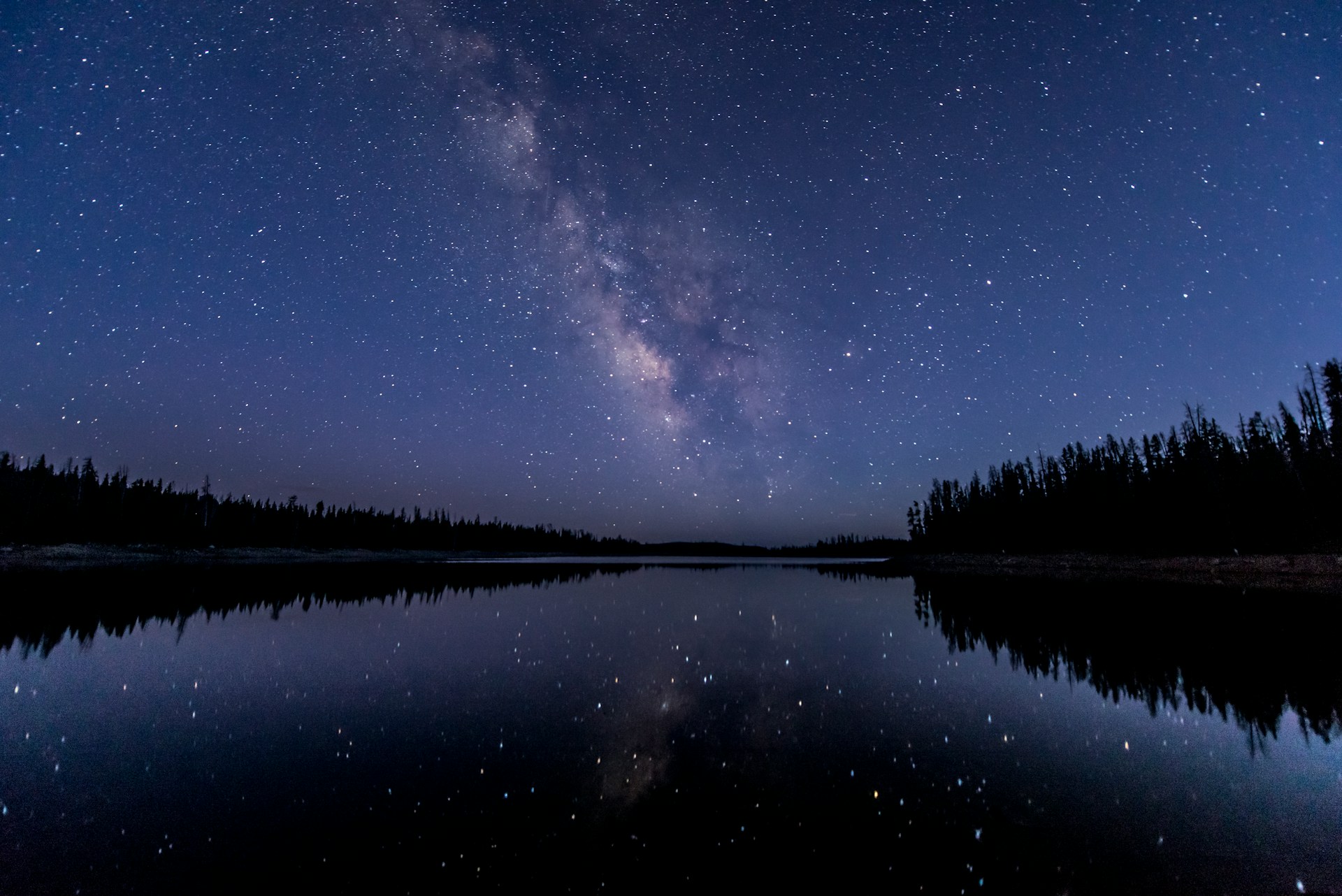
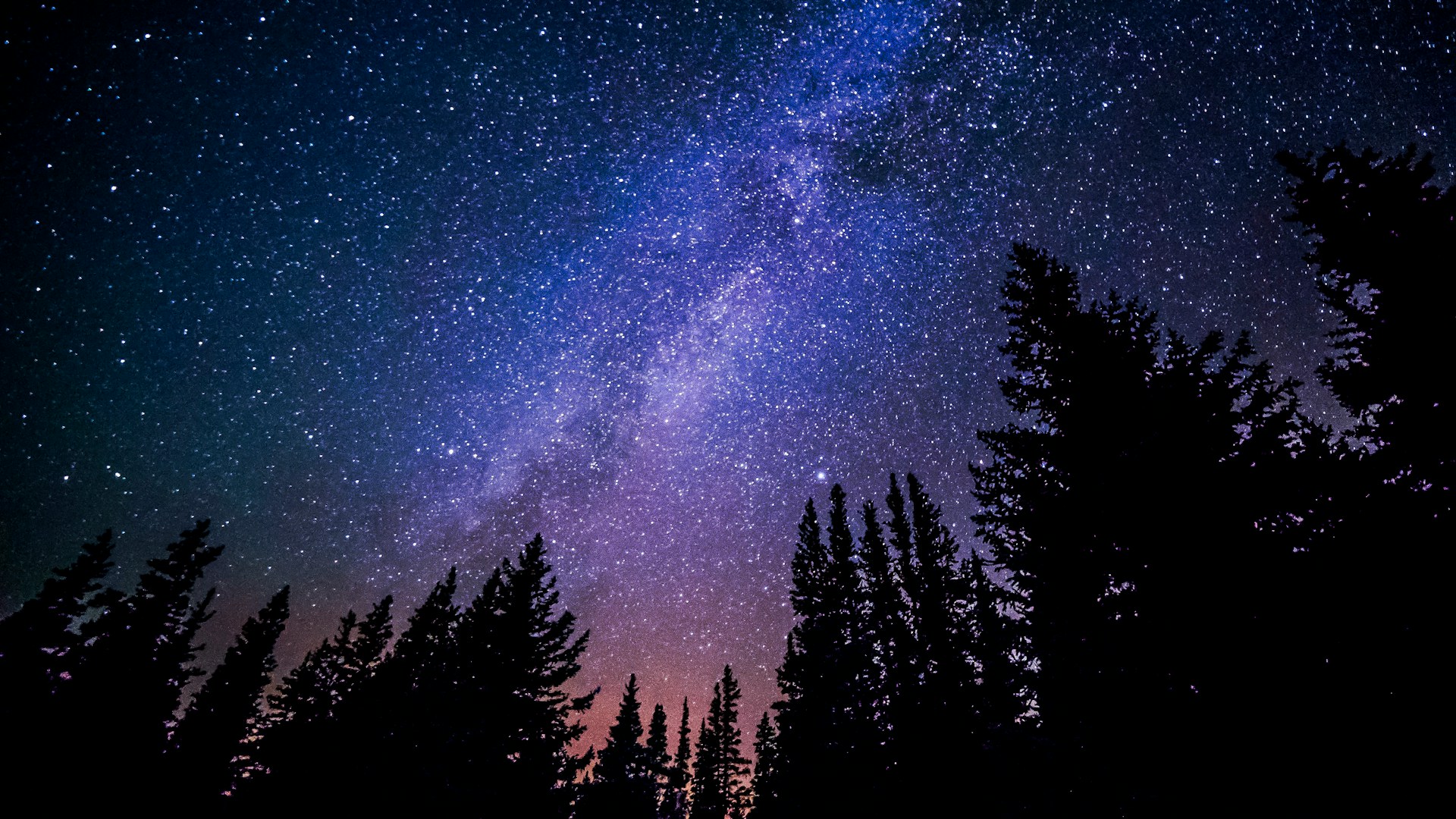
Imagine a world where the Sun never fully rises or disappears, where the horizon glows with eternal orange light, and where entire civilizations build their lives beneath a sky caught between day and night.
There is something extraordinary about twilight.
It is the moment when the familiar world begins to look unfamiliar. Buildings become silhouettes, clouds turn into bands of purple and gold, and distant landscapes appear to exist somewhere between reality and imagination. The Sun may have already slipped below the horizon, yet the world continues to glow as if daylight is reluctant to leave.
Twilight is usually temporary. It occupies the narrow space between the brightness of day and the darkness of night, giving the atmosphere a brief opportunity to perform one of its most beautiful transformations.
But what if twilight never ended?
Imagine an Earth where a permanent band of soft light stretched across the planet, creating a region where the Sun hovered perpetually near the horizon. In this place, the sky would never become completely bright, yet it would rarely experience the darkness associated with ordinary night. The landscape would exist beneath a continuous glow, and the familiar rhythm of sunrise, midday, sunset, and midnight would become something very different.
Such a world would not simply look beautiful. It would challenge our understanding of climate, ecosystems, agriculture, human behavior, architecture, and even the way societies organize time.
To understand what might happen, we first need to imagine how a permanent twilight zone could exist in the first place.
The Astronomy Behind a World Without Ordinary Daylight
Earth’s daily cycle exists because our planet rotates on its axis. As different regions turn toward the Sun, they experience daylight. As they turn away, darkness follows.
The boundary between day and night is called the terminator. It is not a perfectly sharp line because Earth’s atmosphere scatters sunlight, allowing the sky to remain illuminated for a while after the Sun has disappeared below the horizon.
A permanent twilight zone would require a different arrangement of light and planetary motion.
One possibility would be a hypothetical planet that rotates synchronously with its star. Such a planet would complete one rotation in the same amount of time it takes to orbit its star. One hemisphere would always face the star, while the opposite hemisphere would remain turned away.
This arrangement is often discussed in relation to planets orbiting close to small stars.
On a simplified version of such a world, the point directly beneath the star would experience permanent daylight, while the opposite point would remain in perpetual darkness. Between them would lie a vast transition region, where the star would remain close to the horizon.
That region would be the planet’s natural twilight belt.
The Sun would not sweep across its sky as it does on Earth. Instead, it would hang near the horizon, creating a persistent glow that could change subtly with atmospheric conditions, clouds, and the planet’s orbital characteristics.
This is not how Earth currently operates, and a permanent twilight belt would not appear on our planet simply because we wished for one. It is a hypothetical planetary arrangement that allows us to explore how different conditions could produce an entirely different environment.
And once we imagine that environment, the possibilities become fascinating.
A Sky That Never Finishes Its Sunset
The first thing visitors to a permanent twilight zone would probably notice is the sky.
On Earth, twilight is a constantly changing spectacle. Colors shift as the Sun descends, the atmosphere scatters shorter wavelengths of light, and the remaining sunlight travels through increasingly long atmospheric paths.
A permanent twilight environment could preserve some of these visual effects throughout the day.
Depending on the atmosphere’s composition, cloud cover, and the position of the observer, the horizon might glow in shades of amber, pale gold, dusty rose, violet, or deep blue. High clouds could catch the incoming light and reflect it across the sky, while lower clouds might create long shadows over the landscape.
The result could be a world with a remarkably consistent visual identity.
Imagine walking through a forest where every tree casts a long shadow toward the dark side of the planet. The leaves would reflect a soft, directional light. Rivers might catch a narrow strip of gold, while distant mountains would appear as layers of blue-gray silhouettes.
Cities could develop under skies that never become conventionally bright. Their buildings might be illuminated by the same natural glow that has existed for generations.
Yet permanent twilight would not necessarily mean permanent orange skies.
The exact appearance would depend on the atmosphere and the star providing the light. A thicker atmosphere might scatter light more extensively, while dust, aerosols, and clouds could alter the colors. An atmosphere with different chemical properties could produce an entirely different palette.
The sky would be a product of physics, not simply a painting suspended above the planet.
And beneath that sky, life would need to adapt to a world that never experiences an ordinary sunrise.
The Climate Would Be a Study in Extremes
A permanent twilight zone might look peaceful, but its climate could be complicated.
The fundamental issue is the distribution of energy.
On an Earth-like planet that always presents the same hemisphere toward its star, the dayside receives energy continuously. The nightside receives little or no direct stellar illumination. The twilight region lies between these two environments, receiving sunlight at a very low angle.
Because sunlight arrives at a shallow angle, the same amount of incoming energy is spread across a larger surface area. The ground also receives less direct heating than a location beneath a high Sun.
This could make portions of the twilight belt cooler than the illuminated hemisphere.
However, temperature would not depend on sunlight alone.
Atmospheric circulation could transport heat from the dayside toward the nightside. Winds would move air masses across the planet, redistributing energy. Oceans, if present, could carry heat through currents. Clouds could reflect incoming radiation or trap outgoing infrared energy.
The thickness and composition of the atmosphere would be particularly important.
A substantial atmosphere might help moderate temperature differences between the two hemispheres. A thin atmosphere could allow the dayside and nightside to develop more extreme conditions, making some parts of the twilight belt less hospitable.
The permanent twilight zone would therefore not automatically become a comfortable paradise. Some regions might experience mild temperatures, while others could be exposed to powerful winds, freezing conditions, or unstable weather.
The most habitable locations would depend on the planet’s atmospheric circulation, water availability, terrain, and the energy emitted by its star.
Still, there is an intriguing possibility: a world in which the most comfortable places for life occupy a broad band between two dramatically different environments.
Instead of searching for the ideal distance from the equator, inhabitants might search for the ideal distance from the star-facing hemisphere.
Geography would acquire a completely different meaning.
Would Plants Still Grow?
Plants depend on light, but not all plants need the same quantity, intensity, or duration of illumination.
On Earth, photosynthesis allows plants to use light energy to convert carbon dioxide and water into chemical energy. The process supports much of the planet’s food web.
A permanent twilight zone would present plants with a distinctive challenge.
The light might be continuous, but it could also be weak. Whether plants could grow successfully would depend on the intensity and spectrum of the available radiation, as well as temperature, water, nutrients, and the plant species involved.
Some Earth plants can tolerate shade remarkably well. Others require strong sunlight to grow and reproduce effectively. Organisms on a hypothetical twilight world would likely be shaped by generations of adaptation to local conditions.
Plants might develop broad leaves that capture more available light. Their growth could be slower, particularly in environments where photosynthesis is limited by low illumination.
Forests might be less dense than their Earth counterparts, or they might contain unfamiliar species adapted to exploit every available photon.
The color of vegetation could also vary. While Earth’s familiar green appearance results partly from the pigments used in photosynthesis, the appearance of plants on another world would depend on their pigments, their evolutionary history, and the light reaching them.
Alien vegetation would not necessarily be purple or blue simply because it grew under unusual skies. It could remain green, adopt different colors, or display patterns that would seem unfamiliar to human observers.
Agriculture would require careful planning.
Farmers might select crops capable of growing under low-light conditions, breed plants for efficient energy use, or cultivate food in controlled environments with supplemental lighting.
Greenhouses could become especially valuable. They would allow farmers to regulate temperature, humidity, water supply, and illumination while protecting crops from extreme winds.
In a world where natural light is limited, agricultural engineering could become one of civilization’s most important technologies.
Animals Would Need a Different Biological Clock
Many organisms use light to coordinate their biological rhythms.
On Earth, the daily cycle of light and darkness helps regulate sleep, feeding, migration, reproduction, and hormone production. Animals have evolved numerous ways of interpreting changes in illumination.
A permanent twilight environment would complicate those signals.
Without a regular sunrise or sunset, animals might rely more heavily on other environmental cues. Temperature changes, seasonal patterns, food availability, chemical signals, and internal biological clocks could help coordinate their activities.
Some species might remain active throughout the illuminated period, while others could evolve patterns of activity that resemble the day-night cycles of Earth despite the absence of a conventional solar cycle.
Predators and prey would also adapt to the available light.
In a dim environment, large eyes could provide an advantage to some animals by collecting more light. Other organisms might rely more heavily on hearing, smell, touch, or specialized sensory systems.
However, evolution would not produce a single universal solution. Different species would face different pressures, and their adaptations would depend on the ecological relationships within their habitats.
An animal that hunts by detecting movement might develop very different capabilities from one that feeds on stationary plants. A creature that navigates across open plains would face different challenges from an organism living in a dense forest.
The twilight belt could support complex ecosystems, provided the planet offered sufficient energy, liquid water, nutrients, and suitable temperatures.
One particularly interesting consequence concerns the relationship between light and camouflage.
On Earth, many animals use colors and patterns that work under specific lighting conditions. A permanent twilight environment could favor entirely different visual strategies. Dark markings might blend into certain landscapes, while reflective surfaces or subtle color contrasts could become useful under a low Sun.
The result would be an ecosystem whose inhabitants were shaped by a light environment unlike anything experienced by most terrestrial species.
Human Civilization Would Redesign Its Relationship With Time
Suppose humans somehow established a settlement in this permanent twilight region.
The first major challenge would be timekeeping.
Our modern schedules are deeply connected to Earth’s rotation. We divide the day into hours, organize work around morning and evening, and use daylight to coordinate activities.
In a permanent twilight zone, the sky would no longer provide an obvious daily signal.
People could still measure time using clocks. Mechanical and electronic systems do not require the Sun to rise. However, the psychological and cultural relationship with time might change.
Communities could organize work according to standardized schedules, artificial lighting cycles, or carefully maintained periods of rest and activity.
Homes might feature lighting systems that gradually shift from warm tones to cooler ones, creating an artificial distinction between morning and evening. Public buildings could use lighting to signal the beginning of a working period, while residential spaces might simulate a darker environment for sleep.
This would not be merely a matter of convenience.
Human circadian rhythms respond to light, and the absence of a natural day-night cycle could affect sleep and alertness. Carefully designed lighting environments could help provide more consistent daily cues.
Schools, hospitals, factories, and offices might be designed around controlled illumination. Windows could provide views of the permanent twilight landscape, while interior lighting would establish the rhythms needed for daily life.
People would still experience time, birthdays, seasons, and personal milestones. They would simply rely more heavily on instruments and social agreements to define the ordinary day.
The clock would become more important than the horizon.
Architecture Would Become an Art of Managing Light
Architecture on a permanent twilight world could develop a distinctive visual language.
On Earth, buildings are designed to respond to the movement of the Sun. Windows are positioned to capture daylight, roof overhangs reduce excessive heat, and courtyards can improve ventilation and distribute natural illumination.
In a permanent twilight region, the Sun’s position would remain relatively fixed.
Architects could orient buildings toward the illuminated horizon, using carefully placed windows to collect as much natural light as possible. Reflective surfaces might direct daylight deeper into interiors, while light-colored walls could help distribute illumination throughout rooms.
Buildings might feature long horizontal windows facing the star, allowing residents to watch the glowing horizon from living spaces and communal areas.
On the opposite sides of buildings, designers could create sheltered courtyards, storage spaces, or rooms requiring less natural illumination.
The landscape itself could influence urban planning.
If strong winds traveled between the hot and cold hemispheres, buildings might need aerodynamic forms and protective structures. Streets could be arranged to reduce wind exposure, while covered walkways would provide comfortable routes between homes, workplaces, and public spaces.
Cities might also develop a strong relationship with artificial lighting.
Because the sky would remain relatively dim, illuminated buildings could become prominent visual landmarks. Public squares might use indirect lighting to create welcoming environments without overwhelming the natural glow of the horizon.
Imagine a city of glass roofs, softly illuminated pedestrian streets, and buildings whose windows reflect a permanent band of gold.
At night on Earth, cities often compete visually with darkness. In a twilight city, artificial illumination would coexist with a constant natural glow.
The boundary between indoor and outdoor lighting design would become especially important.
Could Agriculture and Technology Support Large Cities?
The success of a permanent twilight civilization would depend heavily on its energy resources.
Low sunlight could restrict agricultural productivity, especially if temperatures were unfavorable. A civilization would need reliable ways to grow food and maintain infrastructure.
Solar energy might still be useful, particularly on the brighter side of the planet. Wind power could be valuable where temperature differences generate strong atmospheric circulation. Geothermal energy could provide electricity and heat in regions with suitable geological conditions.
Other energy sources would depend on the planet’s available resources and the civilization’s technological development.
If enough electricity were available, controlled-environment agriculture could supplement outdoor farming. Indoor farms could use artificial lighting, carefully managed nutrients, and efficient water-recycling systems.
Hydroponics, which grows plants using nutrient-rich water rather than conventional soil, could be particularly useful in environments where fertile land is scarce.
Vertical farms might allow cities to produce food within compact buildings, reducing the distance between farms and consumers. However, artificial lighting consumes energy, so the overall feasibility of these systems would depend on energy efficiency, crop selection, and the cost of power.
Water management would be equally important.
If the twilight zone contained rivers, lakes, or accessible groundwater, settlements could develop around these resources. If water were scarce or frozen, obtaining and transporting it could become one of the central challenges of daily life.
Technology would not eliminate the planet’s environmental limitations. Instead, it would determine how effectively a civilization could work within them.
A successful twilight city would be a carefully balanced system in which energy production, food supply, water management, transport, and housing reinforced one another.
In that sense, the civilization would resemble an ecosystem of its own.
What Would Happen to the Oceans?
If the hypothetical planet possessed oceans, their behavior could dramatically influence the twilight belt.
On Earth, oceans store enormous quantities of heat and transport energy through currents. Water responds to temperature changes more slowly than land, helping moderate regional climates.
On a planet with permanent dayside and nightside hemispheres, ocean currents could transport heat across large distances. Warm water might flow away from the illuminated hemisphere, while colder water could move toward it at depth or along other parts of the circulation system.
The exact pattern would depend on ocean depth, planetary rotation, winds, continental arrangement, and the distribution of heating.
Near the twilight region, these currents could influence coastal temperatures, rainfall, fog formation, and marine productivity.
Some coastlines might experience persistent fog as moist air encounters colder surfaces or different atmospheric conditions. Other regions could be relatively dry if prevailing winds carried moisture away or if mountain ranges blocked precipitation.
Marine ecosystems would also respond to the availability of light.
Photosynthetic organisms near the surface would need sufficient illumination to sustain growth. In particularly dim regions, primary productivity might be lower than in well-lit waters, although local conditions could vary considerably.
Deep-ocean ecosystems might rely on organic matter transported from brighter waters, while some organisms could use chemical energy in environments where sunlight does not provide the main source of biological production.
The ocean would therefore serve two roles: a physical system for redistributing heat and a biological system supporting life across the planet.
A permanent twilight zone would not exist independently of the rest of the world. Its climate and ecosystems would be connected to distant regions through winds, currents, and the movement of living organisms.
Would There Be Seasons?
A permanently positioned Sun does not automatically eliminate seasons.
Seasonal changes depend on factors including axial tilt, orbital characteristics, atmospheric circulation, and the planet’s distribution of land and water.
A hypothetical planet with little or no axial tilt might experience relatively modest seasonal changes in solar illumination. Its twilight belt could maintain a fairly consistent relationship with the star throughout the year.
However, if the planet had a significant axial tilt, the geometry of illumination could change over its orbit. The twilight region’s conditions might shift, and some areas could experience seasonal differences in temperature or sunlight.
Changes in atmospheric circulation could also create seasonal weather patterns even when the Sun’s position appeared nearly constant.
For inhabitants, these seasons might be recognized through rainfall, vegetation growth, animal migration, temperature, or changes in wind direction rather than through the familiar progression of longer and shorter days.
Calendars would remain useful. Communities could track the planet’s orbit and organize planting, harvesting, travel, and festivals around predictable environmental patterns.
A civilization would still have seasons, but its understanding of them might be built around ecological and astronomical measurements rather than sunrise times.
A Different Kind of Night Sky
One of the most striking experiences in a permanent twilight zone would be observing the stars.
The sky’s brightness would depend on the exact geometry of the system, atmospheric scattering, and the position of the observer.
Where the star remained close to the horizon, its scattered light could make some stars difficult to see. The brightest stars might emerge first, followed by fainter objects as the sky became darker farther from the illuminated horizon.
On the side facing away from the star, the night sky could become dramatically darker, revealing many more stars if clouds, atmospheric conditions, and artificial lighting permitted.
For people living near the boundary, the sky might offer an unusual combination: a glowing horizon in one direction and a dense field of stars in another.
Astronomy could become a central part of education and culture.
Children might learn to identify constellations in a sky where the star’s position never follows the familiar daily arc. Observatories could be placed in the darkest accessible regions, where atmospheric and environmental conditions permitted precise measurements.
The planet’s permanent light boundary might also provide an opportunity to study how atmospheres scatter radiation and how temperature differences shape weather.
The landscape would be beautiful, but it would also function as a natural laboratory.
The Psychological Experience of Eternal Twilight
There is another question that is harder to answer with equations: what would it feel like to live in a world where the Sun never truly rose or set?
Human beings experience light as more than illumination. It shapes how we perceive landscapes, organize routines, and distinguish different parts of the day.
Sunrise can signal a beginning. Sunset can provide a sense of closure. Darkness can create an opportunity for rest, reflection, and the observation of stars.
Permanent twilight would change those associations.
Some people might find the continuous soft light calming. The absence of harsh midday sunlight could make outdoor environments visually comfortable, depending on temperature and weather.
Artists and photographers could find endless inspiration in the landscape. The consistent angle of illumination might create long shadows, dramatic silhouettes, and a distinctive atmosphere for painting, film, and photography.
Yet the lack of natural variation could also become challenging.
People might miss the experience of watching the Sun rise above the horizon or seeing daylight gradually disappear. Without clear environmental signals, daily routines would need deliberate structure.
This is why architecture, lighting technology, and social organization would matter so much. A comfortable life would require more than a habitable temperature. It would also require environments that support sleep, recreation, social connection, and a healthy sense of time.
The human response would not be uniform. Different individuals and communities could adapt in different ways, depending on their routines, living conditions, and cultural practices.
A permanent twilight world would not necessarily be emotionally peaceful or psychologically difficult for everyone. It would simply demand a different relationship with light.
Would the Twilight Belt Be the Best Place for Life?
It is tempting to imagine that the permanent twilight zone would be the ideal region for life because it lies between a hot hemisphere and a cold one.
The reality would be more complicated.
A planet’s habitability depends on many interacting factors, including atmospheric pressure, surface temperature, liquid water, stellar radiation, chemistry, and long-term climate stability.
The twilight region could offer moderate temperatures if the atmosphere and oceans transported heat efficiently. However, it might also experience powerful winds, limited rainfall, or large temperature variations across short distances.
Some areas could be suitable for liquid water and complex ecosystems, while others could be too cold, dry, or unstable.
Even the location of the most habitable region would not necessarily follow a perfect line around the planet. Continents, mountains, ocean currents, and atmospheric circulation could create local variations.
A sheltered coastal region might be more suitable for settlement than an exposed inland plateau. A valley with reliable freshwater could support agriculture more effectively than a colder, windier plain.
Life would depend on the details.
And that is what makes the concept scientifically interesting. A permanent twilight zone would not provide a simple answer to the question of habitability. It would give scientists an opportunity to investigate how life responds when a planet distributes light and heat differently from Earth.
The Beauty of a World Between Two Worlds
A permanent twilight zone offers a fascinating reminder that our experience of the planet is shaped by its physical design.
Earth’s rotation gives us alternating days and nights. Its axial tilt produces seasons. Its atmosphere scatters sunlight into the colors of dawn and dusk. These processes combine to create the familiar world we inhabit.
Change the geometry, and the entire environment begins to change with it.
On a hypothetical planet with a permanent twilight belt, the sky could become a constant feature of the landscape. Plants might adapt to low-light conditions. Animals could develop new biological rhythms. Cities might orient themselves toward a stationary horizon, while agriculture and technology would evolve around the planet’s unusual energy distribution.
Oceans and winds would connect the twilight belt to the brighter and darker regions beyond it. Human communities, if they existed, would need to build new ways of measuring time, producing food, and creating comfortable living spaces.
Some of these possibilities would depend on highly favorable conditions. Others would present enormous engineering challenges. The planet would not automatically be habitable simply because its horizon glowed with beautiful colors.
Yet the thought experiment reveals something important about planetary science: there is no single arrangement of light that defines every possible world.
The universe contains planets with different sizes, atmospheric compositions, orbital periods, and relationships with their stars. Some experience dramatic changes in illumination, while others may have hemispheres that remain oriented toward or away from their stars for long periods.
Each arrangement creates a different set of possibilities.
Perhaps the most compelling image is a settlement standing beneath an endless sunset, its buildings illuminated by soft natural light while the first stars appear above the dark side of the horizon.
People would go to work, grow food, raise families, study the sky, and create art. Their clocks would measure hours that the landscape could not visibly distinguish. Their cities would glow against a horizon that never quite became night.
They would inhabit a world caught between two familiar states, yet complete in its own way.
And somewhere beyond that imagined horizon, the universe would continue producing new planetary arrangements, each one demonstrating that the conditions we take for granted on Earth are only one possible expression of nature’s remarkable diversity.
A permanent twilight zone would be more than a beautiful place to watch the sunset. It would be a living experiment in how light shapes an entire world.