

What Would the Night Sky Look Like From Inside a Globular Star Cluster?
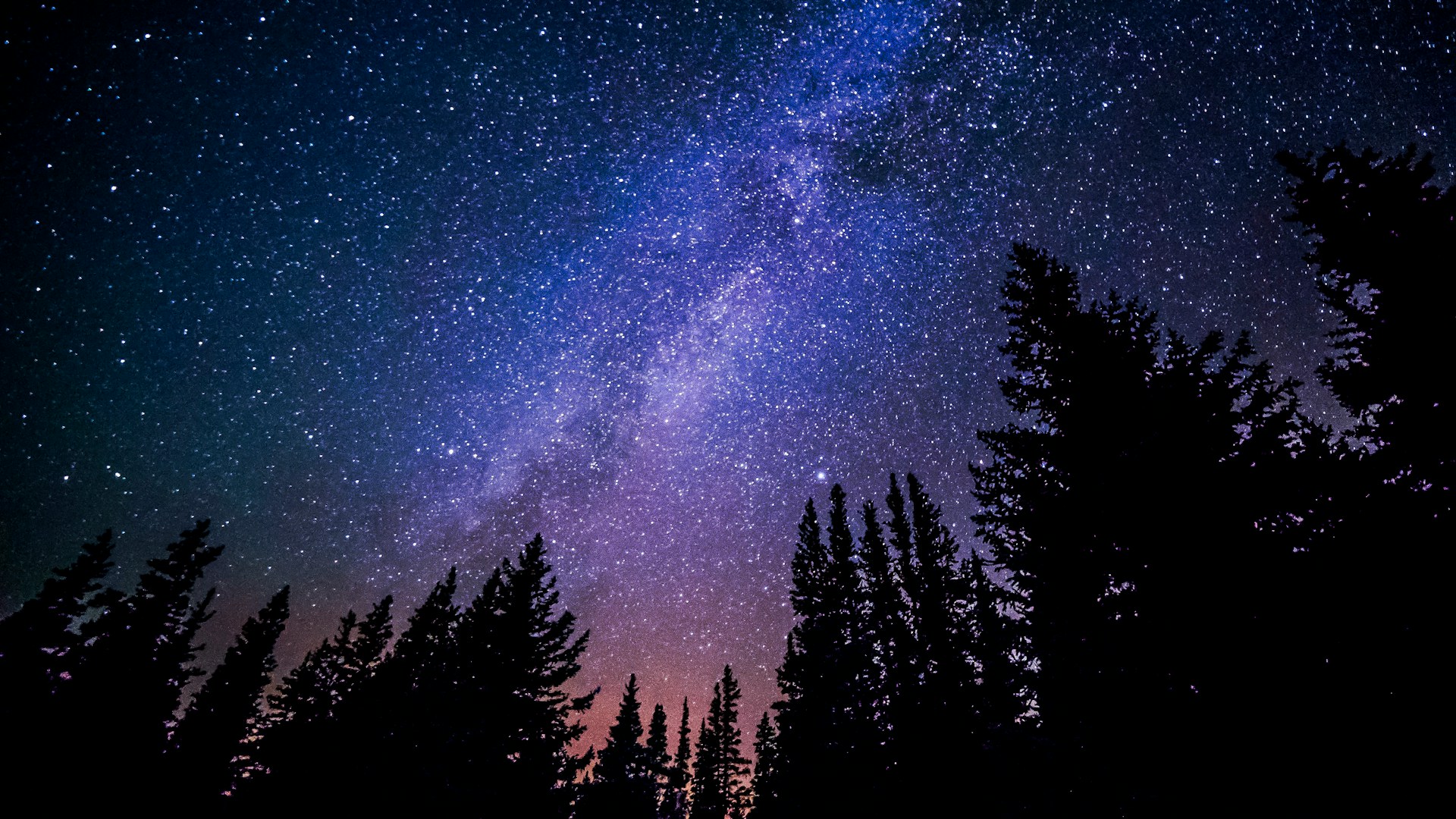
Imagine looking up at the night sky and discovering that the universe has filled it with thousands of stars, each shining like a distant lantern in an enormous cosmic city.
There are places in the universe where the night sky would be almost unrecognizable to someone accustomed to looking up from Earth. The familiar darkness between the stars might give way to a spectacular display of light, with stellar points scattered across every direction and the Milky Way appearing as only one feature in a much larger celestial panorama.
One of these places is a globular star cluster.
Globular clusters are among the most beautiful and ancient structures in our galaxy. They are enormous, roughly spherical collections of stars held together by gravity. Some contain hundreds of thousands of stars, while the richest examples contain considerably more. Many formed more than ten billion years ago, preserving a record of the universe’s distant past.
From Earth, we see these clusters as compact, glowing objects through telescopes. Their outer regions can appear delicate and diffuse, while their centers become increasingly crowded with stars. But those observations reveal only one perspective: the view from outside.
What would happen if we could travel into one of these ancient stellar cities, settle on a suitable planet near one of its stars, and look up after sunset?
Would the sky glow with thousands of brilliant points? Would familiar constellations disappear? Could the Milky Way become difficult to recognize against a background filled with stars?
The answers reveal something fascinating about the relationship between distance, light, gravity, and the human experience of the cosmos.
1. Welcome to the Universe’s Ancient Stellar Cities
A globular cluster is not simply a collection of stars that happen to occupy the same region of space. It is a gravitationally bound system in which stars move around a shared center of mass.
Unlike the more loosely organized star-forming regions found in spiral galaxies, globular clusters are generally compact, densely populated, and extremely old. They orbit their host galaxies, sometimes traveling through the galactic halo far above or below the familiar disk of stars, gas, and dust.
Our own Milky Way contains more than a hundred known globular clusters. One famous example is Omega Centauri, a particularly massive stellar system that contains millions of stars and is often discussed as a possible remnant of a much larger disrupted stellar system. Another is Messier 13, commonly called the Hercules Globular Cluster, which is a spectacular target for amateur astronomers.
From a distance, these objects resemble luminous cosmic jewels. Their brightness increases toward their centers, where the density of stars can become extraordinary.
Yet the most interesting question is not how a globular cluster looks through a telescope.
It is what the cluster would look like from the perspective of someone standing inside it.
Imagine replacing the familiar arrangement of stars above your home with a sky shaped by a stellar population that has remained together for billions of years. Instead of seeing a few thousand stars under exceptionally dark conditions, you might find yourself surrounded by a much richer celestial landscape.
The experience would depend on exactly where you lived within the cluster. A planet near its outskirts would offer a different view from one near its crowded core.
And that difference would be enormous.
2. The Night Sky Would Be Filled With More Stars
On Earth, the unaided human eye can typically detect a few thousand stars under excellent dark-sky conditions, depending on the observer, the atmosphere, and the darkness of the location.
Most of the stars we can see individually belong to our own stellar neighborhood or to relatively nearby regions of the Milky Way.
The spaces between them create the visual impression of a largely dark universe.
Inside a globular cluster, the situation could be dramatically different.
Because the stars are concentrated into a relatively small volume, an observer could see many more stars than would be visible from Earth. Some would be close enough to appear brighter than comparable stars at greater distances, while countless others would form a dense background of faint points.
The night sky might resemble an immense, three-dimensional field of light.
Stars would appear across the entire celestial sphere, not merely in one direction. There would be no single luminous strip that contained nearly all the interesting scenery. Instead, the cluster itself would surround the observer.
The sky might look like a vast black canvas decorated with thousands upon thousands of luminous pinpoints, with certain regions appearing especially crowded.
In the densest environments, the concentration of stars could make parts of the sky look almost grainy with light.
However, there is an important distinction between seeing more stars and seeing a uniformly bright sky.
Individual stars would remain separated by dark spaces, and the brightness of the overall scene would depend on their luminosities, their distances, and the observer’s exact position. A cluster’s outer regions might still offer a relatively dark sky, while its inner regions could be much more spectacular.
The result would not necessarily resemble daylight or a permanently illuminated landscape. It would be something more subtle: a night sky whose darkness was punctuated by an extraordinary density of stars.
3. The Core: Where the Stars Become a Crowd
The central regions of a globular cluster would probably provide the most dramatic views.
In a typical globular cluster, stellar density increases toward the center, although some clusters have undergone processes that produce unusually dense cores. The exact distribution varies considerably from one cluster to another.
Imagine moving gradually inward from the outskirts.
At first, the sky might seem only modestly richer than Earth’s. Familiar patterns of stars would be surrounded by additional points of light, and the Milky Way might still be recognizable as a broad band across the sky.
As the density increased, however, the number of visible stars would rise.
A constellation that once contained a dozen recognizable stars might be surrounded by hundreds of additional points. Dark gaps between familiar stellar patterns would begin to fill with faint light. Looking toward the cluster’s center, you might see a concentrated region where stars appeared much closer together than anywhere else.
The visual effect could be astonishing.
Some stars might be bright enough to attract immediate attention, while others would merge into a dense background that resembled glitter suspended in darkness.
The cluster’s central glow could become an important feature of the sky, particularly if the observer were far enough from the very center to see its overall structure.
Yet a globular cluster is not a solid ball of light. Even its crowded core contains enormous amounts of empty space compared with the physical sizes of the stars themselves.
The apparent closeness of the stars would be a consequence of their distribution across the sky, not because their surfaces were touching.
This is one of the most fascinating properties of astronomical environments: a region can look extraordinarily crowded while remaining overwhelmingly empty at the physical scale of its contents.
The core would be a celestial metropolis, but one constructed from distances rather than streets.
4. Would the Stars Look Bigger?
Here is where the imagination needs a little help from physics.
When we picture a crowded star cluster, it is tempting to imagine enormous suns hanging close together, each appearing much larger than the Sun looks from Earth.
But stars would not automatically appear larger simply because more of them occupied the same region.
The apparent angular size of a star depends primarily on its physical diameter and its distance from the observer.
Our Sun looks large in Earth’s sky because it is relatively close to us. Other stars are so distant that, even when they are intrinsically much larger than the Sun, they usually appear as points of light to the unaided eye.
Inside a globular cluster, the same principle applies.
Most stars would still appear as points rather than visible disks. Some would look brighter because they were closer, more luminous, or both. A nearby giant star could be particularly striking, but its apparent size would still depend on its actual distance.
The real spectacle would come from the number of stars visible at once.
Think of the difference between looking at a single bright lamp across an empty field and looking at a distant city illuminated by countless separate lights. The individual lights do not need to grow larger for the overall scene to become more impressive.
A globular cluster’s visual character would emerge from the combined arrangement of its stars.
Brightness, density, and perspective would do most of the work.
5. Would the Milky Way Still Be Visible?
From Earth, the Milky Way appears as a pale band stretching across the night sky. That band is the combined light of countless distant stars in our galaxy’s disk, viewed from our position inside it.
A globular cluster would offer a different perspective because many of its stars would belong to the cluster itself rather than to the surrounding galactic disk.
If you were living in a cluster orbiting far above the Milky Way’s disk, the galaxy could appear as a distant structure across the sky. Its precise appearance would depend on the cluster’s location and the direction from which you viewed the galaxy.
The Milky Way might resemble a broad luminous band, a flattened cloud of light, or a more distant collection of stellar regions. From some positions, its disk could be a striking feature against the surrounding darkness.
But the cluster’s own stars would complicate the view.
Instead of the Milky Way being the most obvious concentration of stellar light, the globular cluster might dominate the immediate celestial scenery. You would be surrounded by the stars of your local environment, with the much larger galaxy forming another layer of the cosmic landscape.
This creates a fascinating reversal of perspective.
From Earth, we often think of globular clusters as tiny objects within the Milky Way. From inside one, the cluster itself would become the observer’s immediate universe, while the galaxy would be the larger environment surrounding it.
The scale of the view would change, even though the underlying cosmic structures remained the same.
6. The Colors of an Ancient Sky
A globular cluster is not just a crowded collection of stars. It is also a population of stars that preserves the history of an ancient era of star formation.
Many globular clusters contain stars that are significantly older than the Sun. Their populations are generally dominated by old, relatively low-mass stars, although evolved stars and other unusual stellar populations contribute to their appearance.
What colors would an observer see?
The sky would contain a variety of stellar colors, including white, yellowish, orange, and reddish hues. Hotter stars tend to appear blue-white, while cooler stars appear orange or red.
However, many of the cluster’s original massive, short-lived stars would have evolved away long ago. This means that a typical ancient globular cluster would not necessarily have the same stellar color distribution as a young cluster filled with newly formed, massive blue stars.
Instead, its appearance could be shaped by numerous old stars, along with evolved giants that have expanded and brightened as they progressed through their lives.
Red giant stars would be particularly interesting because they can be intrinsically very luminous. Even when they are not especially close, some could stand out as warm-colored points among the surrounding stars.
Other stars might appear white or yellowish, producing a mixture of colors that would become more noticeable as the observer examined individual points of light.
The visual impression would depend on the cluster’s particular stellar population and the sensitivity of human vision under low-light conditions.
In very dark conditions, human eyes become less sensitive to color. A spectacular range of stellar temperatures would not necessarily translate into a vividly colored display for the naked eye.
Still, a telescope or sensitive camera could reveal a beautiful assortment of stellar hues.
The sky would carry the visual signature of billions of years of stellar evolution.
7. Could You See the Stars During the Day?
This question becomes especially interesting when we imagine living on a planet inside a globular cluster.
The answer depends on the planet’s atmosphere, the brightness of its local star, and the amount of light scattered through its sky.
On Earth, the daytime sky is bright primarily because sunlight is scattered by molecules in the atmosphere. This scattered light overwhelms the comparatively faint light of most distant stars.
A planet inside a globular cluster would still experience the same basic physics.
If it had an atmosphere similar to Earth’s, the local star could produce a bright daytime sky, making most other stars difficult or impossible to see with the naked eye.
The surrounding cluster would not automatically make every star visible during daylight.
However, the increased density of stars could change the amount of background starlight reaching the planet. In sufficiently dense regions, the combined light from the cluster could make the night sky brighter than an equivalent sky in a sparse stellar environment.
Whether individual stars could be seen during the day would depend on the contrast between their light and the brightness of the atmosphere.
A planet without a substantial atmosphere would offer a very different experience. With little atmospheric scattering, the sky could remain dark even when its local star was illuminating the landscape. Stars could potentially remain visible against that dark background, provided their light was not overwhelmed by glare or other local sources.
This is an important reminder that the appearance of the sky depends on more than the stars themselves.
The atmosphere is part of the scenery, too.
8. Would the Night Be Bright Enough to Read a Book?
A crowded star field might sound bright enough to illuminate an entire landscape, but the answer is more complicated than the number of visible stars suggests.
Stars can be individually brilliant, yet the light they deliver to a planet decreases with distance. Even an impressive collection of stars may produce far less illumination than a nearby Sun or a full Moon.
The total brightness of a globular cluster’s night sky would depend on the cluster’s stellar density, the distribution of stellar luminosities, the observer’s location, and the distances between stars.
The central regions could receive substantially more light from surrounding stars than the outskirts.
Nevertheless, it would be incorrect to assume that a planet in a globular cluster must experience perpetual twilight.
The combined starlight might create a noticeably brighter night sky, but whether it would illuminate the ground enough to read comfortably would require a specific model of the cluster and the planet’s location.
Individual stars would also contribute differently. A nearby luminous star could dominate the local night sky, while the light from many more distant stars would add a diffuse background.
There is another detail worth considering: the planet’s own star would determine the ordinary day-night cycle, assuming the planet orbited one star and rotated in a familiar way.
When that star set, the surrounding stellar population would remain visible, but it would not suddenly become a second sun.
Instead, the planet would enter darkness illuminated by an extraordinary number of distant stellar sources.
It might be a spectacular night, but it would still be a night.
9. Would Living There Be Dangerous?
The densest parts of globular clusters raise an obvious question: could stars be so close together that living on a planet would become difficult?
Globular clusters are dense by astronomical standards, but their stars are still separated by substantial distances. A close stellar encounter is not the same thing as a collision, and even the cores of most clusters remain mostly empty space.
However, the environment could affect planetary systems.
A star moving relatively close to another star can gravitationally disturb planets orbiting around it, particularly if those planets occupy wide orbits. Repeated encounters over billions of years can influence the long-term stability of planetary systems.
The likelihood of these encounters depends on the cluster’s density, stellar velocities, and the locations of the stars involved.
In a crowded core, close encounters are generally more likely than in the outskirts.
That does not mean every planetary system in a globular cluster would be unstable. A planet in a sufficiently compact and stable orbit around its host star could be less vulnerable to some types of distant stellar encounters than a planet orbiting far away from its star.
The local environment would matter enormously.
Radiation and stellar evolution would also be relevant. A planet’s habitability would depend on the properties of its host star, its atmosphere, its orbit, and its geological and climatic conditions.
It is therefore impossible to conclude that globular clusters are universally hostile to planets or that their stars are guaranteed to support habitable worlds.
The scientifically interesting point is that the same dense environment that creates a magnificent sky can also influence the long-term evolution of planetary systems.
Beauty and complexity often emerge from the same physical conditions.
10. What Would Happen to the Familiar Constellations?
Constellations are patterns we recognize by connecting stars in the sky. They are useful for navigation and astronomy, but their shapes depend on where we observe them from.
From Earth, Orion, Scorpius, and the Southern Cross occupy familiar positions and contain stars that form recognizable patterns.
Move to a different location in space, and the perspective changes.
Inside a globular cluster, many familiar constellations could look different because the observer would be viewing the Milky Way from another position. Stars that appear close together from Earth might no longer line up in the same way, while other stars could become prominent.
The cluster’s own stars would introduce an entirely new collection of bright points and patterns.
An observer might invent constellations formed from nearby cluster stars, tracing imaginary animals, geometric shapes, or stories across the sky.
Some patterns would be easy to recognize, while others might change significantly as the observer moved through the cluster.
The night sky would become an opportunity to develop a completely different astronomical tradition.
Imagine generations of astronomers growing up under that sky. Their earliest star maps would describe the dense core, the distribution of stellar brightness, and the distant Milky Way rather than the patterns familiar to people on Earth.
Their constellations might look completely alien to us.
Yet they would be built from the same fundamental ingredients: stars, perspective, and the human desire to organize the heavens into meaningful patterns.
11. A Telescope Would Reveal an Entire Universe of Detail
The naked-eye view would be spectacular, but a telescope would reveal much more.
Individual stars that seemed indistinguishable in the crowded background could be separated and studied. Astronomers could examine the distribution of stellar colors, identify variable stars, and investigate the evolutionary stages of different stellar populations.
The cluster would also provide a natural laboratory for studying gravity.
By observing how stars move through the cluster, astronomers can investigate its mass distribution, estimate its dynamical history, and learn how gravitational encounters influence stellar systems over time.
Some globular clusters contain exotic objects, including neutron stars and black holes. Their presence can affect the cluster’s dynamics and provide opportunities to study extreme physical processes.
A sufficiently advanced civilization living inside such a cluster could, in principle, study its local stellar environment from a remarkably useful position.
Instead of observing the cluster from a great distance, its astronomers would have direct access to a dense stellar population surrounding their home.
They could measure stars across different distances, map local motions, and examine the changing appearance of the cluster as viewed from multiple locations.
The sky would not merely be beautiful. It would be an enormous scientific resource.
Every bright point would be a potential subject of investigation, and every change in brightness or position could contain information about the physical processes shaping the cluster.
The universe would be both the scenery and the laboratory.
12. The View Would Depend on Where You Lived
Perhaps the most important fact about this imagined journey is that there would be no single globular-cluster night sky.
The view from the outskirts would differ from the view near the core.
Far from the center, an observer might see a relatively sparse local environment, with the denser cluster regions forming a bright concentration in one part of the sky. The Milky Way could remain a prominent background feature, depending on the cluster’s location in the galaxy.
Move closer to the center, and the stars would become more numerous across the celestial sphere. The background could grow more luminous, and the cluster’s central regions might appear especially crowded.
In an exceptionally dense core, the view could become even more dramatic, although the exact appearance would depend on the individual cluster.
There would also be differences between clusters.
Some have relatively concentrated cores, while others are more diffuse. Their total stellar populations, ages, chemical compositions, and dynamical histories vary.
A planet in one cluster might experience a sky dominated by a bright central concentration. Another might orbit a star in a less crowded environment, where the cluster’s appearance is impressive but not overwhelmingly bright.
This is why scientific imagination works best when it combines visual creativity with physical constraints.
We can imagine the scenery, but we should also recognize the variables that determine it.
The result is not a single fantasy landscape. It is an entire family of possible skies.
13. The Quiet Beauty of an Ancient Stellar Neighborhood
There is something particularly moving about the idea of watching the night sky from a globular cluster.
Many of its stars formed billions of years ago, long before Earth existed in its present form. They have spent immense stretches of cosmic history moving through the same gravitationally bound system.
Over that time, the cluster has evolved. Stars have exhausted their nuclear fuel, expanded into giant phases, shed material, and become remnants. Others have continued shining steadily, carrying the cluster into the present.
From a planet orbiting one of these surviving stars, the sky could offer a direct visual connection to that ancient history.
The observer would not need to understand every detail of stellar evolution to appreciate the view.
They would only need to look up.
A dense field of stars would stretch across the darkness. Some points would shine more brightly than others. The central regions of the cluster might form a luminous concentration, while the Milky Way appeared as a distant structure beyond the immediate stellar environment.
The view would be shaped by gravity, distance, age, and the slow transformation of matter into light.
And beneath that sky, an observer might experience the same curiosity that inspires people on Earth to study the cosmos.
How far away are those stars? How old are they? Do planets orbit them? What would the sky look like from somewhere else?
These questions connect us to the universe, regardless of where we happen to stand within it.
Conclusion: A Night Sky Unlike Anything on Earth
If we could stand on a suitable planet inside a globular star cluster, the night sky could be one of the most extraordinary sights imaginable.
Depending on the planet’s location, we might see far more stars than are visible from Earth, a densely populated celestial background, luminous concentrations toward the cluster’s core, and a different perspective on the distant Milky Way.
The stars would not necessarily appear larger, and the sky would not automatically become bright enough to resemble daytime. The exact appearance would depend on stellar distances, luminosities, cluster structure, and the planet’s atmosphere.
But the central idea remains remarkable.
On Earth, we experience the night sky from within a galaxy whose stars are distributed across enormous distances. Inside a globular cluster, we would experience the universe from within a much more concentrated stellar environment, surrounded by the light of an ancient gravitational community.
It would be a reminder that the cosmos has no single universal appearance.
The sky is different depending on where you stand.
Somewhere among the stars, a hypothetical observer could look upward and see a celestial landscape unlike our own, filled with the light of an ancient stellar population. Their universe would be the same universe we inhabit, governed by the same physical laws, yet arranged into a dramatically different visual experience.
And perhaps that is the most fascinating lesson of all.
We do not need a different universe to discover an entirely different sky.
Sometimes, all we need is a different place from which to look up.

