
Why Every Generation Has Its Own Internet
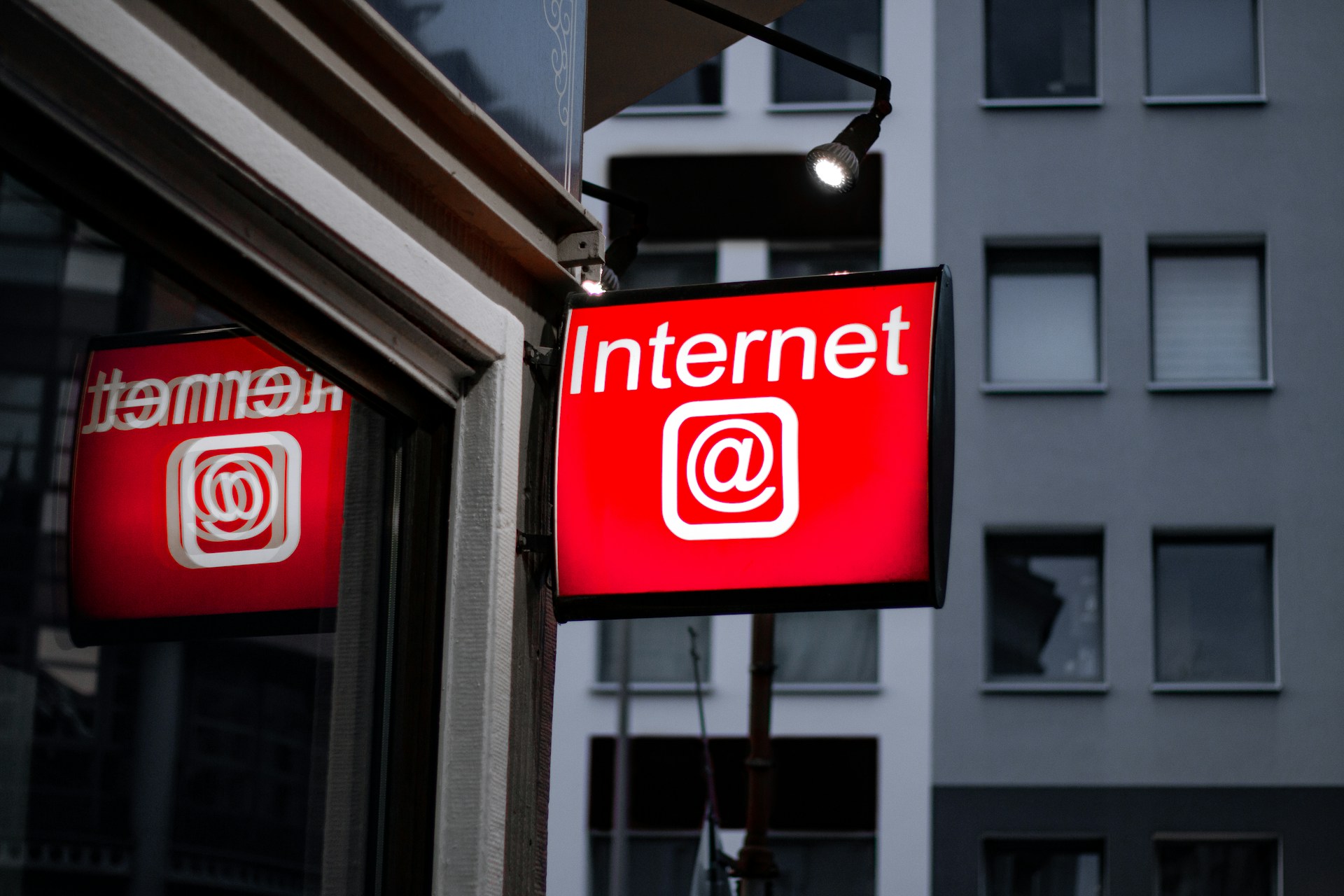
The internet is often described as one giant place.
We talk about the internet as if it were a single city, a single network, or a single culture that everyone enters through the same doors.
But spend enough time watching how different generations use technology, and another picture begins to appear.
The internet is not exactly one place.
It is many different places connected together.
Your internet might be YouTube, WhatsApp, Facebook, Google, Reddit, GitHub, Spotify, Discord, or a collection of websites you have visited for years.
Someone younger might experience the internet through short videos, group chats, gaming communities, livestreams, recommendation feeds, and AI assistants.
Someone older might still think of the internet as websites, email, search engines, forums, and online newspapers.
Technically, everyone may be using the same global network.
Culturally, however, they can be living in completely different digital worlds.
That is why every generation seems to have its own internet.
The Internet We Meet First
Technology becomes personal when we encounter it for the first time.
For many people, their first experience of the internet happened through a desktop computer.
There was something special about sitting in front of a computer, opening a browser, typing a web address, and waiting for a page to appear.
The internet felt like a collection of destinations.
You went somewhere.
You visited a website.
You searched for something.
You downloaded a file.
You sent an email.
You joined a forum.
The experience required intention.
You often had to know what you were looking for before you could find it.
That created a particular kind of internet culture.
People remembered website addresses.
They bookmarked pages.
They built personal websites.
They participated in forums.
They discovered small communities hidden across the web.
The internet felt enormous because it was decentralized in the user’s experience.
You could stumble across a website that looked like it had been created by one person in their bedroom, because it probably had.
And that was part of the magic.
Then the Internet Became Social
Eventually, the internet became less about simply visiting websites and more about connecting with people.
Social networks changed the experience.
Instead of asking, “What website should I visit?” people increasingly asked, “What’s happening in my network?”
Your friends became part of the interface.
Photos, updates, comments, messages, and communities started appearing in one continuous stream.
The internet became more social.
For an entire generation, this was their defining digital experience.
They remember creating their first social media account.
They remember adding friends.
They remember customizing profiles.
They remember discovering music, jokes, photographs, conversations, and communities through people they knew.
The web became a reflection of social life.
And social life became increasingly connected to the web.
The distinction between being online and being offline started becoming less obvious.
The Smartphone Changed the Doorway
Then the smartphone arrived and changed something fundamental.
The internet no longer required a desk.
It could travel with you.
The computer became something you carried in your pocket.
This changed not only how people accessed information but also how frequently they accessed it.
The internet became available while walking.
While waiting for a bus.
While sitting in a restaurant.
While traveling.
While having breakfast.
While standing in line.
The internet became ambient.
It was no longer somewhere you went.
It was something that was always nearby.
This created a new generation of internet users who never experienced the web as something separate from mobile technology.
For them, the internet was already part of everyday life.
The phone was the browser.
The camera was the publishing tool.
The messaging application was the communication layer.
The map was the navigation system.
The music player was connected to the cloud.
The app store became a gateway to services.
The internet had moved from the desktop into everyday objects.
Every Generation Learns a Different Digital Language
Technology does more than provide tools.
It creates language.
Every generation develops its own vocabulary for using the internet.
Older internet users might talk about websites, browsers, email addresses, forums, downloads, and search engines.
Another generation might talk about profiles, followers, likes, hashtags, feeds, stories, and direct messages.
A newer generation might talk about livestreams, creators, servers, gaming communities, short-form video, algorithms, and AI.
The technology underneath may overlap.
The vocabulary does not.
This is similar to how different generations develop their own expressions in music, fashion, and entertainment.
The tools become part of cultural identity.
Someone can sometimes tell which era shaped another person’s digital habits simply by watching how they navigate technology.
One person opens a browser.
Another opens an app.
One searches directly.
Another waits for recommendations.
One reads a long article.
Another watches a video explaining the same idea.
One joins a forum.
Another joins a Discord server.
None of these approaches is inherently strange.
They are simply products of different internet eras.
The Internet Became a Recommendation Machine
One of the biggest changes in the modern internet is the transition from search to discovery.
The older web often required you to ask a question.
The newer web can answer before you ask.
Recommendation systems have become powerful parts of the online experience.
You watch one video, and another appears.
You listen to a song, and another is suggested.
You read an article, and several related articles appear.
You buy something, and similar products are presented.
The internet increasingly learns from patterns of interaction.
This creates another generational difference.
Some people still think of the internet primarily as a library.
Others experience it more like a personalized television station.
The first group goes looking for information.
The second group allows information to find them.
Both are using the same internet.
But the experience is fundamentally different.
Social Media Became Television for a New Generation
Every generation has its dominant forms of entertainment.
Television shaped one era.
Radio shaped another.
Cinema became central to others.
Then online video transformed entertainment again.
Platforms made it possible for almost anyone with a camera, microphone, computer, or phone to become a publisher.
This changed the relationship between audience and creator.
You no longer needed to work for a traditional media organization to reach people.
A person could create something from their bedroom and distribute it globally.
A programmer could publish a tutorial.
A musician could release a song.
An artist could share their work.
A developer could document a project.
A gamer could livestream gameplay.
A writer could publish an essay.
The internet became a giant publishing system.
And every generation learned to use that publishing system differently.
Gaming Created Its Own Internet
There is another internet that deserves attention: the gaming internet.
For many people, online gaming was not simply entertainment.
It became a social environment.
Players communicated through voice chat.
They formed teams.
They joined communities.
They built friendships.
They exchanged strategies.
They created content.
They participated in digital economies.
Gaming communities developed their own languages, traditions, jokes, and social structures.
For younger generations especially, the internet was never simply websites and social media.
It was also virtual worlds.
A game could function as a meeting place.
A digital avatar could become part of someone’s identity.
A multiplayer lobby could become a social space.
This is one reason it can be difficult for older generations to understand how deeply online gaming can shape modern internet culture.
They may see a game.
A younger user may see a community.
Developers Have Their Own Internet Too
As a software developer, I have always found this particularly interesting.
There is an internet built around code.
It has its own neighborhoods.
GitHub.
Stack Overflow.
Package registries.
Documentation websites.
Developer communities.
Technical blogs.
Open-source repositories.
Programming videos.
AI coding tools.
Developer newsletters.
These places can feel completely invisible to someone who does not work with technology.
But for a developer, they can represent a significant part of daily internet life.
A developer can spend hours moving between a code editor, documentation, repositories, APIs, package managers, issue trackers, and technical communities.
To someone outside software engineering, that may look like a completely different internet.
In a sense, it is.
It is a professional culture built on top of the same infrastructure.
The Internet Is Becoming More Conversational
Another major transition is happening now.
The interface to information is becoming increasingly conversational.
For decades, we interacted with computers through menus, buttons, forms, and search boxes.
Now we can increasingly communicate with software using natural language.
Instead of searching for ten different pages, someone can describe what they want.
Instead of manually comparing information, they can ask software to organize it.
Instead of learning every command, they can describe the outcome.
This does not mean traditional interfaces disappear.
It means another layer is being added.
The internet is becoming more conversational.
That may eventually become one of the defining characteristics of the generation growing up with AI systems.
Their first instinct may not be to search for a website.
It may be to ask.
The Internet Is Also Local
One of the most interesting things about the internet is that it is simultaneously global and local.
A person in Zambia can read a technical article written in the United States.
They can listen to music from Nigeria.
Watch football from Europe.
Follow creators from South Africa.
Buy software from Asia.
Communicate with someone in Canada.
And still spend much of the day talking to people from their own neighborhood.
This creates a strange combination.
The internet makes the world smaller while allowing local cultures to remain visible.
Different countries develop their own online humor, communities, creators, businesses, and digital traditions.
The internet does not erase geography.
It gives geography another layer.
African internet culture, for example, continues to develop its own identity through language, music, business, technology, humor, fashion, and storytelling.
The global network becomes a collection of local experiences.
Your Internet Is Shaped by Your Era
Perhaps the most important lesson is that our internet experience is deeply connected to when we grew up.
Someone who experienced the web before smartphones may always think differently about technology than someone whose first internet experience happened on a phone.
Someone who grew up with social networks may understand online identity differently from someone who grew up with email.
Someone who grew up watching online video may have a different relationship with creators than someone who grew up watching scheduled television.
Someone entering the digital world during the AI era may develop completely different expectations about what computers can do.
Technology changes.
But human beings also adapt to the technology surrounding them.
We learn the interface.
We learn the culture.
We learn the unwritten rules.
We learn what feels normal.
And eventually, that version of the internet becomes our internet.
There Is No Single Internet Experience
This is why arguments about “the internet” can sometimes be confusing.
Two people can open their phones at exactly the same moment and see completely different worlds.
Different news.
Different creators.
Different communities.
Different recommendations.
Different conversations.
Different languages.
Different interests.
Different technologies.
Different memories.
The infrastructure connects them, but their experiences separate them.
The internet is therefore less like one giant room and more like an enormous building with millions of rooms.
Every generation discovers a different entrance.
Every generation decorates its own room.
Every generation develops its own vocabulary.
And every generation eventually leaves behind pieces of its culture for the next one.
The Internet We Build Next
The most interesting question is not which generation has the “real” internet.
There probably isn’t one.
The more interesting question is what the next generation will consider completely normal.
Maybe artificial intelligence will be as ordinary to them as web browsers are to us.
Maybe virtual environments will feel as natural as social media.
Maybe voice interfaces will become more common.
Maybe websites will become less important while intelligent agents become more important.
Maybe new forms of digital ownership will emerge.
Maybe communication will become more immersive.
Maybe technologies that currently feel experimental will become boring infrastructure.
That is how technology works.
Yesterday’s innovation becomes today’s normal tool.
The computer was once revolutionary.
The smartphone was once revolutionary.
Social media was once revolutionary.
Streaming was once revolutionary.
Cloud computing was once revolutionary.
Now millions of people use these technologies without thinking about the engineering behind them.
The same thing will happen to the technologies being developed today.
We All Carry a Piece of the Internet
When I think about technology, I often think about how much of our identity is connected to the tools we use.
The websites we remember.
The first computer we owned.
The first phone we used.
The first social network we joined.
The first game we played online.
The first programming language we learned.
The first video we uploaded.
The first song we streamed.
The first application we built.
These experiences become digital memories.
They shape how we understand technology.
They influence what we expect from the next generation of tools.
That is why every generation has its own internet.
Not because the physical network is different.
But because the human experience surrounding that network keeps changing.
The internet is infrastructure, but it is also culture.
It is code, but it is also memory.
It is information, but it is also identity.
It is global, but it is also deeply personal.
And perhaps that is the most beautiful thing about it.
Every generation gets to add another layer.
The internet we inherited was built by people before us.
The internet we use today is being shaped by everyone using it.
And the internet that comes next will be shaped by what we decide to build.
Software in My Mind. Rock in My Soul.