
The Quiet Addiction to Struggle in African Culture
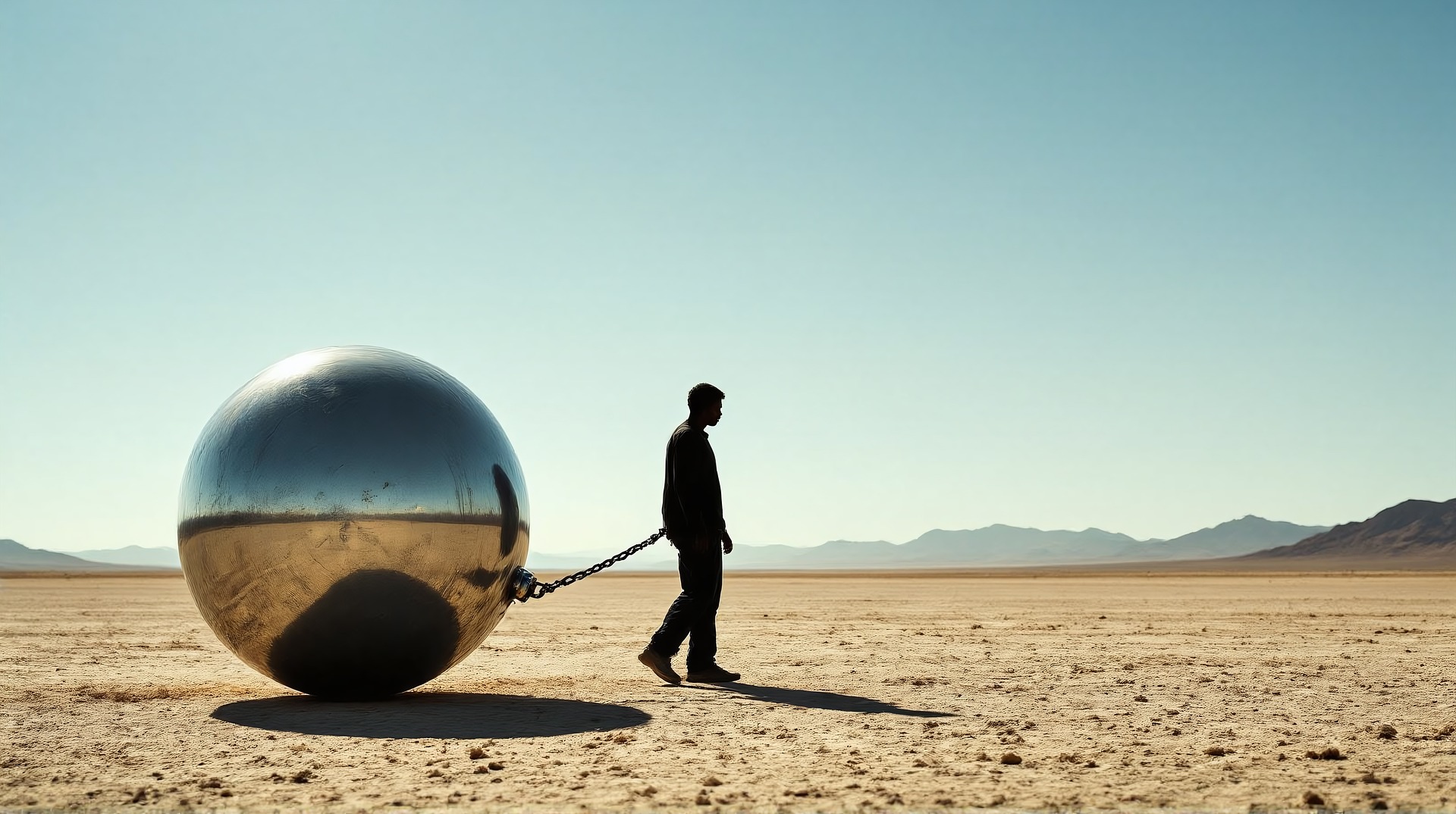
There is a kind of suffering we don’t question.
Not because it is invisible.
But because it is familiar.
It is woven into our stories.
Carried in our conversations.
Worn almost like a badge of honor.
We call it resilience.
We call it strength.
We call it survival.
But if you look closely—really closely—there is something else hiding beneath it.
Something quieter.
Something more uncomfortable.
An attachment to struggle.
Not the kind forced upon us by history, economics, or circumstance.
But the kind we begin to normalize.
Then accept.
Then, without realizing it… defend.
In many African homes, struggle is not just an experience.
It is an identity.
You hear it in the stories we tell:
“I came from nothing.”
“We suffered.”
“It was not easy.”
“We had to fight for everything.”
And these stories matter.
They are real.
They are valid.
They are part of who we are.
But somewhere along the way, something shifts.
The struggle stops being something we went through…
And becomes something we believe we must continue to go through.
As if ease is suspicious.
As if comfort is weakness.
As if life is only meaningful when it is hard.
And that’s where the danger begins.
Because when struggle becomes identity, letting go of it feels like losing yourself.
Think about it.
How many times have you felt guilty for resting?
For taking things slow?
For choosing peace over pressure?
There is a voice—quiet but persistent—that whispers:
“You’re getting too comfortable.”
“You’re not doing enough.”
“You should be suffering more if you want to succeed.”
Where does that voice come from?
Part of it is history.
A continent shaped by colonization, exploitation, and systems that demanded endurance just to survive.
A past where struggle was not optional.
It was necessary.
And that survival mindset… it stayed.
Passed down.
From generation to generation.
Not just in stories.
But in behavior.
In expectations.
In belief systems.
Our parents struggled.
Their parents struggled.
So somewhere deep within us, we internalized a simple equation:
Struggle = Worth
If it’s hard, it’s meaningful.
If it hurts, it’s valuable.
If you’re tired, you’re doing something right.
And if it’s easy?
Then maybe it’s not real.
This is the quiet addiction.
Because struggle gives us something.
It gives us identity.
It gives us a sense of purpose.
It gives us a story we can tell ourselves and others.
“I’m trying.”
“I’m pushing.”
“I’m grinding.”
And in a world where recognition is scarce, struggle becomes proof.
Proof that we are serious.
Proof that we are committed.
Proof that we are becoming something.
But here’s the uncomfortable truth:
Not all struggle is productive.
Some struggle is necessary.
It builds resilience.
It sharpens perspective.
It teaches discipline.
But some struggle is just… repeated.
Unexamined.
Unnecessary.
The kind that comes from poor systems.
From lack of direction.
From habits we never question.
The kind that feels familiar, so we keep choosing it—even when better options exist.
We stay in environments that drain us.
We follow paths that don’t align with us.
We work harder instead of smarter.
And when something easier appears—something more efficient, more peaceful—we resist it.
Because it doesn’t match our internal narrative.
We’ve been taught that success must look like sacrifice.
That growth must feel like pain.
That progress must be exhausting.
So when it’s not…
We doubt it.
We say things like:
“It can’t be that easy.”
“There must be a catch.”
“Real success doesn’t come like that.”
But what if that belief is the very thing holding us back?
What if the goal was never to struggle endlessly…
But to move beyond unnecessary struggle?
There is a difference between earning something and suffering for it.
But we often confuse the two.
We glorify burnout.
Celebrate exhaustion.
Normalize stress.
And slowly, we build a culture where peace feels foreign.
Where rest feels like laziness.
Where ease feels undeserved.
But here’s the truth:
You don’t have to suffer endlessly to be worthy of success.
You don’t have to prove your value through constant hardship.
You don’t have to carry pain just because it’s familiar.
Letting go of unnecessary struggle is not weakness.
It’s awareness.
It’s recognizing that some battles are not yours to fight.
That some paths are not yours to walk.
That some weight is not yours to carry.
But that realization is not easy.
Because when you step away from struggle, something strange happens.
You lose your reference point.
If you’re not struggling… what are you doing?
If you’re not suffering… are you still progressing?
If life feels calm… are you falling behind?
These questions don’t come from logic.
They come from conditioning.
And breaking that conditioning requires something deeper than effort.
It requires conscious choice.
A decision to redefine what growth looks like.
To see value in clarity, not just chaos.
To see strength in peace, not just pressure.
To see progress in consistency, not just intensity.
Because growth does not always look dramatic.
Sometimes, it looks quiet.
It looks like waking up without anxiety.
Like working without burnout.
Like building something that doesn’t consume you.
It looks like balance.
And balance is not something we talk about enough.
Because it doesn’t sound heroic.
It doesn’t make for dramatic stories.
It doesn’t fit the narrative of struggle we’ve been told.
But maybe that’s the point.
Maybe the next evolution of African success is not about enduring more.
But about designing better.
Better systems.
Better habits.
Better environments.
So that success is not built on suffering…
But on sustainability.
Because the goal is not to prove how much you can endure.
It’s to build a life you don’t need to escape from.
And that requires a shift.
From:
“How much can I handle?”
To:
“What is actually necessary?”
From:
“Am I struggling enough?”
To:
“Am I moving effectively?”
From:
“Is this hard?”
To:
“Is this aligned?”
Because not everything that is hard is meaningful.
And not everything that is easy is worthless.
Sometimes, the smartest move is not to push harder.
But to step back.
To rethink.
To redesign.
And that takes courage.
Because it means questioning everything you’ve been taught.
Everything you’ve seen.
Everything you’ve believed about success.
It means letting go of the identity built around struggle.
And choosing something different.
Something quieter.
But more powerful.
A life where effort exists…
But suffering is not the foundation.
A life where growth happens…
But not at the cost of your peace.
A life where you are not constantly trying to prove something…
But simply becoming.
And maybe that’s the real shift.
Not escaping struggle entirely.
But breaking the addiction to it.
Because once you do…
You begin to see something clearly for the first time:
You were never meant to suffer endlessly.
You were meant to evolve beyond it.